Youth Machine Sizes and Prices for Wisconsin Families
Choosing a youth ATV or UTV is not just a question of age or engine size. A machine that is too large can be difficult to control, while a model that is outgrown quickly can strain the family budget. This guide explains how to judge fit, compare realistic purchase costs, and account for Wisconsin riding rules and first-season expenses.
Start With the Rider, Not the Engine
A youth machine should match the child’s physical size, coordination, experience, and the places they will ride. An age label or engine displacement can help narrow a search, but neither proves that a particular child can control a particular model.
The most useful test is a supervised fit check on level ground, with the engine off. The rider should be able to reach the controls without stretching, steer through the full range of motion, and operate the brakes confidently. On a youth ATV, the rider should be able to sit upright with a relaxed grip and keep both feet planted on the footrests. They should be able to move their weight without being crowded by the seat or bodywork.
For a youth UTV, check that the child can sit against the seat back, reach the steering wheel and controls, and remain properly positioned behind the restraint system. A seat or belt that does not fit is not made safe by the vehicle’s lower speed setting. If a child cannot reach a control or sit securely, the machine is not a suitable size.
A practical fit check includes these steps:
- Check reach. The rider should be able to turn the handlebars or steering wheel without leaning far forward or losing a stable position.
- Check control operation. With the engine off, have the child operate the brakes and other controls several times. Make sure they understand which control does what.
- Check foot position. On an ATV, both feet should stay on the footrests. On a UTV, the feet should reach the floor area without interfering with the pedals.
- Check visibility. The rider should see the path ahead while seated normally, not by standing or leaning around the vehicle.
- Check confidence and judgment. A child who can physically reach everything may still need more instruction before operating a powered machine.
Children develop at different rates. Two riders of the same age may have different strength, coordination, and ability to make safe decisions. A parent should be comfortable with both the child’s physical fit and their readiness to follow instructions, stop when directed, and recognize hazards.
A size category is only a starting point
Youth ATVs are often grouped by engine size or intended age range, but those labels are not universal guarantees. Seat height, weight, throttle response, braking, and the position of the controls all affect how manageable a machine feels. A relatively small engine can still feel too powerful to a new rider if throttle response is abrupt or the machine is heavy.
A youth UTV presents a different set of fit questions. Its steering wheel and pedals may be easier for some children to manage than ATV handlebars, but its width, weight, turning behavior, and passenger arrangements require a different kind of supervision. A UTV is not automatically a safer choice simply because it has a cabin or seat belts.
If a machine has an adjustable speed limiter, treat it as one part of a training plan, not as a substitute for correct sizing. Check how the limiter works, whether it can be changed easily, and whether the adult supervising the ride can verify the setting. A limiter does not reduce every risk: it does not make a steep slope, road crossing, passenger, or unfamiliar trail appropriate for a young rider.
When comparing sizes and developmental stages, Youth Machine Sizes and Wisconsin Rules can help connect the fit question to the rules that apply to young riders. For a more age-specific starting point, see Best First Quad for a Ten-Year-Old Up North. Neither replaces a hands-on fit check.
ATV or UTV: Which Type Fits the Family?
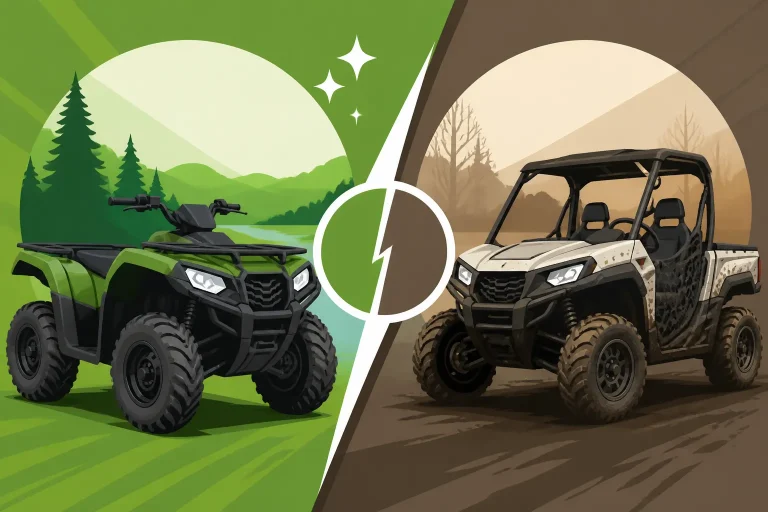
An ATV is generally a better match for a child who is learning to balance, steer, and manage controls on a single-rider machine. A UTV can suit a family with a specific need for a side-by-side, but youth-sized models still require a rider who fits the controls and understands how to operate them. A larger, adult-sized UTV should not be treated as a youth machine just because a child can sit in the passenger seat.
| Question | Youth ATV | Youth UTV |
|---|---|---|
| How does the rider control it? | Balances and steers with handlebars; operates hand or foot controls depending on design | Steers with a wheel and operates pedals and vehicle controls |
| What is the main fit concern? | Reach to controls, foot placement, seat fit, and ability to shift body position | Reach to wheel and pedals, seat and restraint fit, and ability to stay properly positioned |
| Who rides? | Usually one operator; do not add a passenger unless the machine is designed and approved for one | Operator and, on models designed for it, a passenger seated in the intended position |
| What should a family check? | Throttle response, brakes, weight, speed-limiting features, and rider control | Restraints, doors or nets, rollover protection, operating controls, and passenger rules |
| Is it easy to transport? | Often easier to fit in a smaller trailer or truck bed, depending on dimensions | Often wider and heavier; confirm trailer capacity and loading space |
| What is the common budget trade-off? | Entry-level youth models can be less expensive, but quality, condition, and equipment matter | A youth side-by-side can cost more, and larger models add substantial purchase and hauling costs |
The basic difference is how the rider interacts with the machine. An ATV requires the operator to manage body position as well as steering and throttle. That can be a useful skill, but it also means a child needs to be able to move comfortably and stay in control. A UTV provides a seated steering position and may carry a passenger if the model is designed for one, but the driver must understand pedals, restraints, and the vehicle’s larger footprint.
Before deciding, ask where the family will actually ride. A compact youth ATV may be easier to transport and store, but it may not be appropriate for every route or trail. A youth UTV may better fit a family’s intended use, but its width can limit where it can go. Confirm the dimensions and restrictions for the locations you plan to use rather than assuming a machine can follow adult vehicles everywhere.
Do not buy a larger machine solely to extend the time before the child outgrows it. A vehicle that is too heavy or difficult to control can turn a good-value purchase into a poor safety decision. If a child is between sizes, compare the actual controls and seat positions on each model. Choose the machine that fits now, and plan for resale or replacement when the rider grows.
The decision also depends on how the vehicle will be used. A youth ATV is not a substitute for an adult machine, and a child passenger is not a reason to buy a UTV before checking whether the rider meets the applicable age, fit, and operating requirements. For a broader comparison of household side-by-side needs, see Buying Your First Side-by-Side in Wisconsin.
Youth ATV and UTV Prices: What to Budget
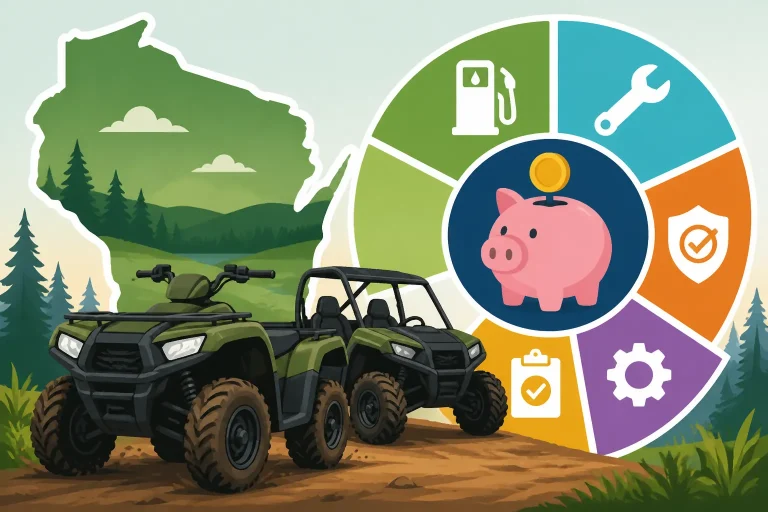
Youth-machine prices vary with engine size, vehicle type, condition, brand, features, and local availability. As a broad planning guide, a used small youth ATV may be found in the low thousands, while a new small youth ATV commonly falls in the low-thousands-to-several-thousand-dollar range. Larger youth ATVs and youth UTVs can cost more, and a well-equipped or nearly new machine may approach the cost of a larger entry-level vehicle.
These are rough shopping ranges, not a current quote or a promise about what a particular model should cost. Local listings and dealer inventory change. Check current listings for the exact model and year, and compare the final written price rather than relying on an advertised starting figure. The overview in Youth Quad Prices Wisconsin Families See can help you think through the range of youth-machine listings.
A useful budget begins with the purchase price but does not end there. Ask what is included, what is required for the rider and machine, and what the family needs to transport and maintain it.
| Budget item | What to check before buying |
|---|---|
| Machine price | Compare the same model year, condition, and equipment; check whether the listing is for a new or used unit |
| Dealer-added costs | Ask for an itemized written out-the-door quote and clarify any setup, delivery, documentation, or other charges |
| Safety gear | Budget for a properly fitting helmet, eye protection, gloves, boots, and clothing suited to the weather |
| Registration and access | Confirm what registration or trail-access requirements apply to the machine and the places you plan to ride |
| Trailer and tie-downs | Check whether the family’s existing vehicle and trailer can carry the machine safely |
| Maintenance and repairs | Allow for routine service, tires, brakes, batteries, and repairs appropriate to the machine’s age and condition |
| Storage | Consider whether the machine can be kept secure and protected from weather |
| Resale | Compare local used listings and keep service records, manuals, and included parts to support a later sale |
New versus used
A new machine can offer a clear service history, known ownership, and a warranty if one applies. It may also make it easier to confirm the model’s intended rider range and included safety features. Those advantages do not mean every new machine is a good buy. Compare the total price, ask about the warranty’s coverage and exclusions, and confirm that the child can operate it comfortably.
A used machine may reduce the upfront cost, but condition matters more than a low asking price. Check for damaged plastic, loose controls, cracked seat or footrest areas, uneven tire wear, leaking fluids, bent components, and signs of rough storage. Ask who used it, how it was maintained, whether it has been repaired after a crash, and whether the seller has receipts or service records. Start it only with the owner’s permission and follow the manufacturer’s guidance for any inspection.
On a used ATV, inspect the throttle, brakes, steering, suspension, tires, and drive components. On a used UTV, also inspect the seat belts or other restraints, doors or nets, steering, pedals, chassis, and safety structure. A machine can look clean while hiding wear, so a pre-purchase inspection by a qualified shop may be worth considering. The more unfamiliar the model is to the buyer, the more useful an independent inspection can be.
Do not rely on the seller’s claim that a child has “outgrown” the machine as proof that it fits your child. Nor should you accept an engine size or age label in place of a proper check. If the model’s manual is missing, find out whether the manufacturer can provide one before purchase. If the seller cannot explain how a speed limiter or other key feature works, treat that as a reason to investigate further.
For a deeper used-machine checklist, see Inspecting a Used Machine in Wisconsin and Buying a Used Machine in Wisconsin. When comparing asking prices, remember that a low number can reflect repairs, missing parts, or a lack of paperwork rather than a bargain.
New-machine quotes and add-ons
If buying from a dealer, request an itemized quote that separates the vehicle price from setup, delivery, documentation, accessories, and any other additions. Ask whether the machine is ready to ride or whether the family will need to buy essential equipment separately. A displayed price may not include everything needed to take the machine home and use it.
Useful questions include:
- What is the final amount due before financing?
- Which accessories are included, and which are optional?
- Is the speed control adjustable, and how is it set?
- What maintenance is required during the break-in period?
- What does any warranty cover, and what could void coverage?
- Can the dealer demonstrate the controls and explain the owner’s manual?
- Is the machine intended for the rider’s size and experience?
Avoid buying accessories simply because they are bundled with a machine. A winch, upgraded tires, or decorative parts may not solve the family’s immediate needs. Prioritize fit, required safety equipment, correct transport, and routine maintenance before discretionary upgrades.
Wisconsin Rules and Where You Plan to Ride
A youth machine that fits physically still has to be legal and suitable for the intended riding area. Wisconsin rules distinguish between ATVs and UTVs and can depend on a rider’s age, safety certification, supervision, vehicle type, and whether the riding area is public or private. Requirements for public trails and routes are not interchangeable with permission to ride on private land.
Do not assume a youth ATV can be operated wherever an adult’s registered machine can go. Before a child rides, confirm the current age rules, certification requirements, supervision rules, registration requirements, and local access rules for the specific vehicle and location. Start with Wisconsin Age Rules for ATVs and UTVs and Wisconsin’s Rule for Riders Aged 12 to 15. For the distinction between the minimum ages commonly discussed for ATVs and UTVs, see Twelve for an ATV, Sixteen for a UTV.
Safety certification is another point to verify before buying. A child’s age and the type of machine can affect the requirements, and an adult’s certificate or experience does not automatically satisfy a young rider’s obligation. Review Wisconsin’s ATV Safety Certificate Requirement and confirm the current details with the official source before planning a ride.
A few practical rules help prevent mistaken assumptions:
- A route or trail may have restrictions that differ from those on private property.
- A landowner’s permission does not necessarily answer every question about machine use, supervision, or safety.
- A machine’s advertised age range is not a legal determination.
- An ATV and a UTV may have different age and operating requirements.
- Local ordinances and trail-system rules can add conditions, so check the specific community or trail information.
- Rules can change. Confirm them before the season and before taking a child to an unfamiliar location.
Helmet and protective-equipment requirements for minors also matter. A properly fitted helmet should be selected for the rider, not handed down simply because it is available. Check Wisconsin Helmet Requirements Under 18 for the applicable rules, and review the manufacturer’s instructions for the helmet and machine. Even when a particular item is not required in a given setting, protective equipment is an important part of planning a youth ride.
Before visiting a trail system, check that the machine itself is permitted there. Width, vehicle classification, route designation, registration, and pass requirements can all affect access. A youth model’s compact appearance does not automatically make it eligible for every ATV trail, and a family’s regular adult route may not be appropriate for an inexperienced young rider. Riding Wisconsin Trails With Kids offers additional planning considerations for families.
Equipment, Transport, and First-Season Costs
The cost of a youth machine includes everything needed to use it responsibly. Gear that fits correctly is not an optional afterthought. Children grow, so inspect fit regularly; a helmet or boot that fit last season may not fit now.
Prioritize:
- A correctly sized helmet that meets applicable standards and fits securely.
- Eye protection that stays in place and works with the helmet.
- Gloves and sturdy footwear suitable for the controls and riding conditions.
- Clothing that protects against weather, debris, and contact with the machine.
- Any required restraint equipment on a UTV, adjusted as the manufacturer directs.
- A communication plan for the supervising adult and rider.
Online marketplaces such as Amazon can be useful for comparing accessories and checking dimensions, but a product listing cannot confirm that a helmet or protective item fits a particular child. For items where fit and safety matter, verify the specifications and have the child try the gear on when practical. Do not choose equipment on price alone, and replace gear that is damaged or no longer fits.
Transport and storage
Before buying, measure the machine and the available trailer, truck bed, garage, or storage area. Compare the vehicle’s actual width, length, and weight with the trailer’s usable space and rated capacity. Include room to load and secure it, not just to park it. A UTV can be much wider and heavier than a compact youth ATV, so a trailer that works for one may not work for the other.
Use suitable ramps, tie-down points, and straps rated for the load. Follow the machine and trailer manufacturers’ instructions. Do not rely on improvised tie-down locations or assume that a small vehicle can be lifted and loaded safely by one adult. If the family needs to buy or rent a trailer, include that cost in the purchase decision. The related articles What a Hauling Trailer Costs and Ramps and Straps Worth the Money can help with transport planning.
Storage matters in Wisconsin’s changing weather. Keep the machine secure and protect it from moisture, dirt, and prolonged exposure to the elements. Follow the owner’s manual for battery care, fuel, and winter storage. If the family has no suitable storage space, compare that cost with the expected use before committing to a purchase. Winterizing a Machine in Wisconsin covers steps owners commonly need to plan for before cold-weather storage.
Maintenance and the family’s real annual budget
A youth machine may have a smaller purchase price than a full-size vehicle, but it still needs maintenance. Budget for the items specified in the owner’s manual, regular inspections, and repairs that may arise as the machine is used. Tires, brakes, batteries, belts, fluids, and damage from storage or riding conditions can all affect the ownership cost.
How much the family spends depends on how often the machine is used, the terrain, the machine’s age, and whether the owner can perform basic maintenance. A model used for occasional supervised rides may need a different service budget from one used frequently through a full season. Avoid promising a child that a machine will be inexpensive to own based only on its purchase price.
Before each ride, check the tires, brakes, throttle, steering, visible fasteners, and any safety equipment. Follow the maintenance schedule rather than relying on a fixed calendar that may not match the manufacturer’s recommendations. Keep receipts and a simple service log, especially if the family expects to resell the machine. For a fuller ownership-cost view, see Yearly Cost of Owning an ATV in Wisconsin and What a First Season Really Costs in Wisconsin.
How to Compare Machines Without Overbuying
A disciplined comparison helps families avoid paying for size, features, or equipment they do not need. Start by writing down the rider’s present measurements and experience, the intended riding locations, the available transport, and a maximum total budget. Then compare machines against those needs rather than comparing engine size alone.
Use a short scorecard:
| Check | Questions to answer |
|---|---|
| Fit | Can the child reach and operate every control while seated correctly? |
| Rider ability | Has the child shown enough judgment and coordination for this type of machine? |
| Vehicle type | Does the family need a single-rider ATV or a UTV designed for its intended occupants? |
| Access | Is the machine allowed on the trails, routes, or private property the family expects to use? |
| Safety features | Are the controls, restraints, speed settings, and equipment suitable and understood? |
| Condition | Does an inspection support the seller’s claims about maintenance and use? |
| Full cost | What will the family pay for the machine, gear, transport, access, maintenance, and storage? |
| Exit plan | If the child outgrows it, can the family maintain it and resell it with useful records? |
When two machines appear close, arrange to see them in person. Have the child sit on each one with the engine off and test the controls under adult supervision. Check whether the rider can maintain a stable position and follow simple instructions. Do not use a fast test ride as the first fit assessment, and do not let a seller pressure the family into an immediate purchase.
For a used machine, compare more than the asking price. Consider condition, records, wear, included parts, and the cost of repairs that an inspection identifies. For a new machine, compare itemized out-the-door quotes and ask what the advertised amount leaves out. In either case, include the trailer, gear, and other necessary costs before deciding whether the purchase fits the family budget.
It can also help to plan for the next stage. Children may outgrow a machine sooner than expected, but buying too large today is not a reliable way to avoid a later purchase. A well-maintained machine with complete paperwork and service records can be easier to sell. Keep the owner’s manual, purchase documents, and repair receipts together, and ask about the correct process for transferring any registration when the machine is sold.
A reasonable family decision may be to wait. If the child does not fit a suitable model, lacks the coordination to control one, or cannot meet the applicable riding requirements, buying now is not a saving. A smaller, correctly fitted machine or more instruction may be a better next step than moving up in engine size.
Frequently Asked Questions
What size ATV should I buy for a child?
Choose based on the child’s ability to reach and operate the controls, maintain a stable riding position, and manage the machine—not age or engine size alone. Have the child sit on the specific model with the engine off and check fit before buying.
Are youth UTVs safer than youth ATVs?
Not automatically. The two vehicle types require different skills and have different fit and operating concerns. A UTV’s restraints and seating arrangement must fit the occupants, and the driver must be able to reach and use the controls. Match the vehicle to the rider, purpose, and legal riding location.
How much should a Wisconsin family budget for a youth machine?
Used small youth ATVs may be listed in the low thousands, while new youth ATVs and youth UTVs can cost several thousand dollars or more depending on size, condition, equipment, and seller. Check current local listings and itemized dealer quotes, then add gear, transport, access, maintenance, and storage costs.
Can a child ride a youth machine on any Wisconsin trail?
No. The machine, rider’s age, certification, supervision, registration, and trail or route rules can all matter. Verify the current Wisconsin requirements and the rules for the specific place before riding.
Disclaimer
This article is for general informational purposes only and does not constitute professional advice. Laws, prices and regulations vary by location and change over time. Consult a qualified professional for guidance on your specific situation.