Riding Slowly Past a Farmyard on a Route
There's nothing quite like exploring Wisconsin's expansive ATV/UTV trail system, but sometimes those trails share the road with working farms and homes. Navigating these stretches responsibly, especially when passing a farmyard, is crucial not just for safety but for maintaining the positive relationship between riders and residents. This guide will walk you through the essential etiquette and practical tips for being a good neighbor on the routes.
The "Why" Behind Slowing Down at Farmyards on Wisconsin Routes
When you're out on an ATV or UTV route, the open road can feel exhilarating. It's easy to get caught up in the freedom of the ride. However, when that route passes through active farmyards or residential areas, the dynamics change completely. What might seem like a minor inconvenience to slow down can actually make a world of difference in fostering a respectful and sustainable relationship between riders and the communities they pass through. It’s about more than just rules; it’s about common courtesy.
Ignoring the need to slow down when passing these sensitive areas isn't just rude; it can have tangible negative consequences. From potential accidents involving children or livestock to ongoing complaints that jeopardize the future of local ATV/UTV routes, a little foresight and a reduced speed go a very long way. We all want to keep enjoying these fantastic routes, and that means doing our part to be responsible users.
Prioritizing Safety for Everyone
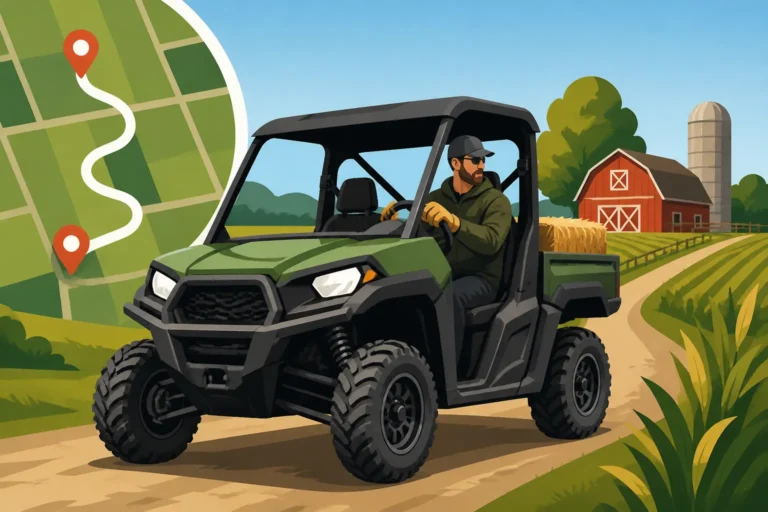
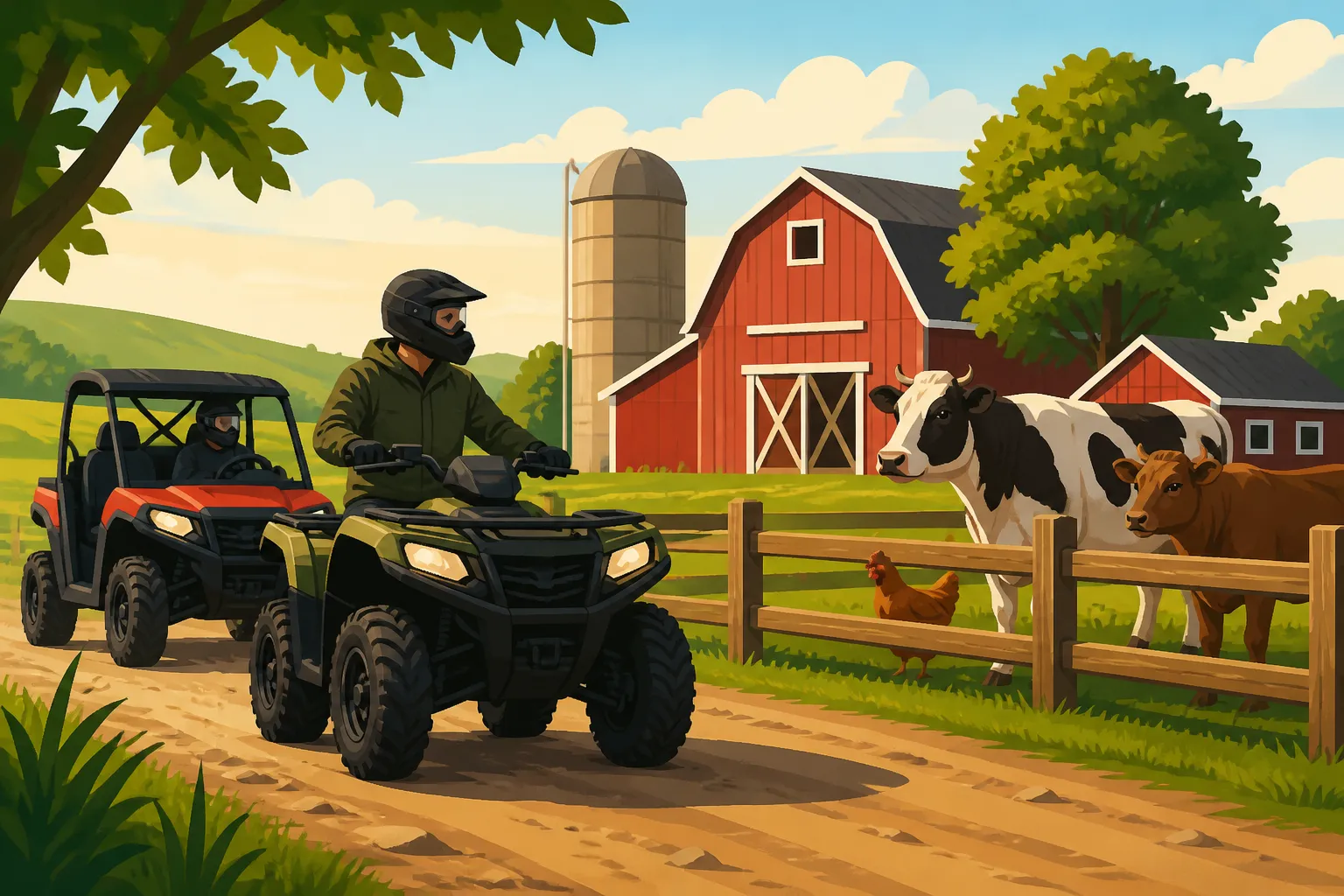
Safety is always the number one concern, and farmyards present a unique set of hazards that require extra vigilance. Unlike typical suburban homes, farmyards are often bustling with activity, which can be unpredictable. You might encounter children playing outdoors, often unaware of approaching vehicles. These kids could dart out into the lane of travel unexpectedly, or simply be distracted by their own games. Their safety is paramount.
Livestock, too, poses a significant safety consideration. A loud, fast-moving ATV or UTV can easily spook horses, cows, or even barn cats and dogs. Startled animals can jump into the road, creating a collision risk for you and potentially injuring themselves. Imagine a rider, perhaps on a borrowed machine, suddenly facing a full-grown dairy cow in the middle of a country road – it’s a scenario no one wants. Additionally, farm equipment, like tractors, hay wagons, or even slow-moving combines, can be operating in and around the yard, often with blind spots. They move at different speeds and require wide turns, making it crucial for you to be seen and for you to slow down to react to their movements. [Wisconsin Road Rules Riders Get Wrong] often center around these kinds of unexpected encounters.
Minimizing Noise and Dust Impacts
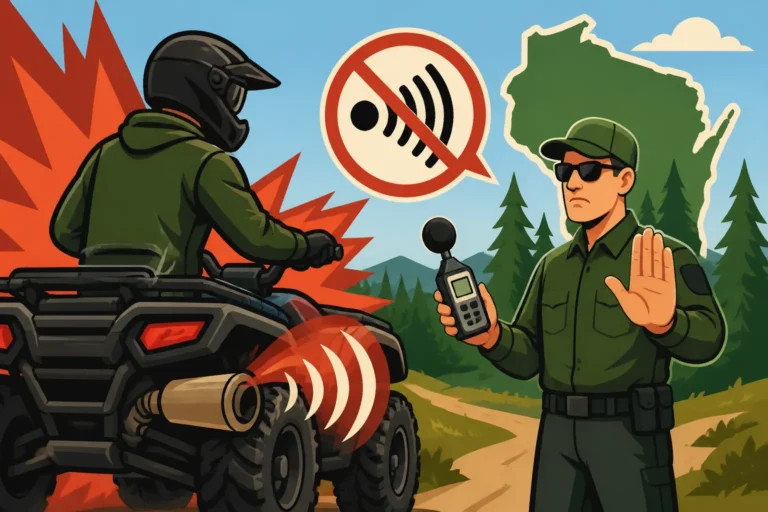
ATVs and UTVs, by their very nature, can be noisy machines. While that roar might be part of the fun on a wide-open trail, it's a completely different story when you're passing within yards of someone's home or through a barnyard where animals are resting. Excessive noise can be incredibly disruptive. It can wake sleeping babies, interrupt conversations, startle pets, and even stress livestock, potentially impacting their health or productivity. Nobody wants to feel like their peace is being invaded by recreational traffic, especially in their own yard.
Dust is another major concern, particularly on dry, gravel, or dirt routes that often pass through farm properties. Kicking up a massive cloud of dust can reduce visibility for everyone, including you, residents trying to back out of a driveway, or farmers moving equipment. Beyond visibility, that dust contains dirt, pollen, and other irritants that can get into homes, coat outdoor furniture, and affect air quality. It's an issue that often leads to complaints from residents to local authorities, which can, over time, threaten route access. Think about how you’d feel if someone sped past your home, blanketing your property in a fine layer of grit; it’s not exactly a welcoming gesture.
Protecting Route Access and Rider Reputation
Every time you ride an ATV or UTV on a public route, you are, in essence, an ambassador for the entire riding community. Your actions, good or bad, reflect on all of us. When riders consistently speed, create excessive noise, or kick up huge dust clouds while passing farmyards, it generates complaints. These complaints go to town boards, county supervisors, and the Department of Natural Resources. Over time, a pattern of negative interactions can lead to communities re-evaluating their decision to allow ATV/UTV routes on their town roads. [Municipal Ordinances Wisconsin Riders Must Read] are often a direct result of public feedback and the need to manage rider behavior.
Many of Wisconsin's fantastic ATV/UTV routes exist because local communities and landowners have agreed to open up their roads. This privilege is not a right, and it can be revoked if the negative impacts outweigh the benefits for the local residents. By demonstrating respect and courtesy – specifically by slowing down, reducing noise, and minimizing dust when passing farmyards – we help preserve these routes for everyone. It shows that we, as riders, are mindful of our impact and appreciate the access we've been given. It's an investment in the future of Wisconsin ATV/UTV riding.
Practical Steps for Navigating Farmyards Responsibly
Being a responsible rider means more than just having your machine registered and carrying your safety certificate. It means actively thinking about your surroundings and adjusting your behavior to be a good neighbor. When you approach a farmyard on a designated route, it's a cue to shift your mindset from trail warrior to courteous visitor. These practical steps aren't complicated, but they require a conscious effort and a commitment to shared respect.
It's all about anticipating potential issues and taking proactive measures. Rather than waiting for a problem to arise, you're implementing strategies that prevent it. This isn't about being slow for the sake of being slow; it's about being slow for the sake of safety, peace, and the continued enjoyment of our riding privileges. Every small adjustment you make contributes to a better experience for everyone on and along the route.
Adjusting Your Speed and Observing Your Surroundings
The most fundamental action you can take when passing a farmyard is to drastically reduce your speed. Don't just tap the brakes a little; slow down to a crawl, almost like you're searching for an address. Many municipal ordinances will have specific [Speed Limits on a Wisconsin Route] when passing through residential areas, sometimes as low as 10-15 mph. Even if there isn't a posted limit right at the farmyard, use common sense and dial it back significantly. The slower you go, the more time you have to react to the unexpected.
As you approach, scan the entire area. Are there open gates, indicating animals might be loose or farm equipment might be exiting? Do you see children's toys in the yard, suggesting kids might be playing? Is there any activity around the barn or house, like someone working outdoors or a dog tied up? Take note of any animals in pastures adjacent to the road – a quick glance can tell you if they seem agitated by your approach. By observing your surroundings, you're not only enhancing safety but also showing respect for the property and its inhabitants. It allows you to make an informed decision on how slow you need to be and where to keep your attention.
Managing Noise and Emissions
Beyond slowing down, actively manage your machine's noise. If you're running at high RPMs, even at a slower speed, your engine will still be loud. Ease off the throttle, allow your machine to coast a bit if the terrain allows, or shift into a higher gear to keep the engine RPMs low. Avoid aggressive acceleration or "blipping" the throttle, which can create sudden bursts of noise. The goal is to be as unobtrusive as possible.
For riders who are particularly concerned about sound, especially if they frequent routes that pass through many residential areas, there are aftermarket solutions. Some companies, like SuperATV, offer exhaust systems designed to be quieter than stock while still meeting performance standards. These can be a significant investment but provide a tangible benefit in reducing your sound footprint. Always ensure any modifications still comply with [The 96-Decibel Sound Test in Wisconsin] if you plan to ride on public trails. Additionally, make sure your spark arrestor is clean and properly maintained; a clogged or damaged one can alter exhaust sound.
Avoiding Dust-Ups and Maintaining Clear Sightlines
Managing dust is as crucial as managing noise, particularly on dry days. When you’re passing a farmyard, try to drive smoothly and avoid any sudden braking or acceleration that can churn up the ground. Stick to the established lane of travel, as veering off onto softer shoulders can create more dust. If the route is particularly dry and dusty, consider whether your machine's setup contributes to the problem.
Adding a full windshield or a rear dust panel to your UTV, like those robust options offered by SuperATV, can make a huge difference in controlling the dust your machine generates and contains. A windshield prevents dust from blowing back into your face and cab, improving your visibility, while a rear panel helps to keep dust from being sucked into the rear of the cabin area. Beyond accessories, simply driving slower is the single most effective way to reduce the amount of dust you kick up. Always ensure your eye protection is clean and clear to maintain excellent visibility, both for your safety and for monitoring your surroundings.
Here's a quick reference for best practices when approaching a farmyard:
| Action Category | Do | Don't |
|---|---|---|
| Speed Control | Decelerate significantly, approach at a crawl (10-15 mph or less). | Maintain normal cruising speed or accelerate through. |
| Observation | Scan for children, pets, livestock, and farm equipment. | Ride with tunnel vision, focusing only on the road ahead. |
| Noise Management | Ease off the throttle, use higher gears to keep RPMs low. | Blip the throttle, accelerate aggressively, or rev your engine. |
| Dust Control | Drive smoothly, stick to the established path. Consider a windshield. | Speed up, brake suddenly, or drive off-road onto soft shoulders. |
| Interaction | Offer a friendly wave if you make eye contact with residents. | Stare, gawk, or ignore residents. |
| Compliance | Know and follow specific local ordinances. | Assume general trail rules apply everywhere. |
Understanding Local Rules and Building Good Neighbor Relations
The tapestry of Wisconsin's ATV/UTV routes is woven through many different communities, each with its own unique character and local governance. This means that while there are statewide regulations, the granular rules you encounter can change from one town or county to the next. Understanding these local nuances is paramount to being a respectful rider and ensuring that these vital connections remain open for everyone to enjoy. It's about more than just avoiding a ticket; it's about being an active participant in a shared outdoor experience.
The collective behavior of riders shapes public perception and policy. When we demonstrate respect, we build trust. When we fail to, we erode it. This delicate balance is what ultimately determines the longevity and expansion of our riding opportunities. It’s a responsibility we all share, from the seasoned veteran to the first-time rider, and it requires continuous attention to how we interact with the places and people we encounter.
Checking Municipal Ordinances for Specifics
While the Wisconsin DNR provides general guidelines for ATV/UTV use, the specific rules for road routes are often set by individual towns, villages, and counties. This means that a speed limit, a time restriction, or even an insurance requirement could be different on a town road route just a few miles from another. It's not uncommon for these ordinances to contain very specific language regarding noise, dust, and speed when passing through residential or agricultural areas. Some towns might explicitly state a reduced speed limit of, say, 10 mph past any occupied dwelling or farmyard. You can often find this information by visiting the local town clerk's office, checking the municipality's website, or sometimes through local ATV/UTV club websites which often compile such details. [Finding a Wisconsin Town's ATV Ordinance] is a crucial step for responsible riding.
Failing to adhere to these local rules can result in citations and fines. [Wisconsin Fines for Illegal Road Riding] can range significantly depending on the infraction and the local jurisdiction. Beyond the financial penalty, repeat violations or widespread disregard for local rules can lead to routes being restricted, or even closed down entirely. It's a sad but real consequence of a few bad actors. By taking the time to understand the local ordinance for the area you're riding in, you’re not only protecting yourself from a ticket but also helping to secure riding access for the entire community.
The Ripple Effect of Rider Conduct
One of the most powerful concepts in maintaining public ATV/UTV routes is the "ripple effect" of rider conduct. Imagine a beautiful Saturday afternoon ride through a quaint Wisconsin farming community. If every rider slows down, passes courteously, and perhaps offers a friendly wave to a farmer on their porch, that positive impression resonates throughout the community. Residents see riders as respectful visitors, enjoying the countryside without being a nuisance. This goodwill builds support for the routes and encourages continued cooperation.
Conversely, if a single rider speeds through a farmyard, kicks up a massive dust cloud, or blasts loud music, that one negative act can quickly sour local sentiment. It often leads to complaints, and unfortunately, that one negative experience can overshadow hundreds of positive ones. Suddenly, the local town board is hearing from angry residents, and the conversation shifts from celebrating the economic benefits of tourism to discussing noise and safety concerns. This is why being a good ambassador is so vital. Every interaction, even a fleeting one, contributes to the overall reputation of ATV/UTV enthusiasts. Consider that [Riding a Wisconsin Town Road] comes with the responsibility of being a good neighbor, not just a good driver.
What to Do if You Encounter a Problem
Despite your best efforts to be courteous, sometimes misunderstandings can happen, or you might encounter someone who is already upset. If you accidentally kick up too much dust, or if a resident signals their displeasure, the best course of action is almost always de-escalation. Slow down even more, perhaps even stop safely if it's clear the person wants to speak with you. A simple, sincere apology and an acknowledgment of their concern can go a long way. "I'm so sorry, it's pretty dry today, I'll try to slow down even more." This immediately shows respect and diffuse tension.
If a situation feels confrontational or unsafe, simply continue riding slowly and safely, but make a mental note of the location and time. You can always report legitimate concerns about harassment or unsafe behavior (from either side) to local law enforcement or the DNR. However, the primary focus should always be on prevention: riding responsibly to avoid these situations in the first place. Remember that your actions speak volumes, and showing respect is the most effective way to address potential issues and build lasting positive relationships with the communities that host our beloved ATV/UTV routes.
Disclaimer
This article is for general informational purposes only and does not constitute professional advice. Laws, prices and regulations vary by location and change over time. Consult a qualified professional for guidance on your specific situation.