Registering a Homemade Frame in Wisconsin
So, you've put your heart and soul into building an ATV or UTV from scratch, welding up a custom frame, sourcing parts, and making it truly your own. It's a fantastic accomplishment, a testament to your skills and dedication. But now comes the part that can feel like trying to fit a square peg in a round hole: getting that beautiful, custom-built machine legally registered in Wisconsin. Unlike buying a shiny new rig from a dealer or even a used one with a clear history, registering something born from your garage can be a real head-scratcher. This guide is here to walk you through the unique journey of registering a homemade frame in Wisconsin, cutting through the confusion and helping you navigate the Department of Natural Resources (DNR) process.
The Unique Challenges of Registering a Homemade ATV or UTV Frame in Wisconsin
Let's be honest, registering a factory-built ATV or UTV is usually pretty straightforward. You've got a manufacturer's certificate of origin (MCO) or a previous registration card, a VIN, and a clear path to getting your decals. But when you’ve fabricated the very foundation of your machine – the frame – from scratch, or significantly modified an existing one to the point it's essentially new, the traditional avenues don't quite apply. This isn't just a simple registration renewal; it's proving the very existence and ownership of your unique creation.
The biggest hurdle, and often the most confusing for builders, is the absence of a conventional Vehicle Identification Number (VIN) and a manufacturer's title or MCO. Every ATV and UTV needs a VIN for registration, but a frame you built yourself won't have one stamped by Polaris or Can-Am. This means you’re essentially starting from square one, asking the state to acknowledge your hard work as a legitimate, registerable off-highway vehicle. It can feel like an uphill battle, especially when the forms seem geared toward mass-produced machines.
Why a Homemade Frame Needs Special Attention from the DNR
Think about it from the DNR's perspective. Their system is designed to track manufactured machines, tying a specific VIN to a specific manufacturer and a chain of ownership. When you present a "new" machine that doesn't fit this mold, they need a way to verify its legitimacy and assign it an identity. This process is crucial for preventing fraud, theft, and ensuring that machines operating on public lands meet safety and environmental standards. They can't just take your word for it, which, while frustrating, makes sense.
Because Wisconsin doesn't actually title ATVs and UTVs in the same way cars are titled – meaning there's no official paper "title" document issued by the Department of Transportation – the registration itself acts as the primary record of ownership. For a homemade machine, establishing that initial record is paramount. You're not just getting a sticker; you're creating the very first official record of your machine's existence, making the DNR the arbiter of its identity. This is why the process involves more scrutiny and unique steps compared to simply bringing in a [Buying a Used ATV in Wisconsin: The Paperwork] for transfer.
Understanding Wisconsin's Lack of ATV Titling
It’s worth reiterating that Wisconsin is one of those states that doesn't issue traditional vehicle titles for ATVs and UTVs. While this might seem like it would simplify things for a homemade machine, it actually puts more emphasis on the registration record and the VIN. For a factory-built machine, the manufacturer's certificate of origin (MCO) serves as the initial proof of ownership, eventually leading to a registration card. For your homemade machine, you won't have an MCO. Instead, you'll be creating a new "first record" directly with the DNR.
This distinction is important because it means there's no separate "title application" process to worry about. Your goal is singular: to get that machine registered and assigned a unique VIN. The registration card, once issued, will be your ultimate proof of ownership and legitimacy. Without a traditional title to fall back on, the thoroughness of your documentation and the VIN assignment process become even more critical steps for your custom build. This is a common point of confusion, and understanding [Why Wisconsin Does Not Title ATVs] helps clarify the overall landscape you're navigating.
Establishing Proof of Ownership for a Homemade Frame
This is perhaps the most critical step for anyone registering a homemade machine. Since there's no manufacturer's certificate or existing registration to transfer, you need to prove to the DNR that all the components, and especially that custom frame, legitimately belong to you. This isn't just about showing up with a completed machine; it's about providing a clear, verifiable paper trail. It's tedious, yes, but it’s absolutely necessary to get your machine legal.
Imagine yourself as a detective, gathering evidence to prove your case. Every major component you purchased, every scrap of metal for that frame, needs some form of documentation. This documentation acts as your machine's birth certificate, establishing its origins and confirming that you are the rightful owner who assembled it. Without this foundational proof, the DNR has no way to confidently assign a VIN or issue a registration, and you'll find yourself stuck in limbo.
The Importance of Receipts for Major Components
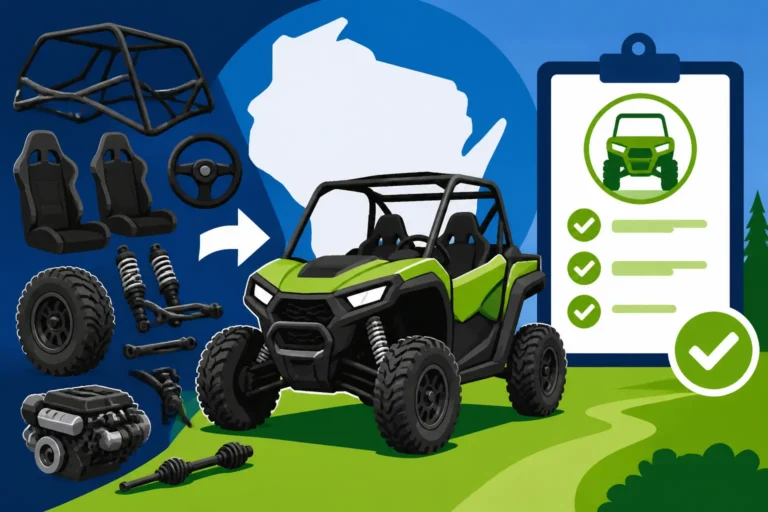
When you’re building an ATV or UTV from various parts, the DNR will want to see where those parts came from. Think about the big-ticket items: the engine, the transmission, axles, suspension components, and even the raw materials for your frame. If you bought these new, hold onto those receipts! They are invaluable. If you purchased them used, a bill of sale from the seller is essential. Even if it’s just a handwritten note, as long as it includes the seller's name, address, signature, the date of sale, a description of the item, and the price, it can work. Using a service like LawDepot to generate a professional bill of sale for any significant used parts you acquired can add a layer of credibility.
The key here is demonstrating a clear chain of custody for each major part. This helps the DNR ensure that you haven't inadvertently assembled a machine using stolen components. While it might seem excessive to keep every tiny receipt, focus on the big items that contribute significantly to the machine's identity and value. The more comprehensive your collection of purchase records, the smoother this part of the process will be. Remember, the DNR isn't just looking at the frame; they're looking at the entire machine you’ve created.
What to Do When Receipts Are Not Available
Life happens, and sometimes you don’t have every receipt for every component. Maybe you inherited parts, or salvaged them from an old project years ago, or bought them in a private cash sale without much paperwork. Don't despair, but be prepared for a bit more work. In these situations, you might need to create an affidavit or sworn statement detailing how you acquired the parts. This is a legally binding document where you attest to the facts under oath.
For example, if you fabricated the frame yourself from raw steel stock, you'd explain that in the affidavit and include any receipts you do have for the steel. If the engine came from an old, unregistered machine you've owned for years, you'd state that, perhaps even providing photos of the original machine if available. You might also need to include a description of the parts and their estimated value. Again, tools like LawDepot can help you draft a proper affidavit document if you’re unsure how to phrase it. The goal is to provide a reasonable explanation for the lack of traditional receipts and to demonstrate that you are the legitimate owner of all components. This situation is very similar to needing [Proof of Ownership Without a Title] for any other machine in Wisconsin.
The VIN Assignment Process for Homemade Machines in Wisconsin
Once you've gathered all your proof of ownership, the next major hurdle is getting a VIN assigned to your homemade frame. Since you won't have a manufacturer's VIN, the Wisconsin DNR will step in to provide one. This is a crucial step because without a VIN, your machine simply cannot be registered. It's the identifier that will follow your machine throughout its life, appearing on your registration card and any subsequent transfers.
This isn't a DIY process; you can't just stamp any random numbers on your frame. The DNR has a specific procedure for assigning these unique identification numbers, and it often involves an inspection. They need to ensure that the frame is robust enough, that the machine appears to meet basic safety considerations, and that it's genuinely a "homemade" unit rather than a modified, potentially stolen, manufactured machine.
Applying for a DNR-Assigned VIN
The first step is typically to contact the Wisconsin DNR directly regarding their "Application for Special Assigned VIN" or similar form for homemade vehicles. You’ll need to explain that you've constructed a machine with a homemade frame and require a VIN. They will guide you on the specific form to fill out, which will require all the ownership documentation you've meticulously collected. You'll likely need to provide a detailed description of your machine, including make (which will likely be "Homemade"), model (your designation), engine size, and overall dimensions.
Be prepared to explain the construction process, including the materials used for the frame and how it was assembled. This application is your formal request for the DNR to officially recognize your creation and assign it a unique identity within their system. The more thorough and clear you are on this application, the easier it will be for the DNR staff to process your request and move you to the next stage. This is a highly specialized version of the general [Wisconsin DNR ATV Registration Explained] process.
The Inspection Process for Homemade Machines
After you submit your application and documentation, the DNR will likely require an inspection of your homemade machine. This inspection serves several purposes. Firstly, it allows a DNR representative to physically verify that the machine exists as described in your application and that the parts you’ve listed are indeed incorporated. Secondly, it's an opportunity for them to ensure the frame and overall construction appear to be structurally sound and safe for operation. They aren't going to do an engineering stress test, but they will look for obvious deficiencies that could pose a safety risk.
During the inspection, the DNR official will confirm that there isn't an existing VIN that you're unaware of, or that a VIN hasn't been tampered with if you used a modified existing frame. Once satisfied, they will physically stamp or affix the newly assigned VIN to your homemade frame in a permanent, visible location. This could be on the steering head, near the footpeg, or another easily accessible area. Make sure you discuss where they intend to place it so you can ensure the area is clean and accessible. This assigned VIN is now your machine's official identifier, just like a factory VIN.
Steps to Successfully Register Your Homemade Machine in Wisconsin
With your VIN now assigned and stamped, you're on the home stretch! The hard part of establishing ownership and getting an identity for your custom rig is mostly behind you. Now, you’ll follow a process that mirrors the standard [Registering an ATV in Wisconsin] for any other machine, but with your newly assigned VIN as the star of the show. You’ll still need to consider how you’ll use the machine, and whether you want public or private use registration.
It's a huge relief to reach this stage because it means the state officially recognizes your hand-built masterpiece. Just remember to keep all your paperwork organized, as you’ll need it when you visit a registration agent or the DNR office. The final steps are all about completing the forms, paying the fees, and finally, getting those coveted decals that show you’re legal to ride.
Completing the Registration Application
With your newly assigned VIN permanently affixed to your machine, you can now complete the standard Wisconsin ATV/UTV registration application form. This form will ask for basic information about you (the owner) and your machine. Under the VIN section, you’ll enter the number that the DNR inspector assigned and stamped on your frame. For "make" and "model," you'll likely use "Homemade" or "Custom Built" as appropriate, or whatever designation the DNR advised during the VIN assignment process.
You'll also need to decide whether you want a [Wisconsin's Public Use ATV Registration] or a [Wisconsin's Private Use ATV Registration]. This decision hinges entirely on where you plan to ride. If your homemade machine will ever touch public trails, frozen lakes, or designated ATV routes, you absolutely need public use registration. If it will only ever be ridden on your own private land and never leave it, then private use might suffice, but most riders opt for public use for maximum flexibility. The fees vary for each, and it’s important to understand [Public Use Versus Private Use in Wisconsin] before you finalize your choice.
Paying Fees and Receiving Your Decals
Once the application is complete, you'll submit it along with all your supporting documentation (proof of ownership, VIN assignment confirmation) and the appropriate registration fee. You can usually do this at an authorized [Wisconsin Registration Agents and Where They Are] or directly through a DNR office. Make sure to bring physical copies of everything, as the agent will need to review it.
After your application and payment are processed, you'll receive your registration card and the official Wisconsin registration decals. These decals will have your new VIN and expiration date printed on them. You'll need to affix these to your machine in the designated locations – typically on the front and rear, clearly visible. The registration card should be carried with you whenever you're operating the machine, especially if you're out on public lands or routes. This card, now linked to your DNR-assigned VIN, is your ultimate proof of legal operation for your homemade marvel. Without it, you could face [Penalties for an Unregistered ATV in Wisconsin].
| Step | Description | Key Documents/Actions |
|---|---|---|
| 1. Gather Ownership Proof | Collect documentation for all major components of your homemade machine, especially the frame. This proves legitimate acquisition. | Receipts for new parts; Bills of Sale (from LawDepot or handwritten) for used parts; Affidavits for parts without receipts; Photos of the build. |
| 2. Apply for DNR-Assigned VIN | Contact the Wisconsin DNR to apply for a special assigned VIN for your homemade frame. This is crucial as it has no manufacturer VIN. | DNR "Application for Special Assigned VIN" form; Detailed description of machine and components. |
| 3. Undergo DNR Inspection | Schedule and complete the physical inspection of your homemade machine by a DNR official. They will verify construction and permanently affix the new VIN. | Have machine ready for inspection; Ensure clear, accessible spot for VIN stamping. |
| 4. Complete Registration Application | Fill out the standard Wisconsin ATV/UTV registration form using your newly assigned VIN. Decide between Public Use or Private Use registration. | Wisconsin ATV/UTV Registration Application form; Choose [Wisconsin Public Use Registrations Expire March 31] or [Private Registration That Never Expires]. |
| 5. Pay Fees & Receive Decals | Submit your completed application, all supporting documents, and the applicable registration fee to a DNR registration agent or office. | Valid ID; Proof of ownership; VIN assignment documentation; Payment for [Wisconsin ATV Registration Fee for Public Use] or [Wisconsin Private Use Registration Fee]. |
Disclaimer
This article is for general informational purposes only and does not constitute professional advice. Laws, prices and regulations vary by location and change over time. Consult a qualified professional for guidance on your specific situation.