Registering a Machine Built From Parts
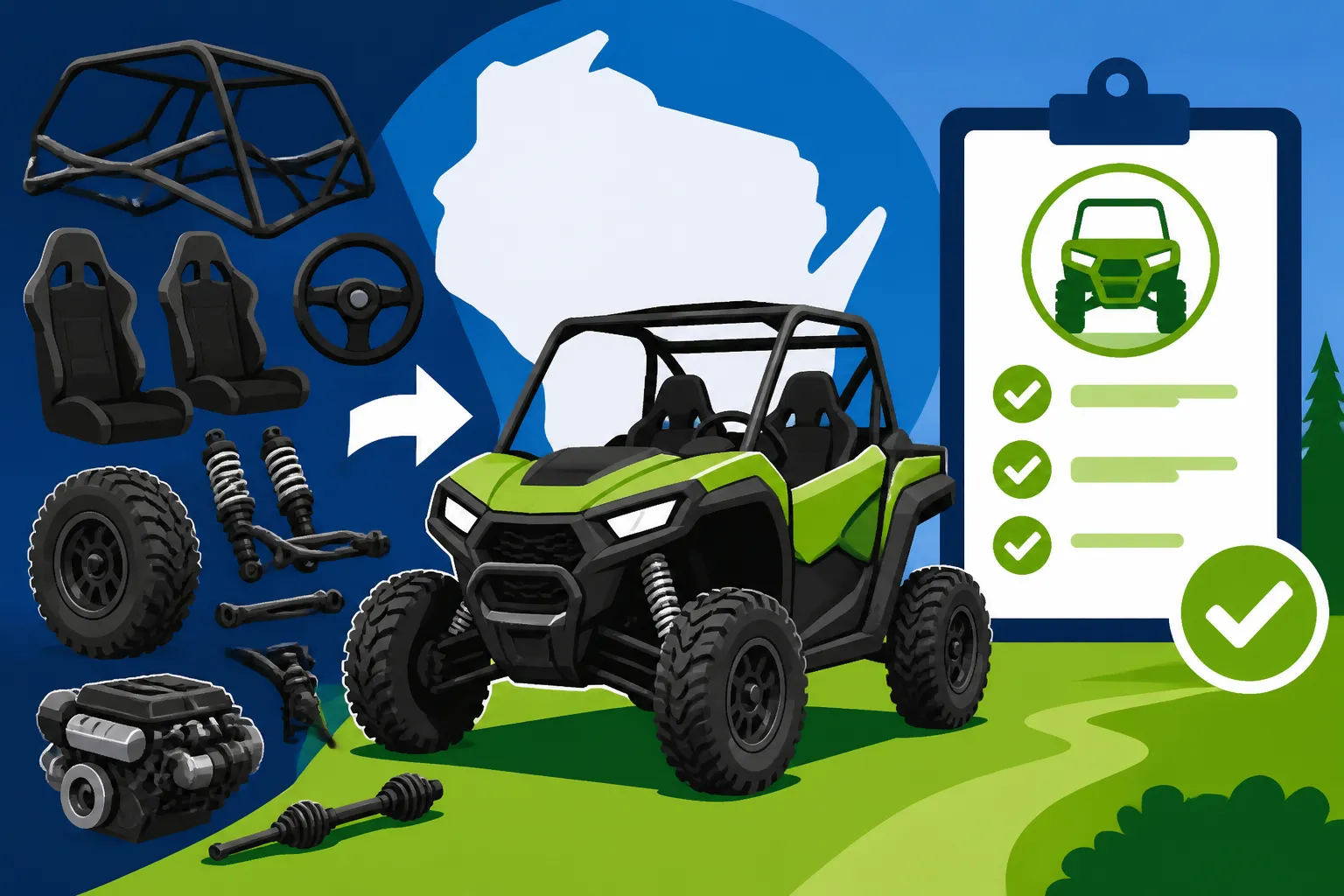
So, you've pieced together your dream off-road machine, a true testament to your mechanical skill and vision. Maybe you started with a bare frame, added an engine from one donor, a suspension from another, and fabricated the rest. It's a fantastic feeling to create something unique, but that excitement can quickly turn to frustration when you realize registering this custom-built beast in Wisconsin isn't as straightforward as buying a new one off the showroom floor. This guide is here to walk you through the unique challenges and steps involved in getting your meticulously crafted ATV or UTV legally registered for those fantastic Wisconsin trails and routes.
The Unique Challenges of a "Frankenstein" Machine
When you build an ATV or UTV from scratch, or by combining significant components from several different machines, you're not dealing with a factory-issued Vehicle Identification Number (VIN) and a clean manufacturer's certificate of origin. This creates a few specific hurdles that traditional registration processes don't account for. It's not impossible, but it definitely requires more diligence on your part to establish its legitimacy and origin.
Why Standard Registration Forms Don't Fit
Think about the typical forms for [Registering an ATV in Wisconsin]. They usually ask for a VIN, make, model, and year, all information readily available on a new machine or a used one with a clear history. Your custom build might have a frame from one manufacturer, an engine from another, and a custom-fabricated body. Which VIN do you use? What's the "make" or "model" when it's entirely your creation? These are the questions that can make filling out the standard Wisconsin DNR ATV registration application feel like trying to fit a square peg in a round hole. The DNR needs to know what they're registering, and a "built from parts" machine doesn't have that neat, singular identity.
Establishing a "Primary Component"
Wisconsin, like many states, needs a clear anchor for your machine's identity. For a custom build, this often comes down to identifying a "primary component" – usually the frame. This component ideally has a manufacturer's VIN stamped on it. If you've started with a frame that has a legitimate VIN, that's your starting point. However, if your frame is homemade, or if you've used a frame that has no identifiable VIN, things get more complex. In such cases, you might need to apply for a state-issued VIN. This usually involves an inspection by law enforcement to ensure the machine isn't stolen and meets certain safety criteria, and it adds an extra layer of bureaucracy to the process. It's a crucial step because without a valid VIN, your machine is essentially invisible to the registration system, and you won't be able to get it registered.
The Paperwork Maze for Every Part
You might think you just need a bill of sale for the complete machine once it's done, but that's not quite right for a custom build. Imagine you're making a delicious stew; you need to know where each ingredient came from. The same goes for your ATV. Every major component – the engine, the frame, the transmission, axles, even major suspension components – ideally needs some form of documentation showing its origin. This could be a purchase receipt, a bill of sale from a private party, or even a statement if you salvaged it from a previously registered machine you owned. This is where meticulous record-keeping during the build process becomes absolutely essential. The more documentation you have for individual components, the smoother your registration process will likely be, as it helps establish that no part of your "new" machine is stolen or illegally acquired.
Gathering Your Proof of Ownership and Origin
This is arguably the most critical step for registering a machine built from parts. The Wisconsin DNR needs to be sure that you legally own every significant piece of your ATV or UTV. Without clear proof of ownership, they cannot register it, plain and simple.
Itemized Bills of Sale for Major Components
Let's talk paperwork. You've been buying parts, scrounging for components, and maybe even trading for pieces. For every major part that makes up your final machine – especially the frame and engine – you need documentation. If you bought an engine from a guy down the road, make sure you got a bill of sale, even if it was handwritten. This bill of sale should include the seller's name and contact information, the date of sale, a description of the part (including any serial numbers), and the price. For a custom-built machine, you might find yourself needing several of these. If you bought a frame from a scrapyard or a private party, get that bill of sale too.
Consider using a service like LawDepot to generate professional-looking bills of sale for your component purchases. Even for private sales, having a standardized, clear document can make all the difference when presenting your case to the DNR. A detailed bill of sale for each major component helps trace the legal lineage of your machine, proving that you didn't just find these parts in a ditch. Remember, even if an individual part wasn't super expensive, documenting its acquisition is important.
Here’s a table outlining the difference in documentation for factory-built versus custom-built machines:
| Feature/Component | Factory-Built Machine Documentation | Custom-Built Machine Documentation |
|---|---|---|
| Primary Identity | Manufacturer's Certificate of Origin (MCO) with VIN | Bills of sale for frame/engine, or state-issued VIN application |
| VIN | Pre-stamped by manufacturer | Existing frame VIN, or state-assigned VIN after inspection |
| Engine | Listed on MCO | Bill of sale for engine, including serial number |
| Frame | Listed on MCO | Bill of sale for frame, including VIN (if applicable) |
| Other Major Parts | Implied with MCO | Receipts or bills of sale for axles, transmission, etc. |
| Sales Tax | Paid on full machine purchase | May need to pay on component values, or declare total value |
Proof of Sales Tax Paid on Components
Wisconsin requires sales tax on most purchases. When you buy a complete ATV or UTV, you typically pay the [Wisconsin Sales Tax on an ATV Purchase] at the dealer, or if it's a private sale, you pay it when you register it. For a built-from-parts machine, it's a bit different. You might have paid sales tax on individual components if you bought them new from a retailer. Keep those receipts! If you bought used parts from private sellers, you generally wouldn't pay sales tax at the time of purchase. However, when you go to register your finished machine, the DNR might require you to declare the total fair market value of your custom build and pay sales tax on that declared value, much like you would for [Buying a Used ATV in Wisconsin: The Paperwork] where the sales tax is collected at registration if not collected at the point of sale. Be prepared to explain how you arrived at your declared value. Showing receipts for your major components can help substantiate this value and demonstrate transparency.
The Importance of a "Builder's Statement"
Since your machine doesn't come with an MCO, you'll need to create your own "story" for it. This is often called a builder's statement or an affidavit of construction. This document, signed and ideally notarized, details the entire build process. It should include:
- Your name and contact information.
- A clear statement that you constructed the vehicle.
- The date the build was completed.
- A detailed description of the machine, including an estimated weight, dimensions, and any identifying features.
- A list of all major components used, including where they were acquired, the date of acquisition, any serial numbers, and who you purchased them from.
- If you fabricated parts, explain what you made and from what materials.
- The VIN you intend to use (either an existing frame VIN or the one you're applying for).
This builder's statement, combined with your itemized bills of sale for parts, forms the bulk of your [Proof of Ownership Without a Title]. It acts as your machine's birth certificate and medical history all rolled into one. Using a template from a legal document service like LawDepot could provide a solid framework for creating a comprehensive builder's statement, ensuring you don't miss any critical details that the Wisconsin DNR might look for.
The Wisconsin DNR Process for Custom Builds
Once you've diligently gathered all your documentation, you're ready to tackle the Wisconsin DNR. This part can feel a bit like uncharted territory since the typical registration pathways are geared towards factory-produced machines. Be patient and prepared to provide detailed explanations.
Applying for a State-Assigned VIN (If Necessary)
As mentioned, if your primary frame doesn't have a valid, traceable VIN, or if it's a completely fabricated frame, you'll likely need to apply for a state-assigned VIN. This is a critical first step. You'll need to contact the Wisconsin DNR to inquire about their specific procedures for this. They will guide you on how to apply and what documentation they require to approve your application. Typically, this involves completing a form and often requires a physical inspection of your machine by a law enforcement officer, such as a county sheriff's deputy or a DNR warden. The purpose of this inspection is to verify that the vehicle is indeed constructed as you claim, that it meets basic safety standards (though not a full roadworthiness check), and most importantly, that it is not assembled from stolen parts. They'll look for any signs of previously removed or altered VINs, which could lead to complications or even confiscation if the machine has a dubious history.
Completing the Registration Application
With a valid VIN (either existing or state-assigned) and all your ownership documents in hand, you'll proceed with completing the Wisconsin ATV/UTV registration application. This form, often referred to as a "Wisconsin Off-Highway Vehicle Application," is where you'll input all the details about your custom build.
- VIN: Provide the VIN that has been established for your machine.
- Make/Model: This can be tricky. You might list "Homemade" or "Custom Build" for the make, and a descriptive term like "ATV" or "UTV" for the model. Be consistent with what you wrote in your builder's statement.
- Year: This is typically the year you completed the build or the year you are registering it.
- Owner Information: Your personal details, just like any other registration.
- Usage: Indicate whether it's for [Wisconsin's Public Use ATV Registration] or [Wisconsin's Private Use ATV Registration]. This will determine the fee and expiration date.
- Supporting Documentation: This is where you attach your builder's statement, all your itemized bills of sale for major components, and any proof of sales tax paid. Be sure to make copies of everything for your records.
It’s often beneficial to visit a DNR Service Center or an authorized [Wisconsin Registration Agents and Where They Are] in person for this initial registration. They can review your documents and ensure everything is in order, potentially catching issues before they become major problems. Be prepared to explain your build and provide a compelling case for its legitimacy.
Potential for Additional Scrutiny or Inspection
Because your machine doesn't have a factory pedigree, it's not uncommon for the DNR to give it extra scrutiny. They might ask for additional information, or in some cases, request a physical inspection if one wasn't already done for a state-assigned VIN. Don't be alarmed; this is part of their due diligence to prevent the registration of stolen or illegally assembled vehicles. The more organized and thorough your documentation, the better equipped you'll be to answer any questions and move the process forward. If there are any discrepancies in your paperwork, or if you can't account for a major component, it will undoubtedly slow things down. Being proactive and having everything in order from the start is your best defense against delays.
Maintaining Your Custom Machine's Records and Value
Once you've successfully navigated the registration process and received your shiny new Wisconsin decals, your journey with documentation isn't over. For a custom-built machine, maintaining impeccable records is even more important than for a factory model.
Keeping Your "Binder of Truth" Updated
Consider creating a physical binder or a digital folder dedicated solely to your custom machine. This "binder of truth" should contain copies of everything you submitted to the DNR: your builder's statement, all component bills of sale, the state-assigned VIN application (if applicable), proof of sales tax payments, and of course, your current [Wisconsin DNR ATV Registration Explained].
Why is this so important?
- Renewals: While renewals are generally straightforward (e.g., [Renewing a Wisconsin Registration Online]), having your original registration paperwork handy can help if there's ever a question about the machine's identity.
- Future Sales: If you ever decide to sell your unique creation, this comprehensive documentation will be invaluable. A buyer will want assurance that the machine is legitimately built and legally registered. Without it, your custom build's resale value could plummet, or you might find it impossible to sell. A complete paper trail demonstrates responsible ownership and provides confidence to a potential buyer, just like having a clear history for a used factory machine. When the time comes to sell, consider preparing a detailed private sale agreement through a service like LawDepot to protect both you and the buyer.
- Insurance: [Insuring an ATV in Wisconsin] can be more complex for a custom build. Insurers might ask for detailed information about its components and value. Your binder provides all the facts they need.
- Theft Recovery: In the unfortunate event of theft, your detailed records, including serial numbers of major components, greatly assist law enforcement in [Recovering a Stolen Machine in Wisconsin]. Without unique identifiers or a clear paper trail, a custom build can be much harder to trace.
- Modifications: If you make significant modifications later (e.g., engine swap), you should add documentation for those new components to your binder. This way, your machine's history is always current and complete.
Transferring Ownership of a Custom Build
Selling a custom-built ATV or UTV requires the same diligence as its initial registration. When you sell, you'll need to provide the new owner with your current registration card, a bill of sale for the entire machine, and ideally, a copy of your "binder of truth." The bill of sale should clearly list the state-assigned VIN or the frame VIN that the machine is registered under. It's the new owner's responsibility to complete the [Transferring a Wisconsin Registration Within Ten Days] process, but providing them with all necessary paperwork makes it much easier for them.
If your machine has a state-assigned VIN, that VIN becomes its permanent identity. The new owner will register it under that VIN. The more detailed and complete the records you hand over, the smoother the transfer will be for the buyer, and the less likely they are to encounter issues with the DNR. It's all about proving a clear, legal chain of custody and ownership for a machine that started as a collection of parts rather than a single factory unit.
Disclaimer
This article is for general informational purposes only and does not constitute professional advice. Laws, prices and regulations vary by location and change over time. Consult a qualified professional for guidance on your specific situation.