Insuring a Machine That Plows a Wisconsin Driveway
There's nothing quite like the relief of waking up to a fresh blanket of Wisconsin snow and knowing your ATV or UTV is ready to tackle the driveway. It's a game-changer, turning a back-breaking chore into a satisfying morning routine. But while you're focused on clearing the path, have you truly considered what happens if your plowing machine runs into an unexpected snag – a fender bender with the garage, or worse, an accidental ding to a neighbor's property? This guide is all about navigating the specific insurance landscape for your hard-working plowing machine in Wisconsin, ensuring you're protected for both the practical and the playful sides of ownership.
The Unique Insurance Needs of a Plowing Machine
Many of us get into the ATV and UTV lifestyle for the thrill of the trails, the muddy adventures, or the scenic rides through the [Chequamegon-Nicolet National Forest Trails]. But for a significant number of Wisconsin owners, these machines are indispensable tools, especially when winter weather hits. When your quad or side-by-side transitions from a recreational vehicle to a utility workhorse, its insurance needs shift dramatically.
Beyond the Trail: Understanding Your ATV's Role
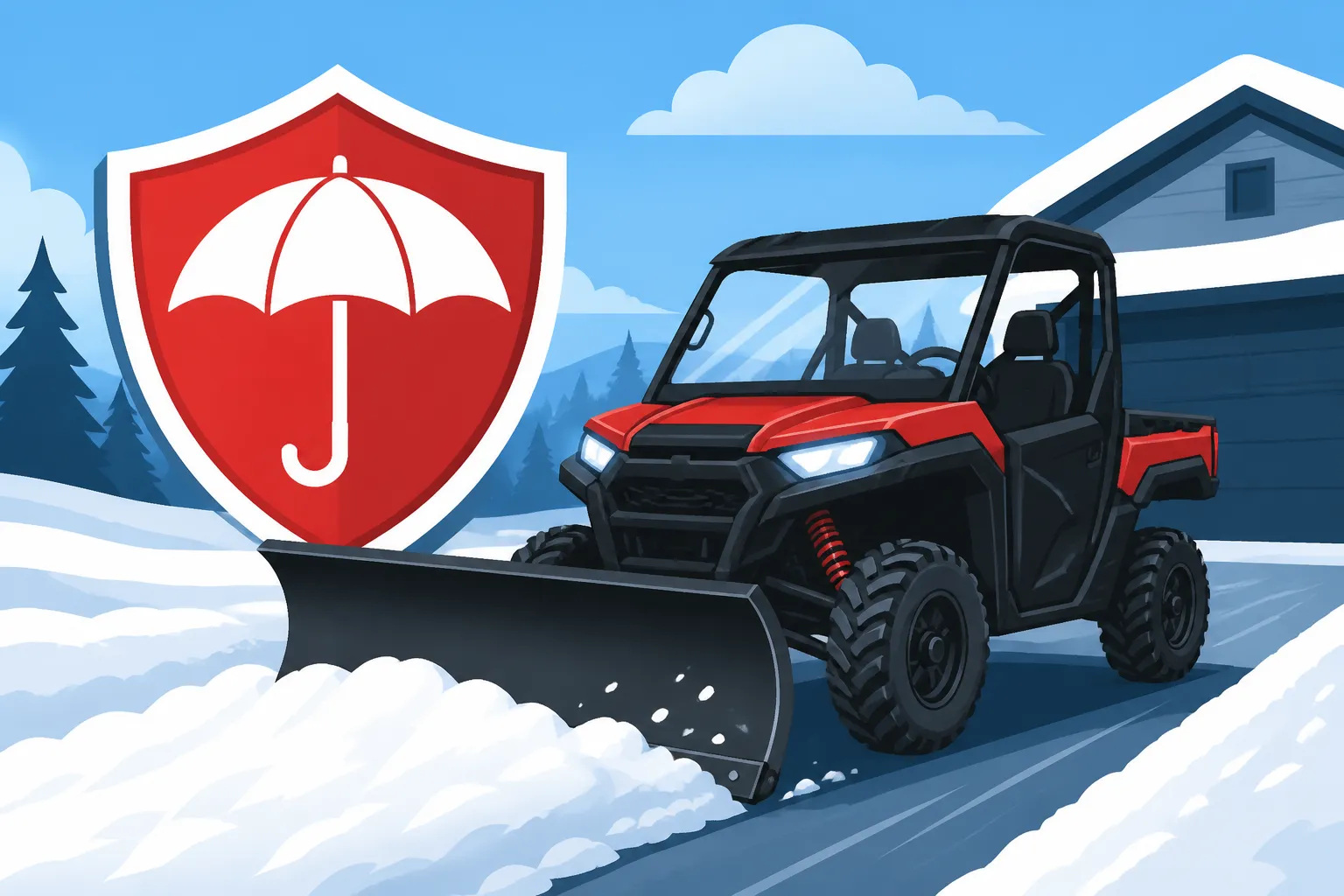
When you strap a plow to the front of your ATV or UTV, you're not just preparing for a casual ride; you're gearing up for serious work. This fundamental change in function means your machine is no longer exclusively a "toy" for weekend fun. It becomes a vital piece of equipment for property maintenance, tackling heavy snowfalls that would otherwise demand hours of strenuous shoveling. This utility role introduces a different set of risks compared to purely recreational riding. You're operating in a more confined, often high-traffic area, sometimes close to structures, vehicles, or even people.
Consider the context: a recreational ATV ride typically happens on designated trails or open fields, often far from residential buildings. When plowing, however, your machine is consistently in close proximity to your home, garage, fences, landscaping, and potentially even public sidewalks or neighboring properties. This distinction is crucial because insurance policies are often written with specific types of usage in mind. If your primary use is utility work like snow removal, your coverage needs to reflect that reality, moving beyond what a standard trail-riding policy might offer.
Why Standard ATV Policies Might Fall Short for Plowing
The typical ATV insurance policy is often tailored for recreational use. It's designed to protect you against risks associated with trail riding – like collisions with other machines, rollovers on uneven terrain, or damage incurred while exploring the [Wisconsin County Forest Trail Systems]. While these policies are essential for protecting your investment during leisure activities, they might not adequately cover the specific perils of plowing your driveway, let alone a neighbor's.
Imagine a scenario where you're plowing your driveway, and accidentally misjudge a turn, scraping the side of your garage or hitting your own car. A standard recreational policy might have limitations or even exclusions for property damage that occurs on your own premises, especially if the machine is primarily being used for a functional task rather than leisure. The same applies if, for example, a child darts out from behind a snowbank while you're plowing and sustains an injury, or you inadvertently damage a neighbor's mailbox while helping them clear their sidewalk. The liability aspect of plowing can be significantly higher, and the nuances of property damage and bodily injury coverage need careful attention.
Exploring Your Insurance Options in Wisconsin
Navigating the world of insurance for your plowing machine in Wisconsin can feel a bit like trying to find the best route on an unfamiliar trail – there are a few paths, and some are definitely more direct (and safer) than others. Understanding your choices is the first step to ensuring you're properly covered.
Homeowners Insurance: A Potential, But Limited, Solution
For many Wisconsin homeowners, the first thought might be, "Doesn't my homeowner's insurance cover this?" And it's a good question! In some cases, your existing homeowner's policy might offer some limited coverage for your ATV or UTV, particularly if it's primarily used on your own property for tasks like plowing. This can sometimes extend to liability if someone is injured on your property by the machine or if you damage an adjacent structure while working. However, this coverage is often very narrow and comes with significant caveats.
The critical detail to look for is "exclusions." Many homeowner policies specifically exclude coverage for recreational vehicles, or any vehicle that requires separate registration, especially if they are operated off your premises. Even if coverage is extended to your property, it might not cover damage to the machine itself, or liability if you're plowing for a friend or neighbor. You absolutely must read the fine print of your existing policy or, better yet, call your insurance agent directly and ask specific questions about your ATV's use for plowing. You might find that you can add an endorsement or a "scheduled personal property" rider to your policy for an additional premium, which could provide more explicit coverage for your machine and its attachments, but this is still often limited compared to a dedicated policy.
Dedicated ATV/UTV Insurance: Tailoring Coverage for Utility Use
For the most comprehensive and tailored protection, a dedicated ATV/UTV insurance policy is almost always the superior choice, especially if your machine is a regular workhorse for plowing. These policies are specifically designed for off-road vehicles and can be customized to reflect how you actually use your machine, whether it's solely for [Riding a Frozen Wisconsin Lake] or primarily for moving snow. You can generally select from a range of coverages that mimic traditional auto insurance policies, but with the unique aspects of ATVs and UTVs in mind.
Think about the various components: liability coverage protects you if you cause injury to others or damage their property while plowing. Collision coverage handles repairs to your own machine if you hit something (or something hits you). Comprehensive coverage steps in for things like theft (which can be a real concern for even a utility machine), fire, or vandalism. And importantly, you can usually include coverage for your valuable plowing attachments, like the plow blade, winch, and mounting hardware. When discussing your options, be very clear with your insurer that the machine is used for snow removal and other utility tasks. This transparency ensures they can recommend the right policy and prevent future claim denials. Understanding the full spectrum of options can also help you evaluate [Wisconsin ATV Insurance Cost] more accurately.
Commercial Policies for Business Plowing Operations
While this guide focuses primarily on machines used for personal driveway plowing, it's vital to briefly touch on commercial operations. If you're using your ATV or UTV to plow driveways, parking lots, or commercial properties for pay, your insurance needs escalate significantly. Personal ATV policies and even homeowner endorsements will almost certainly not cover commercial activity. These policies have strict "business use" exclusions.
If you are indeed running a plowing business, even a small one, you will need a dedicated commercial general liability policy. This policy would cover bodily injury and property damage claims arising from your commercial operations. It's a completely different class of insurance because the risks are far greater, involving third-party properties and clients. Never assume your personal policy will stretch to cover professional work; the financial ramifications of an uncovered commercial accident could be catastrophic.
Key Considerations for Plowing Machine Insurance in Wisconsin
Insuring a machine used for plowing isn't just about having a policy; it's about having the right policy. There are specific elements you need to consider to ensure that your valuable asset and your potential liabilities are adequately protected.
Valuing Your Machine and Attachments
When you're insuring your plowing machine, it's easy to just think about the ATV or UTV itself. However, the plow blade, the mounting system, the winch, and any other modifications specifically for plowing represent a significant investment on top of the base machine. You wouldn't want to file a claim after an accident only to find out that your $1,000 plow isn't covered! Many standard policies might only cover the base vehicle, leaving those expensive additions unprotected.
When speaking with your insurance agent, be sure to explicitly list all accessories and attachments, especially the plowing equipment. Take photos of your machine with the plow installed and keep all receipts for the purchases. This documentation is crucial. Most dedicated ATV policies allow you to add "accessories and optional equipment" coverage, which is exactly what you need for your plow. Discuss whether your policy offers "replacement cost" coverage, which pays to replace your damaged items with new ones, or "actual cash value," which factors in depreciation. Replacement cost is generally preferred for newer machines and attachments, ensuring you can quickly get back to plowing without significant out-of-pocket expenses. This is also important to consider when you look at [What a Wisconsin ATV Bill of Sale Should Carry] if you ever plan to sell your machine, as the value of these attachments can be significant.
Liability: The Biggest Risk When Plowing
For many, the most significant risk associated with plowing, whether on your own property or someone else's, is liability. Accidents can happen in a flash. Imagine you're backing up to clear a pile of snow and accidentally collide with a parked car, a fence, or even a person walking by. The costs associated with bodily injury or property damage to a third party can be astronomical, far exceeding the value of your ATV itself. This is why liability coverage is non-negotiable and often warrants higher limits than you might initially think.
Consider a hypothetical scenario: you're plowing your neighbor's driveway as a favor, and your machine slips on ice, veering into their new garden shed. Without adequate liability coverage, you would be personally responsible for the cost of repairing or replacing that shed. If someone is injured, medical bills, lost wages, and even pain and suffering claims could follow. It's not just about what you can afford, but what the worst-case scenario might demand. Many insurance professionals recommend carrying at least $250,000 to $500,000 in liability coverage for off-road vehicles, especially if they are used for practical tasks in populated areas. If you ever find yourself in a situation where you need to document an accident or formalize an agreement with a neighbor for repairs, resources like LawDepot can provide templates for incident reports or property damage agreements, which can be helpful even in casual agreements. Being prepared for [Wisconsin ATV Crash Reporting] is also a good idea, as official channels might be necessary depending on the severity.
Understanding Exclusions and Endorsements
Every insurance policy has its limits, and understanding these "exclusions" – what your policy doesn't cover – is just as important as knowing what it does. For a plowing machine, you need to be particularly vigilant. Some common exclusions on standard ATV policies might include:
- Business Use: As mentioned, if you're plowing for profit, your personal policy will likely not cover you.
- Racing or Competitive Use: This is less likely to apply to a plowing machine but is a standard exclusion to be aware of.
- Modifications: Sometimes extreme modifications beyond normal accessories might be excluded or require special review.
On the flip side, "endorsements" are additions or modifications to your policy that can expand coverage. For a plowing machine, you might look for endorsements that:
- Explicitly cover plowing equipment: Ensuring your plow blade and winch are protected.
- Extend liability to off-premises work: If you occasionally plow for friends or neighbors, confirm your liability extends beyond your own property.
- Offer "stated value" or "agreed value" for classic or highly customized machines: This is less common for a utility ATV but can be relevant if your machine is a rare find or has extensive, expensive modifications beyond just the plow.
Always ask your agent to walk you through any exclusions relevant to your specific usage for plowing. Don't assume anything. A good rule of thumb is to clarify everything upfront, especially if your machine will be used in ways beyond recreational trail riding.
Practical Steps to Secure the Right Coverage
Getting the right insurance for your Wisconsin plowing machine doesn't have to be a confusing chore. By taking a few deliberate steps, you can ensure you have robust protection that matches your machine's utility and your peace of mind.
Gathering Information and Getting Quotes
The first and most crucial step is to gather all the pertinent information about your ATV or UTV and its specific use. Insurers need the full picture to provide an accurate quote and appropriate coverage. Have the following details ready:
- Machine Information: Make, model, year, and Vehicle Identification Number (VIN). You'll usually find the VIN stamped on the frame or a sticker. Knowing [Where a Can-Am Outlander Carries Its VIN] or [Which VIN Digit Gives the Model Year] can be helpful here.
- Usage: Be crystal clear that the machine is used for plowing snow, as well as any recreational riding you do. Don't downplay the utility aspect.
- Attachments: List all plowing-related attachments (plow blade, winch, mounting hardware) and their approximate value.
- Riders: Who else will be operating the machine? If it's a family member or employee, they'll need to be listed.
- Storage: Where is the machine stored when not in use (e.g., heated garage, shed, outside)?
Once you have this information, reach out to several insurance providers. Don't just stick with your current auto or home insurer; many companies specialize in powersports insurance and might offer more competitive rates or specialized coverage. Compare quotes not just on price, but on the specific coverages, deductibles, and limitations.
Reviewing Your Policy Annually
Just like you check the oil and tire pressure on your machine, your insurance policy needs a regular tune-up. Life changes, and so do your insurance needs. What might have been adequate last year could be a significant gap this year. Set a reminder to review your policy at least once a year, or whenever a major life event or machine change occurs.
Consider these scenarios:
- New Attachments: Did you upgrade your plow, add a new winch, or install a cab enclosure? Make sure these additions are covered.
- Change in Usage: Are you now plowing for a neighbor more regularly? Did you purchase a second property where the machine will be used?
- New Riders: Did your teenager get their [Wisconsin ATV Safety Certificate Requirements] and start helping with plowing? They need to be added to the policy.
- Machine Upgrades: If you performed significant engine work or other valuable modifications, ensure the increased value is reflected.
Regular review ensures you're not paying for coverage you don't need, and more importantly, that you have the coverage you do need. This proactive approach can prevent unpleasant surprises down the road, especially if you're concerned about [Wisconsin Registration for a Machine Still Under Warranty] and how usage affects it.
Documenting Incidents and Accidents
Even with the best insurance, accidents can still happen. Knowing what to do in the immediate aftermath can significantly impact the success of your claim and mitigate potential liabilities. Plowing-related incidents often involve property damage or minor injuries, making quick and thorough documentation critical.
If you are involved in an incident while plowing, whether it's on your own property, a neighbor's, or a public area, take these steps:
- Ensure Safety: First and foremost, check for injuries. If anyone is hurt, seek medical attention immediately.
- Document the Scene: Take photos and videos from multiple angles. Capture damage to your machine, other property, and the surrounding environment (snow conditions, obstacles).
- Gather Information: If other parties are involved (e.g., a damaged fence, a bumped car), get their contact and insurance information. If there are witnesses, get their contact details too.
- Do Not Admit Fault: Stick to factual statements. Let the insurance companies determine fault.
- Notify Your Insurer: Contact your insurance company as soon as possible, ideally within 24 hours. Provide them with all the information and documentation you've gathered.
- Formalize Agreements (if needed): If it's a minor incident with a neighbor, and you wish to settle it without involving insurance, consider using a resource like LawDepot to draft a simple property damage agreement to ensure clarity and protection for both parties.
Having a clear plan for documenting incidents can save you immense stress and potential financial headaches down the line. It's about being prepared for life's unpredictable moments, even when you're just clearing snow.
| Feature | Homeowners Insurance (Potential Endorsement) | Dedicated ATV/UTV Insurance (Utility Use) |
|---|---|---|
| Primary Focus | Dwelling, personal property, general liability | Off-road vehicles, specific usage |
| Plowing Coverage | Often limited; usually on-premises only | Explicitly covers utility use, plowing |
| Machine Damage | Often excluded or limited for the ATV/UTV | Comprehensive, collision coverage available |
| Plow/Accessory | Might require specific scheduling or rider | Can easily include in policy |
| Liability | May be limited, especially off-premises | Designed for off-road liability |
| Premium Impact | Small increase for endorsement | Varies based on coverage, machine type |
| Best For | Very occasional, on-property use | Regular plowing, broader protection |
Disclaimer
This article is for general informational purposes only and does not constitute professional advice. Laws, prices and regulations vary by location and change over time. Consult a qualified professional for guidance on your specific situation.