Blaze Orange on a Wisconsin Fall Ride
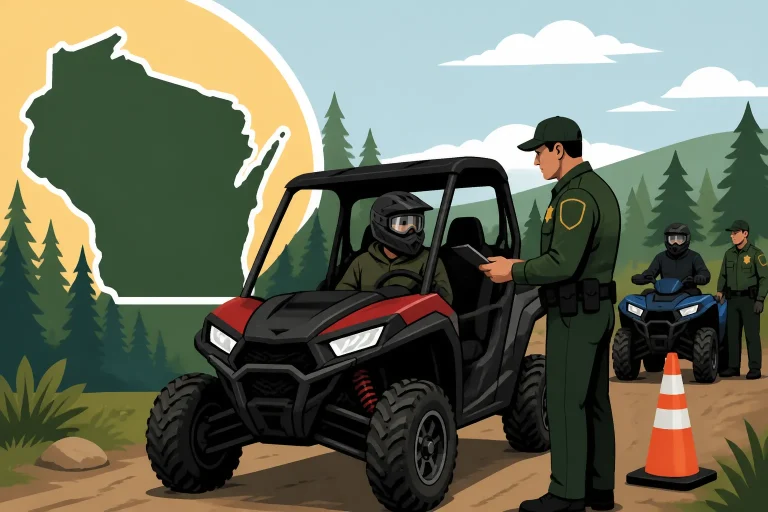
A fall ATV or UTV ride in Wisconsin can put you near hunters, changing trail conditions and short daylight hours. Blaze orange is a sensible visibility choice, but it is not automatically a legal requirement for every person riding a machine. The key is knowing when hunting rules apply, what orange can and cannot do, and how to make your whole ride easier to see.
When blaze orange is required and when it is a smart choice
Wisconsin’s blaze-orange requirements are tied to hunting, not simply to riding an ATV or UTV in autumn. A person riding a legal route or trail for recreation does not generally have to wear blaze orange just because it is fall. If you are hunting, or accompanying someone who is hunting, the rules may apply to you. The details can depend on the season and activity, so confirm the current requirements with the Wisconsin DNR before heading out.
For firearm deer hunting, Wisconsin rules generally require hunters and people accompanying them to wear a minimum portion of their outer clothing above the waist in fluorescent orange or fluorescent pink. The required amount and what counts toward it are important: a small patch or a little color on the machine is not a substitute for the required clothing. Check the current hunting regulations for the exact standard and any exceptions.
| Situation | Is blaze orange a practical or legal consideration? | What to check |
|---|---|---|
| Recreational ride on an open trail | A strong visibility choice, even when not required solely because you are riding | Trail status, local rules and hunting activity nearby |
| Ride while hunting or accompanying a hunter | Hunting clothing rules may apply | Current Wisconsin DNR rules for the specific season and activity |
| Travel on a town road or ATV route | Orange can help other road users see you, but does not replace required equipment or route rules | The local ordinance and Wisconsin Road Rules Riders Get Wrong |
| Ride on private land | Landowner permission and hunting rules still matter | Property access, hunting activity and applicable regulations |
This distinction prevents two common mistakes. One is assuming that every fall rider is legally required to wear orange. The other is assuming that ordinary riding clothes are enough when you are actually part of a hunting party. If your day includes both trail riding and hunting, plan for the stricter clothing requirement that applies to your hunting activity.
Blaze orange also does not make an otherwise unlawful ride legal. It cannot replace an ATV registration, a required trail pass, permission to cross private land, or compliance with a closure. If you are visiting from out of state, check the separate permit rules in Wisconsin’s Non-Resident Trail Pass. A bright vest is about being seen, not permission to ride.
The rule follows the activity, not the machine
The same ATV can be used for different purposes on the same day. Someone riding to a trailhead for recreation is not automatically in the same position as a person using a machine as part of a hunt. If you plan to hunt from a machine, travel to a hunting location, or accompany a hunter, check the rules that apply to that activity rather than relying on the general rules for recreational riding.
For context on the overlap between riding and hunting, see Wisconsin ATV Rules During Gun Deer Season and Riding to a Wisconsin Deer Stand. These topics involve more than clothing: access, where a machine may be operated and the rules for the land can all matter.
How to be easier to see on a fall ride
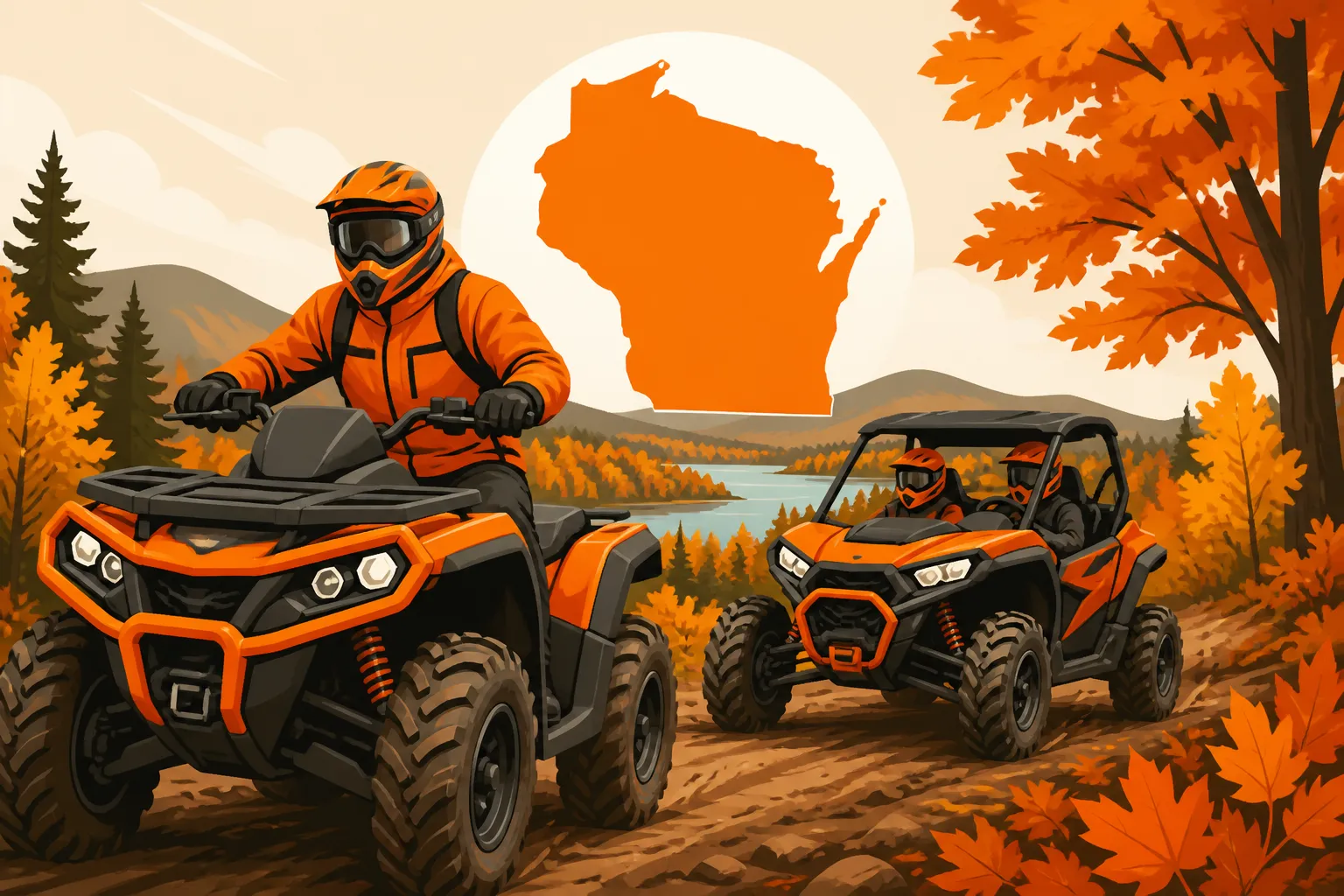
Even when it is not legally required, orange is useful because autumn scenery can make riders difficult to pick out. A dark jacket can blend into tree trunks and shadows. A camouflage pattern may disappear against brush. Bright clothing gives other riders, hunters and drivers a clearer view of a person, especially when the light is flat or the background is busy.
Think about visibility from more than one direction. A small orange panel on the front of a jacket may be hidden when you are seated, leaning forward or facing away from approaching traffic. A vest or outer layer with substantial fluorescent color is easier to notice from the side and rear. A bright hat can help, but it should not be your only visible clothing if you need to meet a hunting clothing rule.
| Gear or choice | What it helps with | What it does not do |
|---|---|---|
| Solid fluorescent-orange or fluorescent-pink outer layer | Makes your upper body easier to distinguish from trees and brush | Replace hunting clothing requirements unless it meets the current standard |
| Bright helmet or helmet cover | Adds visibility above the shoulders | Make a dark jacket or machine visible from every angle |
| Clean lights and reflectors | Help other road users notice the machine, particularly in dim conditions | Make riding on a closed or unauthorized route legal |
| High-visibility vest for each rider | Makes passengers and operators easier to see | Count as a substitute for required protective equipment |
| Orange flag or other machine-mounted marker | Can add a visible point above the machine where appropriate | Guarantee that others will see you or replace clothing rules |
A practical setup starts with clothing worn on the body, not just accessories attached to the ATV. If you are riding with passengers, give each person a visible outer layer. A passenger may sit behind the operator and be partly hidden from the front, so a bright jacket or vest is useful even when the machine itself has visible bodywork.
If you need a basic vest and cannot find one nearby, a sporting-goods retailer or Amazon may offer options. Choose something fluorescent and easy to wear over your normal layers. Check that it fits securely, does not snag on controls or equipment, and does not restrict movement. If you are relying on it for hunting compliance, compare the garment with the current Wisconsin requirements rather than assuming any orange item qualifies.
Clothing is only one part of being seen
A bright rider can still be hard to notice if the machine is dusty, the headlight is dirty or the ride takes place in deep shade. Before leaving, check that your lights work and that the lenses are clean. Wear eye protection that lets you see clearly, and keep clothing from blocking your view or interfering with safe control of the machine.
Do not count on color to prevent a collision. Ride at a speed that gives you time to respond to a person, vehicle or animal appearing around a bend. Keep a safe following distance, especially where dust, leaves or low sun reduce visibility. At trail and road crossings, slow down and look carefully even when you believe you have the right of way.
Plan for hunters, routes and changing fall conditions
Fall riding often means sharing an area with people who are not using the trail. A route may pass close to hunting land, a field edge or a parking area where hunters are preparing for the day. A little courtesy helps: keep to the marked route, avoid stopping where you block access, and do not assume that a quiet stretch of trail is unused simply because you have not seen another vehicle.
If you encounter hunters, give them room and avoid driving off the route to get around parked vehicles or equipment. Do not approach a person or hunting setup just to ask a question from close range. Stop at a safe distance, make your presence known, and follow any posted access restrictions. For more on land access, see Wisconsin Rules on Wildlife Areas and Wisconsin Trespass Law for Riders.
Check the route before you unload
Fall conditions can change quickly. A trail that was open on your last visit may have a seasonal closure, a temporary restriction or damage from wet weather. Check the local trail status before driving to the staging area, and pay attention to signs once you arrive. An orange vest does not authorize travel on a closed trail or a private road.
Route riding also involves different rules from riding on a trail. A town may open certain roads to ATVs and UTVs under its own ordinance, while nearby roads remain off limits. Confirm the route and its operating rules with the local authority. Finding a Wisconsin Town’s ATV Ordinance can help explain why checking local rules matters.
Before leaving, make sure your registration or trail-pass needs are covered for the machine and the places you plan to ride. A visitor from another state should not assume that a home-state registration automatically covers every Wisconsin trail. Review Passes for a Machine Registered Out of State if that applies to your trip.
Build visibility into the ride plan
The best time to think about visibility is before everyone is dressed and the trailer is loaded. Put bright outer layers where the group can reach them. Check lights, mirrors and reflectors. Make sure each passenger has suitable gear and knows to stay with the group if you stop. If the ride continues near dusk, allow extra time to return while visibility is still good.
Keep the group together without crowding. On a narrow trail, ride in single file and leave enough room to stop safely. At road crossings, make sure every rider has cleared the crossing before the lead machine moves on. If someone in the group is hunting, agree in advance where the riding portion ends and how the group will handle the hunting portion. Mixing the two without a plan can lead to confusion about access, clothing and where machines may be used.
Weather can also change what makes a good visibility choice. A rain layer, insulated jacket or helmet cover may hide the orange clothing underneath. Put the bright layer over outerwear when practical, and check that it remains visible from the sides and back. In cold weather, warmth and safe movement still come first: do not wear loose fabric that could catch on a control or equipment.
A simple pre-ride checklist
Before a Wisconsin fall ride, take a few minutes to separate legal requirements from sensible precautions. That keeps the group from treating orange as a cure-all or overlooking the rules that actually govern the ride.
- Decide whether the outing includes hunting. If you will hunt or accompany a hunter, check the current Wisconsin DNR clothing rules for the activity and season.
- Choose visible outerwear for every rider. Prefer substantial fluorescent orange or pink over a small patch, and make sure clothing is not hidden by other layers.
- Check the machine. Clean the lights and reflectors, and confirm that they work.
- Confirm where you can ride. Check trail status, route access, local ordinances and landowner permission where relevant.
- Confirm registration and pass requirements. This is especially important for out-of-state visitors and machines used on different types of land.
- Adjust for light and conditions. Slow down in shade, dust, fog, rain or low sun, and avoid stretching the ride past safe daylight.
- Agree on group behavior. Keep riders together, stop in safe places and make sure passengers know what to do at crossings or if the group becomes separated.
The practical takeaway is straightforward: recreational riders are not automatically required to wear blaze orange just because the ride happens in fall, but orange is a useful safety choice. If hunting is part of the outing, treat hunting clothing rules as a separate requirement and verify the current standard. In either case, visibility works best alongside legal access, functioning lights, sensible speed and attention to other people using the area.
Disclaimer
This article is for general informational purposes only and does not constitute professional advice. Laws, prices and regulations vary by location and change over time. Consult a qualified professional for guidance on your specific situation.