The March 31 Expiration on a Wisconsin Pass
A Wisconsin pass can look current in the fall and still be out of date when spring riding begins. The March 31 cutoff is easy to confuse with registration renewal, especially if your machine is registered in another state. Here’s what the date means, how to avoid a gap in trail access, and what to check before you load up.
What the March 31 expiration applies to
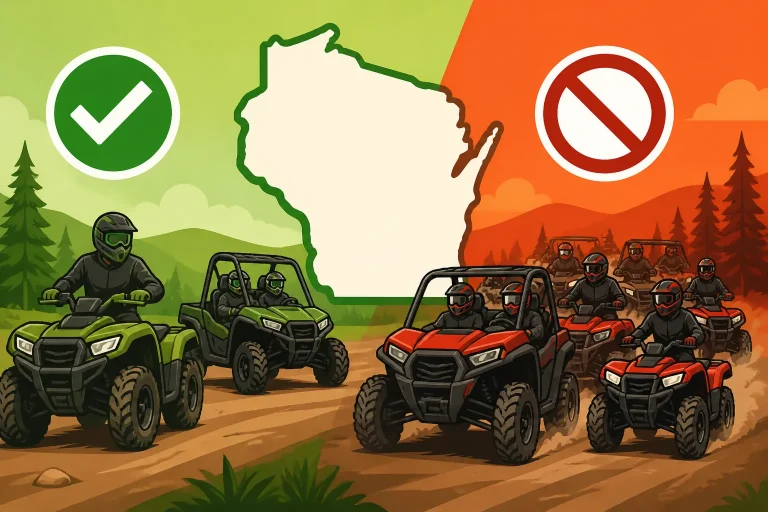
The March 31 date is associated with Wisconsin’s annual ATV and UTV trail pass for machines that are not registered in Wisconsin. The pass is tied to a season that ends on March 31, so a pass from the ending season does not carry forward into the next one. If you plan to ride on eligible Wisconsin trails after that date, you’ll generally need the new season’s pass.
That cutoff is not the same thing as the registration expiration for a Wisconsin-registered machine. Registration and a nonresident trail pass are different credentials, and the right one depends on how the machine is registered and where you intend to ride.
| Your machine and riding situation | What to check |
|---|---|
| Registered in another state, riding Wisconsin public trails | Whether you need a current Wisconsin nonresident trail pass, and whether the registration from your home state is current |
| Registered in Wisconsin for public use | Whether the Wisconsin registration is current; a separate nonresident trail pass generally is not the credential for this machine |
| Used only on private property | Whether the activity stays entirely within the property and whether any local or landowner rules apply |
| Used on a Wisconsin road route | Whether the route is legally open, and whether its requirements differ from trail access |
| Rented or borrowed for a Wisconsin trip | Which registration the machine carries and who is responsible for the required pass |
The pass is not a substitute for registration. It does not make an unregistered machine legal, and it does not automatically authorize riding anywhere you can find a trail on a map. Access depends on the trail or route being open to your machine and on following applicable local rules. For a broader explanation of who needs a pass, see Wisconsin’s Non-Resident Trail Pass and Which Wisconsin Trails Require a Pass.
The first useful question is therefore not simply, “Is my sticker still attached?” It is: “What kind of credential does this machine need for this ride, and is that credential valid for the date I’ll be riding?”
How to plan around the cutoff
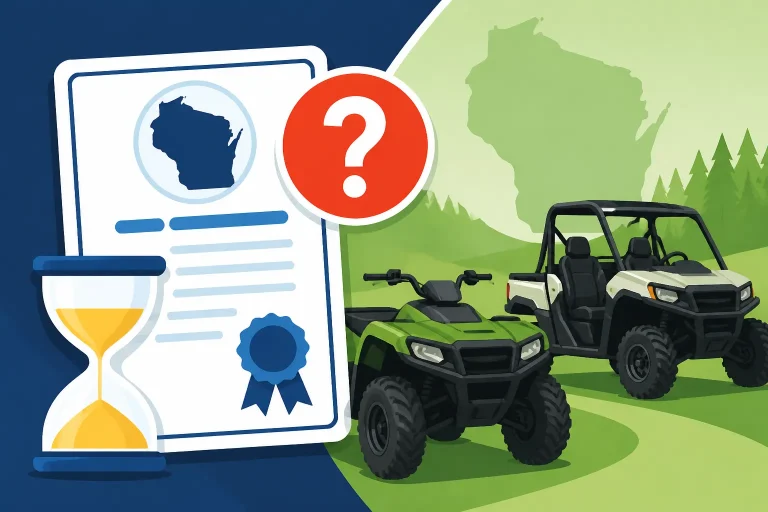
Treat March 31 as a season boundary, not as a reminder to renew on the day you leave. If you expect to ride in early April, check the pass requirement before you make travel plans. You’ll need to know whether the current pass has ended, whether the new-season pass is available, and how the official sales system handles the transition.
A pass purchased late in its season may provide only a short period of use before the cutoff. Don’t assume its validity runs for a full twelve months from the day you buy it. The expiration is seasonal, not simply tied to your purchase date. Before paying, read the validity dates shown by the official Wisconsin Department of Natural Resources purchasing or registration system. For the general timing rules, [When a Wisconsin Trail Pass Expires] is a useful companion.
A practical planning routine looks like this:
- Identify the machine’s registration. Check the registration document and the state or jurisdiction that issued it. Do not rely on the decal alone if the paperwork is unclear.
- Confirm the access type. Decide whether you are riding a public trail, an open road route, private land, or a mix. A trail pass and route permission are not interchangeable.
- Check the date you’ll ride. A pass that worked during one season may not be valid for the next.
- Use the official sales channel. Confirm the pass season and expiration displayed before completing the purchase. Buying a Wisconsin Trail Pass Online explains the online option.
- Check display requirements. Follow the current instructions for attaching or displaying the pass. A purchase confirmation may help you keep records, but it may not replace the required physical credential.
- Recheck trail status before departure. A valid pass does not override a seasonal closure, local restriction, or trail condition notice. See Checking Wisconsin Trail Status Before You Drive.
This routine matters most for riders traveling from another state. A visitor may have a current home-state registration and still need the Wisconsin pass for access to public trails. Conversely, a pass does not replace the home-state registration the machine is supposed to carry. For the distinction, see Passes for a Machine Registered Out of State.
It also helps to keep your purchase and registration details together. Save the confirmation, note the season it applies to, and make sure the machine’s registration information matches what you entered. If several family members are organizing a trip, share the details with the person towing or operating the machine. A screenshot sent to the group is useful for coordination, but it is not a reason to ignore the official display rules.
Pass expiration is not the same as registration expiration
The dates are easy to mix up because both credentials may involve stickers, renewals, and Wisconsin’s spring riding season. But they serve different purposes.
A Wisconsin public-use registration is issued for a Wisconsin machine under the state registration system. Wisconsin public-use registrations have their own renewal schedule, including a March 31 expiration cycle. A nonresident trail pass, by contrast, is an annual trail-access credential for qualifying machines registered outside Wisconsin. The shared calendar date does not make the two credentials equivalent.
That difference can be summarized this way:
| Credential | What it relates to | What the March 31 date means |
|---|---|---|
| Wisconsin public-use registration | Registration of a machine in Wisconsin | The registration has its own expiration and renewal requirements |
| Wisconsin nonresident trail pass | Trail access for an eligible out-of-state machine | The pass is seasonal and does not continue past its stated expiration |
| Home-state registration | Registration issued by another jurisdiction | Must be handled under the issuing jurisdiction’s rules; it does not automatically renew or replace a Wisconsin pass |
| Local route authorization or ordinance requirement | Use of particular roads or routes | Requirements depend on the local rules and the route |
If your machine is registered in Wisconsin, start with the registration record rather than buying a nonresident pass by habit. Machines Registered in Wisconsin and the Pass describes how Wisconsin registration affects the pass question. If your Wisconsin registration is nearing its own renewal date, use Wisconsin Public Use Registrations Expire March 31 for that separate issue.
For out-of-state owners, don’t treat the pass as proof that every other paperwork obligation is settled. Carry or retain the registration documents required for your machine, and check that identifying details such as the registration number and VIN are correct. The pass is not an ownership document, and it does not fix a lapsed or mismatched registration.
There can also be different rules for trails, routes, private land, and special-use situations. A machine may be allowed on one type of property but not another, even when the pass is current. If you expect to ride on town roads, for example, check the local route requirements and signage instead of assuming that a trail credential grants road access. The article What a Wisconsin ATV Route Actually Is explains why a route and a trail should not be treated as the same thing.
Replacing an expired pass and avoiding a bad surprise
If the date has passed, don’t assume that an old pass becomes valid again when the weather improves or trails reopen. Check the official system for the current season and purchase the correct credential before riding where it is required. If the new pass is not yet available when you check, wait for the official instructions rather than relying on a previous season’s decal or an unofficial listing.
A seller, social-media post, or old confirmation may describe a pass that was valid for a past season. Verify the expiration shown in the official channel. If you are buying online, pay attention to the machine details, the pass type, and the validity dates before submitting the order. Keep the confirmation in case you need to review the purchase, but follow the current display instructions for the pass itself. See Displaying a Wisconsin Trail Pass for the practical side of attaching it.
Avoid these common mistakes:
- Riding on last season’s pass because it still looks intact. A sticker can remain physically attached after its validity has ended.
- Assuming the purchase date sets the expiration. Seasonal credentials can end on a fixed date, even if purchased shortly before that date.
- Confusing a trail pass with registration. Both may be relevant, but one does not automatically replace the other.
- Assuming a pass covers every location. Trail status, route rules, land access, and machine eligibility still matter.
- Waiting until the trailhead to sort it out. You may have limited service, no convenient sales option, or difficulty confirming the right credential.
- Relying only on a digital receipt. Keep it as a record, but check whether a physical pass or decal must be displayed.
If the pass is damaged, missing, or attached incorrectly, use the official replacement or correction process rather than trying to alter the decal yourself. For display and replacement questions, the relevant official instructions matter more than advice from another rider who may have a different pass type or machine.
For trip preparation, a small folder or document sleeve can help keep the registration details, purchase confirmation, and emergency information organized. Amazon may have inexpensive waterproof sleeves, but use one for paperwork rather than covering a decal that must remain visible. Amazon is not an official source for Wisconsin pass validity, so confirm the season through the state’s purchasing system. If you use Amazon to buy a storage pouch or label holder, check the dimensions and make sure it does not interfere with any required display.
A simple checklist before you ride after March 31
The safest approach is to check the pass close to the time of your trip, especially if you are riding near the seasonal change. Rules and system instructions can be updated, and trail openings may not line up neatly with the date on your pass. Confirm both the credential and the access conditions before towing.
Use this checklist:
- Registration: Is the machine registered, and does the registration apply to the machine you are bringing?
- Pass: Does this machine need a Wisconsin nonresident trail pass for the places you plan to ride?
- Season: Does the pass cover your ride date, or did it expire on March 31?
- Display: Is the current pass displayed as instructed?
- Trail status: Are the trails open to your machine on the date of your trip?
- Route rules: If you plan to use roads, have you checked the local ordinance and route signs?
- Rider requirements: Have you checked relevant age, safety-certification, helmet, and equipment rules?
- Backup records: Can you access your registration information and purchase confirmation if questions come up?
For safety and rider eligibility, review Wisconsin’s ATV Safety Certificate Requirement as well as any rules that apply to the age of the operator. Pass validity is only one part of being ready to ride.
A useful habit is to set a reminder before the end of March rather than on the expiration date. That gives you time to check which machine needs a new pass, confirm the official season dates, and buy through the proper channel. Amazon can help with practical storage items for your papers, but the official Wisconsin system is where you should verify the pass itself. Put the expiration date in your trip calendar, then check trail conditions again before you head out.
The key point is straightforward: a Wisconsin nonresident trail pass is seasonal, and the March 31 cutoff should be treated as the end of that pass period. A pass that remains stuck to the machine is not necessarily still valid. Confirm the current season, match the pass to the machine and its registration, and make sure your planned trail or route is open before you ride.
Disclaimer
This article is for general informational purposes only and does not constitute professional advice. Laws, prices and regulations vary by location and change over time. Consult a qualified professional for guidance on your specific situation.