Tracks on a Machine in Northwoods Snow
Navigating the deep, powdery snow that blankets Wisconsin's Northwoods each winter can be a real challenge for even the most capable ATV or UTV. While we love our machines for year-round adventures, tires often hit their limit, leaving you stuck, frustrated, and unable to reach those secluded ice fishing spots or hidden winter trails. This guide is all about exploring how track systems can transform your off-road machine into a true winter beast, allowing you to conquer the snow-covered landscapes that regular wheels simply can't.
Why Tracks for Northwoods Snow?
The beauty of a Wisconsin winter is undeniable, but it brings with it a specific set of challenges for ATV and UTV riders. If you've ever tried to power through a foot or more of fresh powder with your standard tires, you know the struggle is real.
The Limitations of Tires in Deep Snow
Standard ATV and UTV tires are designed for a variety of terrains—mud, dirt, rock, and light snow. They excel at providing traction and flotation in most conditions, but deep, uncompacted snow is a different beast entirely. When the snow really piles up, often seen after a big lake effect snow event up north or a clipper system sweeps through, tires tend to dig rather than float.
You'll find your machine quickly sinking down, its belly bottoming out in the snow, and the tires spinning helplessly. This isn't just an inconvenience; it can be downright dangerous if you're far from help or trying to get somewhere important. Getting unstuck often involves a lot of digging, winching, and a cold, tiring workout, which really takes the fun out of a planned outing.
How Track Systems Transform Your Machine
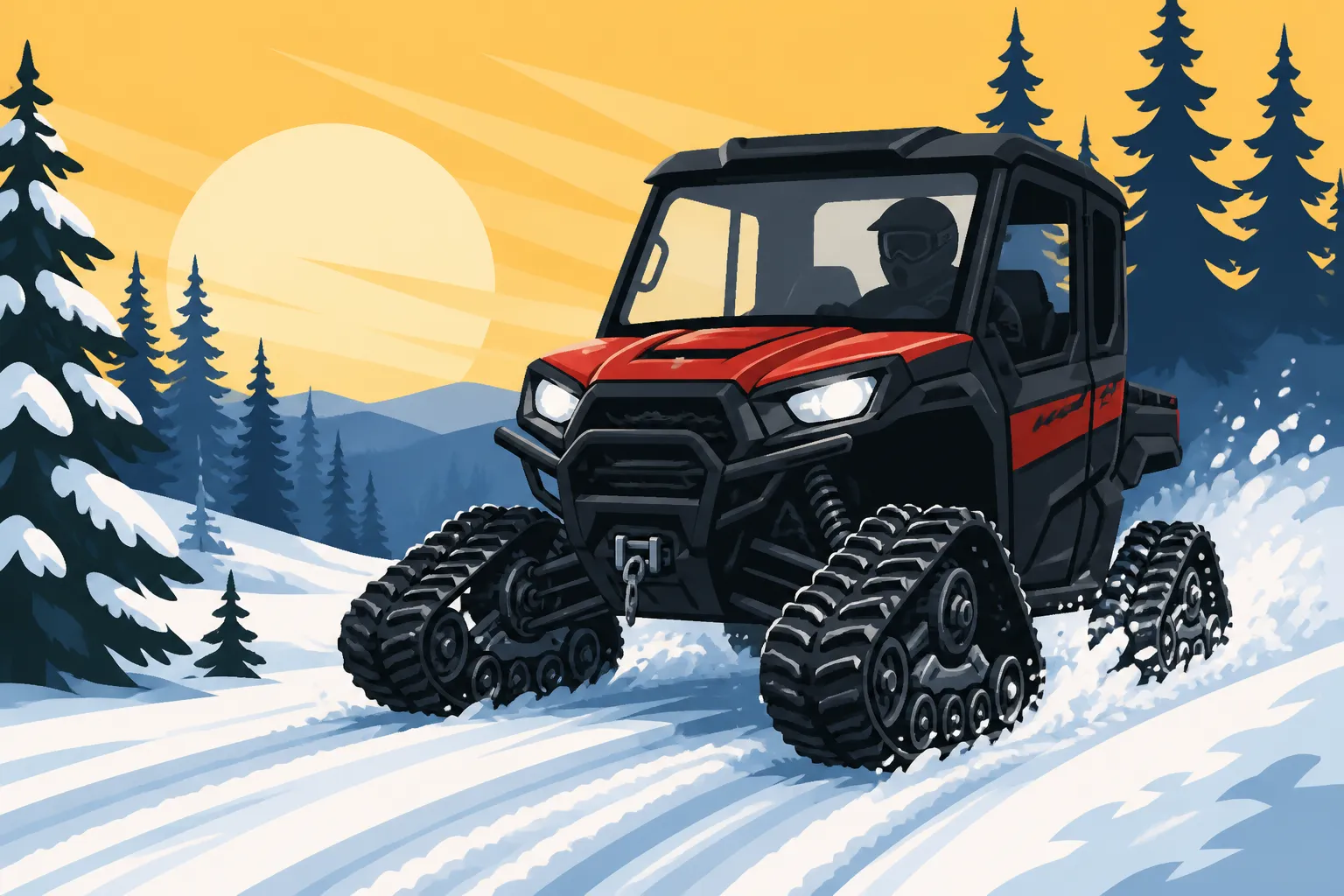
This is where track systems come into their own. Instead of four relatively small contact patches like tires, a track system replaces your wheels with four larger, continuous rubber belts, much like a miniature tank. This design dramatically increases the surface area in contact with the ground, spreading the machine's weight over a much larger footprint. The result is superior flotation, allowing your ATV or UTV to ride on top of the snow rather than sinking into it.
Beyond flotation, tracks offer unparalleled traction in snow and on ice. The aggressive treads on the tracks grip the snow and ice far more effectively than any tire, even those with chains. This means you can power through deep drifts, climb snow-covered hills, and confidently traverse frozen lakes. Suddenly, those previously inaccessible winter trails or remote ice fishing spots become a reality. Think of being able to plow a long driveway with ease, or haul firewood from the back forty, even after a heavy snowfall. It opens up a whole new world of winter utility and recreation, transforming your ATV or UTV into a year-round workhorse.
Types of Track Systems and What to Consider
Diving into the world of track systems can feel a bit overwhelming, but understanding the basics and what to look for will help you make an informed decision for your Northwoods adventures.
Overview of Common Track Systems
Several manufacturers offer high-quality track systems for ATVs and UTVs, each with their own design nuances. While the specifics vary, most systems consist of four individual track units, one for each wheel hub. These units typically include a heavy-duty rubber track, a series of bogie wheels that help distribute weight and guide the track, and a drive sprocket that engages with your machine's hub. The whole assembly mounts directly to your existing wheel studs, replacing your tires. Brands like SuperATV offer a range of track systems designed for various machine makes and models, known for their durability and performance in challenging conditions.
The key is that these systems are engineered to withstand the rigors of off-road use, especially in harsh winter environments. They are generally self-contained, requiring minimal modification to your machine beyond the initial installation. The robust construction ensures they can handle the torque and forces applied when pushing through heavy snow or pulling loads.
Key Considerations Before Buying
Choosing the right track system isn't a one-size-fits-all decision. There are several factors you'll want to carefully weigh before making this significant investment.
First, machine compatibility is paramount. Not every track system fits every ATV or UTV. Manufacturers design specific mounting kits for different brands, models, and even model years. You'll need to know your machine's exact make, model, and year to ensure you get a track system that will fit correctly and perform as intended. Check with a reputable dealer or manufacturer like SuperATV to verify compatibility for your specific machine.
Next, consider your primary purpose. Are you mostly looking for enhanced recreational riding through deep snow? Or do you need the tracks primarily for heavy-duty work like extensive plowing, hauling heavy loads, or accessing remote hunting camps? Some track systems are designed with more aggressive treads for extreme performance, while others balance performance with ride comfort and durability for utility tasks. Your intended use will influence the type and robustness of the system you need.
Installation is another major point. While many track systems are designed for relatively straightforward installation, it's not a quick tire swap. It typically requires lifting the machine, removing the wheels, and carefully mounting each track unit. Some riders are comfortable doing this themselves, especially if they have a well-equipped garage and mechanical experience. Others prefer to have a dealership or experienced mechanic handle the installation. You'll also need to consider the effort involved in switching between tracks and tires, as it’s not something you’ll want to do every weekend.
Finally, be aware of how tracks affect your machine's ground clearance and overall stress. Tracks generally increase ground clearance, which is a big plus in deep snow. However, they also add significant weight and resistance, which can put extra strain on your machine's engine, transmission, suspension, and steering components. It's an investment that comes with the potential for increased wear and tear over time, so ensure your machine is in good mechanical condition before adding tracks. And of course, the cost is substantial; track systems represent a significant investment, often comparable to a down payment on a new machine. It’s a serious upgrade, so make sure it aligns with your budget and needs.
Riding with Tracks in Wisconsin's Northwoods
Once you've got your machine fitted with tracks, the Northwoods transforms into a whole new playground. However, riding with tracks is a different experience than riding on tires, and understanding these differences will make your winter adventures safer and more enjoyable.
Performance Differences on Snow and Ice
The most immediate and striking difference you'll notice is the phenomenal improvement in flotation and traction. Your machine will glide over deep powder where tires would have bogged down instantly. This is particularly noticeable when traversing fresh snow, unplowed trails, or frozen lakes with a dusting of white. The large contact patch of the tracks distributes the weight so effectively that you'll feel like you're floating rather than pushing.
On packed snow and ice, tracks provide superior grip, which enhances stability and control. This makes navigating slippery conditions much safer. However, this increased traction comes with a trade-off: speed. Tracks generally reduce your top speed, often by 30-50%, due to the increased rolling resistance and weight. Don't expect to fly down groomed trails like you would on tires. Cornering also feels different; your turning radius will increase, and you'll need more effort to steer, especially at lower speeds, as the tracks tend to "push" rather than pivot easily. It's a learning curve, but one that quickly becomes intuitive with practice.
Maintenance and Winter Care for Track Systems
Just like any major accessory, track systems require regular maintenance to ensure longevity and optimal performance, especially in the harsh Northwoods winter. After each ride, it's crucial to thoroughly clean your tracks. Snow and ice can pack into the bogie wheels and between the track and frame, which can freeze and cause issues. A good rinse with warm water (if available) or even just knocking off the accumulated snow and ice before it freezes solid is a good practice. Inspect the tracks for any tears or damage, and check the bogie wheels for excessive wear or debris.
Lubrication of any moving parts, as recommended by the manufacturer, is also important. Always follow the specific instructions that come with your track system. Regularly checking track tension is critical; tracks that are too loose can come off, and tracks that are too tight can put undue stress on components. The manufacturer's guide will provide instructions on how to properly check and adjust tension.
When it's time for off-season storage, cleaning and inspecting the tracks thoroughly before putting them away will prevent issues next winter. Store them in a dry, protected area, away from direct sunlight, which can degrade rubber over time. Taking good care of your track system will ensure it's ready for many more Wisconsin winters to come.
Legalities and Rules on Wisconsin Trails and Roads
Navigating the legal landscape with a tracked machine in Wisconsin requires understanding the rules for ATVs and UTVs in general, and then considering any specific nuances for tracks.
First and foremost, your tracked machine still requires proper registration if you plan to ride it on public land or designated trails. This means securing either a [Wisconsin's Public Use ATV Registration] or a [Wisconsin's Private Use ATV Registration], depending on where you intend to ride. You'll also need a Wisconsin trail pass if you're riding on public trails, just like a wheeled machine. Out-of-state riders will need a [Wisconsin's Non-Resident Trail Pass]. There are no special registration categories just for tracked machines; they fall under the existing ATV/UTV regulations.
When it comes to road routes, this is where things can get a bit more complex. Many Wisconsin towns and counties have opened their roads to ATV and UTV traffic, creating [Wisconsin Road Routes]. Generally, if your wheeled machine is permitted on a road route, your tracked machine might be, but it’s essential to check local ordinances. The concern with tracks on paved or gravel roads often relates to potential surface damage. While many track systems are designed with rubber treads that minimize road damage, local municipalities might have specific restrictions due to this concern. Always look up the specific ordinance for the town or county you plan to ride in, as rules can vary widely. It’s better to be safe than sorry and avoid a citation.
Regarding noise, tracks can sometimes be louder than tires, especially on hard surfaces. Remember that Wisconsin has a [The 96-Decibel Sound Test in Wisconsin] limit for ATVs and UTVs, and wardens can enforce this. Be mindful of residential areas and other riders. On private land, the rules are typically more relaxed, but you should always have permission if riding on someone else's property, similar to [Riding a Friend's Land Up North].
Benefits and Drawbacks of Track Systems
Deciding whether a track system is right for you involves weighing its undeniable advantages against some practical downsides. It’s an investment that radically changes your machine's capabilities, but it also introduces new considerations.
The Unmatched Advantages
The most significant benefit of a track system is the unparalleled access to otherwise impassable terrain. When the snow depth makes traditional wheeled machines useless, tracks shine. This means you can reach remote hunting shacks, clear snow from expansive areas, access distant ice fishing spots, or simply explore the serene, snow-covered beauty of the Northwoods long after the trails would normally be closed to wheeled vehicles. It truly extends your riding season into the heart of winter.
For those who rely on their machine for chores, tracks offer increased utility for tasks like plowing, hauling firewood, or running supplies to a remote cabin. The superior traction means you can move heavier loads and clear deeper snow with less effort and fewer hangups. Imagine clearing a long, winding driveway without getting stuck every fifty feet—it’s a game-changer for winter property maintenance.
Furthermore, in certain deep snow conditions, tracks can even offer enhanced safety. By providing better floatation and traction, they reduce the risk of getting stuck in dangerous situations or losing control on slippery surfaces. The stability they offer on uneven, snow-covered ground can also be a comfort, especially when riding in isolated areas. SuperATV, for instance, offers systems that prioritize stability and robust performance, giving riders confidence in challenging conditions.
Realities and Downsides to Consider
While tracks are incredible for winter riding, they come with a few realities that every prospective owner should consider. The first, and often the biggest, is the significant investment. Track systems are not cheap. They represent a substantial financial outlay, sometimes costing as much as a used ATV itself. This initial cost needs to be weighed against how much you'll actually use them and the value they add to your winter activities.
Another common drawback is reduced speed and fuel economy. The added weight and increased rolling resistance of track systems mean your machine will be slower and consume more fuel. You won't be cruising at the same speeds you would on tires, and you'll be stopping for gas more frequently, which can be a factor on longer winter excursions in areas where fuel stops are sparse.
Tracks also introduce increased wear and tear on your machine's drivetrain, suspension, and steering components. The engine has to work harder, and the suspension components are under more stress from the added weight and the unique way tracks articulate over terrain. While modern ATVs and UTVs are robust, constant use with tracks can accelerate the need for maintenance on these systems.
Finally, there's the installation and removal effort. Swapping from tires to tracks (and back again) is not a trivial task. It requires time, tools, and a suitable workspace. For many, it's a seasonal commitment rather than a quick adjustment. You also need to consider trailer considerations; tracks make your machine wider, which might require a wider trailer or careful loading if you typically haul two ATVs on one trailer bed. It’s not simply a matter of [Two Quads on One Trailer Bed] with tracks; often, one machine with tracks will take up the entire width of a standard utility trailer.
| Feature | Wheels (Tires) | Tracks (Installed System) |
|---|---|---|
| Deep Snow | Prone to sinking, poor flotation, easy to get stuck | Excellent flotation, rides on top, greatly improved |
| Packed Snow/Ice | Moderate traction (can add chains), less stable | Superior traction, highly stable, confident grip |
| Cost | Standard initial purchase, occasional tire replacement | High initial investment, specific maintenance needs |
| Top Speed | Higher, varies by machine | Reduced significantly (30-50% slower) |
| Fuel Economy | Better | Worse due to increased drag and weight |
| Machine Stress | Lower stress on drivetrain/suspension | Higher stress on drivetrain/suspension |
| Turning Radius | Smaller, agile | Larger, more effort to steer, pushes in turns |
| Installation | Quick tire swap | Time-consuming seasonal installation/removal |
| Off-Road Access | Limited in deep snow | Greatly expanded winter access |
| Road Use | Generally permitted on designated routes | May be restricted due to surface damage concerns |
Disclaimer
This article is for general informational purposes only and does not constitute professional advice. Laws, prices and regulations vary by location and change over time. Consult a qualified professional for guidance on your specific situation.