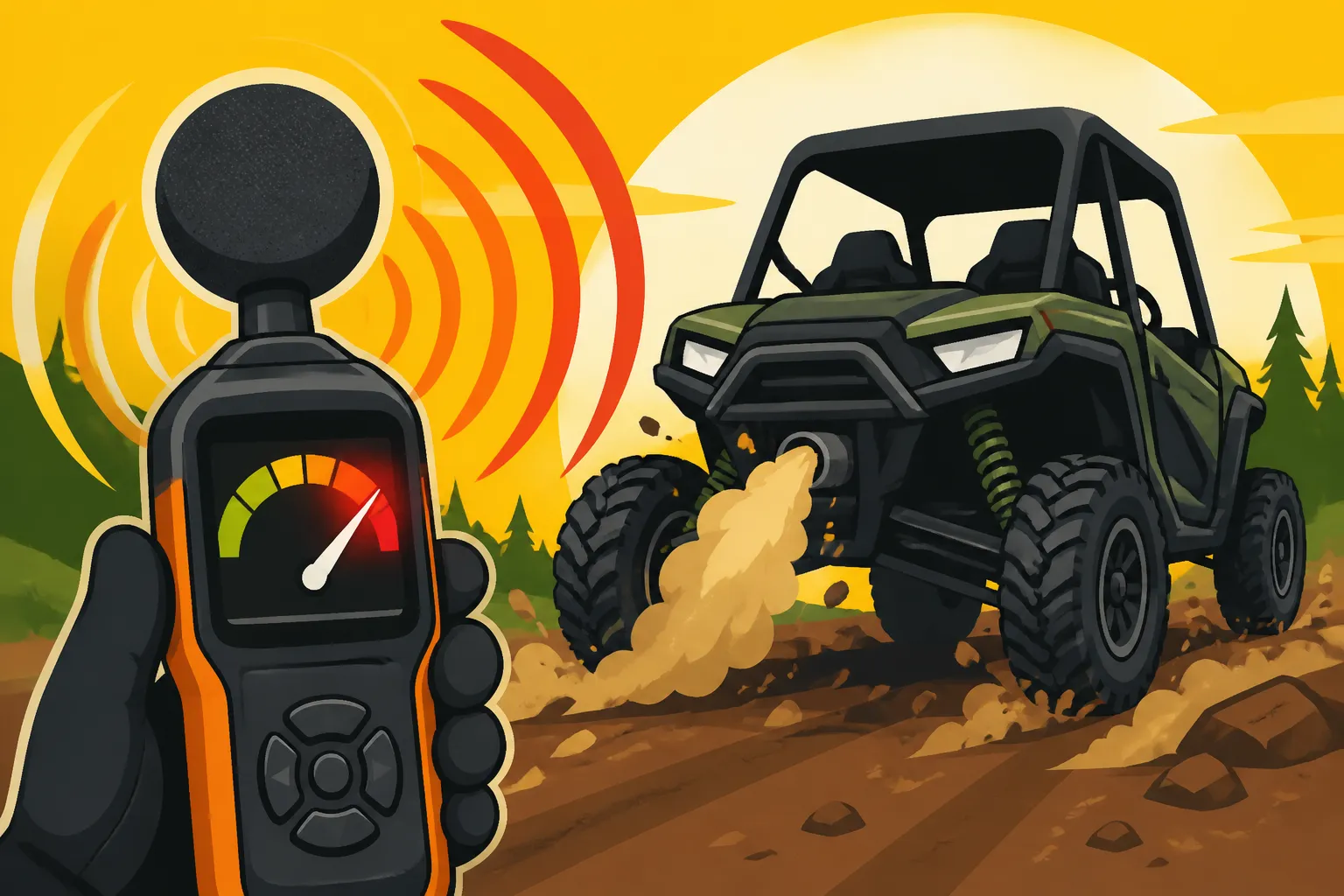
Measuring 96 Decibels on a Wisconsin Machine
Let's face it, nothing quite ruins a peaceful ride on a Wisconsin trail or a quiet evening at the cabin like a machine that sounds like it's trying to wake the dead. Many of us unwittingly roll out with ATVs and UTVs that bark a bit too loud for the law, leading to frustrated neighbors, unhappy wardens, and some pretty hefty fines. This guide is here to walk you through exactly how to check if your machine meets Wisconsin's noise regulations and what to do if it doesn't, so you can enjoy the trails without the worry.
The Rattle and Hum: Why Wisconsin Cares About Your Machine's Noise
You might think a little extra rumble adds character to your ride, and in some contexts, it definitely does. But when it comes to shared public spaces, like Wisconsin's extensive ATV and UTV trail systems and designated road routes, the sound your machine makes isn't just about personal preference anymore. It becomes a matter of community, wildlife, and the sustainability of our riding opportunities. Wisconsin has clear rules in place, and knowing them is the first step to being a responsible rider.
Unpacking Wisconsin's 96-Decibel Exhaust Limit
So, what's the magic number? In Wisconsin, the legal limit for your ATV or UTV's exhaust noise is 96 decibels (dBA). This isn't just a random number pulled out of a hat; it's based on a standardized test procedure designed to provide a consistent and fair measurement. This limit applies to all ATVs and UTVs operating on public lands, including designated trails, frozen lakes, and approved road routes across the state. It's not just about what came from the factory; it's about what your machine sounds like right now, after any modifications or years of wear and tear. You'll find this rule outlined in state statutes, and it’s something every rider needs to be aware of. Getting caught with a machine that's over this limit can put a real damper on your riding day, not to mention your wallet. [Wisconsin's 96-Decibel Exhaust Limit] is a rule that aims to strike a balance between allowing enthusiasts to enjoy their sport and protecting the peace and quiet for others who live, work, or recreate near our trail systems.
The "Why" Behind the Sound Standard
When you're out on the trails, especially in the beautiful Northwoods, you're not just riding through empty wilderness. You're often near homes, businesses, wildlife habitats, and other recreational users like hikers, campers, and silent sports enthusiasts. Excessive noise from ATVs and UTVs can be a major source of conflict and complaints. It disrupts the tranquility of rural communities, scares off wildlife, and can even damage the public perception of our sport, potentially leading to fewer open trails and routes in the future. Imagine trying to enjoy a quiet evening by a lake only to have a procession of loud machines rumble by your cabin every few minutes. It certainly wouldn't foster good neighborly relations. The 96-decibel limit is a proactive measure to minimize these negative impacts. It helps ensure that everyone can enjoy Wisconsin's natural beauty, whether they're on an ATV, a fishing boat, or just sitting on their porch. It's about preserving the experience for all, and that includes the riders themselves, who benefit from a healthy, sustainable trail system.
Rolling Up Your Sleeves: How to Measure Your ATV or UTV's Sound Output
Figuring out if your machine is compliant doesn't require a specialized mechanic or a trip to a certified testing facility, although those options are certainly available. You can perform a reasonably accurate static sound test right in your driveway, much like a warden might do on the side of a trail. This process involves a few simple tools and a clear understanding of the standardized procedure. Getting comfortable with this test can save you a lot of headache down the road and give you peace of mind that your ride is legal.
Essential Tools for Your At-Home Sound Check
Before you start, gather your gear. You don't need anything incredibly high-tech, but accuracy is key. First, you'll need a sound level meter, often called an SPL (Sound Pressure Level) meter or a decibel meter. You can find these online or at electronics stores; look for one that measures in dBA (A-weighted decibels) and has a fast response setting. While professional-grade meters can be pricey, many affordable consumer models are accurate enough for this purpose. Just make sure it's calibrated if possible, or at least from a reputable brand.
Next, you'll need a measuring tape, preferably a long one, to ensure proper distances. A tachometer is also crucial. Many modern ATVs and UTVs have a built-in digital tachometer on their dashboard display, which is perfect. If your machine doesn't, you might need to acquire an external inductive tachometer that can clip onto a spark plug wire to read engine RPMs. Finally, a pen and paper or your phone's note app will be helpful to record your readings. A stable, level, and open outdoor space away from reflective surfaces like walls or other vehicles is also an "essential tool" for accurate results. Avoid testing in a garage or near buildings, as sound can bounce and give you artificially high readings.
The Step-by-Step SAE J1287 Static Test
Wisconsin, like many other states, generally adheres to the Society of Automotive Engineers (SAE) J1287 test procedure for static sound measurement. This ensures consistency. Here’s how you do it:
- Warm Up Your Machine: Start your ATV or UTV and let it run for a few minutes until it's at normal operating temperature. This ensures the exhaust system is warmed up and operating as it would on a trail.
- Position Your Machine: Park your machine on a level, hard surface in an open area. Ensure there are no large reflective objects (like walls, other vehicles, or buildings) within 20 feet of the machine. The exhaust outlet should be clear.
- Set Up the Sound Meter: Place your sound level meter on a tripod or hold it steadily at the same height as the exhaust outlet. The microphone should be 20 inches (50 cm) from the rearmost exhaust outlet. The microphone must also be at a 45-degree angle to the exhaust flow, pointing towards the center of the outlet. If your machine has multiple exhaust outlets, test each one individually and use the highest reading.
- Determine Test RPM: This is critical. For most ATVs and UTVs, the test RPM is half of the engine's maximum rated RPM. For example, if your machine has a max RPM of 8,000, you'll test at 4,000 RPM. Consult your owner's manual or look up your machine's specifications online to find its maximum rated RPM. Some manufacturers, like Polaris, Honda, or Can-Am, will often list this in their specs.
- Take Your Reading: With the engine warmed up and the meter in position, slowly bring the engine speed up to the test RPM. Hold it steady at that RPM and take your decibel reading. Don't blip the throttle; hold it consistently. Take several readings to ensure consistency, and note the highest steady reading. Make sure your sound meter is set to "A-weighting" (dBA) and "fast response."
- Record and Compare: Jot down your highest reading. If it's 96 dBA or less, congratulations! Your machine is currently compliant with Wisconsin's noise limit. If it's above 96 dBA, you've got some work to do.
This test is designed to simulate the kind of noise output your machine makes at a consistent cruising speed, which is why the RPM target is so important. Ignoring any step in this process can lead to inaccurate readings and a false sense of security (or unnecessary panic).
What Your Decibel Reading Really Means
So, you've done the test, and you have a number. What does it all mean? If your reading is 96 dBA or below, you're golden. Your machine meets the legal requirements for noise output in Wisconsin. This means you can hit the [Wisconsin Trails Open Year-Round] and designated road routes without worrying about a noise citation. However, it's a good idea to re-test periodically, especially if you've done any modifications, noticed a change in your exhaust sound, or simply put a lot of hours on your machine. Mufflers can degrade over time, and packing can wear out, leading to increased noise levels.
If your reading is above 96 dBA, it's a clear signal that your machine is too loud for Wisconsin's public riding areas. This isn't just a suggestion; it's a legal limit, and operating an unregistered machine or one that exceeds sound limits can result in penalties. [Failing a Sound Test on a Wisconsin Trail] isn't just an inconvenience; it can lead to fines and potentially even having your riding privileges revoked for a period. This is when you need to start looking into solutions to quiet down your ride, which we'll cover next. Remember, every few decibels represents a significant increase in perceived loudness, so even being a few points over 96 dBA means your machine is notably louder than the law allows.
Quieting Down Your Ride: Solutions for a Louder-Than-Legal Machine
Finding out your machine is too loud can be a bummer, but it's not the end of the world. There are often straightforward solutions to bring your ATV or UTV back into compliance. The key is to identify the source of the excessive noise and then address it effectively. Sometimes it’s a simple fix, other times it might require a bit more investment.
Identifying Common Noise Culprits
Before you start throwing money at parts, try to pinpoint why your machine is loud. Often, the culprit is an aftermarket exhaust system that wasn't designed with noise limits in mind. Many performance exhausts prioritize horsepower and aggressive sound over quiet operation, and some are explicitly marked "for competition use only" – meaning they're not street or trail legal in many places, including Wisconsin. When considering [Aftermarket Exhaust and the Wisconsin Sound Limit], remember that "louder" doesn't always mean "better performance," and it definitely means "more legal trouble."
Another common issue is a worn-out or damaged stock muffler. Over time, internal baffles can break loose, packing material can deteriorate or blow out, and corrosion can create holes, all leading to increased noise. Sometimes, it's as simple as a loose connection or a cracked header pipe allowing exhaust gases to escape before the muffler can do its job. Even a missing spark arrester can contribute to noise, although its primary function is fire prevention. On some older machines, engine problems like misfires or worn valves can also create unusual and excessive mechanical noise that might push you over the limit. Pay attention to when your machine got louder – was it after a modification, a hard hit, or just gradual over time? This can give you clues.
Effective Strategies for Noise Reduction
Once you've identified the source, you can start looking at solutions. The most straightforward approach for an aftermarket exhaust that's too loud is often to replace it with a stock (OEM) muffler. Manufacturers design their stock systems to meet legal noise limits, so it's usually a guaranteed fix. If your stock muffler is damaged, replacing it with a new OEM unit or a high-quality aftermarket muffler specifically designed to meet SAE J1287 standards is your best bet. Many reputable brands offer "quiet" or "utility" exhaust options that prioritize sound reduction.
For mufflers with replaceable packing, repacking the exhaust can significantly reduce noise. This involves disassembling the muffler, removing the old packing, and installing new, dense fiberglass or stainless steel wool packing material. This is a common maintenance task for two-stroke machines but can also apply to some four-stroke mufflers. Always ensure your spark arrester is clean and properly installed, as a clogged or missing one can alter exhaust flow and noise. [Spark Arrester Rules on Wisconsin Public Land] are in place for safety, but a functional spark arrester also plays a role in sound damping. For minor leaks, sometimes a simple exhaust clamp or high-temperature sealant can make a difference. If you're running a stock exhaust that's just a little over the limit, some riders experiment with exhaust tips or inserts designed to redirect or baffle sound, but always re-test to ensure compliance.
Navigating Aftermarket Exhaust Systems
The aftermarket is full of options, and for some riders, modifying their exhaust is part of the fun of ownership. Companies like SuperATV offer a huge range of parts, including various exhaust components. However, when you're looking at performance-oriented aftermarket exhausts, you need to be extremely diligent about their noise output. Many of these systems are designed to be louder and flow more freely, which means they are very likely to exceed Wisconsin’s 96-decibel limit. It's crucial to read product descriptions carefully. If an exhaust doesn't explicitly state that it meets SAE J1287 or specific state noise requirements, assume it does not.
If you're dead set on an aftermarket option, look for systems that are specifically marketed as "quiet core," "trail friendly," or "forestry legal." These generally incorporate more baffling or have removable inserts designed to reduce sound levels while still offering some performance benefits. Be wary of systems that promise massive horsepower gains purely from an exhaust change, as these often come at the expense of sound compliance. Sometimes, a "slip-on" muffler can be a good compromise, as it replaces only the rear section of the exhaust, but you still need to verify its noise output. Always perform your static decibel test after installing any aftermarket exhaust component to ensure you remain compliant with [Mufflers and Spark Arresters in Wisconsin] and the state's noise limits. Don't just assume it's legal because it looks good.
Riding by the Rules: Enforcement and Consequences of Noise Violations
Ignorance of the law is never a valid excuse, especially when it comes to operating your ATV or UTV on public land in Wisconsin. The rules regarding noise limits are enforced by DNR wardens, county sheriffs, and local law enforcement officers, all of whom patrol trails and routes to ensure compliance. Understanding how enforcement works and what the potential repercussions are can help you avoid costly mistakes.
What Wardens Look For on Wisconsin Trails and Routes
DNR wardens and other law enforcement personnel are experienced in spotting machines that sound excessively loud. They often have a trained ear and can tell the difference between a stock exhaust and one that's been modified for maximum volume. When they pull you over, they may ask to perform a static sound test similar to the SAE J1287 procedure you just learned. They carry their own calibrated sound meters and are trained in the correct measurement protocols.
Beyond the sound itself, wardens might also visually inspect your exhaust system for signs of modification or damage. They'll look for non-OEM mufflers, signs of internal damage, or missing spark arresters. If you've got an obviously modified system that's roaring down the trail, you're going to attract attention. It’s also important to remember that [Warden Enforcement on Wisconsin Routes] covers a wide range of regulations, not just noise. They'll also be checking for valid registration, appropriate safety gear, and proper operation. Having a machine that's clearly modified to be loud is often a red flag that might lead to further inspection of your machine and your riding habits.
The Cost of a Loud Machine: Penalties and Fines
Operating an ATV or UTV that exceeds Wisconsin's 96-decibel limit isn't just a minor infraction; it can lead to significant penalties. While specific fines can vary by county and depend on the officer's discretion, you're generally looking at a citation that carries a monetary fine. These fines can quickly add up, especially if you're caught repeatedly. [Wisconsin ATV Ticket Amounts] can be substantial, and a noise violation falls into this category.
Beyond the initial fine, there can be other consequences. In some cases, law enforcement might order you to cease operation of the machine until it's brought into compliance. This could mean having to trailer your machine off the trail, ending your riding day prematurely. Repeated violations could potentially lead to more severe penalties, including increased fines, points on your driving record, or even the suspension of your ATV/UTV riding privileges. It's not worth risking your ability to enjoy Wisconsin's amazing trail system just for a louder exhaust note. Being a responsible rider means adhering to all regulations, including the noise limits, to ensure that these valuable resources remain open for everyone.
| Noise Reduction Method | Effectiveness | Cost | Effort | Best For |
|---|---|---|---|---|
| Replace with OEM Muffler | Very High | Medium to High | Low | Severely loud aftermarket or damaged stock |
| Repack Aftermarket Muffler | High (if applicable) | Low to Medium | Medium | Mufflers designed for repacking (worn packing) |
| Add Exhaust Baffle/Insert | Medium to High | Low | Low | Slightly over the limit aftermarket exhausts |
| Repair Exhaust Leaks | Medium | Low | Low to Medium | Cracked pipes, loose connections |
| Clean Spark Arrester | Low (but necessary) | Low (no cost) | Low | Ensuring proper exhaust flow |
| Install "Quiet" Aftermarket | High (if certified) | Medium to High | Low | Replacing loud aftermarket, wanting a different look |
Disclaimer
This article is for general informational purposes only and does not constitute professional advice. Laws, prices and regulations vary by location and change over time. Consult a qualified professional for guidance on your specific situation.