Taillight Requirements on a Wisconsin Machine
There's nothing quite like hitting the trails or cruising a new road route on your ATV or UTV in Wisconsin, but it can be incredibly frustrating to figure out all the rules and regulations. One of those sticky points that often leaves riders scratching their heads, especially when the sun starts to dip, is exactly what’s required for taillights. It's not just about avoiding a ticket; it's about making sure you and your passengers are seen and safe out there. This guide is here to untangle the Wisconsin Department of Natural Resources (DNR) rules and local ordinances regarding taillight requirements, so you can ride with confidence, day or night.
The Basics of Wisconsin Taillight Rules for ATVs and UTVs
Let's be real, when you're out having a blast, thinking about whether your little red light on the back is bright enough isn't top of mind. But it should be. The state of Wisconsin has specific requirements for taillights on ATVs and UTVs, and these aren't just suggestions. They're put in place for a really important reason: safety.
Why Taillights Matter on Wisconsin Trails and Routes
Imagine you’re out on a dusty trail in the Jackson County Forest, or maybe cruising down a town road that’s part of the extensive Vilas County trail system. Visibility can change in an instant. A sudden dip in terrain, a thick stand of pine trees, or even just the kicking up of dust from the machine in front of you can make it tough for others to see what’s ahead. This is where your taillights become absolutely critical.
On public trails and designated road routes, you're sharing space with other riders, and sometimes even cars, trucks, and farm equipment. Without a properly functioning and visible taillight, you become a hazard. Another rider might not see you stop abruptly, or a vehicle on a shared road route might not realize you're there until it's too late. It’s a terrifying thought, but collisions can and do happen, and often they're preventable with proper lighting. Even if you consider yourself primarily a private land rider, remember that many folks will cross a public road, ride to a gas station in a small town like Crivitz, or even just traverse a utility corridor, all of which fall under public land rules. Having visible taillights ensures everyone around you knows where you are and what your intentions are, greatly reducing the risk of a dangerous encounter.
Specific Requirements for Red Taillights
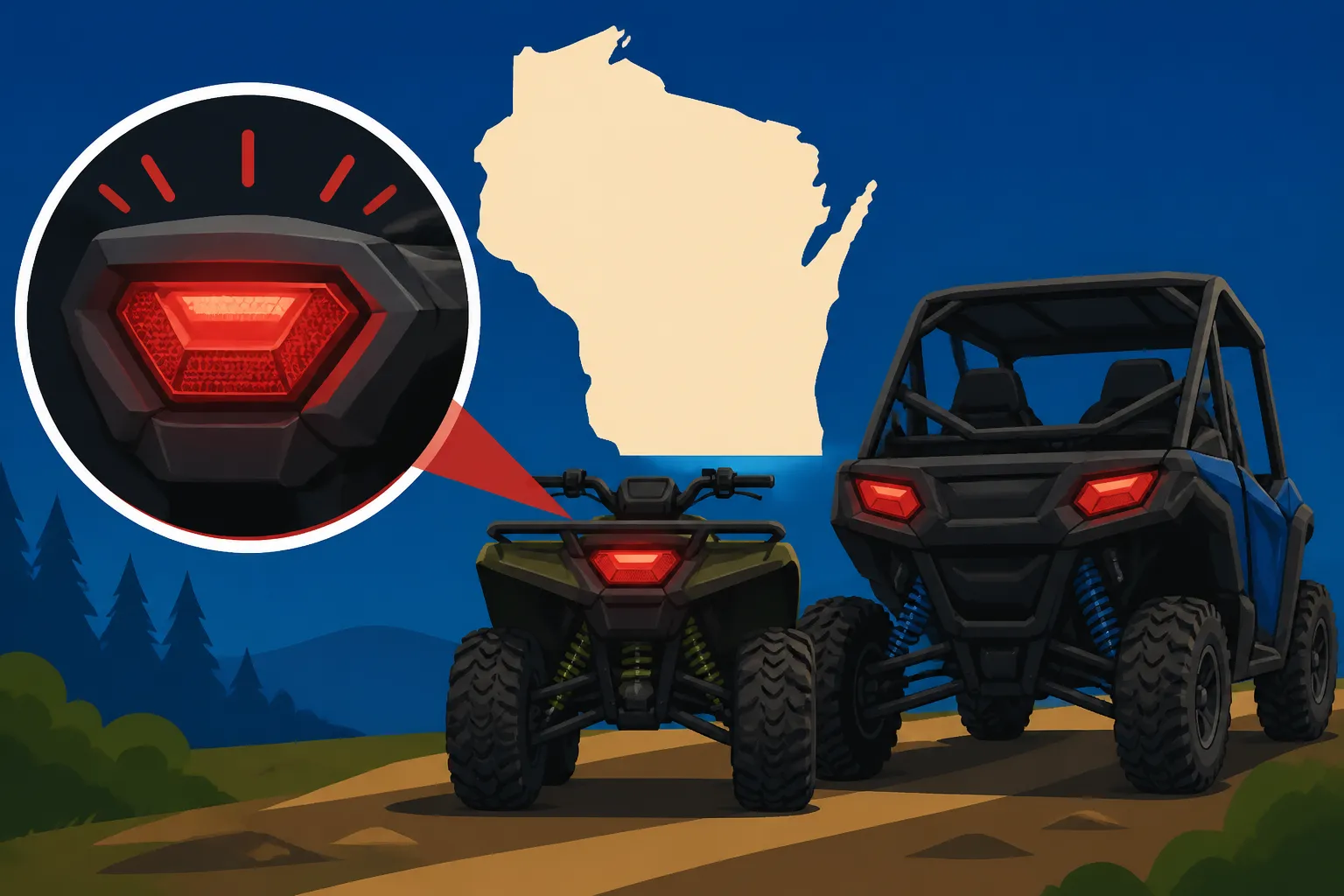
So, what exactly does Wisconsin demand from your taillights? The core rule is pretty straightforward: your machine must have at least one taillight that emits a red light visible from a distance of 500 feet to the rear. This isn't just about having a light; it's about having one that's effective and visible from a considerable distance.
Think about it this way: 500 feet gives a following rider or driver enough time to react to your presence, even at trail speeds or on a town road. This light needs to be continuously burning when you're operating the machine on any public trail, route, or frozen lake, especially after dark or in periods of reduced visibility. While the law specifies a minimum, many seasoned riders will tell you that meeting the bare minimum isn't always enough for optimal safety. Newer machines often come with brighter LED taillights as standard, but older models might have dim incandescent bulbs that barely cut it. Ensuring your taillight is clean, functional, and actually projects that vivid red light for 500 feet is your responsibility. This also ties into [Wisconsin Headlight Rules After Dark] and [Lighting Rules for Wisconsin Night Riding], as both front and rear visibility are crucial for safe operation.
Beyond the Basics: Advanced Taillight Considerations and Upgrades
While meeting the minimum requirement for a red taillight is essential for legal riding in Wisconsin, many riders choose to go above and beyond. This isn't just about being extra; it's about significantly enhancing your safety and the safety of those around you, especially as more and more road routes open up across the state.
Brake Lights: More Than Just a Taillight
Here's where things can get a little nuanced, but it's important. A running taillight simply indicates your presence. A brake light, however, communicates intent – specifically, that you are slowing down or stopping. While some older ATVs might not have come with a dedicated brake light as standard equipment, most modern UTVs and many newer ATVs do. And if you're riding a machine on a designated road route, having a functioning brake light becomes incredibly important for communicating with other traffic.
Imagine a situation on a county road route near Hayward: you're riding in a group, and the lead machine unexpectedly stops for a deer. If you only have a running taillight, the rider behind you might not register your deceleration quickly enough, leading to a close call or worse. A bright, immediate brake light is a universal signal that gives following vehicles precious seconds to react. If your machine doesn't have one, consider an aftermarket upgrade. Companies like SuperATV offer fantastic integrated taillight kits that include bright LED brake lights, making your machine much more visible and communicative. These upgrades are not just about compliance; they are about accident prevention.
Turn Signals and Hazard Lights: Enhancing Visibility
This is another area where many riders choose to upgrade for enhanced safety, particularly for UTVs that spend time on road routes. While not always universally mandated for ATVs, turn signals are quickly becoming a common and highly recommended feature, especially for UTVs on shared public roads. Being able to clearly indicate a left or right turn to other drivers, or to other riders in your group, prevents confusion and potential hazards.
Think about navigating a small town like St. Germain on a busy weekend. You need to turn onto a side street to get to a gas station or a restaurant. Hand signals might work in a tight group, but they are often difficult for other drivers to see, especially if they're not expecting them. Dedicated turn signals make your intentions clear and undeniable. Similarly, hazard lights – those flashing amber lights – are invaluable for communicating distress or a temporary obstruction. If your machine breaks down on the side of a gravel road, or you're moving slowly through a construction zone, flashing hazard lights alert others to proceed with caution. Many aftermarket kits, including those from providers like SuperATV, combine running lights, brake lights, and turn signals into a single, cohesive system, greatly improving your machine's overall visibility and compliance, especially when you encounter [Wisconsin Road Rules Riders Get Wrong].
Installation, Maintenance, and Common Pitfalls
Having the right lights means nothing if they're not working correctly. Just like any other part of your machine, your taillights need regular attention to ensure they're always ready to shine. Neglecting them can lead to dangerous situations and unwanted fines.
Checking Your Existing Setup and Simple Fixes
Before every ride, or at least every few rides, take a quick walk around your ATV or UTV and perform a visual check. Start the machine, turn on your lights, and verify that your taillights are burning brightly. If your machine has brake lights and turn signals, test those too. Have a friend stand behind your machine while you press the brake pedal and activate the turn signals.
Here are some common issues and simple fixes:
- Dirty Lenses: Often, the simplest problem is just caked-on mud or dust. A quick wipe down with a damp cloth can dramatically improve light output. After a particularly muddy ride in the Black River State Forest, this is a must-do.
- Burnt-Out Bulbs: This is the most common culprit for an unlit taillight. For incandescent bulbs, replacement is usually straightforward, but make sure you get the correct wattage and type.
- Loose Connections: Vibrations from riding can cause wires to come loose. Check the connections at the back of the taillight housing and where the wiring harness connects to the main electrical system. A little dielectric grease can also help prevent corrosion.
- Fuses: If multiple lights aren't working, or if the problem persists after checking bulbs and connections, a blown fuse might be the issue. Consult your owner's manual for the fuse box location and the correct fuse for your lighting circuit.
- Corrosion: Especially in Wisconsin's varied climate, moisture can lead to corrosion on electrical terminals. Use a wire brush or fine sandpaper to clean off any rust or green buildup on connections.
Taking a few minutes to do these checks can save you from a traffic stop by a DNR warden, who are often out checking for compliance, and it definitely improves your safety on the trail. This proactive approach will help you avoid the frustration of a warning or even a fine that ties into [Wisconsin Fines for Illegal Road Riding].
Upgrading for Better Performance and Compliance
If your machine has older, dim incandescent taillights, or if you're looking to add brake lights and turn signals, upgrading to LED technology is a smart move. LEDs are not only significantly brighter, making you much more visible, but they also draw less power from your machine's electrical system and have a much longer lifespan. This means fewer burnt-out bulbs and a more reliable lighting system.
Many aftermarket companies, like SuperATV, offer complete LED taillight assemblies that are direct replacements for factory units or comprehensive kits that add full street-legal lighting functionality. These kits often feature:
- Brighter Output: Modern LEDs are incredibly powerful, ensuring that 500-foot visibility is easily met, and often exceeded.
- Integrated Functions: Many kits combine running lights, brake lights, and turn signals into a single, sleek unit, simplifying installation and maintaining a clean look for your machine.
- Durability: Aftermarket LED units are often built with sealed housings, making them much more resistant to water, mud, and trail debris – perfect for the rugged conditions of Wisconsin trails.
When choosing an upgrade, ensure it's compatible with your machine's make and model, and that any turn signal kits come with the necessary wiring harness and flasher relay. Investing in quality lighting is investing in your safety and enjoyment of the trails. It's as important as wearing proper [Eye Protection on a Wisconsin Route Ride] or understanding [Wisconsin Helmet Requirements Under 18].
Avoiding Fines and Ensuring Safety
It might seem like a small detail, but functional and compliant taillights are not something wardens overlook. When a Wisconsin warden asks a rider for identification or performs a routine check, as covered in [What a Wisconsin Warden Asks a Rider For], one of the first things they'll likely verify is proper lighting. Riding without a functioning taillight, or with one that doesn't meet the visibility requirements, can result in a citation. These fines are not insignificant and can quickly overshadow the fun of your ride.
Beyond the legal aspect, consider the peace of mind. Knowing that you are as visible as possible, especially when riding in a busy area like the Enterprise Trail System in Oneida County or along a county road with unexpected traffic, allows you to focus more on the ride itself. It reduces stress and enhances the overall enjoyment of your outing. Always assume that conditions might warrant the use of your lights, even if it's broad daylight. Dust, shadows, and sudden weather changes can all diminish visibility rapidly, making that bright red beacon on your machine invaluable.
Navigating Specific Riding Scenarios in Wisconsin
Wisconsin offers a diverse range of riding opportunities, from dedicated off-road trails to shared road routes and even frozen lakes. Each scenario can present slightly different expectations or amplified needs when it comes to your machine's taillights.
Taillights on Designated ATV/UTV Road Routes
This is arguably where taillight compliance becomes most critical. Wisconsin has made great strides in opening up town and county roads for ATV and UTV use, creating extensive networks in areas like Marinette County and Iron County. However, with the privilege of riding on these routes comes the responsibility of adhering to traffic laws that are often much stricter than those on a dedicated off-road trail.
When you're sharing the road with passenger vehicles, trucks, and even farm equipment, your machine needs to be as visible and communicative as possible. A single, dim red taillight might pass muster on a secluded trail, but on a busy paved or gravel road route, it's a huge liability. Many municipalities that have opened [Wisconsin Towns With Miles of Open Roads] to ATVs will often have their own specific ordinances that might go beyond the state minimums, sometimes requiring brake lights and turn signals for UTVs, or even for ATVs operating on their routes. Always check the local ordinances for the specific town or county you plan to ride in, as detailed in [Municipal Ordinances Wisconsin Riders Must Read]. On these routes, your taillights aren't just a regulatory checkbox; they're your primary line of defense against being rear-ended or misunderstood by other motorists. Ensuring they are bright, functional, and that you have working brake lights and possibly turn signals (especially on UTVs) is non-negotiable for safe and legal route riding.
Night Riding and Reduced Visibility Conditions
Riding after dark in the Wisconsin Northwoods can be an incredibly unique and peaceful experience. The stars are brighter, the air is cooler, and the sounds of wildlife come alive. But it's also when visibility challenges are at their peak, making your taillights absolutely vital. The state law requiring a red taillight visible from 500 feet is specifically designed to cover these conditions.
However, even during the day, situations arise where reduced visibility makes strong taillights essential. Think about kicking up a massive dust cloud on a dry trail near Lake Arbutus, or riding through a dense fog that rolls in unexpectedly near a lake. Deep shadows in heavily wooded areas can also make it hard for following riders to spot you. In these scenarios, a standard incandescent bulb might barely cut through the gloom. This is where high-quality, bright LED taillights truly shine, providing a clear, unmistakable presence that cuts through dust, fog, or darkness. Some riders even add additional reflective tape, as discussed in [Reflective Tape for a Northwoods Dusk Ride], to further enhance their machine's rear profile for those unexpected moments after dusk or in challenging conditions. The bottom line is: if you're out anytime between sundown and sunrise, or when visibility is otherwise impaired, your taillights need to be working flawlessly. This is particularly true when you are [Riding a Wisconsin Route After Sundown].
Farm Use and Exemptions (and when they don't apply)
Wisconsin does offer some exemptions for ATVs and UTVs used exclusively for agricultural purposes, particularly when operating on private farmland. For example, a machine used solely to haul feed on a dairy farm might have different registration requirements. However, it's a huge misconception that these "farm exemptions" somehow negate lighting requirements if you're ever on a public road or trail.
The moment an agricultural machine leaves private land and enters a public road, trail, or shoulder (even just to cross it), or if it's being used for recreational purposes, it is generally subject to the same lighting and registration rules as any other ATV or UTV. The narrow scope of [Wisconsin Exemptions for Farm Machines] means that relying on them for general use on public ways is a risky gamble. For instance, if you're using your side-by-side to plow snow off your long country driveway but then decide to take it down the town road to a neighbor's house, those taillight rules suddenly apply. The safest bet is to ensure your machine always meets the basic Wisconsin taillight requirements, regardless of its primary use. This way, you're covered whether you're working the land or enjoying a weekend ride, preventing any unwanted surprises from a warden.
| Feature | Basic Taillight (Minimum Legal) | Enhanced Taillight System (Recommended) |
|---|---|---|
| Visibility | Red, visible from 500 feet | Brighter LED, wide angle, instant on/off |
| Functionality | Running light only | Running light, brake light, turn signals |
| Durability | Standard bulb, basic housing | Sealed LED, robust housing (e.g., SuperATV) |
| Power Draw | Moderate | Low (LED), less strain on electrical system |
| Road Route Use | Legal minimum, but limited safety | Highly recommended for safety & communication with traffic |
| Safety Factor | Essential minimum for presence | Significantly increased, communicates intent |
Disclaimer
This article is for general informational purposes only and does not constitute professional advice. Laws, prices and regulations vary by location and change over time. Consult a qualified professional for guidance on your specific situation.