Wisconsin Rules on State Highways
Anyone who loves hitting the trails or cruising the backroads in Wisconsin with their ATV or UTV knows that navigating the state's diverse road network can feel like deciphering a complex legal code. One of the most common points of confusion, and frankly, a source of major frustration for riders, revolves around state highways. It's not always clear where you can and can't ride, and state highways are particularly tricky. This guide will meticulously break down Wisconsin's rules regarding ATV and UTV use on state highways, helping you understand the strict limitations, the rare exceptions, and what you absolutely need to know to stay safe and legal.
Understanding Wisconsin's Road Network: A Primer for ATV/UTV Riders
Before we dive into the nitty-gritty of state highways, it's really important to understand that not all roads are created equal in Wisconsin, at least not in the eyes of an ATV or UTV rider. We've got a layered system of roads, each with its own set of rules, and mistaking one for another can lead to a quick end to your ride and a hefty fine. You might be used to cruising down a quiet town road, thinking all paved surfaces are fair game, but that's simply not the case, especially when it comes to the larger arteries of the state.
Distinguishing Road Classifications
Imagine you're planning a route from your cabin near Minocqua down to a favorite fishing spot. You might see a mix of gravel paths, paved town roads, county roads marked with numbers or letters, and then the big state highways, often designated by a shield. Each of these classifications has a different governing authority and, consequently, different rules for ATV/UTV access. Town roads, for instance, are often opened up by local ordinance for ATV and UTV use, creating those wonderful "route" systems we all enjoy. County roads can also be opened by their respective county boards. But state highways? That's a whole different ballgame. They're part of the state's main transportation network, designed for higher speeds and heavier traffic, and the laws governing them reflect that. Understanding this fundamental difference is your first step to legal riding.
When you're out exploring, pay close attention to the signage. It's not just decorative; it's telling you what kind of road you're on and what rules apply. A simple road sign can be the difference between a scenic ride and a conversation with a warden that no one wants to have. Many riders invest in GPS units with pre-loaded trail maps or apps like onX Offroad, which can be invaluable for identifying exactly what type of road you're on in real-time. This level of preparation is key, especially if you're venturing into new areas where you're not familiar with the local layout.
The Role of the Wisconsin DNR and Local Ordinances
While the Wisconsin Department of Natural Resources (DNR) plays a huge role in overseeing ATV/UTV recreation in the state, particularly concerning trails and registration, the rules for riding on specific road types often fall under different jurisdictions. The DNR sets overarching safety guidelines and manages the state's extensive public trail systems, but the decision to open a local road to ATV or UTV traffic is typically made at the municipal or county level. This is why you'll find that one town might have miles of open ATV routes, while its neighbor might have none at all, even if they share similar types of roads.
Local ordinances are the key here. A town board can vote to open certain town roads, or even portions of county roads that run through their jurisdiction, to ATV/UTV use. These decisions are made with careful consideration of traffic patterns, safety concerns, and community input. The DNR provides guidance and framework, but the actual "yes" or "no" for a specific town or county road comes from your local government. State highways, however, bypass this local decision-making process almost entirely. They are under the direct jurisdiction of the Wisconsin Department of Transportation (WisDOT), and their rules are far more uniform and restrictive across the state. This distinction is paramount: don't assume that just because your local town has embraced ATV routes, every road in the area is open to you.
The Strict Reality of State Highways and ATVs in Wisconsin
Let's cut right to the chase: as a general rule, you cannot ride your ATV or UTV on a Wisconsin state highway. This isn't a suggestion or a guideline; it's a legal prohibition that all riders must respect. It's a hard pill to swallow for some, especially when you see town roads right next to a highway that are perfectly legal for riding. However, the reasoning behind this strict stance is rooted in safety, traffic flow, and the fundamental design purpose of these major roadways.
General Prohibition on State Trunk Highways
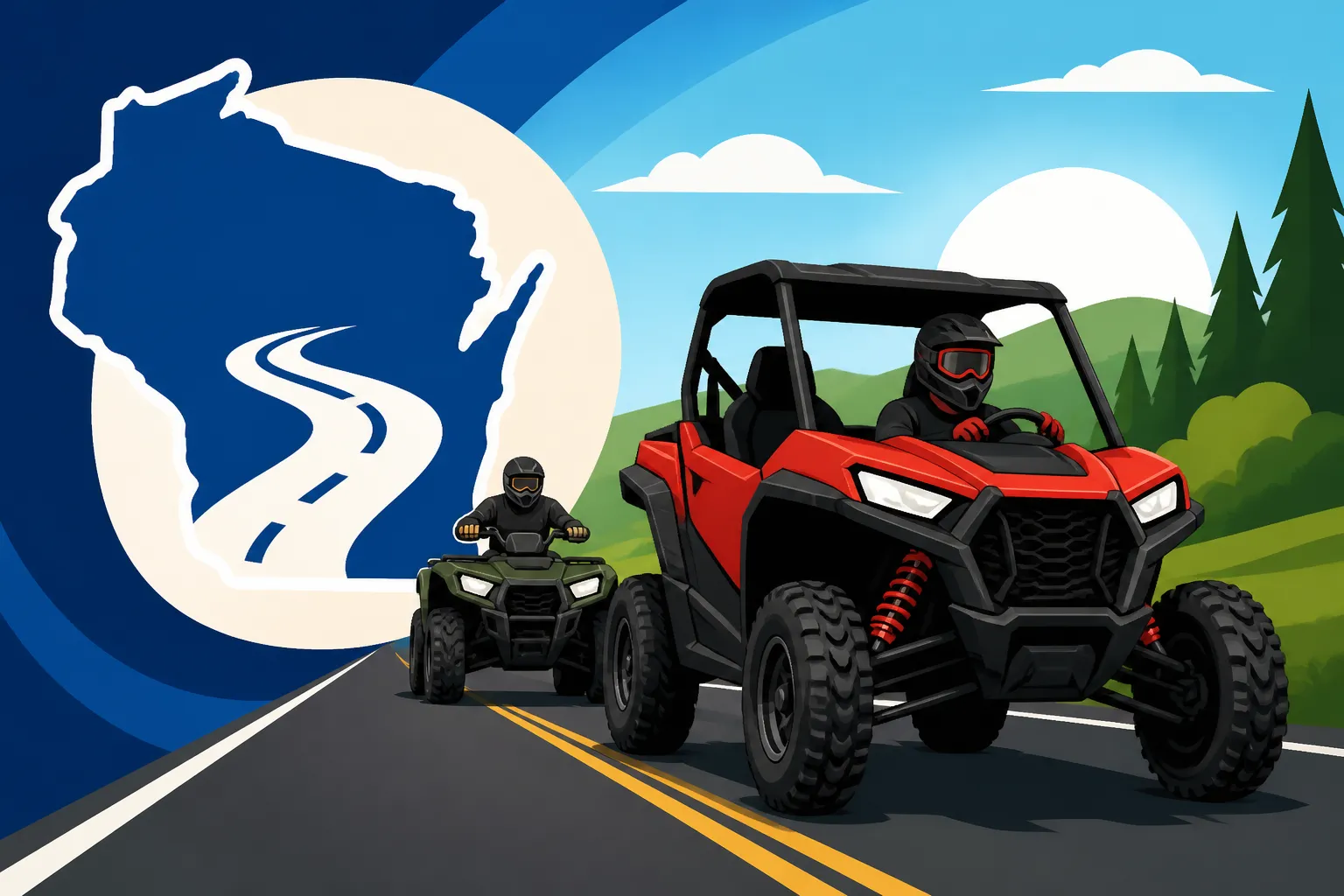
Wisconsin law is quite clear: operating an ATV or UTV on the "roadway" or "shoulder" of any state trunk highway is generally prohibited. State trunk highways are those major routes that connect cities and regions across Wisconsin, often marked with the familiar state highway shield. Think about how fast traffic moves on these roads, the sheer volume of cars and trucks, and the limited visibility often found at intersections or curves. An ATV or UTV, even one equipped with street-legal accessories, simply isn't designed to safely integrate with this kind of high-speed, high-volume traffic.
The law applies broadly, regardless of whether your machine has turn signals, a horn, or even if you consider it "street legal" in other contexts. The designation of the road as a state trunk highway is the overriding factor. It's a blanket rule designed to prevent serious accidents that could arise from the speed differential, the lower profile of ATVs/UTVs, and the lack of robust crash protection compared to a passenger vehicle. Ignoring this rule isn't just a minor infraction; it's a serious safety risk for you and for other motorists.
Why the "Street Legal" Concept Doesn't Apply Here
Many riders pour time and money into making their ATVs or UTVs "street legal" with accessories like full windshields, mirrors, turn signals, and DOT-approved tires. Companies like SuperATV offer a fantastic array of these aftermarket parts that genuinely enhance safety and legality for many town and county road routes. However, it's crucial to understand that even with all these modifications, a machine that is technically "street legal" for a town road or a designated county route does not automatically become legal for a state highway in Wisconsin. This is a common misconception that can lead riders into trouble.
The term "street legal" is somewhat fluid and depends heavily on the specific jurisdiction and type of road. While adding [Wisconsin Helmet Rules for Riders Under 18] and [Eye Protection on a Wisconsin Route Ride] along with other necessary equipment makes your machine compliant for many municipal routes, it doesn't change the fundamental classification of a state trunk highway. The state's prohibition on state highways isn't about the machine's equipment; it's about the inherent danger of operating any off-highway vehicle on a high-speed, high-volume state artery. No amount of aftermarket modification, even from reputable brands, will override the state's specific laws regarding these major roadways.
Navigating State Highways: The Crossing Exception
While the general rule is a resounding "no" for riding on state highways, there's a critical exception that allows ATVs and UTVs to legally traverse these roads. This exception is not an invitation to ride along the highway, but rather to cross it directly when connecting designated trail or route segments. It's a nuanced rule designed to allow riders to maintain connectivity within a larger trail system without endangering themselves or others, provided specific conditions are met.
Conditions for a Legal Crossing
For an ATV or UTV crossing of a state highway to be legal in Wisconsin, several strict conditions must be adhered to. First and foremost, the crossing must be done at approximately a 90-degree angle to the highway. This minimizes the time your machine spends in the active travel lanes and makes your intentions clear to other drivers. You can't just meander across diagonally; it must be a direct, perpendicular crossing. Second, the crossing must be made at a point where a designated ATV/UTV route or trail intersects with the state highway. This isn't about creating your own crossing points; it's about following established connections that are usually signed appropriately.
Third, and this is incredibly important, the crossing must be done with due regard for safety. This means yielding to all vehicular traffic on the state highway, essentially treating it like you're pulling out from a stop sign onto a busy road. You must ensure the crossing can be completed safely without interfering with the flow of traffic. This often means waiting for a significant gap in traffic, which can be challenging on busy state highways. Lastly, local ordinances might add further restrictions, such as specific hours for crossings or additional signage requirements. Always check the local rules for the area you're riding in. [Crossing a Wisconsin Highway Safely] is paramount.
Safety Protocols for Highway Crossings
Executing a safe state highway crossing requires more than just knowing the rules; it demands extreme caution and a defensive mindset. Before you even approach the edge of the highway, make sure you have a clear line of sight in both directions. Blind corners or crests are absolutely not acceptable places to attempt a crossing. Come to a complete stop, look left, look right, and then look left again, just as you would when pulling onto a busy street in your car. Make eye contact with any approaching drivers if possible, to ensure they see you.
When you do make the crossing, do so decisively and without hesitation. Don't crawl across; accelerate smoothly to minimize your time in the travel lanes. If you're riding in a group, it's often safer to cross one machine at a time, allowing each rider to focus entirely on their own crossing without distraction. Avoid crossing at dusk or dawn, or during inclement weather like heavy rain or fog, when visibility is reduced. Your machine should have adequate lighting, including headlights and taillights, even for daytime crossings, to maximize your visibility to other motorists. Remember, state highway traffic is often moving at speeds of 55 mph or more, and closing distances happen incredibly quickly.
Why State Highways Differ from Town and County Routes
It's easy to get frustrated when you see a beautiful, smooth state highway running right through prime riding country, only to find out you can't ride your ATV on it, while the bumpy, gravel town road right next to it is fair game. This disparity isn't arbitrary; it's rooted in fundamental differences in jurisdiction, funding, design, and traffic characteristics between these road types. Understanding these distinctions can help clarify why the rules are so different.
Jurisdiction and Funding: The Legal Basis
The primary reason for the difference in rules lies in who owns and maintains the roads. State highways, as the name suggests, are part of the state's trunk highway system, managed by the Wisconsin Department of Transportation (WisDOT). They are funded by state and federal taxes, and their purpose is to provide efficient long-distance transportation for a wide variety of vehicles, primarily cars, trucks, and commercial carriers. WisDOT sets the rules for these roads with a statewide perspective, focusing on consistency and the safe movement of the primary traffic types they serve. They are not typically designed with recreational ATV/UTV use in mind, unlike local trails which might receive [Wisconsin Trail Aids and Registration Revenue].
Town and county roads, on the other hand, are under the jurisdiction of local governments. Town boards and county supervisors have the authority to establish ordinances that allow or prohibit ATV/UTV use on the roads they maintain. This local control allows communities to tailor rules to their specific needs, traffic patterns, and the desires of their residents and visitors. If a community sees economic benefit from ATV tourism, for example, it has the power to open up its local roads. This local control is why you'll find varying rules even between neighboring municipalities. The state, however, maintains its strict stance on state highways due to their critical role in statewide commerce and long-distance travel, overriding local desires for ATV access.
Design and Traffic Volume: Safety Considerations
Beyond jurisdiction, the physical design and typical traffic characteristics of state highways are key factors in the prohibition of ATVs and UTVs. State highways are engineered for high-speed travel. They often have longer sight lines, fewer sharp turns (though still plenty in Wisconsin's Northwoods!), and are generally wider to accommodate faster-moving vehicles. The traffic volume is also typically much higher than on a rural town or county road, especially during peak seasons or on major routes.
ATVs and UTVs, while capable of decent speeds, are generally slower than highway traffic, creating dangerous speed differentials. Their smaller size and lower profile make them less visible to drivers of cars and semi-trucks, particularly at night or in adverse weather. Furthermore, the handling characteristics of ATVs and UTVs are different from road vehicles, and they lack the same level of crash protection. Imagine trying to brake quickly or swerve to avoid debris on a state highway while riding a UTV; the physics are simply not in your favor when interacting with traffic moving at 65 mph. These inherent design and operational differences make state highways fundamentally unsafe for integrated ATV/UTV travel, regardless of how well-equipped your machine is or how experienced you are as a rider. It's a risk too great for the state to allow.
What Happens If You Break the Rules on a State Highway
Ignoring the clear prohibitions on state highway use for ATVs and UTVs is not just about taking a risk with your safety; it also carries significant legal and financial consequences. Enforcement in Wisconsin is taken seriously, particularly when it comes to rules designed for public safety on major roadways. A spur-of-the-moment decision to take a shortcut on a state highway can quickly turn into a costly and frustrating experience.
Penalties for Illegal Operation
Operating an unregistered ATV or UTV on a state highway, or any ATV/UTV where it's prohibited, can result in substantial fines. The specific amount can vary depending on the exact statute violated and any additional infractions (like speeding or reckless operation), but you can expect to pay hundreds of dollars. Beyond the financial penalty, you could also face court appearances, and in some cases, points added to your driving record, which can impact your automobile insurance rates. Remember, while an ATV isn't a car, offenses committed while operating one can sometimes have crossover effects on your regular driver's license privileges. [Fines for Riding Wisconsin Unregistered] can be applied even if you thought your machine was "street legal."
Furthermore, if you cause an accident while illegally operating your machine on a state highway, the consequences escalate dramatically. You could be held liable for damages, injuries, and face even more severe legal repercussions. Your insurance policy might even deny coverage if you were operating the machine outside of legal parameters. It's a gamble with incredibly high stakes, far beyond the convenience of a short shortcut. Riding on these prohibited roads also reflects poorly on the entire ATV/UTV community, potentially jeopardizing future efforts to expand legal riding opportunities on other road types.
Encountering Law Enforcement on a State Highway
Wisconsin law enforcement, including local sheriff's deputies and Wisconsin State Patrol troopers, are vigilant about enforcing rules on state highways. If they spot an ATV or UTV operating illegally on a state highway, they will almost certainly pull you over. Unlike a casual encounter on a remote trail, a stop on a state highway will be treated with the gravity appropriate for a major roadway infraction. Expect to be asked for your identification, proof of [Insuring an ATV in Wisconsin], and registration documents.
During such a stop, it's crucial to be polite, cooperative, and provide all requested information. Arguing or becoming defensive will not help your situation. The officer is simply enforcing the law designed to keep everyone safe. They are not trying to ruin your fun, but rather prevent potential tragedy. Be prepared for a citation, and understand that explaining you "didn't know" or "only went a little way" will not exempt you from the consequences. The best approach is to avoid the situation entirely by meticulously planning your routes to stay off state highways, relying only on designated trails and approved town and county road routes. It takes away the guesswork and ensures your ride is enjoyable and stress-free.
Here's a quick comparison of common Wisconsin road types and their general ATV/UTV access:
| Road Type | General ATV/UTV Access | Key Characteristics | Governing Authority & Notes |
|---|---|---|---|
| State Highways | Generally Prohibited | High-speed, high-volume, major arteries | WisDOT. Crossings allowed at designated points. |
| County Roads | By Local Ordinance | Connect towns, moderate speed/volume | County boards. Many opened as part of ATV/UTV route systems. |
| Town Roads | By Local Ordinance | Local access, lower speed/volume | Town boards. Most common type for established ATV/UTV routes. |
| ATV/UTV Trails | Generally Allowed | Designated off-road paths, various surfaces | DNR, County Forests, Private Landowners. Requires registration and often a trail pass. |
| Private Land | By Permission | Any terrain, no public access | Landowner. No public access without explicit permission. No registration or trail pass required here. |
In conclusion, while Wisconsin offers an incredible array of ATV and UTV riding opportunities, it's imperative to distinguish between the various types of roads and the specific rules that govern them. State highways are, by and large, off-limits for ATVs and UTVs due to critical safety and traffic considerations. Understanding the nuances of where you can ride—and, more importantly, where you absolutely cannot—is fundamental to a safe, enjoyable, and legal riding experience in the Badger State. Always plan your route, pay attention to signage, and when in doubt, choose the designated trail or approved local road route.
Disclaimer
This article is for general informational purposes only and does not constitute professional advice. Laws, prices and regulations vary by location and change over time. Consult a qualified professional for guidance on your specific situation.