Crossing a Wisconsin Road on an ATV
It's an age-old question for anyone who loves hitting the trails in Wisconsin on their ATV or UTV: can I really cross that road, or am I just asking for a ticket? The confusion is real, and the rules often feel like a maze of local ordinances and state statutes. This comprehensive guide is designed to cut through that complexity, giving you a clear understanding of how and when you can legally and safely cross a Wisconsin road with your off-highway vehicle (OHV). We'll cover everything from the types of roads you might encounter to the essential gear you need and the common pitfalls to avoid, ensuring your next ride is both fun and compliant.
The Basics of Wisconsin ATV Road Crossings
Venturing out on Wisconsin's extensive trail systems often means encountering paved or gravel roads. It's a natural part of the riding experience, but it also brings a distinct set of rules. Understanding these basics is fundamental to staying safe and legal.
Why Crossings Are a Big Deal
The road crossing isn't just a brief interruption; it's a moment where your off-highway vehicle briefly enters a world designed for cars and trucks. This shift brings significant safety concerns, as ATVs and UTVs handle differently on pavement, are often slower to accelerate, and can be less visible to fast-moving traffic. Legally, the state of Wisconsin and its individual municipalities have a vested interest in public safety, which means strict regulations are in place to prevent accidents and maintain traffic flow. What might seem like a quick hop across a quiet county road to you could be seen as a serious traffic infraction by a local warden or sheriff's deputy if done incorrectly. These rules aren't just bureaucratic red tape; they're in place because the potential for collisions at road crossings is unfortunately high if proper precautions aren't taken.
The Difference Between a Crossing and a Route
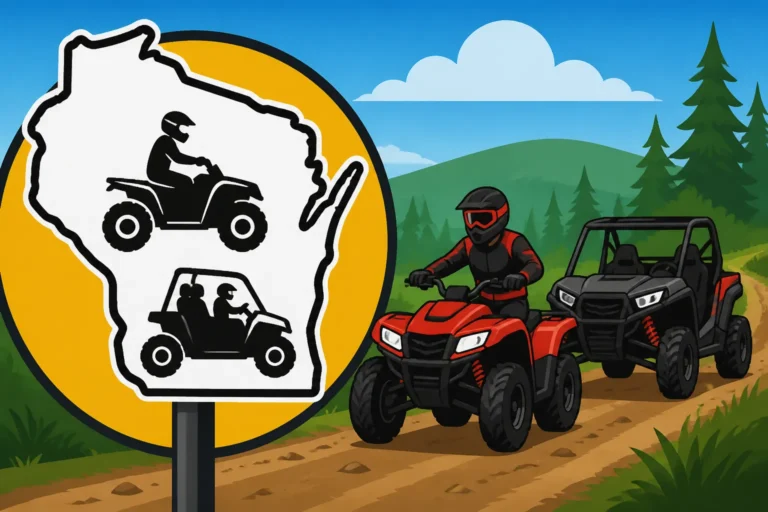
This is perhaps the most critical distinction any Wisconsin ATV or UTV rider needs to grasp. A "crossing" is a short, perpendicular movement from one side of a road to the other, often connecting two segments of an approved trail. You are not allowed to ride along the road for any significant distance. It's a quick, direct path across. On the other hand, a "route" is a designated segment of a public road that has been legally opened for ATV and UTV travel. On a route, you are permitted to ride your machine along the road, often for many miles, connecting trails or accessing towns. The key here is signage: routes are clearly marked with official ATV/UTV route signs. If you don't see those signs, assume you are only allowed to cross, not ride along. Mistaking a crossing for a route is a common way riders get into trouble, leading to citations and putting themselves and others at risk. Understanding [What a Wisconsin ATV Route Actually Is] can save you a lot of headaches and fines.
What the Law Says About Impeding Traffic
When you're making a road crossing, the law dictates that you must not impede the normal flow of traffic. This means you need to exercise extreme caution and yield to all motor vehicles already on the roadway. You can't simply pull out into traffic and expect cars to stop for you. You are required to wait for a safe and clear opening, ensuring that your crossing does not force other drivers to brake suddenly or swerve. Impeding traffic isn't just rude; it's a violation that can carry a fine. More importantly, it dramatically increases the risk of a collision. When preparing to cross, scan both directions multiple times, even on seemingly quiet rural roads. The moment you enter the paved surface, you are a guest, and the responsibility for a safe crossing falls squarely on your shoulders.
Understanding Wisconsin's Road Categories for ATV Use
Wisconsin has a complex network of roads, and not all of them are created equal when it comes to ATV and UTV access. Knowing which roads permit crossings and which are off-limits is vital for responsible riding.
Town Roads and Municipal Ordinances
Many of Wisconsin's ATV and UTV trails are found in rural areas, where they frequently intersect with town roads. These are typically local roads maintained by townships, and they form the backbone of many trail connections. The good news is that many towns and villages in Wisconsin do allow ATV and UTV crossings on their roads. However, this isn't a blanket rule across the entire state. Each individual town board has the authority to pass its own ordinances regarding ATV and UTV use, including whether crossings are permitted, and if so, under what specific conditions. Some towns might have specific hours for crossings, speed limits, or even requirements for increased visibility gear. The variations can be significant even between neighboring municipalities. This is why it's so important to do your homework before you ride. A great first step is checking local trail maps, which usually indicate legal crossing points, or directly contacting the town clerk for specific ordinance information. Don't just assume; always verify.
County Highways and DNR Approval
County highways are a step up in terms of traffic volume and speed compared to most town roads. While some county highways do have designated ATV/UTV routes or crossings, these are generally less common and require a higher level of approval. For a county to open a highway to ATV or UTV use, even for just a crossing, it typically needs to pass a county board resolution and, in many cases, receive approval from the Wisconsin Department of Natural Resources (DNR). These approvals are often tied to existing trail systems and aim to ensure safety at these higher-speed intersections. You'll find that many county highways are not open to ATV or UTV traffic, even for crossings, unless explicitly signed as a route or designated crossing point. Riding on or crossing a county highway without proper authorization is a serious offense. Again, look for clear signage indicating a legal crossing, and if it's not present, assume it's prohibited. The DNR's website and local county parks and recreation departments are good resources for maps and information on approved county road access.
State and Federal Highways: A Firm No
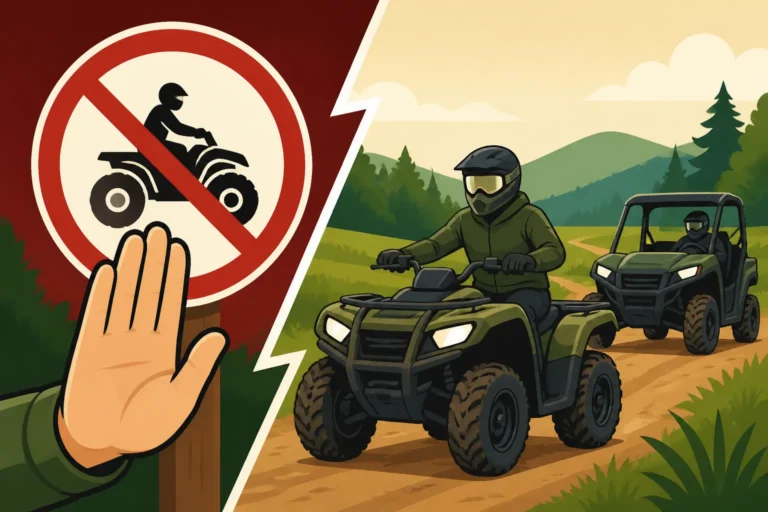
When it comes to state highways (e.g., roads prefixed with STH or WIS) and federal highways (e.g., US-numbered routes or Interstate highways), the rule is almost universally simple: ATVs and UTVs are not permitted to operate on or cross these roadways for recreational purposes. These roads are designed for high-speed motor vehicle traffic, and the presence of an ATV or UTV poses an extreme safety risk, both to the OHV operator and to other motorists. There are very limited, specific exceptions, such as for agricultural use or official law enforcement, but for the typical recreational rider, these roads are a hard boundary. Do not attempt to cross a state or federal highway unless it is a clearly marked, designated crossing, which are exceedingly rare. Attempting to cross one of these high-traffic roads could result in severe injury or worse, and you'll almost certainly face significant legal penalties. Always plan your ride to avoid routes that require crossing these major arteries. For more detailed information on road types, you might want to review [Crossing a Wisconsin Highway Safely], which reiterates these strict prohibitions.
The "How-To" of a Legal Road Crossing
Successfully and legally crossing a road with your ATV or UTV in Wisconsin isn't just about knowing the rules; it's about executing the crossing safely and responsibly. There's a method to it that minimizes risk and ensures compliance.
Pre-Crossing Checks: Safety First
Before you even approach the edge of the pavement, a thorough pre-crossing check is essential. First, slow down significantly as you near the road. This gives you time to assess the situation. Look for any official signage that might indicate a designated crossing point or prohibit ATV/UTV use entirely. Next, activate your headlights and taillights, even during the day, to maximize your visibility to oncoming traffic. If your machine has turn signals, use them to indicate your intention to cross. Check your mirrors, if equipped, and physically turn your head to scan both directions of traffic multiple times. Pay particular attention to blind spots or curves in the road that might hide approaching vehicles. Make sure your machine is in good working order; no one wants to stall in the middle of a busy road. Finally, ensure you and any passengers are wearing appropriate safety gear, including helmets for those under 18 and [Eye Protection on a Wisconsin Ride] for everyone. The more visible and prepared you are, the safer your crossing will be. Even a quick check of your tires, especially if you're using aftermarket ones from a brand like SuperATV, can ensure you have optimal grip and control on the pavement.
Executing the Crossing: Rules of the Road
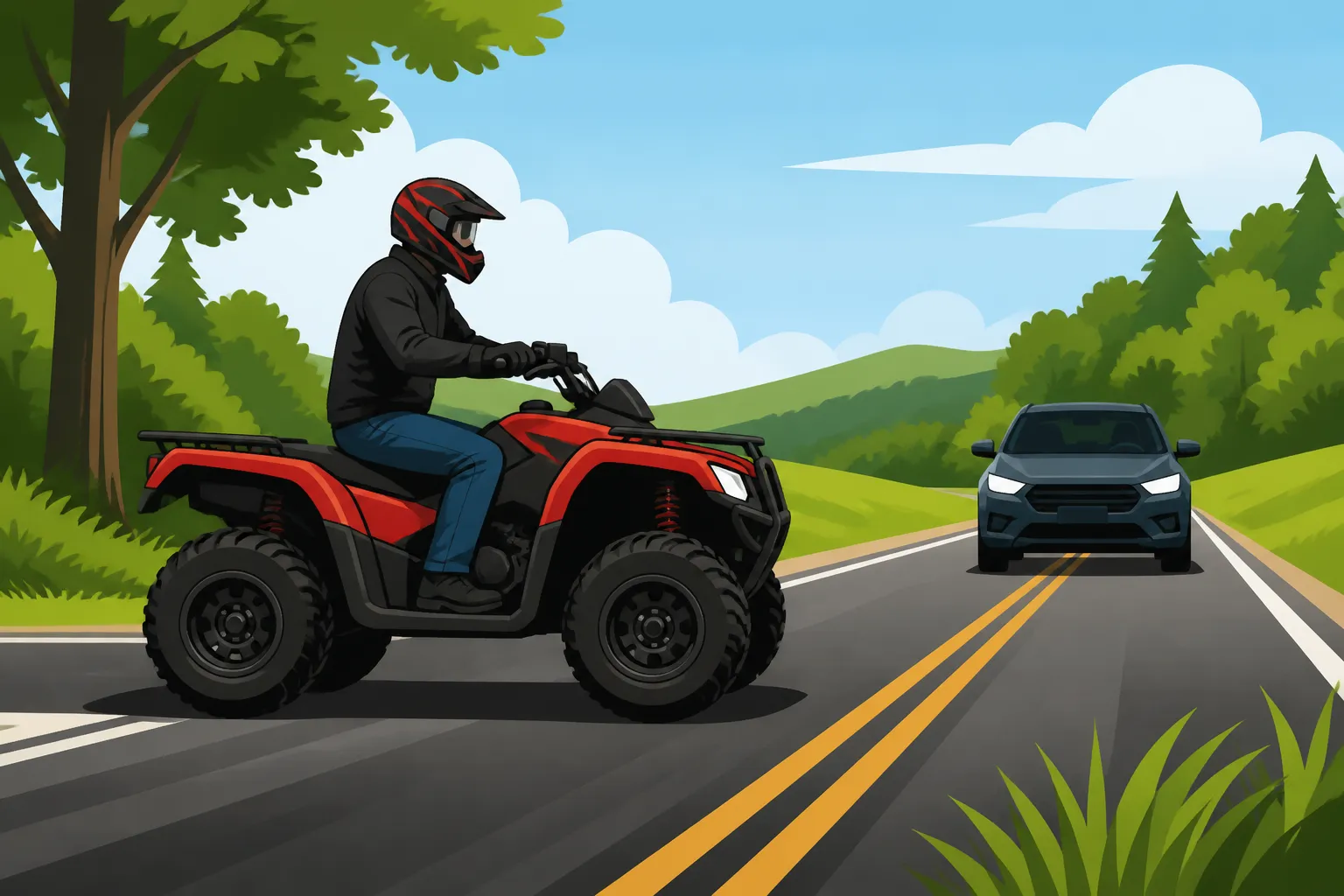
Once you've determined it's safe to cross, the execution is key. Come to a complete stop before entering the roadway. You must yield to all vehicular traffic on the road, waiting until there's a large enough gap to cross without impeding anyone. When you do cross, do so as directly and perpendicularly as possible. This means going straight across the road, not at an angle that lengthens your time in the travel lanes. Avoid riding along the shoulder, in the ditch, or in the traffic lane for any distance before or after your crossing. The crossing should be swift and decisive, getting you from one side of the trail to the other in the shortest possible time. Think of it as a momentary interruption of the roadway, not a continuation of your trail ride on pavement. Keep your speed appropriate for the crossing, usually a moderate pace that allows for quick acceleration if needed but not so fast that you lose control.
Permitted Crossing Points
Not every point where a trail meets a road is a legal crossing. In many cases, legal crossing points are specifically designated and marked. Look for official yellow diamond signs with ATV/UTV symbols, often accompanied by "CROSSING" placards. Sometimes, the trail will be clearly cut and maintained, indicating it's an intended crossing. On local roads, the presence of an ATV trail on both sides of the road often implies a crossing is permitted, but official signage is always the strongest indicator. Never create your own crossing point where there isn't an established trail or clear indication of permission. This could lead to trespassing issues on private property, damage to road shoulders, or entering prohibited areas. When in doubt, it's always best to find an officially marked crossing or reroute your journey. Local trail maps provided by county forest departments or ATV clubs are excellent resources for identifying these authorized crossing locations.
Equipment and Legal Requirements for Crossings
Beyond just knowing how to cross, you also need to ensure your machine and your person meet Wisconsin's legal requirements for operating on or crossing public roadways. Skipping these details can turn a simple crossing into a costly citation.
Essential Machine Equipment
Your ATV or UTV needs to be properly equipped to be legal for road crossings in Wisconsin. First and foremost, working headlights and taillights are mandatory. [Wisconsin Headlight Rules After Dark] apply even during the day for visibility, and especially during low light conditions. Your machine must also have functional brakes, a muffler to keep noise within legal limits (specifically, the [The 96-Decibel Sound Test in Wisconsin] limit), and a spark arrester. Spark arresters are critical for preventing wildfires, particularly in dry conditions, and are generally required on all public lands and trails. While not always legally required for a simple crossing, having a horn can be a crucial safety feature to alert other drivers to your presence. Many riders also add additional visibility features, such as bright flags or reflective tape, especially if they ride a machine that sits low to the ground. Upgrading lights with a reputable brand like SuperATV can significantly enhance your visibility and safety during crossings. Remember, the goal is to be seen and heard by other road users.
Rider Requirements and Safety Gear
Wisconsin law also has specific requirements for the operator. If you were born on or after January 1, 1988, you must possess a valid ATV or UTV safety certificate to operate on public trails and roads, including for crossings. While an operator's license isn't always required for operating an ATV/UTV on trails or routes, it might be for specific road routes in certain municipalities, so always check local ordinances. For young riders, the rules are even stricter: anyone under the age of 18 must wear a DOT-approved helmet when operating or riding as a passenger on an ATV or UTV on public lands, which includes road crossings. [Wisconsin Helmet Rules for Riders Under 18] are clear and strictly enforced. Beyond the legal minimums, wearing appropriate riding gear – including long pants, a long-sleeved shirt, sturdy over-the-ankle boots, and gloves – is highly recommended to protect yourself in case of a fall or collision.
Registration and Trail Pass Status
To legally cross a public road in Wisconsin, your ATV or UTV must be properly registered with the Wisconsin DNR. This means having a valid public use registration and displaying the decals correctly on your machine. If your machine is registered for private use only, you are generally not permitted to operate it on public roads or trails, even for crossings. [Wisconsin DNR ATV Registration Explained] details the different types of registration and their uses. For out-of-state riders, if you're coming from a state that doesn't have reciprocity with Wisconsin for public trail use, you'll also need to purchase a [Wisconsin's Non-Resident Trail Pass] in addition to your home state's registration. These fees go towards maintaining the trails you enjoy, so it's important to be compliant. Always carry your registration card and safety certificate (if required) with you when you ride, as wardens may ask for them during a stop.
Common Mistakes and How to Avoid Them
Even experienced riders can inadvertently fall into common traps when it comes to road crossings. Being aware of these mistakes is the first step to avoiding penalties and staying safe.
Mistaking a Crossing for a Route
This is arguably the most frequent and impactful mistake riders make. Many times, a trail will briefly intersect a paved road, and it's easy to assume that you can ride down that road a bit to get to the next section of trail or to access a gas station. However, unless the road is explicitly marked with official ATV/UTV route signage, you are only permitted to cross directly. Riding along the shoulder, in the ditch, or on the pavement for more than the absolute minimum distance required to cross is illegal. The fines for this can be substantial, and it puts you directly in the path of vehicular traffic not expecting an OHV. Always look for the specific white and black route signs indicating authorized travel. If you're on a trail and come to a road without such signs, prepare to cross directly and legally, and nothing more. This also applies to situations where a quick turn-around might be tempting. Instead, if you miss your crossing, find a safe, legal spot to turn around off the paved surface and then re-approach the crossing.
Riding on the Shoulder or Ditch Line
A related but distinct mistake is believing that riding on the shoulder or within the ditch alongside a road is a legal alternative to riding in the traffic lane or crossing directly. It is not. In Wisconsin, unless specifically designated as part of an ATV/UTV route (which would be clearly signed), shoulders and ditches are generally considered part of the highway right-of-way and are not legal for ATV/UTV operation. Riding in these areas presents its own set of hazards: shoulders can be narrow, uneven, and filled with debris, while ditches can hide culverts, steep drop-offs, or standing water. More importantly, it can still confuse motorists who don't expect an OHV in these areas, increasing the risk of an accident. When you approach a crossing, stop before the paved surface, look both ways, and then cross directly. Do not use the shoulder as an approach or departure path for your crossing.
Illegal Crossings and the Consequences
The consequences of illegal road crossings in Wisconsin can range from inconvenient to severe. At the very least, you could receive a citation and a fine. [Wisconsin Fines for Illegal Road Riding] can add up quickly, especially if combined with other violations like expired registration or lack of a safety certificate. Repeat offenses can lead to higher fines, and in some cases, even the suspension of your riding privileges. Beyond the financial penalties, the greatest consequence is the risk of an accident. Roads are dangerous environments for ATVs and UTVs, which offer less protection than a car. A collision with a motor vehicle can result in serious injury or fatality for the OHV operator and passengers, as well as for those in the vehicle. It's simply not worth the risk to save a few minutes or to avoid looking up the rules. Wardens and local law enforcement actively patrol areas known for ATV/UTV activity, and they are well-versed in the regulations.
Local Ordinances and Finding Specific Rules
The patchwork nature of ATV/UTV road access in Wisconsin means that local ordinances play a huge role. What's permissible in one town might be strictly forbidden just a few miles down the road.
The Power of Local Control
Wisconsin law grants individual towns, villages, and cities significant authority to regulate ATV and UTV use within their municipal boundaries. This "local control" is why you'll encounter such variety in regulations. A town board, responding to local concerns about noise, safety, or property values, might choose to open certain roads as routes, permit specific crossings, or prohibit all ATV/UTV use on its roadways. Conversely, another town might be very rider-friendly, having opened numerous routes and crossings to promote tourism and access to local businesses. This local flexibility means that no two towns are exactly alike, and simply knowing the state law isn't always enough to ensure compliance. It means riders have a responsibility to know the specific rules for the area they are riding in. This is why [Finding a Wisconsin Town's ATV Ordinance] is a crucial step in planning your rides, especially if you're exploring new areas.
Resources for Checking Ordinances
Navigating these local rules doesn't have to be a scavenger hunt. There are several reliable resources available to help you understand the specific ordinances of an area. The most direct approach is often to contact the town or village clerk's office for the municipality you plan to ride through. They can provide copies of the relevant ordinances or direct you to where they are published online. Many counties and towns also have dedicated websites for their parks and recreation departments, which often include maps and summaries of ATV/UTV rules. The Wisconsin DNR's website is another excellent resource, often providing links to county-level information and general guidelines. Finally, local ATV and UTV clubs are invaluable. These clubs often work directly with local governments to establish and maintain trails and routes, and their members are usually extremely knowledgeable about the specific rules in their riding areas. They often publish their own maps or have sections on their websites dedicated to local regulations.
When in Doubt: Ask the Locals or a Warden
Despite all the resources, there might still be situations where you're unsure about the legality of a crossing or route. Perhaps the signage is ambiguous, or you're riding in a very remote area. In these moments, the best advice is always to err on the side of caution. If you can, ask a local resident or a business owner in the area. Many trail towns are very accustomed to ATV/UTV riders and can often provide quick, accurate guidance. Even better, if you encounter a Wisconsin DNR warden or local law enforcement officer, don't hesitate to politely ask for clarification. They are the ultimate authority on enforcement, and asking proactively shows responsibility. It's far better to ask and clarify before you ride than to proceed with uncertainty and risk a fine or, worse, an accident. Remember, local knowledge is golden in Wisconsin's varied riding landscape.
Advanced Scenarios and Considerations
While the basic rules cover most situations, there are a few advanced scenarios and considerations that merit attention for riders looking to maximize safety and compliance.
Crossing Busy Roads or Multiple Lanes
Most ATV trail crossings involve two-lane, relatively low-traffic roads. However, occasionally, a trail might intersect a busier, potentially multi-lane road. These crossings demand an even higher level of caution and situational awareness. When attempting to cross a road with multiple lanes of traffic, the risks are exponentially higher due to increased speeds, greater traffic volume, and the complexity of judging safe gaps across several lanes. In such situations, it's often best to seek out an alternative route that avoids these major arteries entirely. If an alternative isn't feasible and the crossing is explicitly designated as legal, you must be exceptionally patient. Wait for a complete break in traffic across all lanes in both directions. Never assume drivers in the far lane see you or will yield. Your machine, even with improved visibility from products like SuperATV's aftermarket lighting, is small compared to highway traffic. If you're carrying passengers, ensure they understand the added risk and are prepared for a swift, decisive crossing. This is where patience truly becomes a virtue.
Crossing Roads in Designated Trail Towns
Wisconsin boasts many fantastic "trail towns" where ATV and UTV use is embraced as part of the local culture and economy. In these communities, you'll often find that roads within the town limits are designated as official ATV/UTV routes, making it much easier to connect trails, access fuel, food, and lodging. [Riding Into a Wisconsin Trail Town] is a unique experience, as machines are often treated much like cars on the street. However, even in these friendly environments, specific rules apply. Speed limits, often lower than typical road speeds, must be strictly observed. Some towns might have specific hours of operation for ATVs/UTVs on their streets or require extra insurance. While the general atmosphere is more permissive, you're still sharing the road with cars, pedestrians, and cyclists. Always look for signage detailing the town's specific ordinances. Don't assume that because one town is open to OHVs, the next town you encounter will have the same rules. Awareness and respect for local rules are paramount to maintaining positive relationships between riders and communities.
Future Changes and Advocacy
The landscape of ATV and UTV regulation in Wisconsin is not static. Laws and ordinances can change based on new legislation, local government decisions, and rider behavior. What's legal today might be different next season. For instance, the ongoing evolution of UTVs and their capabilities often prompts discussions about how they fit into existing road use statutes. Responsible riders play a crucial role in shaping the future of off-highway vehicle access. By adhering to existing rules, riding safely and courteously, and actively participating in local ATV/UTV clubs, you contribute positively to the riding community's reputation. Clubs often advocate for new trail development, expansion of routes, and clarification of confusing regulations. Staying informed about proposed changes and lending your voice through local clubs or directly to your representatives can help ensure that Wisconsin remains a premier destination for ATV and UTV enthusiasts for years to come. Remember, responsible riding today paves the way for continued access tomorrow.
| Road Type | General Crossing Permission | Key Considerations |
|---|---|---|
| Town Roads | Often Permitted (look for signage or local ordinance) | Varies widely by town. Check local ordinances or maps. Cross directly and perpendicularly. Yield to all traffic. Often used to connect trail sections. |
| County Highways | Limited Permission (requires county/DNR approval, signage) | Less frequent than town roads. Look for explicit "ATV ROUTE" or "ATV CROSSING" signs. Higher traffic speeds mean extreme caution. Do not ride on shoulders or in ditches. |
| State Highways | Generally Prohibited (except rare designated crossings) | High-speed, high-volume traffic. Recreational crossing almost universally illegal. Very dangerous. Plan routes to avoid. Specific agricultural or emergency use exceptions do not apply to recreational riders. |
| Federal Highways | Strictly Prohibited (no recreational crossing) | Interstates and US-numbered routes. Absolutely no recreational ATV/UTV operation or crossing. Extremely dangerous and illegal. Plan your entire trip to avoid these roads. |
| Designated Routes | Riding along the road is permitted | Clearly marked with "ATV ROUTE" signs. Follow all road rules, including speed limits. May have specific hours of operation or additional local requirements (e.g., insurance). Treat as any other vehicle. Often found in trail towns. |
Crossing roads in Wisconsin on your ATV or UTV doesn't have to be a source of stress or confusion. By understanding the distinctions between road types, adhering to legal requirements for your machine and yourself, and exercising extreme caution, you can navigate these necessary interruptions safely and legally. Always prioritize safety, stay informed about local ordinances, and be a responsible ambassador for the ATV/UTV community. Happy trails!
Disclaimer
This article is for general informational purposes only and does not constitute professional advice. Laws, prices and regulations vary by location and change over time. Consult a qualified professional for guidance on your specific situation.