Accessories Wisconsin Riders Buy First
Wisconsin riders can spend a lot on accessories before they know what they actually need. The right first purchases depend on whether you ride trails, work around property, plow snow, or take a machine out in winter. This guide sorts accessories by safety, usefulness, and season, so you can build a sensible setup without paying for gear that stays in the shed.
Start with the ride you actually do
The best first accessory is the one that solves a real problem on your next ride. A trail rider’s priorities are different from a property owner’s, and a machine used for both may need a mix of equipment. Before shopping, write down where the ATV or UTV goes, what it carries, who rides in it, and what conditions it faces.
A few practical questions narrow the list:
- Do you mostly ride marked trails, use the machine for work, or do both?
- Is your usual ride a short trip close to home or a long day in a remote area?
- Do you ride in cold weather, deep mud, or mostly dry conditions?
- Does the machine have passenger seating, a cargo bed, or neither?
- Will you tow a trailer, carry tools, haul fishing gear, or plow?
- Do you already own a helmet, gloves, eye protection, and suitable footwear?
A new machine often arrives ready to operate but not ready for every kind of riding. Some accessories improve safety or solve a basic carrying problem; others are optional upgrades that make a machine more comfortable or specialized. It helps to separate those groups before spending.
| Priority | Accessory group | Why it matters | Usually most useful for |
|---|---|---|---|
| First | Helmet, eye protection, gloves, and suitable clothing | Protects the rider and helps manage weather and debris | Every rider |
| First | Secure storage and basic trail supplies | Keeps essentials contained and available | Trail rides and remote trips |
| Early | Recovery and tire-repair equipment | Helps address common problems away from a shop | Long rides, muddy terrain, remote areas |
| As needed | Winch, plow, or work equipment | Adds a capability that can be valuable but is use-specific | Property work and winter use |
| Later | Comfort, lighting, sound, and appearance upgrades | Improves a specific machine or riding routine | Riders who have identified a particular need |
This order is a starting point, not a universal shopping list. A property owner who plows a long driveway may need a plow and winch early. A weekend trail rider may benefit more from a helmet, a properly fitted storage bag, and a way to carry basic repair supplies.
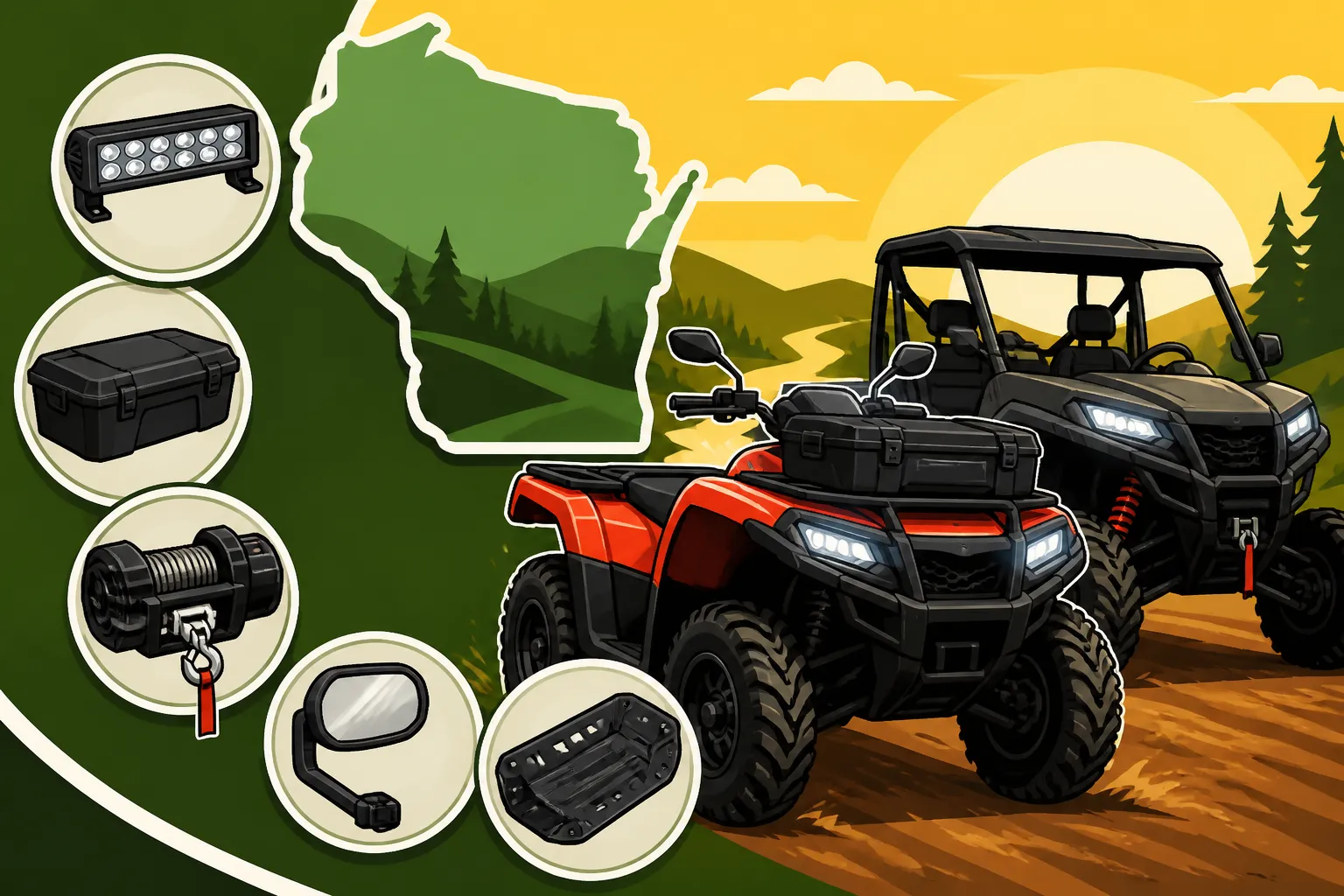
It is also worth checking what came with the machine. A winch, windshield, hand guards, roof, or storage box may already be installed, especially on a used ATV or UTV. For a first-season overview, see Kitting Out a Machine the First Season. If you are buying used, inspect installed accessories rather than assuming they work; an accessory can look complete while having damaged wiring, worn mounts, or missing hardware.
Put protective gear and visibility first
Protective gear is a better first purchase than most bolt-on accessories. It protects the person, works across different machines, and can be used even if the ATV or UTV changes. Fit and condition matter more than appearance, and the right combination depends on the type of machine, the rider, the weather, and the route.
Helmet, eye protection, and gloves
Choose a helmet designed for motorized riding and check that it fits securely. A helmet that shifts, pinches, or does not stay fastened is not a good fit. Look for clear information about the helmet’s safety certification and intended use, and replace a helmet that has taken a significant impact or has damaged parts. Wisconsin requirements can depend on a rider’s age and circumstances; check current rules rather than assuming one helmet setup meets every requirement.
Eye protection matters even when a helmet has a face shield. Dust, branches, insects, and road debris can make a ride uncomfortable or unsafe. Goggles or a shield should fit with the helmet and stay in place when the rider turns their head. For UTV occupants, consider how the vehicle’s windshield, doors, nets, and other barriers affect eye protection; an open or partially enclosed cabin can still let debris in.
Gloves help with grip, hand protection, and cold-weather comfort. Choose a pair that allows the rider to operate the controls without bunching or restricting movement. A heavy winter glove may be warm but too bulky for precise control, while a thin summer glove may be inadequate on a cold or wet ride. Riders looking at a complete clothing setup can use Riding Gear a Wisconsin Rider Needs as a companion topic.
Clothing and footwear
Wear layers that can handle changing conditions. Wisconsin rides can begin in cool air and become warmer, or turn uncomfortable when wind, rain, or wet trail conditions set in. A base layer that moves moisture, a warm layer, and an outer layer that blocks wind or rain can be more flexible than one very heavy garment.
Footwear should protect the feet and ankles while still allowing the rider to control the machine. Avoid loose laces or dangling straps that can catch on parts of the ATV or UTV. For a passenger, check that shoes and clothing are suitable for the vehicle’s footrests and restraints. A passenger should not have to hold on by grabbing a moving part or reaching around the operator.
Carry a dry layer if you expect a long outing or a change in weather. A small waterproof bag is useful for spare gloves, socks, or an insulating layer. Keep the bag secured so it cannot slide into the controls, fall from a rack, or become a hazard if the machine tips.
Lighting and visibility
Good working lights matter, especially when a ride may last longer than planned. Check that factory headlights and taillights work before adding more lighting. A clean lens, sound wiring, and correctly aimed headlight can be more useful than an extra light bar that is poorly mounted or aimed into the eyes of other riders.
Auxiliary lights can help with work around a property or with visibility in conditions where added lighting is appropriate. Their installation should not interfere with required lights, obscure the rider’s view, create glare, or place wiring where it can snag or be damaged. Lighting and equipment rules can vary with where and how the machine is operated. Review the applicable requirements before changing the machine; Lighting Rules for Wisconsin Night Riding covers the road and riding context.
For UTVs, a roof, windshield, doors, or a cab can change how light reflects inside the vehicle. Check the setup from the driver’s seat at night before relying on it for a longer trip. If a windshield produces glare or reflections, the problem may be the windshield material, position, or lighting rather than insufficient brightness.
Carry the basics before adding specialized gear
A modest set of practical supplies can make a ride easier to manage. The goal is not to turn an ATV into a rolling workshop. It is to carry a few items for common interruptions, keep them protected from water and dirt, and avoid overloading the machine.
Storage that stays secure
Choose storage based on the machine and the items you need to carry. A small bag may be enough for a short ride; a larger box or rack-mounted case can make sense for tools, food, spare layers, or work supplies. Before buying, check the mounting points, available space, seat access, and whether the storage interferes with passengers, controls, suspension movement, or the exhaust.
A useful storage system should:
- Stay attached over rough ground without shifting.
- Close securely and protect important items from rain and dust.
- Allow access without unloading the entire machine.
- Keep sharp tools and heavy objects from moving around.
- Avoid blocking lights, reflectors, the operator’s view, or required equipment.
- Fit the machine’s rack or bed without relying on improvised fasteners.
Do not assume a bag labeled for an ATV or UTV will fit every model. Compare its attachment method and dimensions with the actual machine. On a used vehicle, inspect the rack for bent sections, cracked welds, or missing tie-down points before mounting a heavy box.
For an ATV, a rack bag or compact hard case may be a practical option. For a UTV, the cargo bed may be enough for bulky gear, but cargo still needs to be tied down. A bed cover or storage box can help protect items, though it may reduce access or make the bed less useful for larger loads.
A compact ride kit
A simple ride kit can include a first-aid kit, water, a flashlight or headlamp, a basic tool selection, a tire-repair kit suited to the machine, and a way to contact someone if the ride is delayed. The right items depend on the trip, the machine, and the rider’s ability to use them. A tool that does not fit the machine, or a tire kit the rider has never practiced using, may not help when needed.
Pack supplies in a waterproof container or bag and check them before the riding season. Replace used or expired items and remove anything that has become damaged. Keep the kit small enough to stay organized, but do not leave out essentials just to save a little space.
For longer Northwoods rides, plan for limited cell coverage and the possibility of a delay. Tell someone where you expect to go and when you plan to return. A phone is useful but should not be the only way to navigate or ask for help. A paper map, a charged device with offline maps, and an appropriate communication plan can complement each other. More detail on trip supplies appears in What to Carry on a Northwoods Ride and Cell Service in the Wisconsin Northwoods.
A small amount of water and food is also worth carrying, especially on rides that last several hours. Keep them secured and separate from fuel, lubricants, and dirty tools. For a longer outing, plan fuel stops and range rather than assuming a container or accessory tank will solve every gap. See Fuel Planning for a Wisconsin Trail Day for trip-planning considerations.
Recovery and tire supplies
Recovery equipment is useful when it matches the machine, the terrain, and the rider’s ability to use it safely. A basic tow strap can help in some situations, but it is not a substitute for knowing where the machine can be safely attached. Avoid attaching a strap to a part that is not designed for recovery, and keep people clear of a loaded strap.
A winch is a more substantial investment. It can help with recovery and property work, but it adds weight, wiring, mounting requirements, and maintenance. The rated capacity and mounting system need to suit the machine and the task. Learn how to use it before depending on it in mud, snow, or a steep area. Keep the winch line and remote in serviceable condition, and use appropriate safety practices around tensioned cable or rope.
A tire-repair kit and a compact inflator can be useful, but confirm that the kit works with the tires and valve stems on the machine. Some tire damage cannot be repaired on the trail, and a plug is not a universal fix. A spare tire, where practical, may be relevant for some UTVs, but it needs a secure mount and adds bulk and weight. For equipment options and trade-offs, see Winches at the Low End and Recovery Gear for Wisconsin Mud.
Before buying recovery gear, ask whether you can safely use it, where you will attach it, and whether it fits your machine. A winch that is too weak for the intended job, a strap with no safe attachment point, or a repair kit that does not fit the tire can create false confidence.
Add cargo and comfort equipment that solves a real problem
Once safety and basic carrying needs are covered, consider accessories that improve how the machine fits your routine. Many comfort upgrades are worthwhile, but the best choice depends on rider height, machine layout, weather, and the kind of trip.
Windshields, roofs, and hand protection
A windshield can reduce wind and flying debris, particularly on a UTV. It can also trap heat, create reflections, or change airflow. Full, half, and folding windshields each involve trade-offs. A full windshield offers more protection from wind but may need ventilation to reduce fogging and heat. A partial windshield gives less coverage but can be a better fit for a rider who wants more airflow.
For a UTV, consider whether a windshield is compatible with the roof, doors, wipers, cab enclosure, and other accessories already installed. A poorly matched combination can rattle, leak, or block sightlines. Check that the windshield material is suitable for the vehicle and that the mounting system is designed for the model.
Hand guards can reduce wind and brush contact for ATV riders. They should not limit steering, interfere with levers, or become a snag point. After installation, turn the handlebars fully in both directions and check clearance around the controls, cables, and bodywork.
Seats, grips, and passenger protection
A more comfortable seat or grip can matter on long rides, but try to identify the source of discomfort first. A seat may be uncomfortable because it is damaged, poorly adjusted, or unsuitable for the rider’s build. Grips may be worn or too large. Replacing an accessory without checking the underlying fit can lead to wasted effort.
For UTV passengers, use the seating positions and restraints provided for the vehicle. Keep the number of occupants within the machine’s intended capacity. Add-on handles or grab bars should be installed only where they are designed to fit and should not encourage passengers to sit or stand somewhere unsafe. Belts, nets, doors, and other barriers should be in good condition and used as intended.
A roof can provide shelter from sun, rain, and light debris, but it does not turn an open vehicle into an enclosed cab. It may also change the machine’s overall height, which matters for a trailer, garage, or low clearance. Measure the machine with accessories installed before planning storage or transport.
Phone mounts, navigation, and cameras
A phone mount can make navigation easier, but it should not distract the operator or block controls and sightlines. Put the device where it can be checked briefly, not where the rider has to look away from the trail for extended periods. A mount should hold securely through vibration and rough ground, while still allowing the device to be removed when parked.
Protect electronics from rain, dust, vibration, and cold. Keep the device charged and download maps in advance if cell coverage may be unreliable. A phone mount does not replace route planning, a map, or a way to communicate when service is unavailable.
Cameras can document a ride or help with specific work tasks, but they need a secure mount that will not come loose or obstruct the operator. Check that any camera, cable, or battery pack cannot interfere with a helmet, steering, passenger restraints, or moving parts.
Quiet, clean, and compliant modifications
Exhaust, engine, and lighting modifications can affect noise, emissions, reliability, and compliance. A louder machine is not automatically more capable, and a performance part may need tuning or other changes to work properly. Before installing an aftermarket exhaust or changing the air intake, check that the component is appropriate for the exact model and that the machine will meet applicable requirements where it is operated.
Keep mud, leaves, and debris from accumulating around hot or moving parts. A radiator screen or protective guard may help in some conditions, but added protection can also restrict airflow if it is poorly chosen or clogged. Clean and inspect it as part of routine maintenance. Avoid accessories that cover a radiator, exhaust, intake, or other component unless the design specifically allows it.
A useful rule is to avoid buying an accessory just because it is popular. Ask whether it improves safety, comfort, carrying capacity, or a job you actually do. If the answer is mostly appearance, put it behind the practical purchases.
Choose work and winter accessories by task
Work equipment can make an ATV or UTV far more useful, but it is usually where fit, load limits, and installation matter most. Buy for a specific job rather than the broad idea that an accessory might come in handy someday.
Plows for snow and property work
A plow can be valuable for clearing a driveway or managing snow around a property. Before choosing one, consider the machine’s size, the surface being cleared, the shape and length of the driveway, where snow can be pushed, and how often the machine will be used. A wider blade may clear a larger area per pass but can be harder to maneuver in a tight space. A narrower blade may suit a smaller machine or confined area better.
Check the plow mount and blade system for compatibility with the exact model. The mounting plate, winch or lift system, wiring, and blade angle all affect how the plow works. Installation should follow the manufacturer’s instructions. A plow adds weight and can change how the machine handles, especially when raised or carrying snow.
Consider a winch and plow as a system rather than two unrelated purchases. The lift method should be appropriate for the equipment, and the machine should be operated within its limits. A plow does not make a small ATV equivalent to a truck, and heavy, wet, or packed snow can place substantial strain on the machine. Compare Machines Wisconsin Owners Pick for Plowing with Plow Kits Starting Near $370 for related buying questions, while checking current compatibility and provider information before you purchase.
Cab equipment and cold-weather protection
For winter work or rides, hand protection, a suitable windshield, and weather-appropriate clothing may be enough. A cab enclosure and heater can make a UTV more comfortable, but they add cost, complexity, and storage considerations. Check that enclosures fit the doors, roof, windshield, and model year. A heater also needs to be installed and maintained correctly, and its performance depends on the machine and operating conditions.
Cold weather affects batteries, tire pressure, plastics, and other components. An accessory intended for winter should be built for the temperatures and exposure it will face. A cover or enclosure that flaps loose, blocks visibility, or interferes with controls is not an improvement. For storage and off-season care, see Winterizing a Machine in Wisconsin and Shed Versus Tarp for Storing an ATV Over Winter.
Trailers, racks, and towing equipment
A cargo rack or bed extender can help carry bulky items, but added cargo must remain within the machine’s capacity and be secured. Keep heavy items low and balanced when possible. Do not cover lights, obstruct the operator’s view, or allow a load to interfere with steering or suspension.
If you plan to tow a trailer, confirm the ATV or UTV’s towing limits and use a hitch designed for the machine. The load, terrain, braking, and trailer condition all affect safe operation. A trailer adds length and can make reversing, turning, and stopping more difficult. Tie down the load and check the trailer before leaving. A machine’s accessory rack is not a substitute for a properly rated hitch.
Some accessories that seem small can affect transport. A tall roof, windshield, light bar, or cargo box may change how the machine fits on a trailer or in a garage. Measure the complete machine, including add-ons, before buying equipment that changes its dimensions.
Buy compatible accessories and avoid expensive mismatches
An accessory is useful only if it fits the machine and works with the equipment already installed. Model names can be similar while mounting points, wiring, dimensions, or production versions differ. Check the exact model, year, trim, and any factory package before ordering.
Confirm fit before checkout
Look for manufacturer compatibility information and installation instructions. Compare the accessory’s mounting points with the machine, and check whether it requires a separate mount, wiring harness, relay, switch, or other component. A listing that says “fits many models” is not a substitute for confirming fit.
Before purchasing, verify:
- Exact machine model and model year.
- Whether the accessory fits the front, rear, bed, cab, or rack configuration you have.
- Whether factory-installed parts must be removed or changed.
- Whether the accessory needs a separate mount or electrical component.
- Whether it changes overall width, height, weight, or ground clearance.
- Whether installation requires drilling, cutting, or specialized tools.
- Whether it interferes with passengers, controls, lights, or routine maintenance.
For used machines, identify existing modifications first. A previous owner may have changed the rack, wiring, bumper, or mounting plate. Do not order a part based only on a badge or a seller’s description if the machine’s actual configuration may have changed.
Think about durability and repairability
An accessory does not have to be the most expensive option to be useful, but it should be suitable for the conditions. A storage bag exposed to rain and mud needs secure seams and closures. A tool mount needs to hold through vibration. Electrical equipment needs protected wiring and secure connections. For parts exposed to impact, consider whether they can be repaired or replaced without changing the whole setup.
Read product details carefully and look for clear dimensions, materials, mounting methods, and compatibility notes. If using Amazon or another marketplace to compare options, confirm the seller’s fitment information against the machine manufacturer’s specifications and review what is included. Do not assume a photo shows every bracket, cable, or adapter required for installation.
Be cautious with universal-fit accessories. Some are genuinely adjustable, but others need drilling or improvised installation. An improvised fit can be unsafe if it affects steering, braking, lighting, restraint systems, or a structural mount. If the accessory carries a heavy load or affects safety, have a qualified shop confirm the installation when you are unsure.
Build a budget in stages
A phased approach keeps the first purchases practical. Start with protective gear and the essentials for the rides you already plan to take. Add storage and basic supplies next. Then consider a winch, plow, cab equipment, or other specialized parts once you know how the machine is used.
One sensible order is:
- Check the machine’s condition and existing equipment.
- Buy properly fitting protective gear for every regular rider.
- Add a secure way to carry water, basic supplies, and small tools.
- Prepare for the likely problems on your routes, such as a flat tire or a delayed return.
- Add task-specific gear only when a recurring need becomes clear.
- Recheck fit, wiring, fasteners, and clearances after installation.
- Inspect accessories regularly and remove equipment that is damaged or no longer useful.
This is not a reason to postpone an essential item. If the machine is used for winter work, a needed plow setup may be more urgent than a trail bag. If a ride is remote, communications and recovery planning may deserve priority. The point is to spend according to the actual use, not to follow a generic accessory bundle.
A practical first-season checklist
Before the first ride, walk around the machine and decide what is missing. The checklist below is a useful starting point, not a requirement to buy every item at once.
For every rider
- A properly fitted helmet appropriate for the rider and use.
- Eye protection that works with the helmet.
- Gloves suited to the season and control layout.
- Clothing and footwear that protect against weather and debris.
- A way to carry water and a small set of essential supplies.
- A phone or other communication method, with a plan for areas without service.
- A map or route information that is available even without a cell connection.
For trail and remote riding
- Secure storage that keeps supplies dry and attached.
- Basic tools suited to the machine.
- A tire-repair setup that matches the tires, plus an inflator if appropriate.
- Recovery equipment the rider knows how to use.
- A flashlight or headlamp and a spare power source.
- A small first-aid kit and emergency layer.
- A trip plan shared with someone who is not on the ride.
Check trail access, conditions, and local rules before leaving. A machine that is prepared for the woods still needs to stay on permitted routes and follow applicable requirements. Planning a Wisconsin Riding Trip and Wisconsin Trailhead Parking and Staging can help with the non-accessory side of a day out.
For property and winter use
- A compatible plow or other work attachment, if the job calls for it.
- The correct mounting system and lift method.
- Weather protection suited to the machine and operator.
- A secure way to carry tools or supplies.
- A safe storage plan for the machine and accessories between uses.
- A habit of checking fasteners, wiring, and wear before each season.
Do not let a work accessory distract from basic machine maintenance. A plow, winch, or cab enclosure adds components that need inspection. Check the mount, connections, moving parts, and any exposed wiring as the season progresses.
Before and after installing anything
Take time to check the machine with the accessory mounted. Turn the handlebars fully, operate controls, check visibility, and confirm that moving parts have clearance. For a UTV, check passenger entry and exit, restraints, doors, and cargo access. For either type, look for loose wiring, sharp edges, rattles, and fasteners that may work loose.
After the first short ride or work session, inspect the installation again. Vibration can reveal a loose mount or a cable that was routed too close to a hot or moving part. Follow the accessory’s maintenance instructions and inspect it again after hard use, a collision, or a recovery.
The best setup is not the one with the most equipment. It is the one that protects the people using the machine, carries what they need, and adds capability without creating new hazards or maintenance burdens. Starting with safety, practical storage, and trip-specific supplies usually gives Wisconsin riders a more useful first-season setup than buying a full catalog of upgrades.
Frequently Asked Questions
What should a Wisconsin ATV rider buy first?
Start with a properly fitted helmet, eye protection, gloves, suitable clothing, and a secure way to carry basic supplies. The next priorities depend on the type of ride. Trail riders may want tire and recovery equipment, while property owners may need a compatible plow or work setup.
Do I need a winch on an ATV or UTV?
Not every rider needs one. A winch can help with recovery and some property tasks, but it adds weight, cost, and maintenance. Buy one when the machine, mounting system, and intended use are a good match, and learn safe operation before relying on it.
Are universal ATV accessories a safe choice?
Some universal accessories fit well, but the label alone does not confirm compatibility. Check dimensions, mounting points, wiring needs, machine clearance, and whether the accessory affects controls, lights, or passengers. For safety-critical or load-bearing equipment, avoid improvised mounting.
What accessories are useful for winter riding or plowing?
Winter riders may benefit from appropriate clothing, hand protection, a windshield, and secure storage for dry supplies. For plowing, confirm that the blade, mount, lift system, and machine are compatible with the work. A cab or heater may improve comfort but requires careful fit and installation.
Disclaimer
This article is for general informational purposes only and does not constitute professional advice. Laws, prices and regulations vary by location and change over time. Consult a qualified professional for guidance on your specific situation.