Why a 14-Year-Old Cannot Drive a UTV
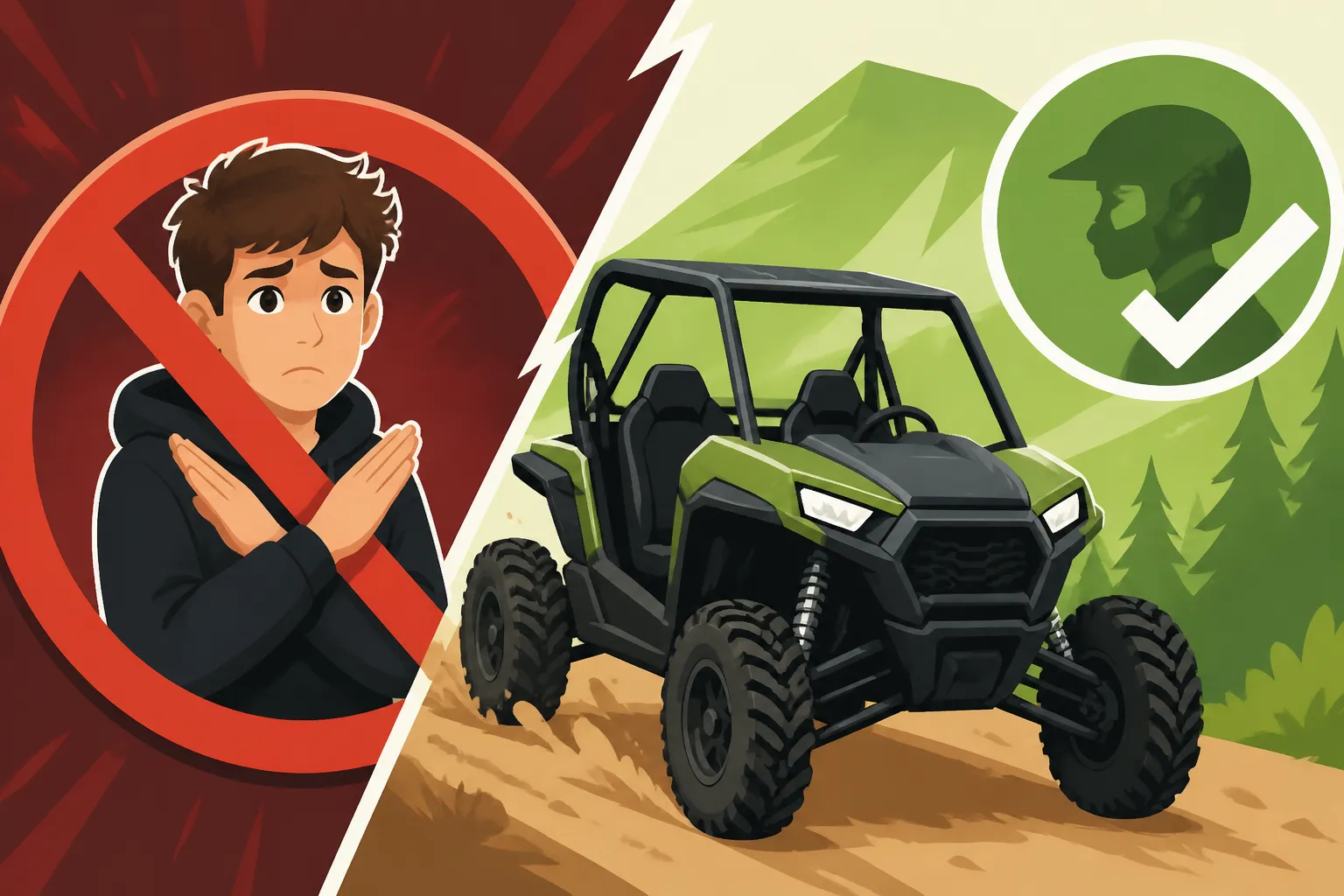
A 14-year-old may be ready to handle a UTV, but Wisconsin’s public riding rules set a firm age limit: a person under 16 cannot operate one on public ATV trails or routes. A safety certificate does not lower that age. Here’s what the rule means, how it differs from ATV rules, and what families should check before a ride.
The public-use rule for a 14-year-old
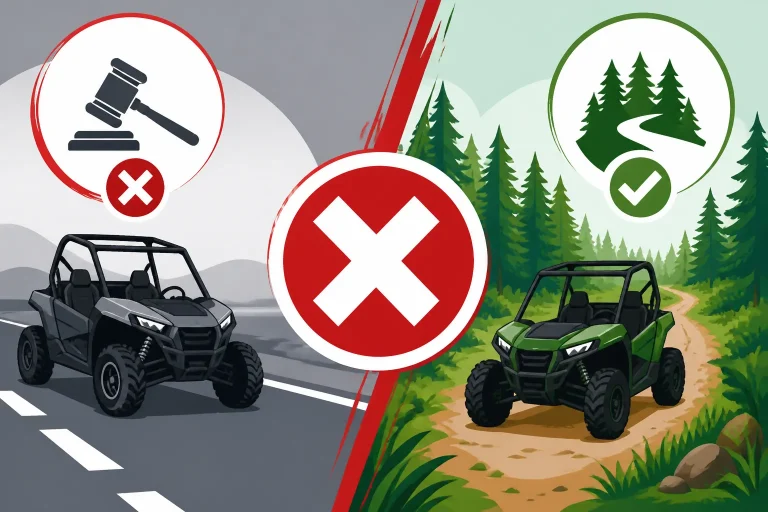
In Wisconsin, a 14-year-old cannot drive a UTV on a public ATV trail or route. The minimum operator age for a UTV in those public riding areas is 16. That rule applies even if the teen has completed a safety course, has an adult nearby, or is experienced behind the wheel.
The word “public” matters. ATV trails and routes may be on public land, private land open to public riding, or connected through different kinds of property. A route can also include a road segment. The practical question is whether the area is designated or open for public ATV or UTV use, not simply who owns the ground beneath it.
A UTV is not treated the same as every ATV for youth operation. Wisconsin allows some younger, certified riders to operate an ATV in certain public riding situations with adult supervision. That does not create the same permission for a 14-year-old to drive a UTV. See Wisconsin Age Rules for ATVs and UTVs and Twelve for an ATV, Sixteen for a UTV for the distinction.
| Situation | Can a 14-year-old operate a UTV? | What to keep in mind |
|---|---|---|
| Public ATV trail or route in Wisconsin | No | The public-use minimum age is 16; a certificate does not change it. |
| Public road that is part of an ATV route | No | A route designation does not make a 14-year-old eligible to drive a UTV there. |
| Private property | The public-trail rule may not be the only rule that applies | Check applicable state law, property rules, local requirements, and safety conditions before allowing operation. |
| Riding as a passenger | Possibly, if the UTV is designed and equipped for passengers | Follow the manufacturer’s seating and restraint instructions and any applicable safety rules. |
The table is a starting point, not a substitute for checking the rules for a particular trail, route, or property. Local ordinances and land-manager rules can add requirements. A town may also set operating conditions for its routes, so consult Finding a Wisconsin Town’s ATV Ordinance before planning a road-route ride.
Why a safety certificate does not change the answer
Safety certification and minimum operating age are separate requirements. A certificate shows that a rider has completed a required safety course; it does not authorize a person to operate every type of machine at any age.
That distinction is easy to miss because age and certification often appear together in Wisconsin ATV rules. For an eligible young ATV operator, certification and adult supervision may be part of the conditions for riding on public areas. But a 14-year-old does not become eligible to drive a UTV on a public trail or route by completing the same course.
A safety course is still worthwhile. It can help a young passenger understand safe behavior, explain why a driver must follow trail signs, and prepare the teen for lawful operation when old enough. But it is not an age waiver, a trail pass, or permission from a parent or property owner to disregard a public-use restriction.
If your teen is 14 and you are considering a public ride, use this quick check:
- Identify the machine as an ATV or UTV. Do not assume that rules for one automatically apply to the other.
- Confirm whether the planned area is a public trail, public route, or other area open to public riding.
- Check the age rule for operating that type of machine there.
- Confirm any required safety certification, registration, pass, and local operating conditions.
- If the teen is under the minimum age for that machine and area, do not let them take the controls.
A rider can be properly trained and still be too young to operate a particular vehicle in a particular place. For broader certification rules, see Wisconsin ATV Safety Certificate Requirements and Who Must Certify to Ride in Wisconsin.
Private property and passenger options
The public-use age restriction should not be read as a simple answer to every question about a UTV on private land. Private property is a different setting, and the rules can depend on where the machine is used, who owns or controls the property, and whether the area is open to other riders. Permission from a landowner is important, but it should not be treated as proof that every legal requirement has been met.
Before a 14-year-old operates a UTV on private property, check the applicable rules and the property owner’s conditions. Consider whether the land is genuinely private and closed to public riding, whether it connects to a public trail or route, and whether any local restrictions apply. Also check the machine’s owner’s manual and any limits set by the manufacturer. A powerful, heavy UTV can be difficult for a young operator to control, even in an open field.
A young teen may be able to ride as a passenger if the UTV is designed for passengers and the passenger uses the intended seat and restraint system. Do not carry someone in a cargo bed or in a seat position the manufacturer does not provide. Keep the number of occupants within the vehicle’s stated capacity, and make sure the driver is legally allowed to operate the UTV in that location.
Passengers still need a safety plan. In a side-by-side, seat belts and doors or nets help keep occupants inside the vehicle, but they do not make careless driving safe. Everyone should stay seated, keep hands and feet inside, and wear appropriate protective equipment. Wisconsin has separate rules and guidance for younger passengers; review Wisconsin Rules for a Child Passenger and Belts and Nets in a Wisconsin Side-by-Side before taking a young rider along.
Private-property permission also does not carry over to a public trail. A teen who may be allowed to operate on a specific private site cannot simply drive from that property onto a public route. Plan transportation between locations rather than treating a short public connector as an exception.
Planning a ride with a 14-year-old
If the goal is to ride Wisconsin’s public trails as a family, a 14-year-old can join without being the UTV operator. An eligible adult can drive, and the teen can ride in a proper passenger seat if the machine is designed and equipped for that use. Check the route’s access rules and the machine’s capacity before leaving.
If the teen wants to practice driving, separate that from the public trail ride. First confirm whether operation is allowed at the intended private site, then choose a controlled area with plenty of room, a suitable machine, and close adult oversight. A familiar field is not automatically safe: uneven ground, ditches, trees, fences, soft soil, and steep slopes can create serious hazards. Keep speeds low and stop if the teen cannot consistently control the vehicle.
For public riding, make the age check part of the same pre-trip process as registration and route access. Wisconsin machines may need the appropriate registration, and the requirements can differ based on how the machine is used. The right registration does not grant a young rider permission to operate a UTV. Review Wisconsin Rules on Private Land for the distinction between private property and public riding, and What Wisconsin Riders Need Before They Ride for other preparation checks.
If your family is visiting from another state, do not assume that another state’s youth rules transfer to Wisconsin. The local rules for the route still matter. Check Wisconsin ATV Rules for First-Time Visitors and confirm current requirements with the relevant land manager or official source before setting out.
The short answer is straightforward: a 14-year-old cannot drive a UTV on Wisconsin’s public ATV trails or routes. Certification, adult supervision, and parental permission do not override that age restriction. For private-property use, verify the rules and site conditions separately; for public rides, plan for the teen to be a passenger until eligible to operate the UTV.
Disclaimer
This article is for general informational purposes only and does not constitute professional advice. Laws, prices and regulations vary by location and change over time. Consult a qualified professional for guidance on your specific situation.