Which Wisconsin Registration You Actually Need
It can be incredibly confusing to figure out the right way to register your ATV or UTV in Wisconsin. Many riders just want to hit the trails or use their machine on their own land without getting tangled in red tape, but choosing the wrong registration type can lead to unnecessary fines or limitations. This guide will walk you through the nuances of Wisconsin's ATV and UTV registration options, helping you understand the differences between public and private use so you can confidently pick the one that truly fits your needs.
Understanding the Two Main Registration Paths in Wisconsin
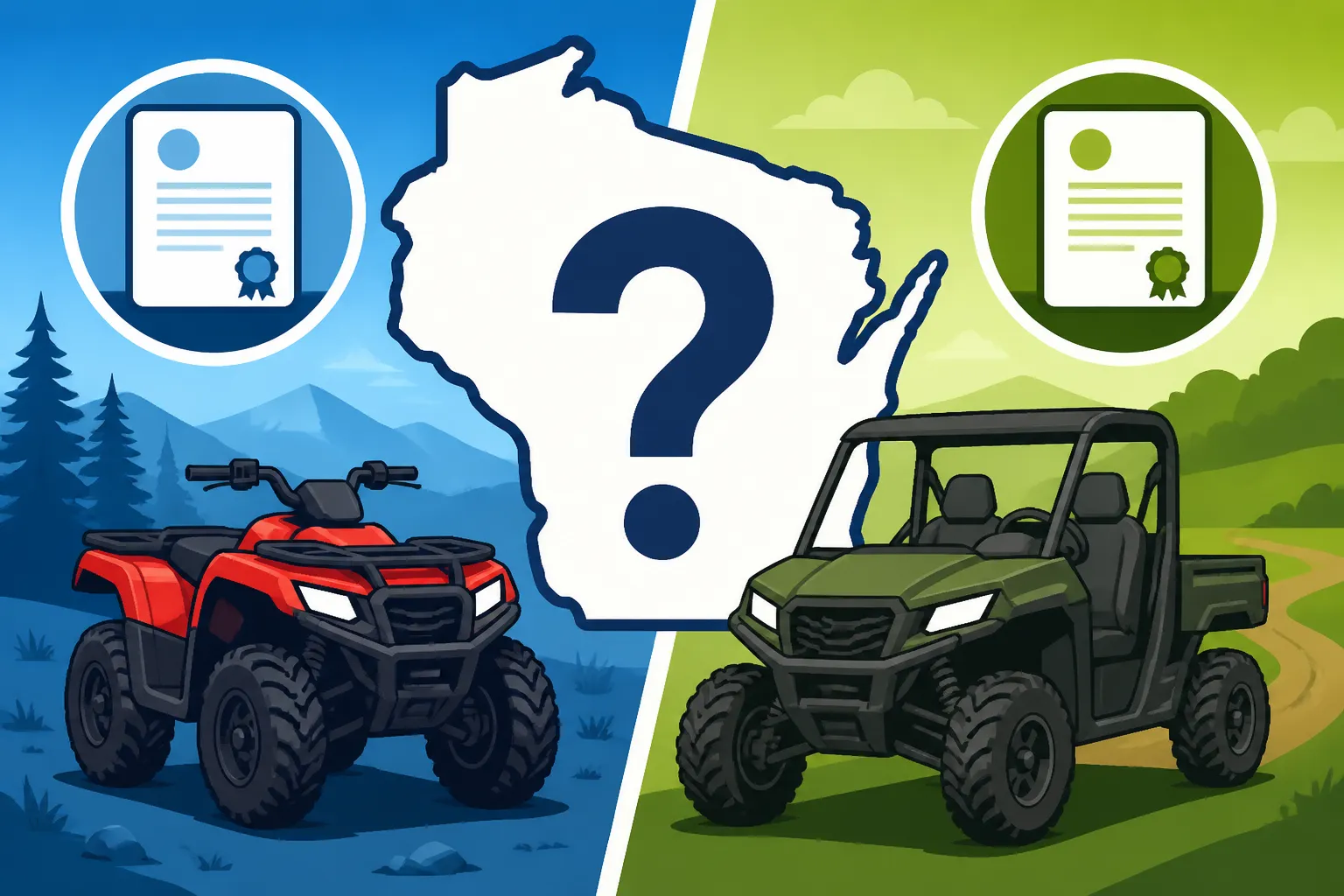
When you're looking to register your ATV or UTV in Wisconsin, you're essentially faced with two primary options: public use registration or private use registration. It’s not just a matter of checking a box; these two categories dictate where and how you can legally operate your machine, and misunderstanding them can really put a damper on your riding plans. Think of it as picking the right key for the right lock – each one opens up a different set of opportunities and responsibilities.
What "Public Use" Really Means for Your Machine
Public use registration is by far the most common choice for riders in Wisconsin, and for good reason. If you have any intention of hitting the vast network of state-funded trails, designated road routes, or even venturing out onto frozen lakes for ice fishing, this is the registration you absolutely need. It signifies that your machine is authorized to operate in areas accessible to the general public, and it contributes to the funding that maintains these incredible resources. Without it, you're essentially riding illegally on public lands, and that's a risk no one wants to take.
Imagine planning a weekend trip up north to ride the Chequamegon-Nicolet National Forest trails or exploring the county forest systems in Marinette or Vilas County. Your public use registration is your ticket to these adventures. It also covers you if you plan to utilize one of the many town road routes that connect trail systems and allow you to ride into small communities for gas or a bite to eat. Even something as simple as crossing a public road to get from one section of your property to another often requires a public use registration. Essentially, if your tires touch anything that isn't exclusively your private land, public registration is the safer, and usually necessary, route. This type of registration is what truly allows you to enjoy the full scope of what Wisconsin offers off-road. For a deeper dive, check out [What Public Registration Lets You Ride].
The Niche World of "Private Use" Registration
On the flip side, we have private use registration. This option is much more limited in scope and is intended for a very specific type of rider. If your ATV or UTV never, ever leaves your own private property—meaning land that you own or have explicit permission to ride on, and which doesn't involve crossing any public thoroughfare—then private use registration might be sufficient. This could be someone who uses their side-by-side exclusively for chores around a large farm, a homeowner who only plows their driveway with their quad, or a hunting enthusiast who transports gear solely on their own forested acreage. The key here is exclusively.
The main draw for private use registration is its permanence: it never expires. You pay a one-time fee, and you're good to go as long as you own the machine and its use remains strictly private. However, this convenience comes with significant restrictions. Take one tire onto a public trail, a designated road route, or even across a public road, and you're immediately in violation. Wardens are well-versed in these distinctions, and ignorance is rarely an excuse. It's a fantastic option for truly isolated use, but for most recreational riders, it's simply too restrictive. For those considering this option, read more about [Registering a Machine That Never Leaves Your Land].
Deciding Which Registration Fits Your Riding Style
Choosing between public and private registration really boils down to how you envision using your ATV or UTV. Most people dream of exploring Wisconsin's incredible landscapes, which almost always means some form of public access. But for a select few, the private option is a perfect, low-hassle fit. Let's break down the considerations for each.
The Public Use Path: Adventure Awaits
If your idea of a perfect weekend involves exploring miles of winding trails, traversing designated road routes that lead to charming small towns, or ice fishing on the expansive frozen lakes up north, then public use registration is your undisputed champion. This is the path most Wisconsin riders take because it offers the freedom to experience the state's vast off-road opportunities. It’s the standard, go-to option that opens up the greatest number of legal riding areas.
The process involves registering your machine with the Wisconsin DNR, and there's an associated fee. It's important to remember that this registration does expire annually. Specifically, all public use registrations expire on March 31st, regardless of when you initially registered your machine. This means you’ll need to renew it each year to keep your trail access valid. Missing this deadline is a common mistake that can lead to unexpected citations during a ride. Think of it as your annual pass to Wisconsin's outdoor playground. Understanding the costs is key, so familiarizing yourself with the [Wisconsin ATV Registration Fee for Public Use] is a good first step, as is knowing that [Wisconsin Public Use Registrations Expire March 31].
The Private Use Choice: Simplicity for Restricted Use
For those who genuinely use their ATV or UTV only on private property and have no intention of ever riding on public trails, designated routes, or crossing public roads, private use registration offers a straightforward, one-time solution. This option is perfect for machines dedicated solely to property maintenance, hauling firewood on private land, or accessing remote areas of your own hunting ground. The simplicity is in its longevity: once registered for private use, that registration doesn't expire. This means no annual renewal fees or worrying about a March 31st deadline, which can be a huge relief for some.
However, the allure of a non-expiring registration often overshadows its severe limitations. Many riders underestimate how often they might "just quickly" cross a town road to get to a neighbor's property, or participate in a local club ride that uses a small section of public trail. Even a simple ride down a field edge that borders a public road could be seen as a violation if your tires technically touch that public right-of-way. The [Wisconsin Private Use Registration Fee] is a one-time cost, and you'll appreciate the benefit of [Private Registration That Never Expires], but only if your use case truly fits within these narrow parameters.
The "What If I Change My Mind?" Scenario
Life happens, and sometimes your riding habits evolve. Maybe you initially bought your UTV for farm work, opted for private registration, but now your friends are all hitting the trails, and you want to join in. Can you switch? Absolutely. You can always upgrade a private use registration to a public use registration. It’s not an irreversible decision. You would simply re-register your machine for public use through the Wisconsin DNR, pay the public use fee, and then you’d be cleared for trail riding.
It’s generally not possible to "downgrade" from public to private registration in the same way, mostly because the private registration is a one-time fee and the public is annual. If you found yourself in a situation where you no longer needed public registration, you would simply let your public registration expire and then, if you still wished to register it for private use, you could apply for that. However, for most riders, it makes more sense to just maintain public registration if there's even a slight chance they'll use public lands or routes. It's far better to be over-prepared than under-prepared when it comes to legal riding.
Common Misconceptions and Edge Cases
The world of ATV and UTV registration in Wisconsin isn't always black and white. There are specific situations and lingering questions that often trip up even experienced riders. Let's clear up some of those common confusions.
"But It's My Land!": The Private Property Puzzle
One of the most frequently heard statements from riders who find themselves in a bind is, "But I was just on my own land!" While it's true that you generally don't need registration to operate an ATV or UTV exclusively on land you own or have permission to use, the nuance lies in what "exclusively" truly means. As soon as your machine touches a public road, even if you're just crossing it to get to another parcel of your property, or if you participate in an organized event that briefly uses a public access point, your private use "exemption" can quickly disappear.
Consider this: you have two plots of land separated by a town road. Even if the road is quiet and unpaved, driving your ATV across that road constitutes public use. In such a scenario, a public use registration would be required. This is a common pitfall in rural areas where properties are often divided by township or county roads. If you're wondering about the specifics, digging into [Do You Need Registration on Your Own Wisconsin Land?] can provide much-needed clarity. The key is to think about any point where your machine might interact with public infrastructure or land, however brief.
Farm Exemptions: Different Rules for Agricultural Work
Wisconsin law provides specific exemptions for ATVs and UTVs used exclusively for agricultural purposes. This is distinct from private use registration, though the spirit is similar. If your machine is used solely for work on a farm – think hauling feed, checking fences, moving equipment between fields, or other bona fide agricultural tasks – it may not require registration at all. This exemption is crucial for the countless farmers who rely on these machines as essential tools for their livelihood.
However, like all exemptions, this one comes with strict conditions. The machine must be used exclusively for agriculture. If that same farm UTV is used on a weekend for a recreational ride down a county trail, or even taken off the farm for a joyride, it loses its agricultural exemption and would then need public use registration. It's a fine line, but one that wardens are keen to enforce. It’s important for farmers to understand these nuances to avoid unexpected fines. More details on this can be found under [Wisconsin Exemptions for Farm Machines].
Dealers and Temporary Plates: Getting Started Right
When you purchase a brand-new ATV or UTV from a licensed dealer in Wisconsin, they will typically handle the initial registration process for you. They'll submit the necessary paperwork to the Wisconsin DNR, often electronically, to get your machine registered for either public or private use, depending on your choice. In many cases, they might provide a temporary plate or sticker that allows you to legally operate your machine for a short period while your official registration and decals are processed and mailed to you.
This initial process by the dealer is usually quite smooth, but it's still crucial for you, the buyer, to understand what type of registration they're applying for on your behalf. Don't assume anything; always confirm whether it's public or private use. And if you're buying from a private seller, this step falls entirely on you. You'll need to submit the registration yourself, which leads us to the next point about the actual mechanics of registering. Knowing that [Wisconsin Dealers Filing Registration in Five Days] means you won't be waiting too long, but it's still your responsibility to ensure it's done correctly.
How to Actually Register Your Machine
Once you've decided whether public or private use registration is right for you, the next step is actually getting it done. The process is straightforward, but it does require attention to detail and the right documentation.
The DNR Online Portal: A Convenient Option
For many riders, the easiest and most convenient way to register an ATV or UTV is through the Wisconsin Department of Natural Resources (DNR) online registration system. This portal allows you to complete the entire process from the comfort of your home, avoiding trips to a physical agent. You'll need to create an account, provide details about your machine (like the VIN), and upload any required documents. This is also the go-to method for renewing your public use registration annually.
The online system is usually quite intuitive, guiding you through each step. You'll typically pay the applicable fees electronically, and then your registration decals and card will be mailed to you. It's an efficient system, but always double-check all information before submitting to avoid delays. For more information on this process, see [Registering Through the Wisconsin DNR Website] and for renewals, check out [Renewing a Wisconsin Registration Online].
Working with a Registration Agent: Local Expertise
If you prefer a face-to-face interaction, have questions, or simply don't have easy access to a computer, you can register your ATV or UTV through a certified registration agent. These agents are often found at sporting goods stores, bait shops, and some convenience stores across the state, especially in popular riding areas. They are equipped to process registrations on the spot, and you'll typically leave with a temporary registration document, with your permanent decals mailed later.
When visiting an agent, make sure to bring all necessary paperwork, which usually includes your bill of sale and proof that sales tax has been paid (more on that below). The agent can guide you through the forms and answer specific questions about your situation. It's a great option for personalized service. You can find locations and more details about [Wisconsin Registration Agents and Where They Are].
The Paperwork You'll Need
Regardless of whether you register online or through an agent, you'll need a few key documents. The most critical is a proper bill of sale. This document proves you are the new owner of the machine. It should include the seller's and buyer's names and addresses, the date of sale, the purchase price, and a detailed description of the ATV or UTV, including its Vehicle Identification Number (VIN). A well-drafted bill of sale is your primary proof of ownership since Wisconsin does not title ATVs or UTVs. Many riders find tools like LawDepot helpful for creating comprehensive, legally sound bills of sale quickly and easily, ensuring all necessary details are included.
Another crucial piece of paperwork is proof of sales tax payment. In Wisconsin, you owe state sales tax on the purchase of an ATV or UTV, even if you buy it from a private seller. If you purchased from a dealer, this tax is usually collected at the time of sale and noted on your bill of sale. If you bought privately, you might need to show proof that you've submitted the sales tax directly to the Wisconsin Department of Revenue. This can sometimes be a sticking point for new registrations if not handled correctly. For what to include in your bill of sale, look at [What a Wisconsin ATV Bill of Sale Should Carry], and for sales tax details, refer to [Wisconsin Sales Tax on an ATV Purchase]. Making sure you have all your ducks in a row with these documents, perhaps using a template from a service like LawDepot for your bill of sale, will make the registration process much smoother.
| Feature | Public Use Registration | Private Use Registration |
|---|---|---|
| Where You Can Ride | Public trails, designated road routes, frozen lakes, public lands, private land with public access | Exclusively on private land owned or leased by you |
| Expiration | Annually, March 31st | Never expires |
| Fee Structure | Annual fee (check DNR for current amount) | One-time fee (check DNR for current amount) |
| Decals | Required, typically mailed after registration/renewal | Required, typically mailed after registration |
| Purpose | Recreational riding, hunting/fishing access, public transit | Property maintenance, farm work, private recreation |
| Flexibility | High (covers most riding scenarios) | Very Low (strictly limited to private property) |
| Funding | Contributes to trail maintenance & development | Does not directly fund public trail systems |
Disclaimer
This article is for general informational purposes only and does not constitute professional advice. Laws, prices and regulations vary by location and change over time. Consult a qualified professional for guidance on your specific situation.