Credit for Tax Paid to Another State
Buying an ATV or UTV out of state can feel like a smart move to save some money or find that perfect machine, but then you bring it home to Wisconsin, and suddenly, the state sales tax question looms large. It’s easy to feel a pang of worry about potentially paying tax twice or wondering if you even did things right. This guide is here to walk you through how Wisconsin handles sales tax on out-of-state ATV and UTV purchases, specifically focusing on whether you can get credit for tax you've already paid elsewhere, helping you avoid double taxation and understand the nuances.
The Wisconsin Sales Tax Conundrum for Out-of-State Purchases
It’s a common scenario: you find a fantastic deal on a side-by-side just over the border in Illinois or perhaps a unique quad in Minnesota. The price is right, the machine is perfect, and you seal the deal. You might pay sales tax right there in that other state, thinking you're all set. Then you bring it home, ready to register it with the Wisconsin DNR, and the question of sales tax pops up again. Many riders get a knot in their stomach wondering if they're about to be hit with another tax bill.
This isn't just about the money, though that's certainly a big part of it. It's about navigating a system that often feels complicated and unclear, especially when you're dealing with two different state tax codes. You want to do things correctly, avoid penalties, and most importantly, not pay more than you legitimately owe. Understanding how Wisconsin views these out-of-state transactions is the first step to peace of mind and smooth registration.
Why Wisconsin Cares Where You Bought It
Wisconsin, like most states, has a vested interest in ensuring its residents contribute their fair share to state services, and that includes sales tax on significant purchases like ATVs and UTVs. When you buy a machine from a Wisconsin dealer, the sales tax is collected right at the point of sale, and it's typically straightforward. However, when you step outside the state, Wisconsin's tax authority doesn't have direct jurisdiction over that initial transaction. They didn't get their cut, and they want to make sure they do.
The concern for the state isn't to punish you for shopping elsewhere, but rather to ensure tax equity. If Wisconsin residents could simply cross a border to buy high-value items without paying Wisconsin sales tax, it would create an unfair advantage for out-of-state businesses and lead to significant revenue loss for Wisconsin. That's why the state has mechanisms in place to address these situations, primarily through what's known as "use tax," which we’ll delve into shortly. It’s all about leveling the playing field and protecting the state's tax base.
The Double-Taxation Fear
Perhaps the most significant anxiety for anyone buying a machine out of state and bringing it to Wisconsin is the fear of being double-taxed. You've already forked over a chunk of cash for sales tax in Minnesota, Iowa, or Michigan, and the thought of having to pay another round of sales tax once you cross back into Wisconsin feels like an unfair punch to the gut. This is a very real and valid concern that many new residents or savvy shoppers face.
Fortunately, most states, including Wisconsin, have provisions to prevent this exact scenario. The intention isn't to make you pay tax twice on the same item, but rather to ensure that at least the difference between what you paid in the other state and what you would have paid in Wisconsin is collected. It's a system designed to balance state revenue needs with fairness to the consumer, though understanding the rules is crucial to actually benefit from it. Knowing you likely won't pay the full tax amount again can be a huge relief.
Understanding Wisconsin's Use Tax
The concept of "use tax" is often where the confusion begins for out-of-state ATV purchases. Many people are familiar with sales tax, but use tax can feel like an obscure, additional charge. In essence, Wisconsin's use tax is a complementary tax to its sales tax. It applies when you bring tangible personal property, like an ATV or UTV, into Wisconsin for use, storage, or consumption, and you haven't paid Wisconsin sales tax on that purchase.
Think of it this way: if you bought your machine from a dealer in Green Bay, you’d pay sales tax. If you bought it from a private seller and didn’t pay sales tax (which happens in many private sales), or you bought it from a dealer in another state who didn't collect Wisconsin sales tax, the use tax steps in. It's the state's way of ensuring that the tax revenue, which funds roads, schools, and other public services, is collected regardless of where the item was purchased. Understanding this distinction is key to navigating the registration process smoothly.
What is Use Tax and When Does It Apply?
As mentioned, Wisconsin’s use tax is essentially a sales tax in disguise for out-of-state purchases. It applies when you buy an ATV or UTV from a seller outside of Wisconsin, and that seller either didn't collect any sales tax from you, or collected sales tax at a rate lower than Wisconsin's combined state and local sales tax rate. The moment you bring that machine into Wisconsin and intend to use it here, you incur a use tax liability. This could be immediately after purchase, or if you were a resident of another state and then moved to Wisconsin with your machine.
For example, if you bought a quad from a private seller in a neighboring state where private sales are exempt from sales tax, or from a dealer who isn’t registered to collect Wisconsin sales tax, you’ll be responsible for remitting the Wisconsin use tax directly to the Department of Revenue when you go to register the machine. It’s not an optional fee; it’s a required part of bringing your machine into compliance for use on Wisconsin trails and routes.
Calculating Wisconsin's Use Tax
Calculating the use tax isn't overly complicated, but it requires knowing a few key figures. First, you need to know the purchase price of your ATV or UTV. Second, you need to know [Wisconsin's 5 Percent State Sales Tax] rate, plus any applicable county sales tax where you live or where you will register the machine. Many counties in Wisconsin also levy a local sales tax, which is typically half a percent, meaning the combined state and local rate could be 5.5% or more. This combined rate is what you'll use for your calculation.
If you paid sales tax in another state, you'll calculate the Wisconsin use tax on the purchase price and then subtract the amount of sales tax you already paid to the other state. You'll only owe the difference, if any. For instance, if Wisconsin’s combined rate is 5.5% and you paid 4% sales tax in another state, you’d owe the remaining 1.5% to Wisconsin. If you paid 6% in another state, you typically wouldn't owe anything additional to Wisconsin, as you've already met or exceeded Wisconsin's rate. This credit for previously paid tax is crucial for avoiding that double-taxation fear.
Claiming Credit for Sales Tax Paid to Another State
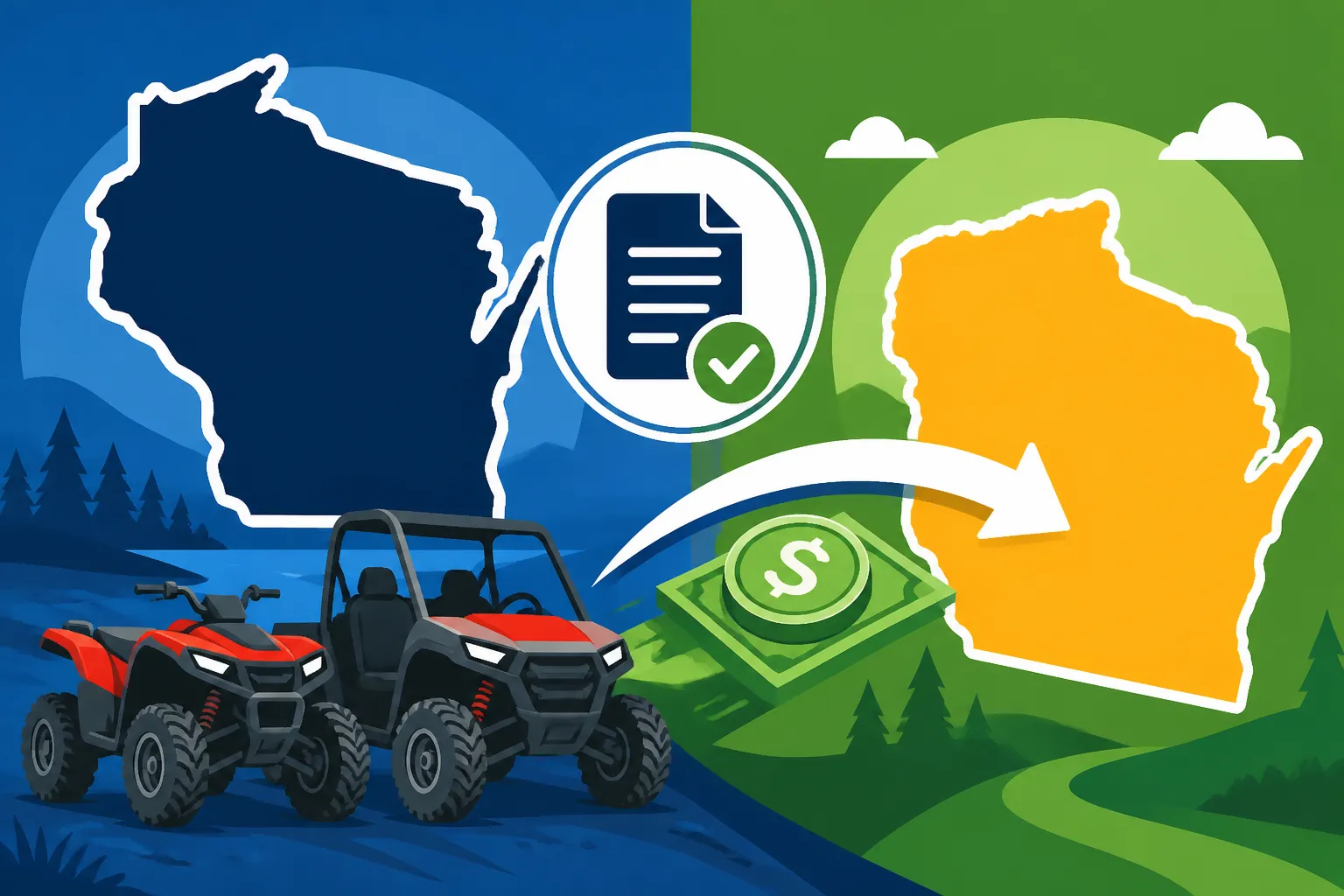
The good news is that Wisconsin does offer credit for sales tax paid to another state on your ATV or UTV purchase. This is a critical provision that prevents you from essentially being taxed twice on the same transaction, a fairness principle that most states adhere to. However, simply saying you paid tax in another state isn't enough; you'll need to demonstrate proof of that payment.
This process usually occurs when you’re going through the [Registering an ATV in Wisconsin] process, whether through the Wisconsin DNR website, by mail, or with a registration agent. The forms will ask about the purchase price and any sales tax paid. Be prepared to fill out this information accurately and have your documentation ready. It’s much smoother if you’re organized from the start.
The Reciprocity Principle for ATV Purchases
The ability to claim credit for sales tax paid to another state is based on a principle of reciprocity. This means that if you paid sales tax in a state that has a reciprocal agreement or similar tax credit provision with Wisconsin, you generally won't have to pay Wisconsin sales tax on the same amount again. Wisconsin's aim is to collect its portion of sales tax, but not to penalize consumers who have already fulfilled a similar obligation in another jurisdiction.
For example, if you bought your quad in Minnesota and paid their state's sales tax, Wisconsin would recognize that payment. If Minnesota's tax rate was lower than Wisconsin's, you'd only pay Wisconsin the difference. If Minnesota's rate was equal to or higher than Wisconsin's, you generally wouldn't owe any additional state sales tax to Wisconsin. This system helps facilitate commerce between states without unduly burdening buyers with duplicate taxes, which is a relief for anyone looking for Credit for Tax Paid to Another State.
Documents You'll Need to Prove Prior Payment
To successfully claim credit for sales tax paid to another state, documentation is absolutely essential. The Wisconsin Department of Revenue or the DNR will require tangible proof of your purchase and the sales tax collected. Without proper documentation, you might find yourself having to pay Wisconsin’s full sales tax rate, even if you paid tax elsewhere. This is why keeping meticulous records is so important, especially for a significant purchase like an ATV or UTV.
Typically, you'll need:
- The original bill of sale or purchase agreement: This document should clearly state the purchase price of the ATV or UTV, the date of sale, and explicitly show the amount of sales tax collected by the selling state's dealer. Make sure it's itemized.
- Payment receipts: Any receipts confirming the payment of the sales tax amount. This might be part of the bill of sale or a separate receipt.
- Proof of registration from the other state (if applicable): While not always required for tax credit, if the machine was previously registered in the other state, that paperwork can further support your claim of having bought and intended to use it there.
If you bought the machine from a private seller out-of-state and they provided a general sales agreement, you might want to consider using a more robust template, perhaps from a service like LawDepot, to ensure all necessary details are captured, especially if you foresee needing to prove the specifics of the transaction. This paperwork is your best friend when proving [Proof of Sales Tax Wisconsin Requires].
How Different Scenarios Affect Your Tax Credit
The amount of credit you can claim, and ultimately how much additional tax you might owe Wisconsin, largely depends on the sales tax rate of the state where you purchased the machine compared to Wisconsin's rate. It's not a one-size-fits-all situation, and understanding these nuances can save you headaches and unexpected costs. Some states have higher sales taxes, some have lower, and a few might even have no general sales tax at all. Each scenario plays out a little differently when you bring your new-to-you quad or side-by-side back to the Badger State.
It’s important to remember that Wisconsin is primarily concerned with collecting its sales tax, and the credit is essentially a courtesy to ensure fair treatment across state lines. Don't expect to "profit" from a tax discrepancy, but rather to minimize your overall tax burden to avoid that dreaded double-tax situation. Being prepared for these varying outcomes is a smart part of your pre-purchase research.
Machines Purchased in States With Higher Tax Rates
Let’s say you purchased your ATV or UTV in a state that has a higher sales tax rate than Wisconsin's combined state and local sales tax (which is currently around 5.5% in most areas). For instance, imagine a hypothetical state with a 7% sales tax rate. If you paid that 7% sales tax on your machine in that other state, when you bring it to Wisconsin, you generally won't owe any additional state sales tax.
Wisconsin will credit you for the amount of sales tax you already paid, up to Wisconsin's applicable sales tax rate. Since 7% is higher than Wisconsin's 5.5%, your obligation to Wisconsin's state sales tax is considered satisfied. You won't receive a refund for the difference, but you won't be required to pay anything further to Wisconsin for state sales tax. This is the ideal scenario for avoiding any additional tax burden when crossing state lines.
Machines Purchased in States With Lower or No Sales Tax
This is where you might still owe some tax to Wisconsin. If you purchased your ATV or UTV in a state with a sales tax rate lower than Wisconsin’s combined rate, you will likely owe the difference. For instance, if you bought a quad in a state with a 4% sales tax rate, and Wisconsin’s combined rate is 5.5%, you would owe Wisconsin the remaining 1.5% of the purchase price as use tax. This ensures that Wisconsin receives its intended tax revenue, even if you found a lower rate elsewhere.
Even more significantly, if you purchased your machine in a state that has no statewide general sales tax (like Oregon, Delaware, Montana, New Hampshire, or Alaska), you would be responsible for paying Wisconsin’s entire combined sales and use tax rate (e.g., 5.5%) on the purchase price of your ATV or UTV. In these situations, since no sales tax was paid to the other state, there's no prior payment to credit, and Wisconsin will expect its full share. This is a crucial point to understand, as it can represent a substantial amount, especially on higher-value machines.
The Role of a Bill of Sale in Your Claim
The bill of sale is not just a formality; it's the cornerstone of your claim for Credit for Tax Paid to Another State. This document serves as undeniable proof of the transaction, detailing the purchase price, the date of sale, and critically, the amount of sales tax collected by the seller (if any). Without a clear, detailed bill of sale, you will have a very difficult time proving to Wisconsin that you paid sales tax elsewhere, or what the actual purchase price was.
For private sales, where a formal dealer receipt isn't available, it's vital to create a robust [What a Wisconsin ATV Bill of Sale Should Carry]. This document should explicitly state the purchase price, clearly note if sales tax was collected (and by whom, if applicable), and be signed by both buyer and seller. Services like LawDepot can provide customizable bill of sale templates that ensure all necessary information is included, protecting both parties and providing you with the necessary evidence for tax purposes. A vague or incomplete bill of sale could lead to you paying Wisconsin sales tax in full, even if you believe you already satisfied the tax obligation.
Navigating the Registration Process with Your Tax Credit
Once you understand the tax implications, the next step is seamlessly integrating this information into the ATV registration process. This isn't just about getting your decals; it's about providing all the correct financial and ownership information to the Wisconsin DNR. The good news is that the forms are designed to prompt you for this information, but you need to be ready with your documentation to ensure a smooth experience.
Failing to properly declare your out-of-state purchase and any sales tax paid can lead to delays, requests for more information, or even the incorrect assessment of Wisconsin use tax. Being proactive and organized will save you a lot of frustration down the road. It’s a part of responsible ownership, just like getting your [Wisconsin DNR ATV Registration Explained].
When and Where to File Your Claim
You'll typically file your claim for credit for tax paid to another state when you submit your application for [Registering an ATV in Wisconsin]. This usually happens through one of a few channels:
- Online via the Wisconsin DNR GoWild website: When you fill out the online registration application, there will be sections asking about the purchase price and if sales tax was paid. You'll enter the amounts there.
- By mail: If you're mailing in your registration forms, you'll complete the relevant sections on the paper application and include copies of your proof of sales tax payment (bill of sale, receipts).
- At a Wisconsin Registration Agent: Many sport shops, hardware stores, and DNR service centers act as registration agents. When you go in person, you'll present your documents, and they can help you fill out the forms and process the tax calculation on the spot. This can be particularly helpful if you have questions or a complex situation, as they are trained to handle these transactions.
It’s crucial to submit all supporting documentation at the time of registration. Don't assume the DNR will simply take your word for it. They need the paper trail to verify your claim and correctly assess any remaining use tax.
Common Pitfalls and How to Avoid Them
Even with the best intentions, it's easy to stumble over some common hurdles when claiming tax credit for an out-of-state ATV or UTV purchase. Awareness is your best defense against these pitfalls:
- Incomplete or Missing Documentation: This is the number one reason for delays and issues. Make sure your bill of sale clearly itemizes the sales tax paid, the purchase price, and the seller's information. A handwritten note on a napkin isn't going to cut it. Always get a formal, legible, and detailed bill of sale, and consider using a template from a reputable source like LawDepot for private sales.
- Miscalculating the Tax: Double-check your math. Ensure you're using Wisconsin's combined state and local sales tax rate for comparison, not just the state rate. Incorrect calculations can lead to either an underpayment (which will be corrected later, often with penalties) or an overpayment.
- Waiting Too Long to Register: While the focus here is on tax credit, remember that Wisconsin has deadlines for new residents or those bringing machines into the state. Delaying registration can lead to penalties for an unregistered machine. For new residents, there's generally a [Wisconsin Registration Deadline for New Residents] which should be adhered to.
- Confusing Sales Tax with Property Tax or Other Fees: Ensure the tax you're claiming credit for is indeed sales tax, not some other fee or property tax from the other state. The credit specifically applies to sales tax or its equivalent.
By being meticulous with your paperwork, double-checking your numbers, and understanding the process, you can avoid these common issues and ensure a smooth registration experience for your out-of-state ATV or UTV.
Beyond Sales Tax: Other Considerations for Out-of-State Machines
While sales tax is a significant financial hurdle for many, bringing an ATV or UTV into Wisconsin from another state involves more than just the tax implications. There are other practical and legal considerations you should be aware of to ensure your machine is fully compliant and ready for the diverse riding opportunities Wisconsin offers, from its sprawling county forests to its extensive road routes.
Thinking beyond the initial purchase and tax can save you headaches later on the trail. These include understanding registration nuances, potential insurance requirements, and even specific differences in how certain types of machines (like UTVs) are treated in Wisconsin compared to other states. It’s all part of becoming a responsible and well-informed Wisconsin rider.
Registering a Minnesota Quad in Wisconsin
Let's use a specific example: you've just purchased a quad in Minnesota and are bringing it back to your home in Wisconsin. The process for [Registering a Minnesota Quad in Wisconsin] is quite similar to any other out-of-state machine but highlights some specific steps. First, you'll gather your bill of sale or purchase agreement, proving ownership and outlining the sales tax paid in Minnesota. Minnesota's sales tax rate is generally around 6.875%, which is often higher than Wisconsin's combined state and local sales tax of 5.5%. This means that in many cases, if you paid Minnesota sales tax, you likely won't owe additional state sales tax to Wisconsin.
You'll then submit your registration application to the Wisconsin DNR, either online, by mail, or in person at a registration agent. On the form, you'll indicate that the machine was purchased out-of-state and provide details of the sales tax paid in Minnesota. Ensure you have copies of your Minnesota sales receipt or bill of sale to accompany your application. Once processed, you'll receive your Wisconsin registration certificate and decals, ready to hit the trails!
Insurance and Other Ownership Costs
While not directly tied to sales tax credit, it's crucial to remember that owning an ATV or UTV in Wisconsin comes with ongoing costs, regardless of where you bought it. One of the most important is insurance. While Wisconsin generally doesn't mandate ATV insurance for all riding scenarios, it's highly recommended. Some municipalities and specific riding areas do require liability insurance, especially for riding on designated road routes. It’s also just plain smart to protect your investment and yourself against unforeseen accidents.
Beyond insurance, consider other yearly costs. There’s the annual [Wisconsin ATV Registration Fee for Public Use] (if you plan to ride public trails), maintenance like oil changes and tire wear, and of course, fuel. If you're buying a used machine, you might also be looking at immediate repair or upgrade costs. Factor all these into your budget, not just the initial purchase price and sales tax. Being aware of the full financial picture helps prevent any unwelcome surprises after you've brought your new machine home to Wisconsin.
Sales Tax Credit Scenarios Table
To help illustrate how Credit for Tax Paid to Another State might work in various scenarios, here's a simplified table comparing hypothetical purchase situations:
| Purchase State | Purchase Price | Sales Tax Paid in Other State | Other State's Sales Tax Rate (Example) | Wisconsin's Combined State & County Tax Rate (Example) | Additional Wisconsin Use Tax Due | Notes |
|---|---|---|---|---|---|---|
| Minnesota | $10,000 | $687.50 | 6.875% | 5.5% | $0.00 | Since Minnesota's rate is higher than Wisconsin's, no additional state use tax is owed. You will not receive a refund for the difference. |
| Illinois | $10,000 | $625.00 | 6.25% | 5.5% | $0.00 | Illinois's state sales tax rate is higher than Wisconsin's combined rate, so no additional use tax is due to Wisconsin. |
| Iowa | $10,000 | $600.00 | 6.0% | 5.5% | $0.00 | Iowa's state sales tax rate is higher than Wisconsin's combined rate, so no additional use tax is due to Wisconsin. |
| Michigan | $10,000 | $600.00 | 6.0% | 5.5% | $0.00 | Michigan's state sales tax rate is higher than Wisconsin's combined rate, so no additional use tax is due to Wisconsin. |
| Indiana | $10,000 | $700.00 | 7.0% | 5.5% | $0.00 | Indiana's sales tax rate is higher than Wisconsin's combined rate, so no additional use tax is due. |
| State X (Low Tax) | $10,000 | $400.00 | 4.0% | 5.5% | $150.00 | You owe the difference between Wisconsin's rate ($550) and what you paid in State X ($400). This would be $150. |
| State Y (No Tax) | $10,000 | $0.00 | 0% | 5.5% | $550.00 | No sales tax was paid in State Y, so you owe the full 5.5% Wisconsin combined sales/use tax ($550). |
| Private Sale (Exempt in other state) | $10,000 | $0.00 | N/A (Exempt) | 5.5% | $550.00 | If you bought from a private party in a state where private sales are exempt from sales tax, you'd owe the full 5.5% Wisconsin combined sales/use tax, as no tax was collected. |
Note: Wisconsin's actual combined state and county sales tax rate varies by county. This table uses a hypothetical 5.5% for illustration, representing a 5% state rate plus a 0.5% county rate.
Disclaimer
This article is for general informational purposes only and does not constitute professional advice. Laws, prices and regulations vary by location and change over time. Consult a qualified professional for guidance on your specific situation.