Riding Wisconsin Trails in October
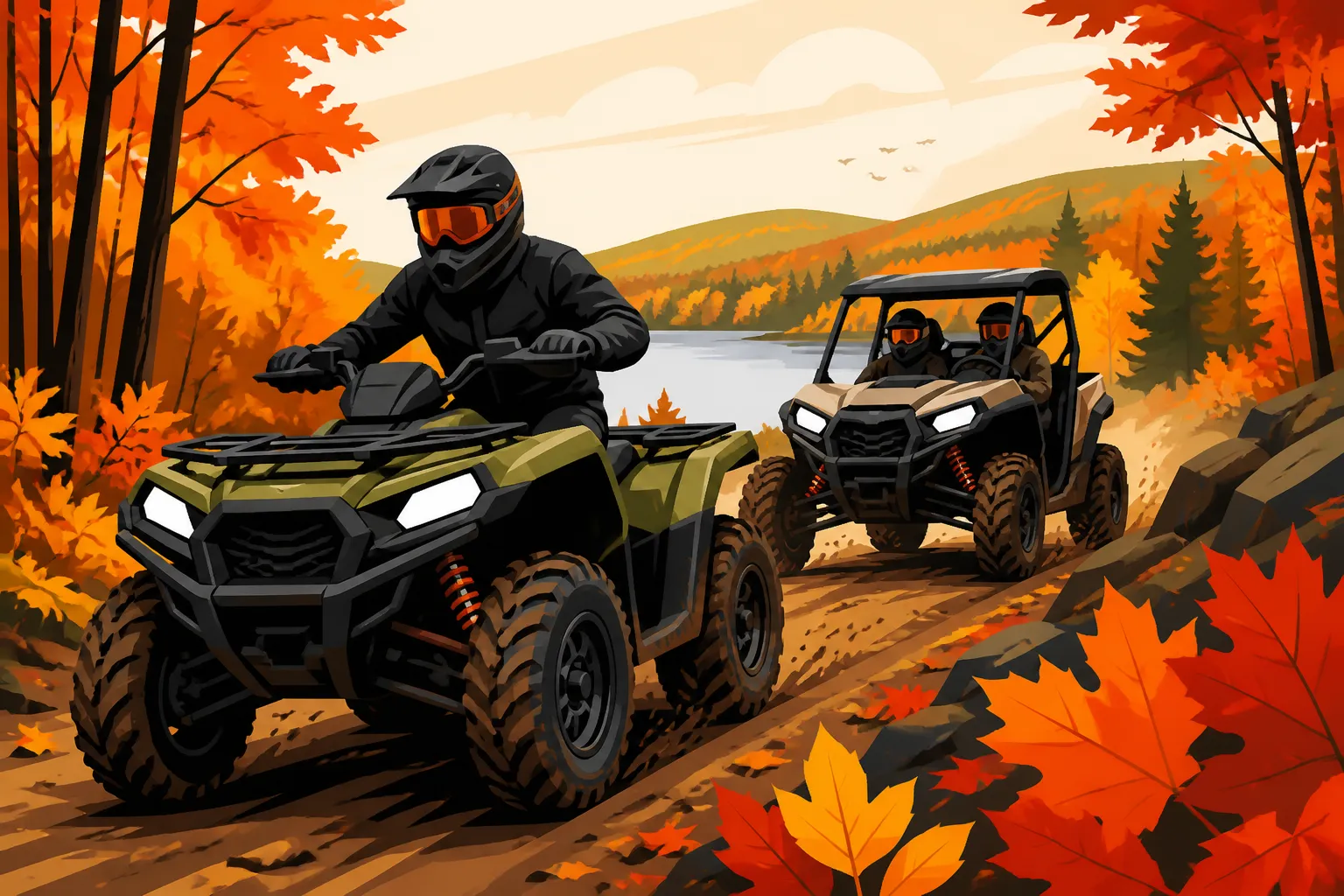
October can be a beautiful time to ride in Wisconsin, but fall color and cool air do not mean every trail is open. County closures, changing weather, hunting activity, and shorter daylight can complicate a trip. This guide explains how to check access, choose a sensible route, prepare your machine, and enjoy an autumn ride without arriving at a closed trailhead.
Check Wisconsin trail access before you leave
Trail openings and closures vary by location
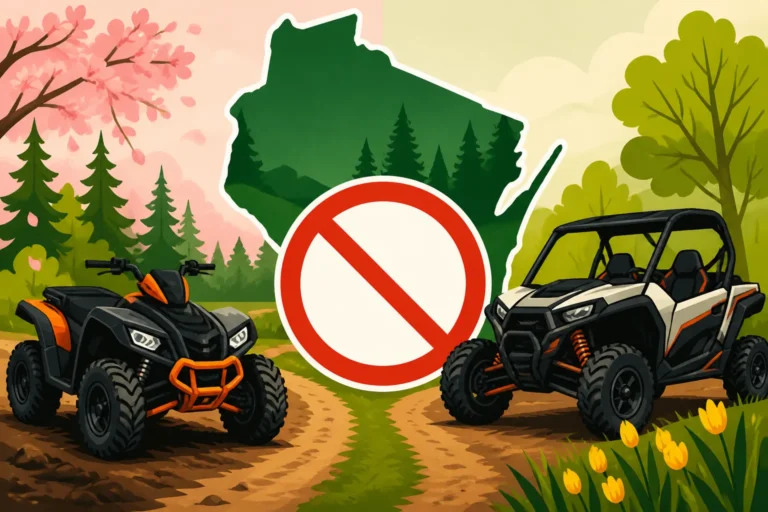
There is no single statewide October schedule that tells you which ATV and UTV trails are open. Access depends on the land manager and the specific trail system. County forest routes, state forest trails, town road routes, and private connections can all follow different rules. A trail that is open in one county may be closed in a neighboring one, or may have a different season from the road route that connects to it.
October is also close to the seasonal transition when some areas begin preparing for winter or limit riding because of wet conditions. A trail shown on an older map may no longer be open for the day you plan to ride. Before loading your machine, check the current notices from the county forestry office, local trail organization, town, or other land manager responsible for that route. Start with Checking Wisconsin Trail Status Before You Drive and Where Wisconsin Closure Notices Are Posted.
Pay particular attention to temporary closures after heavy rain. A packed gravel road may drain well, while a low-lying trail or sandy section can become soft and vulnerable to rutting. Riding around a closure or creating a detour can damage land and may put you somewhere you are not allowed to ride. If conditions are questionable, choose a different route or postpone the trip.
Confirm what kind of route you are riding
The word “trail” can refer to several types of riding access in Wisconsin. A marked off-road trail, a town road route, a county forest road, and a connecting segment are not automatically governed by the same rules. If your planned loop uses more than one kind of route, verify each segment rather than assuming that permission on one section carries over to the next.
Look for route signs at junctions and read them as you ride. Signs may identify a route, show a direction, or indicate that access ends. If a connection crosses a public road, use only a crossing or route that is legally designated for ATV or UTV travel. For a refresher on how these segments fit together, see What a Wisconsin ATV Route Actually Is and Wisconsin Route Signs and What They Mean.
Digital mapping can help you spot trail connections and plan a route, but it should not replace current land-manager notices or posted signs. Riders who use onX Offroad can review mapped routes and build a plan before leaving home; still, check whether the specific trail is open and permitted for your machine. Keep an offline map or paper backup available in case cell service drops.
Use a practical access checklist
A few minutes of checking can save a long drive to a closed gate. Before setting out, confirm the trail’s operating status, the type of machine allowed, any seasonal restrictions, and whether your route includes roads that require separate local permission. If you are riding a loop between towns, check the rules for each town along the way.
| What to check | Why it matters in October |
|---|---|
| Trail status for the exact date | Seasonal or weather-related closures may change access |
| Land manager’s latest notice | A county or town may post a temporary restriction |
| Route type and permitted machine | Trails, forest roads, and town routes can have different rules |
| Start and end times | Shorter daylight leaves less room for delays |
| Pass and registration requirements | Requirements can depend on the machine and where you ride |
| Hunting activity and parking | Busy access points can affect safety and staging |
| Weather and ground conditions | Cold rain, mud, or early snow can make a route harder |
If an official notice is unclear, contact the responsible local office before you travel. Do not rely on a social media post from an earlier weekend as proof that a route remains open. For broader planning help, Planning a Wisconsin Riding Trip can help you think through the route, staging, and timing.
Plan around October weather and shorter days
Expect fall conditions to change quickly
Wisconsin weather in October can shift from mild sunshine to cold rain, wind, or an early snow. Conditions can also differ between southern Wisconsin and the Northwoods, and between a sheltered trail and an exposed road. Check the forecast for the trail area, not only your home town, and consider how the weather may affect the ground as well as your comfort.
Dress in layers that you can adjust during the ride. A warm base layer, wind-resistant outer layer, gloves suited to the temperature, and dry spare clothing in a sealed bag can make a big difference if you stop for a breakdown or get caught in rain. A chilly ride can feel manageable while moving, then become uncomfortable quickly when you stop. Pack for the delay you hope not to have.
Wet leaves can cover roots, rocks, ruts, and drainage channels. A shaded corner may remain slick even when an open stretch has dried. Slow down where visibility is limited, leave more space between machines, and avoid sharp steering or sudden braking on slippery ground. If the trail is becoming muddy, turning around is often the better choice than pushing onward and deepening the ruts.
Start early and set a firm turnaround time
Daylight fades earlier in fall, and trees can make a forest trail feel dim well before sunset. Plan a route that leaves time to return to the staging area before dark. Build in time for breaks, wrong turns, a slow section, and any road connection where you may need to stop and reassess. A route that feels short on a summer afternoon can become a stressful ride if the group is still deep in the woods at dusk.
Before leaving, agree on a turnaround time that is earlier than sunset. Make sure everyone in the group knows the plan and has a charged phone, but do not assume a phone will have service everywhere. A GPS device, downloaded map, or paper map can help when coverage is weak. If you use onX Offroad to prepare, download the information you need before entering a cell dead zone and carry a backup navigation option.
Lighting matters even if you intend to finish in daylight. Check that your headlights and taillights work, and bring a flashlight or headlamp for a roadside stop or trailer loading. If poor visibility or unexpected delays make the return ride unsafe, stop in a safe, permitted location and reassess rather than rushing.
Choose a route that matches the group
October can be a good time for a relaxed scenic ride, but it is not the best moment to discover that a route is too ambitious for a new rider or a machine carrying extra gear. Choose a loop that gives your group a clear return point and options to shorten the day. If you are riding with children, inexperienced operators, or a mixed group of ATVs and UTVs, keep the pace conservative and agree on regrouping points before starting.
A route with frequent junctions can be difficult to follow when leaves cover the ground or markers are hard to see. On a map, identify major intersections and landmarks before you leave. Set a lead rider and a sweep rider if the group is large enough, and do not let the group stretch so far apart that the last machine cannot see the next turn.
Ride with care around hunters and other trail users
Be visible and predictable during hunting season
October overlaps with hunting activity in many parts of Wisconsin. That does not mean every public trail is closed, but it does mean riders should be especially alert around forest access points, parking areas, and roads near hunting land. Check local notices and respect any posted restrictions. Never assume that a trail is open simply because you see another vehicle or machine nearby.
Wear visible clothing appropriate to the conditions and follow any applicable rules for the area and activity. Keep to designated routes, avoid stopping in a way that blocks a gate or access point, and do not ride off-trail to get around congestion. If you encounter hunters or a vehicle carrying hunting gear, slow down and give them room. A calm, courteous interaction is better than trying to squeeze past in a narrow spot.
Be aware that an ATV or UTV can be difficult to hear from a distance in a wooded area, especially when wind and leaves are moving. Reduce speed near blind corners and junctions, and be ready to stop. For more on planning around seasonal access and hunting use, see [Wisconsin Rules for a Machine at a Hunting Lease] and [Wisconsin Rules for a Machine Used on Public Land].
Respect closures, private land, and local rules
A route on a map does not grant permission to cross private property. Some public routes connect through land where access is limited to a marked corridor or specific road. Stay on the signed path, do not follow informal tracks, and never treat a gate that is open as permission to enter. If a sign says the route is closed, turn around rather than looking for a way around it.
Town road routes can have local rules about hours, direction, speed, or permitted machine types. These rules may differ between communities, even when the roads connect. Check the ordinance or route information for each town on your ride. The same care applies to county forest roads and trail systems: the managing authority’s rules and posted notices take precedence over assumptions based on a nearby route.
When a route passes through a community, ride slowly near homes, businesses, and pedestrians. Keep noise down, avoid unnecessary revving, and park only where permitted. Responsible riding helps protect access for everyone, especially during a season when local residents may be sharing forest roads with hunters and other visitors.
Keep the group together without crowding
Fall conditions make good group habits especially important. Agree on a steady pace, keep enough space to stop safely, and use hand signals or a reliable communication plan when the group needs to pause. At a junction, wait until the rider behind you has seen the turn before moving on. This simple habit can prevent someone from taking the wrong branch while the rest of the group continues.
If visibility is poor, dust is low, or the trail is slick, increase following distance. Do not ride side by side where the route is narrow or where another user may appear around a bend. A UTV should leave room for a smaller machine to maneuver, while an ATV rider should avoid darting between vehicles in a group. Everyone should know where the next regrouping point is.
If a machine develops a problem, move it out of the travel line only if it is safe and allowed to do so. Make the group visible to approaching riders, and do not leave one person alone with a disabled machine. For remote routes, review [What to Carry on a Northwoods Ride] and [First Aid Far From a County Trailhead] before packing.
Prepare your machine and gear for an autumn ride
Inspect the machine before loading it
A pre-ride check is useful any time of year, but cold and wet fall conditions can expose small problems. Check tire condition and pressure, brakes, steering, lights, battery, and fluid levels. Look for loose fasteners, damaged boots, and leaks. If you have not ridden the machine recently, test it close to home before hauling it to a remote trailhead.
Make sure the machine is appropriate for the route and any posted restrictions. A wide UTV may not fit on a narrow trail, and a machine set up for winter work may handle differently from one with standard tires. Inspect any winch, plow, or added equipment for secure mounting. If you carry recovery gear, know how to use it safely and avoid attaching a winch to a tree without appropriate protection.
Carry basic tools and a small repair kit suited to your machine. Useful items may include a tire repair kit, spare fuses, a compact air source, and the tools needed for common adjustments. Pack drinking water, snacks, a first-aid kit, and a way to keep essential items dry. A modest kit can make an unexpected stop less uncomfortable, but it does not replace a plan to avoid difficult conditions.
Pack for a delay, not just the ride
A good October packing list accounts for cold, rain, and the possibility of being out longer than expected. Bring a warm extra layer, dry socks, gloves, water, food, and a headlamp. Store them in a waterproof bag or container, particularly if your machine has an open cargo area. Keep critical items easy to reach rather than buried under gear.
Tell someone who is not riding where you plan to go and when you expect to return. Share your starting point and the route you intend to take, then let them know if the plan changes. If the trail system has poor cell reception, consider a navigation or communication backup appropriate for the remoteness of the area. Keep your phone protected from cold and moisture, and do not rely on it as your only map.
If you are riding in a group, check that everyone has suitable clothing and knows the route plan. One underprepared rider can turn a pleasant afternoon into a hurried trip back. A quick conversation before departure about pace, stops, and what to do if someone gets separated is worth the time.
Make the ride enjoyable without forcing the conditions
Fall color is a lovely bonus, but it is not a reason to keep riding through a closure, deep mud, or poor visibility. Build the day around a flexible plan: choose a primary route, identify a shorter alternative, and know where you can safely turn back. If the weather worsens or the ground is getting damaged, adjust the plan without treating it as a failed outing.
For scenic riding, allow time to stop in safe, permitted places rather than slowing unexpectedly in the travel lane. Be considerate at busy trailheads, and leave room for other riders to unload and turn around. Carry out all trash, avoid disturbing wildlife, and leave gates and signs as you found them.
The most memorable October ride is often the one that ends comfortably, with enough daylight to load up without rushing and a machine that did not have to be dragged through questionable conditions. Check local access again before departure, ride at a pace that suits the terrain, and be ready to change plans. Wisconsin’s autumn trails reward riders who prepare carefully and respect the people and places they share.
Disclaimer
This article is for general informational purposes only and does not constitute professional advice. Laws, prices and regulations vary by location and change over time. Consult a qualified professional for guidance on your specific situation.