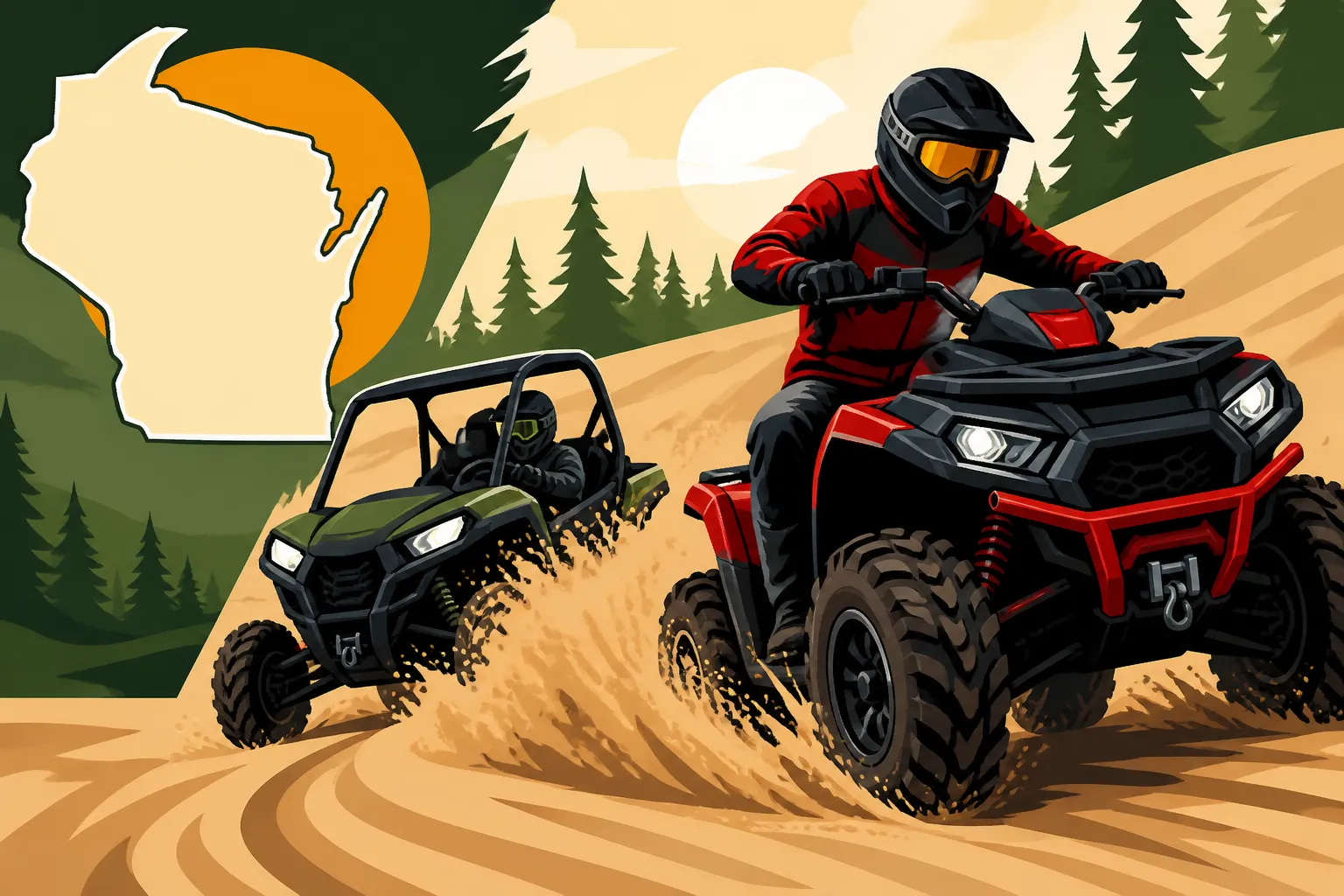
Riding Black River Sand
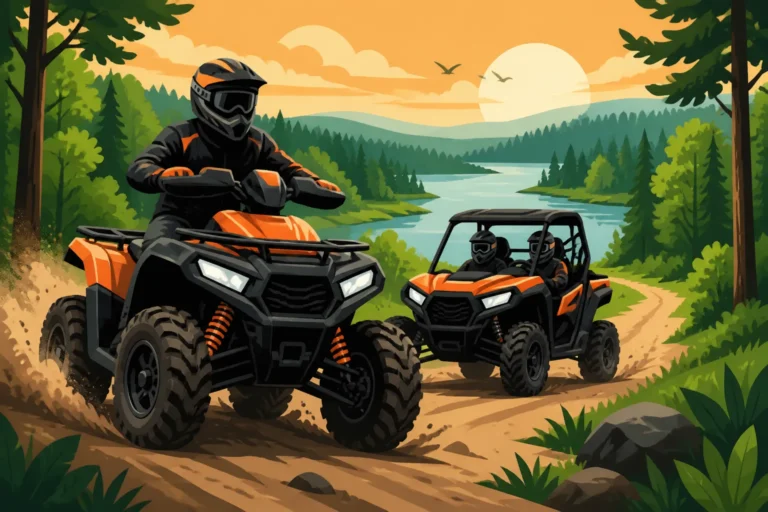
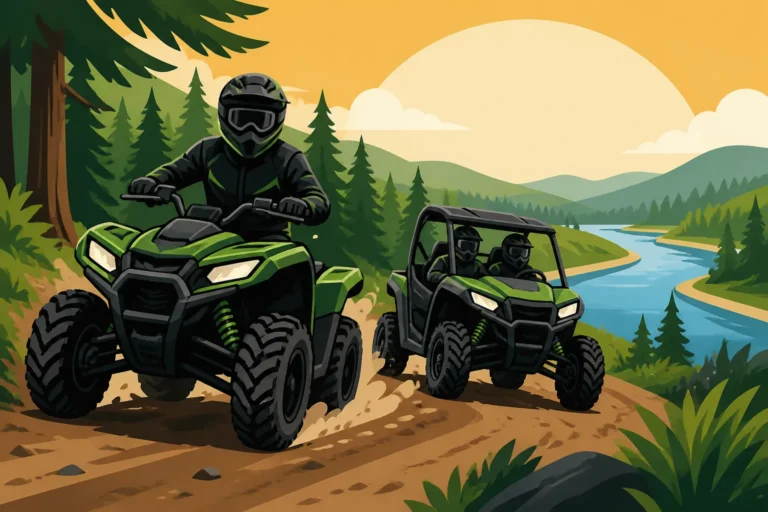
Loose sand can turn a familiar ATV ride into a tiring day of spinning tires, overheating, or getting stuck in a hidden rut. Black River State Forest, near Black River Falls, offers a distinctive sandy riding experience, but conditions and access can vary. This guide covers how to prepare, ride the terrain, check current access, and plan a safer day on the trails.
What makes Black River sand riding different
Expect changing traction, not one consistent surface
The word “sand” can make a trail sound predictable, but the surface may change considerably over a single ride. You might move from firm, packed ground to loose patches, soft corners, or rutted stretches. Recent rain, drying weather, traffic, and maintenance can all affect how the trail feels under your machine.
In loose sand, tires can dig in rather than roll forward, especially if you stop abruptly or apply too much throttle. A machine that feels planted on a firm section may wander or bog down when the surface softens. Keep your speed controlled and make small, smooth adjustments instead of treating every stretch like an invitation to accelerate.
Sand can also hide changes in the ground. A shallow-looking depression might hold soft material or water, while a rut may be deeper than it appears from the seat. Look well ahead, scan the trail surface, and avoid cutting across the edges of a marked route to find a firmer line. Leaving the trail can damage vegetation and may put you somewhere you are not permitted to ride.
For a broader look at the area and the ride itself, see [Black River State Forest ATV Riding]. Conditions are not fixed from day to day, so the best preparation is to expect variation rather than assume the trail will match a previous visit.
Give the machine time to work
A common mistake in sand is responding to every loss of momentum with a sharp burst of throttle. That can spin the tires, throw sand, and dig the machine deeper. Instead, maintain steady, measured power where appropriate, keep your steering inputs gradual, and avoid unnecessary stops in especially soft sections.
If you feel the machine slowing, ease into the throttle rather than snapping it open. Keep your weight balanced and follow the trail’s direction. On an ATV, small body-position changes can help maintain control; on a UTV, smooth steering and throttle inputs help keep passengers comfortable and reduce abrupt weight shifts.
Do not assume a bigger or heavier machine will handle sand more easily. UTVs can carry passengers and gear, but extra weight can make a soft section harder to manage. Likewise, a narrower machine may fit places a wider one cannot, but that does not automatically make it suitable for every trail. Check the rules and dimensions relevant to the route before setting out. [Wisconsin Trails Rated for Full-Size Rigs] can help you think through why machine fit matters.
Treat dust, heat, and visibility as part of the terrain
Loose, dry sand can create dust, especially when riders are close together. Leave generous space between machines so you are not riding in another group’s cloud. If visibility drops, slow down and allow the dust to clear rather than following taillights at a speed that leaves you little time to react.
Dust can also collect around the machine and gear. Bring eye protection that fits securely, and consider how dust may affect anyone riding behind you. UTV occupants should use the machine’s required occupant-protection equipment and follow the manufacturer’s guidance. On an ATV, goggles can help protect eyes from grit and flying debris.
Sand riding can feel physically demanding, even when the trail is not especially technical. Keep water accessible, take breaks before you are exhausted, and pay attention to signs that the machine is running unusually hot or struggling. If performance changes, stop somewhere safe and check the situation rather than pushing on simply because you are close to the trailhead.
Planning a ride in Black River State Forest
Check trail access before loading the trailer
A trail shown on an old map or remembered from a previous trip may not be open when you arrive. Seasonal closures, weather, maintenance, and land-management decisions can affect access. Check current notices and maps before driving to the forest, then look again for posted signs when you reach the riding area.
Start with [Checking Wisconsin Trail Status Before You Drive] and [Finding a Wisconsin County Trail Map]. If you use digital mapping, onX Offroad can help you review a route and understand your location, but treat any app as a planning aid rather than permission to ride. Follow posted signs and official local information when they differ from a saved route or map display.
It is also worth checking whether your planned route is an ATV trail, a road route, or another type of access. Those terms can involve different rules and may not allow the same machines or riding behavior. A route that looks connected on a screen may cross a closed section, an area with different restrictions, or land where motorized travel is not permitted.
Before you leave home, make sure your plan accounts for the machine you are bringing. Confirm that its width, equipment, registration status, and any required pass or permit meet the rules for the specific trail system. Rules can depend on where and how you ride, so do not assume that requirements for one Wisconsin riding area automatically apply to another.
Choose a realistic loop and leave room for delays
It is tempting to plan a full day around the longest line you can trace on a map. That can be a poor fit for loose terrain, especially if you are riding with children, beginners, a passenger, or a machine that is new to you. Start with a manageable plan, then add distance only if conditions, energy, and daylight allow.
A shorter route gives you room to stop for a slow rider, help with a stuck machine, or turn around if the trail becomes uncomfortable. It also leaves time for breaks and avoids the pressure of racing back before dark. If you are unfamiliar with the area, identify a conservative turnaround point before you start rather than making that decision when everyone is tired.
Keep a paper map or another offline navigation option available. Cell service can be unreliable in some wooded areas, and a phone battery can drain faster when it is being used for navigation. onX Offroad may be useful for reviewing an area before the ride, but download or save what you need in advance and carry a backup way to orient yourself.
If your group includes riders with different experience levels, agree on a simple regrouping plan. For example, choose a safe pull-off where the group will wait if it becomes separated. Keep the pace comfortable for the least-experienced rider, and avoid pressure to keep up with a faster machine.
Plan for the practical details
Before unloading, check that your trailer is parked legally and securely, and that your machine is ready to ride. A loose tie-down, low tire, or weak battery is an irritating problem in the parking area; it can become a much bigger one after you have traveled into the forest. Inspect the tires, brakes, lights, throttle, steering, and fuel level, and secure loose cargo.
Pack water, basic first aid supplies, a phone or other communication device, and the tools appropriate for your machine. A tire repair kit and a way to recover a stuck machine may be useful, but only carry recovery equipment you know how to use safely. Avoid improvised recoveries that could put someone in the path of a moving machine or loaded strap.
Tell someone where you are going and when you expect to be back. If plans change, let them know when you can. For more trip-planning ideas, see [Planning a Wisconsin Riding Trip] and [Wisconsin Trailhead Parking and Staging]. For details on navigating when coverage is limited, [Cell Dead Zones in Northern Wisconsin] is also worth reading.
| Before the ride | What to check | Why it matters |
|---|---|---|
| Trail status | Current closures, access notices, and posted signs | A route may be closed or restricted even if it appears on an older map |
| Machine fit | Width, equipment, and permitted machine type | Not every trail is suitable for every ATV or UTV |
| Ride plan | Distance, turnaround point, daylight, and group pace | A realistic plan leaves time for delays and fatigue |
| Machine condition | Tires, brakes, steering, lights, fuel, and cargo | Small problems are easier to address before leaving the staging area |
| Navigation | Current map, offline option, and backup plan | Cell service and battery life may be limited |
| Group readiness | Water, communication, first aid, and recovery plan | Sand, heat, and separation can make a minor issue harder to manage |
Riding loose sand with better control
Keep inputs smooth and leave space
Sand rewards patience. Use smooth throttle and steering, look farther down the trail than the patch immediately in front of your tires, and avoid sudden braking where the surface is loose. If a corner is soft, approach at a controlled pace and steer steadily rather than making a sharp correction at the last moment.
Leave more space than you would on a firm, dry surface. The rider ahead may slow unexpectedly, stop to check a map, or encounter a soft patch. Space also helps reduce dust exposure and gives everyone more room to react. In a group, ride single file unless the trail and rules clearly allow otherwise, and do not pressure another rider to move faster than feels safe.
If a rider ahead stops, do not crowd the machine or pass without a clear view and a safe place to do so. Wait until the trail is visible and there is room to pass legally. On narrow or winding sections, a few seconds of patience can prevent a collision or a stressful recovery.
For route etiquette and the practical challenges of mixed groups, [Single File on a Wisconsin Route] offers useful reminders. Keep the same considerate approach on trails: slow down when appropriate, respect other users, and avoid leaving dust or debris in someone else’s face.
Know what to do if a machine bogs down
If a tire begins to spin, more throttle is not always the answer. Ease off, stop the wheels from digging deeper, and assess the ground and the machine’s position. A rider who keeps spinning tires may turn a manageable soft spot into a deeper hole that is harder to escape.
If it is safe to do so, reduce unnecessary weight and cargo, check whether the machine is hung up on an obstacle, and consider whether a small change in direction would help. Avoid placing hands or feet near moving tires or hot components. If you use a winch or recovery strap, follow the equipment maker’s instructions, use suitable attachment points, and keep people clear of the line of pull.
A recovery should not put the group in greater danger than the stuck machine. Do not stand in line with a tensioned strap, and do not use a vehicle or attachment point that is not designed for recovery. If you are unsure how to proceed, stop and reassess rather than escalating force. [Recovery Gear for Wisconsin Mud] and [Winching Out of a Northwoods Bog] discuss recovery considerations that also apply when a sandy section leaves a machine stuck.
Protect the trail and the next rider
Riding off the marked trail to avoid a soft patch can create damage that lasts beyond your trip. Stay on designated routes, obey gates and closure signs, and do not widen a path by repeatedly steering around a rut. Where the surface is fragile or wet, the responsible choice may be to slow down, turn back, or choose another route.
Be mindful of noise and nearby visitors. Ease off the throttle when approaching other riders, pedestrians, homes, or a staging area. If a trail is dusty or busy, give other users room and keep the group orderly. Pack out wrappers, bottles, and damaged equipment, and report a significant trail hazard through the appropriate local channel rather than trying to alter the trail yourself.
Conditions can change after rain or during seasonal transitions. A route that seemed firm in the morning may become difficult later, and the sand may conceal washouts or water. If you encounter a closure or a section that appears unsafe, respect the restriction. For context on how and why access may change, read [Why Wisconsin Trails Close for the Thaw] and [Wisconsin Trail Closures in April].
Making the day comfortable and safe
Set up the group for a relaxed pace
A good sand ride is not a contest. Agree on a pace before you start, identify the lead and sweep riders, and decide how the group will regroup after a turn or a confusing junction. If someone is unfamiliar with the machine, let them get comfortable before tackling longer or softer sections.
Passengers should know how to sit securely and communicate with the operator. In a UTV, use the required restraints and keep arms and legs inside the vehicle. On an ATV, ride only as the machine is designed and equipped to carry occupants. Never let a passenger’s presence encourage the operator to take a route, speed, or maneuver they would not choose alone.
Children and newer riders need an especially conservative plan. Choose a suitable machine, follow applicable age and training rules, and make sure they can operate it confidently before entering a busy or challenging area. A short, calm ride can be more enjoyable than a long day that leaves everyone tired and anxious.
Finish with a quick machine check
Before loading up, walk around the machine and look for damage, loose parts, leaking fluids, and unusual tire wear. Sand and dust can make it harder to notice a problem until you inspect the machine closely. Clear debris from areas where it could affect cooling or moving parts, following the owner’s manual.
If the machine felt different during the ride, make a note of what happened. A new vibration, reduced power, unusual noise, or steering change is easier to diagnose when you can describe when it began and what the trail was like. Do not assume a problem will disappear after the machine cools down.
Finally, check that the trailer, ramps, and tie-downs are secure before heading home. A thoughtful end-of-day routine helps prevent a good ride from turning into a roadside problem—and makes it easier to spot anything that needs attention before your next trip to Black River.
Disclaimer
This article is for general informational purposes only and does not constitute professional advice. Laws, prices and regulations vary by location and change over time. Consult a qualified professional for guidance on your specific situation.