Ticks and Bug Season on Wisconsin Trails
Wisconsin trail days can turn uncomfortable fast when ticks cling to brush, mosquitoes gather near wet ground, or blackflies find the gap around your helmet. The right timing, clothing, repellent, and post-ride routine make a real difference. This guide explains what to expect during bug season and how to protect yourself without letting pests dictate every trip.
When Ticks and Biting Insects Are Most Active
Tick season follows the weather, not just the calendar
In Wisconsin, ticks can be active whenever conditions are mild enough for them to move around, so a warm spell may bring them out earlier than you expect. They’re often a concern from spring into fall, particularly in wooded areas with leaf litter, tall grass, and brush along trail edges. A ride through a shady county forest can expose you to ticks even when the main trail looks wide and clear.
Ticks don’t usually drop from trees. They tend to wait on low vegetation and attach to people or animals that brush past. That makes trail shoulders, grassy pullouts, and spots where riders stop to stretch or take a photo worth paying attention to. Your risk can rise when you step off the trail to retrieve gear, walk through brush, or kneel beside a machine.
A useful habit is to think about exposure in terms of places and actions, not just months. Before a ride near Eagle River, Hayward, or Black River Falls, consider whether your route passes through tall vegetation or damp woods, and plan for a tick check afterward. For help choosing a route and understanding the terrain, see Wisconsin Trail Difficulty Ratings — but check local trail information before heading out.
Blackflies, mosquitoes, and other seasonal pests
Ticks aren’t the only nuisance on Wisconsin trails. Blackflies can be especially aggravating during spring and early summer, and they may gather around your face, ears, and neck when you stop moving. If you’ve ever pulled over for a quick map check and immediately regretted taking off your gloves, you know how quickly a peaceful break can become a swatting session. For more on that seasonal issue, read Black Flies on a June Ride Up North.
Mosquitoes tend to be more noticeable around wet areas and during calm periods, including early morning and evening. They may be less bothersome while you’re moving, then swarm when your group stops beside a creek, marshy trail, or shaded staging area. Biting insects can also vary dramatically from one ride to another depending on recent rain, wind, temperature, and the surrounding landscape.
| Pest | Where you may notice it | When it can be especially bothersome | Practical response |
|---|---|---|---|
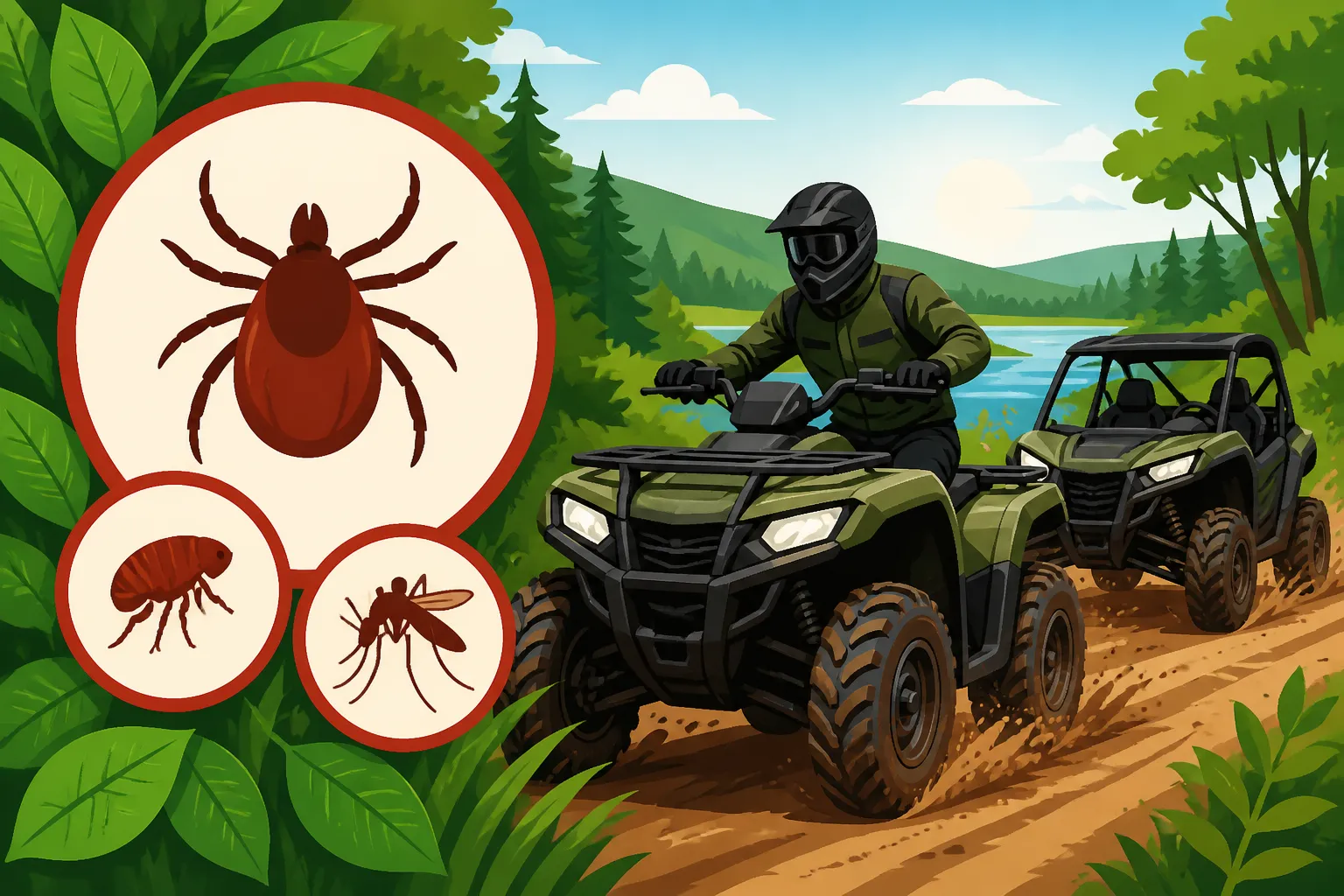
| Ticks | Brush, tall grass, leaf litter, and trail edges | Mild weather from spring into fall | Cover exposed skin, stay on the trail, and check your body after riding |
| Blackflies | Around the head, face, ears, and neck | Often spring and early summer | Use a head net or other protective layer during stops |
| Mosquitoes | Wet, shaded areas and places with standing water | Calm mornings and evenings | Use labeled repellent and limit long stops in buggy areas |
| Biting flies | Open areas and sunny trail sections | Warm days, depending on local conditions | Wear protective clothing and keep moving when practical |
The table is a planning guide, not a guarantee. A breezy ridge may feel comfortable while a still, damp low spot nearby is full of insects. Be ready to adjust your clothing and break locations as conditions change.
How terrain and weather change your exposure
Recent rain can make low-lying trails and forest edges feel especially buggy. A wet week may leave standing water behind, while overgrown vegetation can brush against boots, pants, and machine panels. Dry, breezy conditions may be more comfortable, but they don’t eliminate ticks. Use [Riding a Wisconsin Trail After a Wet Week] as a reminder to check conditions and think about how rain may affect both the route and your comfort.
Local conditions matter more than a broad seasonal rule. A route through open, breezy terrain may feel very different from a shaded stretch through dense woods. On a long ride, the bugs can change as your group moves between forest, fields, marsh edges, and small towns. Plan for more than one kind of exposure rather than assuming the whole day will feel the same.
If you’re using a navigation app such as onX Offroad to plan a route, note where you might stop safely and where the trail passes through wet or heavily wooded areas. That can help you choose a lunch break or regrouping point with better airflow and less brush. It won’t tell you exactly how many insects will be out, but it can help your group avoid turning a long stop into the least comfortable part of the ride.
How to Dress and Use Repellent for a Trail Ride
Wear clothing that reduces exposed skin
Clothing is your first practical layer of protection. Lightweight long sleeves and long pants can limit the amount of skin available to ticks and biting insects, without forcing you to ride in heavy winter gear. Choose clothing that fits comfortably under your riding equipment and won’t snag on controls or interfere with movement.
Tuck pants into socks or boots when conditions make ticks a concern. It may not be your favorite look at the staging area, but it creates fewer easy openings for ticks to reach your skin. A light-colored outer layer can also make it easier to spot a tick crawling on clothing before it attaches. Check that cuffs, waistbands, and shirt hems stay in place as you ride.
Protect your head and neck, too. A helmet and eye protection cover important areas, but insects can still find exposed skin around the ears, hairline, and collar. A neck gaiter or head net can help during stops when blackflies are persistent. Keep any extra fabric clear of moving parts and make sure it doesn’t interfere with helmet fit or visibility.
Apply repellent carefully
Use an insect repellent according to its product label, including instructions about where and how often to apply it. Some products are intended for exposed skin, while others are designed for clothing or gear. Don’t assume that a product suitable for one surface is appropriate for another, and take extra care when applying it around your face, eyes, and mouth.
For children, follow the product’s age directions and have an adult handle application. Avoid applying repellent to a child’s hands, since little ones may rub their eyes or put their fingers in their mouths. If you’re also using sunscreen, follow the product labels for both and reapply as directed. A small bottle stored where you can reach it at a safe stop is more useful than one buried beneath tools and spare gloves.
Some riders treat clothing or gear with products intended for that purpose. If you do, follow the label closely, keep treated items away from children and pets until they’re ready to use, and don’t apply clothing treatments directly to skin unless the product specifically allows it. Repellent is one layer of protection, not a substitute for covering up and checking for ticks.
Make protection practical, not miserable
Bug protection works best when you can tolerate wearing it for the whole ride. If a heavy layer makes you overheat, choose breathable fabric and adjust your layers at safe stops. On a warm afternoon around Marinette County or the Chequamegon-Nicolet National Forest, a light long-sleeved shirt may be more realistic than a thick jacket.
Bring a small kit rather than relying on whatever happens to be in the truck. A useful setup might include repellent, a head net, spare socks, a sealable bag for used wipes, and a small mirror for checking hard-to-see areas. The broader checklist in What to Carry on a Northwoods Ride can help you think through other essentials for a day away from the trailhead.
Navigation and route planning can also reduce uncomfortable stops. If your group uses onX Offroad, decide ahead of time where you’ll regroup, check directions, or take a longer break. Stopping at a breezy, open area instead of beside dense brush can make a noticeable difference, especially when blackflies are active. Keep a paper backup or another navigation option in mind for places where phone reception is limited.
Tick Checks and Bite Care After the Ride
Check yourself, your riding gear, and your pets
A tick check should be part of the end-of-ride routine, not an afterthought once you’re home and tired. Before getting into the vehicle, brush off clothing and look for ticks on socks, cuffs, waistbands, and other spots where fabric folds. Change out of riding clothes when practical, and keep those clothes separate until you can inspect and wash them.
At home, check your body carefully, including areas that are easy to miss: behind the knees, around the waist, under the arms, around the ears, and in the hairline. A mirror or a second person can help with places you can’t see well. Check children with extra care, and inspect pets after they’ve been outdoors. Ticks can hitch a ride on an animal or a jacket and be discovered later indoors.
Look over helmets, gloves, bags, and other equipment, too. A tick may be on a strap or in a fold of clothing rather than attached to skin. If your group has spent the day riding through brush or taking breaks in grassy areas, treat the check as part of packing up the machines. That small routine is easier than trying to remember later which jacket or blanket was used.
Remove an attached tick promptly and carefully
If you find an attached tick, use fine-tipped tweezers to grasp it as close to the skin as possible, then pull upward with steady, even pressure. Avoid squeezing the tick’s body or using folk remedies such as heat, petroleum jelly, or nail polish. After removal, clean the bite area and your hands. If you’re unsure how to remove it or can’t remove the mouthparts, contact a healthcare professional for guidance.
Make a note of when and where you may have been exposed, and watch the bite area and your general health afterward. A spreading rash, fever, aches, or other concerning symptoms after a tick bite are reasons to contact a healthcare professional. Don’t wait for every symptom to appear or assume that a bite is harmless simply because it doesn’t hurt.
For a remote ride, it helps to have basic first-aid supplies and know how your group will get help if someone becomes ill or injured. A cell phone may not work everywhere in the Northwoods, so review Cell Dead Zones in Northern Wisconsin and consider how your group will communicate before leaving the staging area. More planning ideas are covered in First Aid Far From a County Trailhead.
Keep a simple record if a bite worries you
If you remove a tick and feel concerned, record the date, general location of the ride, and when you noticed the bite. If a rash or symptoms develop, those details can help when you speak with a healthcare professional. A quick note on your phone is often enough, though a paper note may be useful if you’re already documenting a remote trip.
You don’t need to turn every bite into an emergency, but it’s sensible to take changes seriously. Contact a healthcare professional for advice if you have symptoms or are unsure what to do. Guidance can depend on the tick, the circumstances of the bite, and your health, so individualized medical advice is more useful than trying to diagnose yourself from a photo.
Plan a More Comfortable Wisconsin Trail Day
Choose stops with airflow and less brush
Your route may be fixed, but your stopping habits are flexible. When your group needs to check a map, adjust gear, or wait for another machine, look for a safe, open place with some airflow and room to stand away from tall grass. Avoid sitting directly in brush or leaf litter, and don’t leave the marked trail to find a more comfortable spot.
This is a place where route planning tools can help with logistics. Riders using onX Offroad can review the route before departure, identify likely regrouping areas, and share the plan with the group. Use it as one tool among several rather than assuming a phone will always have signal. In unfamiliar areas, Carrying a Paper Map on a Northwoods Ride offers a useful reminder to bring a backup way to understand where you are.
When travelling with children or newer riders, schedule breaks before everyone is exhausted and irritable. Pick a safe pullout or staging location where you can check on the group, reapply repellent as directed, and inspect clothing without blocking the trail. Families planning an outing may also find Family-Friendly Wisconsin ATV Trails helpful when choosing a ride that fits the group’s needs.
Check conditions and pack for the people in your group
Before leaving, check trail status, weather, and any local notices that could affect your route. A trail that is muddy or closed is not a good place to press ahead simply because the group has already driven to the staging area. Checking Wisconsin Trail Status Before You Drive can help build a sensible pre-trip routine.
Pack for the least experienced or most sensitive rider, not just the person who rides most often. That might mean bringing an extra layer for a child, a head net for someone who reacts badly to bites, or a planned stop for a rider who needs more frequent breaks. Keep repellent accessible, but store it securely so it doesn’t leak onto food, maps, or vehicle upholstery.
If the bugs become overwhelming, adjust. Move a break to a breezier location, shorten the ride, or return to the staging area. You don’t have to prove anything by staying out when riders are uncomfortable or distracted. A calm group that can see, hear, and focus is safer than one that is swatting insects and rushing through every stop.
Build a repeatable post-ride routine
A reliable routine helps prevent the tired-after-a-ride forgetfulness that makes tick checks easy to skip. Before getting in the vehicle, brush off clothing and inspect visible areas. At home, change clothes, check your body and pets, and inspect gear before storing it. Keep a tick-removal tool or fine-tipped tweezers in your first-aid kit so you aren’t searching through drawers if you find an attached tick.
The routine doesn’t have to be complicated. A few minutes of attention after each ride can help catch ticks early and keep bugs from travelling home on your gear. Pair it with the ordinary end-of-day tasks—loading ramps, securing machines, and checking that everyone has their belongings—and it becomes a habit rather than one more thing to remember.
Wisconsin’s riding season brings mosquitoes, blackflies, and ticks along with the scenery. With covered skin, label-directed repellent, smart break locations, and careful checks afterward, you can reduce the nuisance and focus on the ride itself.
Disclaimer
This article is for general informational purposes only and does not constitute professional advice. Laws, prices and regulations vary by location and change over time. Consult a qualified professional for guidance on your specific situation.