Registering a Side-by-Side Used on a Wisconsin Farm
It can be incredibly frustrating when your trusty side-by-side, which you rely on daily for everything from hauling tools to checking crops, suddenly feels like a legal puzzle piece that doesn't quite fit. Many Wisconsin farmers find themselves scratching their heads over ATV and UTV registration, especially when their machine primarily lives and breathes on private land but occasionally needs to touch a public road. This guide aims to clear up the confusion and walk you through how to register a side-by-side used specifically for farm operations in our beautiful state, helping you stay compliant without unnecessary headaches.
Navigating Wisconsin's ATV/UTV Registration for Farm Operations
For countless Wisconsin farmers, a side-by-side (UTV) isn't just a recreational toy; it's an indispensable workhorse. It hauls feed, pulls small trailers, carries tools for fence mending, and helps traverse large properties quickly. These machines are integral to daily operations, saving time and labor. However, because UTVs are also popular for recreational trail riding, the registration rules can sometimes feel like they're not quite designed for the unique needs of an agricultural operation. The key to successful registration and stress-free use lies in understanding how Wisconsin categorizes these machines and, more importantly, where and how you intend to operate them.
This confusion often stems from the dual nature of UTVs – they are capable of both off-road recreation and heavy-duty utility work. When your primary use is agricultural, you're looking for the path of least resistance and maximum compliance, without inadvertently breaking a rule you didn't even know existed. We're going to dive into the core requirements and common misunderstandings, ensuring you can keep your farm running smoothly and legally.
When Your Farm Side-by-Side Needs to Be Registered
This is often the million-dollar question for farmers: "Does my side-by-side really need to be registered if it mostly stays on my land?" The answer, like many things related to regulations, has a crucial nuance. If your side-by-side absolutely, unequivocally never leaves your private property – meaning it operates solely within your owned or leased fields, pastures, barnyards, and private access roads – then technically, a recreational registration might not be mandatory. However, this is a very strict definition of "never leaves."
The moment that machine touches a public road, even if it's just to cross a town road to access an adjacent field, or to drive a short distance on a county highway that you might typically consider part of your farm's frontage, the requirement for registration changes dramatically. This also applies if you use any designated ATV/UTV routes that happen to connect different parcels of your farm, even if your purpose is purely agricultural. In these scenarios, Wisconsin's public use registration laws kick in, regardless of your intention being farm-related. It's not just about owning the machine; it's critically about where and how you operate it. This is precisely why understanding the difference detailed in [Public Use Versus Private Use in Wisconsin] is so crucial for farmers.
Understanding Wisconsin's Agricultural Exemptions
Wisconsin law does acknowledge the vital role of agricultural machinery, and there are specific exemptions that apply to certain vehicles used in farm operations. For instance, traditional farm implements like tractors, combines, and various tillage equipment are generally exempt from standard vehicle registration when used for agricultural purposes. These machines are clearly defined by their design and primary function.
However, side-by-sides, while undeniably valuable for farm work, often exist in a bit of a grey area because they are also widely used for recreation. The key factor for your UTV often boils down to its primary purpose and, more importantly, the location of its use. If your side-by-side is genuinely and exclusively employed for agricultural tasks on property that is either owned, leased, or directly managed by your farm, and it never ventures onto public trails or public roads that aren't specifically designated for agricultural travel, then you might fall into a different category than someone using a UTV for leisure. But be warned: these agricultural exemptions for side-by-sides typically come with very strict conditions. They might specify limits on speed, distance traveled on public roads, or even time of day, making a full public use registration often the safest and simplest route for many working farms that need even minimal public road access. Always double-check with local authorities or the DNR to ensure your specific use case qualifies for any limited agricultural exemptions.
Public Use Versus Private Use Registration for Your Farm UTV
This distinction is perhaps the most critical point for Wisconsin farmers with side-by-sides. It's easy to assume, "My UTV is a farm machine, so its use is inherently private." But Wisconsin's Department of Natural Resources (DNR) draws a very clear line that directly impacts your registration obligations. Getting this distinction right is the foundation of legal operation; getting it wrong, even with the best intentions, could lead to unexpected citations and fines while you're simply trying to get your farm work done.
Many farmers find themselves in a situation where their land might be split by a township road, or they might need to move equipment a short distance along a county highway to reach another field. These seemingly innocuous movements are often where the "private" use crosses into "public" territory, necessitating a different type of registration.
The Public Use Registration for Farm Operations
If your farm side-by-side will, at any point, operate on public land, a designated ATV/UTV route, or even momentarily touch a public road, a public use registration is absolutely mandatory. This isn't just for extensive trail riding; it applies even if that public road use is minimal—say, just a few hundred feet to cross from one property parcel to another, or to access a barn on the opposite side of a rural highway. Wisconsin law doesn't make a distinction between "short duration public use" and "extended public use" when it comes to the requirement for public registration.
This type of registration provides the legal permission to operate your machine on roads, routes, and trails that have been legally opened to ATV/UTV traffic. For a farmer, this could mean accessing a remote pasture that requires a brief ride on a town road, or driving through a small village that has opened its streets to UTVs as part of a route system connecting your various farm properties. It allows for vital connectivity that simply operating on private land cannot offer. It's also critical to remember that [Wisconsin Public Use Registrations Expire March 31] each year, so keeping track of that annual deadline is essential for uninterrupted legal operation. The good news is that renewing these registrations is usually a straightforward process, often available [Renewing a Wisconsin Registration Online] from the comfort of your farmhouse kitchen.
The Private Use Registration: When It's Enough (or Not)
A private use registration, sometimes referred to simply as a "private property registration," is designed for machines that are strictly confined to private property and are never operated on public trails, routes, or roads. For a farm side-by-side, this means the machine must remain entirely within the physical boundaries of your farm property, never touching any public thoroughfare, not even briefly. The upside to this type of registration is that it is typically perpetual—meaning it [Private Registration That Never Expires].
While this might sound like the perfect solution for a farm machine, the reality for many Wisconsin farms is that some degree of public road use is often unavoidable. Whether it's to access different fields, reach a distant woodlot, or even just cross a short section of a low-traffic township road, these instances push your UTV into the public use category. It's a common misconception that if a road sees little traffic, it's "basically private." However, legally, if it's a publicly maintained road, even a quiet country lane, it's public. The private use registration does not provide any coverage for public travel, no matter how brief or rural the road might be. Therefore, this type of registration is truly only suitable for those rare farm machines that genuinely never, ever leave the confines of their private property, making it a less common but still valid option for some agricultural operations.
The Registration Process: Getting Your Farm Side-by-Side Legal
Once you've carefully evaluated your specific use case and determined whether your farm side-by-side requires a public or private use registration, the actual process of getting it registered is relatively simple. It primarily involves gathering the correct documentation, filling out the necessary forms, and remitting the appropriate fees. Don't let the thought of navigating governmental procedures deter you; there are accessible resources and clear pathways to guide you through each step. Being prepared with your information will make the process smooth and quick, allowing you to get back to your vital farm work.
Taking the time to understand the requirements upfront will save you from potential headaches and delays down the line. It's all about methodically working through the steps, much like any other task on the farm that requires careful planning and execution.
Required Documents and Information
Whether you're registering a brand-new side-by-side fresh off the dealer lot or one that you've purchased used and has been a part of your farm for years, you'll need solid proof of ownership. This is a critical point in Wisconsin, as the state does not issue titles for ATVs or UTVs. This means your proof of ownership usually comes in the form of a manufacturer's statement of origin (MSO) if the machine is new. For a used machine, the previous owner’s valid registration card, combined with a comprehensive bill of sale, becomes your primary proof. It's a good practice to use a reliable template from a service like LawDepot to ensure your bill of sale includes all the necessary legal details, which protects both you as the buyer (or seller, if you're upgrading) and helps streamline the registration transfer.
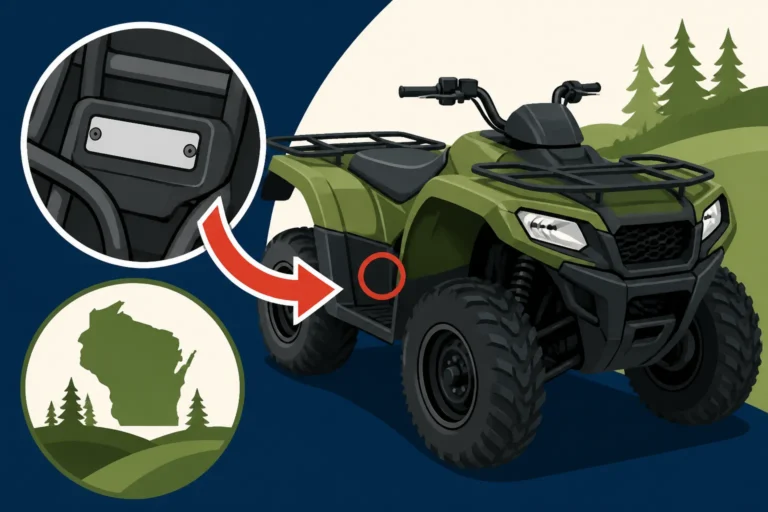
In addition to ownership proof, you’ll need specific identifying information about the machine itself. This includes its Vehicle Identification Number (VIN), which you can typically find stamped on the frame; its make, model, and year; and engine size. Knowing [Where the VIN Sits on a Utility Quad] can save you a lot of time searching. Furthermore, you'll need your personal details, such as your full name, current mailing address, and contact information. Accuracy here is paramount, as any discrepancies could lead to delays or require additional paperwork. Having everything organized before you begin will make the registration process much more efficient.
Where and How to Register Your Farm UTV
When it comes time to actually register your side-by-side, Wisconsin offers convenient options. For many, especially those who prefer handling things digitally, the most common and often quickest method is through the Wisconsin Department of Natural Resources (DNR) website. This online portal is designed to be user-friendly, allowing you to complete the application, upload any required supporting documents, and securely pay the registration fees. It’s a great option for busy farmers who can complete the process during off-hours without leaving the farm.
Alternatively, you can choose to visit one of the many authorized [Wisconsin Registration Agents and Where They Are] located throughout the state. These agents are typically found in local businesses like sporting goods stores, bait shops, snowmobile/ATV dealerships, or even some municipal government offices. They are equipped to help you with the paperwork and can often process your registration on the spot, providing you with temporary decals or a receipt right away. While this option offers face-to-face assistance, it’s crucial to arrive with all your necessary documents in hand, as they will need them to complete the transaction. Regardless of whether you choose the online route or visit an agent, you'll need to clearly state whether you are applying for [Wisconsin's Public Use ATV Registration] or [Wisconsin's Private Use ATV Registration] based on your farm's operational needs.
Here's a quick comparison of the two primary registration types for your farm side-by-side:
| Registration Type | Primary Use Case | Public Road/Trail Access | Expiration | Key Considerations for Farmers |
|---|---|---|---|---|
| Public Use | Recreational riding, any public road/route access | Yes, on designated routes/roads | March 31 annually | Essential if machine ever leaves private property, even for short crossings between fields or accessing a road-front barn. |
| Private Use | Exclusively on private land | No, absolutely no public access | Never (perpetual) | Only suitable if machine never touches a public road, even quiet farm access roads that are public. This is a very narrow use case for most working farms. |
Important Considerations and Best Practices for Farmers
Beyond simply getting your side-by-side registered, there are several practical considerations and best practices that can help Wisconsin farmers operate their machines smoothly, safely, and entirely within the bounds of the law. Adhering to these guidelines can save you from potential fines, ensure uninterrupted farm operations, and protect your investment. Being a responsible operator is just as important as having the right paperwork.
Farmers are inherently practical, and these tips are designed with that practicality in mind, helping you integrate your side-by-side into your daily work life without added stress.
Keeping Records and Staying Current
Once your side-by-side is registered, it's incredibly important to always keep a copy of your registration card with the machine or have it easily accessible whenever you're operating. Think of it like keeping your driver's license in your wallet. If you ever happen to encounter a warden or other law enforcement, they will likely ask for proof of registration. While a digital copy on your phone is often accepted, having a physical copy tucked into a waterproof bag on your machine is a solid, reliable backup, especially in areas with spotty cell service. A truly well-organized farmer understands that good paperwork is just as vital as well-maintained equipment.
For those with public use registrations, it's crucial to be mindful of the annual renewal deadline. The Wisconsin DNR generally sends out renewal reminders, but the ultimate responsibility to ensure your registration is current falls on you. An expired registration, even for a machine you primarily use for farm work, can unfortunately lead to fines and legal complications. Always knowing [When a Wisconsin Registration Expires] will help you avoid last-minute rushes and potential penalties. Make it a recurring item on your calendar, perhaps along with other annual farm maintenance tasks, to keep everything up to date.
Understanding Local Ordinances and Signage
Even with a valid public use registration for your farm side-by-side, your ability to operate on public roads or routes might be further influenced by specific local municipal ordinances. It's a common oversight to assume that state registration is the only hurdle. Some towns, villages, or counties in Wisconsin may have their own distinct rules regarding things like speed limits for UTVs on their roads, specific hours of operation, or even requirements for additional insurance coverage beyond what the state mandates. If your farm operations involve traversing different municipalities, always make it a point to check with the local authorities in each area.
Pay very close attention to any signage you encounter on public roads. Not all roads are open to UTV traffic, and even those that are might have specific restrictions or only be open during certain seasons. Always look for official ATV/UTV route signs and never assume a road is open unless it's explicitly marked as such. Riding on an unmarked public road, even for a short distance, can result in a citation. Remember, pleading ignorance of a local ordinance isn't typically accepted as an excuse if you're cited for illegal operation. Learning about [Municipal Ordinances Wisconsin Riders Must Read] will help you navigate your local landscape without incident.
The Importance of a Solid Bill of Sale (Even for Private Sales)
When you're buying or selling a used side-by-side for farm use, even if it's a private transaction with a neighbor or a family member, having a clear, comprehensive bill of sale is incredibly important. As we've discussed, Wisconsin does not issue titles for ATVs or UTVs, which means this document serves as your primary and most critical proof of ownership. It should meticulously detail the date of sale, the full names and addresses of both the buyer and the seller, a complete description of the machine (including its make, model, year, and VIN), and the agreed-upon sale price.
A well-drafted bill of sale, perhaps put together with an easy-to-use template from a service like LawDepot, does much more than just prove you own the machine. It also helps immensely with accurate calculation and payment of [Wisconsin Sales Tax on an ATV Purchase], and it provides crucial legal protection for both parties in the event of any future disputes or misunderstandings. It's a small step that can prevent significant headaches down the road, especially when it comes to smoothly [Transferring a Wisconsin Registration Within Ten Days]. A signed and detailed bill of sale is truly the bedrock for [Proof of Ownership Without a Title] and a wise investment of a few minutes of your time.
Disclaimer
This article is for general informational purposes only and does not constitute professional advice. Laws, prices and regulations vary by location and change over time. Consult a qualified professional for guidance on your specific situation.