Penalties for an Unregistered ATV in Wisconsin
There's nothing quite like the open air and the thrill of exploring Wisconsin's incredible trails and routes on your ATV or UTV. But before you even think about hitting that throttle, there's a crucial piece of paperwork that can quickly turn a fun day into a costly headache: registration. Many riders find themselves scratching their heads, wondering if they really need to register their machine, or worse, they put it off until it's too late. This guide is here to walk you through the very real consequences of operating an unregistered ATV or UTV in Wisconsin, helping you understand the rules, the penalties, and how to stay on the right side of the law.
Understanding What "Unregistered" Means in Wisconsin
When we talk about an "unregistered" ATV or UTV in Wisconsin, it's not always as straightforward as it sounds. It's not just about having no registration; it can also mean having the wrong kind of registration for your intended use, or simply an expired one. The state has specific categories, and understanding these is your first step to avoiding trouble.
Public vs. Private Use Distinctions
Wisconsin clearly differentiates between public and private use for ATV and UTV registration. If you plan to ride on any public land, including designated trails, frozen lakes, or open road routes, you absolutely need a public use registration. This type of registration ensures that your machine is documented and contributes to the funding of the very trails you enjoy. Without it, even if you’re just crossing a short section of public land to get to private property, you could be considered unregistered for that public portion of your ride.
On the other hand, if your machine never leaves your own private property, or land that you have explicit permission to ride on and that isn't accessible to the public, you might qualify for a private use registration. This registration is significantly different and doesn't permit you to access public trails or routes. Riders often get confused here, thinking that because they primarily ride on private land, they don't need any registration for occasional public trail use. That's a common misconception that can lead to fines. It's vital to be clear about your primary use and ensure your registration matches.
When Registration Actually Isn't Required: Exemptions
While most ATVs and UTVs in Wisconsin will require some form of registration, there are a few specific exemptions where you might not need one at all. For instance, machines used exclusively for agricultural purposes on agricultural lands, like a side-by-side pulling a small trailer of feed on a farm field, are typically exempt from registration. However, if that same farm machine ever ventures onto a public ATV trail or road route, even briefly, it suddenly falls under the registration requirements.
Another common exemption is for machines being used strictly for organized competitive events on private tracks, provided they are not operating on any public lands to get to or from the event. Even then, the event organizers usually have specific rules about machine identification. It’s a narrow exemption, and one that most recreational riders won’t fall under. If you’re ever unsure, the safest bet is always to get registered. The cost of a registration pales in comparison to the potential penalties you could face if you guess wrong.
The Immediate Financial Penalties for Unregistered Operation
Let's talk about what hits your wallet directly when you're caught riding an unregistered ATV or UTV in Wisconsin. It's not just a slap on the wrist; there are specific fines and additional costs that can quickly add up, turning an enjoyable ride into a financial regret.
Fines for Riding Unregistered
The most common and immediate consequence of operating an unregistered ATV or UTV in Wisconsin is a monetary fine. These fines are not trivial; they are designed to deter illegal operation and to encourage compliance with registration laws. While specific amounts can vary, it's safe to say you're looking at hundreds of dollars for a first offense. This isn't like a parking ticket you can forget about. A warden might pull you over on a trail, ask for your registration, and if it's not current or correct for public use, you'll likely be issued a citation on the spot.
Imagine you're on a fantastic ride in the Chequamegon-Nicolet National Forest, miles from anywhere, and a warden stops you. They ask for your registration, and you realize you forgot to renew it. Boom. Citation issued. That fun day suddenly has a dark cloud over it, and you're now facing a significant fine. And it's not just full registration; sometimes riders get caught with expired decals, which also incurs a penalty. It’s a good idea to always keep your [Wisconsin Registration for an Out-of-State Machine] or your standard Wisconsin registration current.
Court Costs and Surcharges
Beyond the base fine, there are often additional fees and surcharges that get tacked onto any citation. When you receive a ticket for an unregistered ATV, you're not just paying the fine itself; you'll also typically incur court costs, processing fees, and sometimes even a statewide penalty surcharge. These additional amounts can easily add another substantial chunk to your total bill, sometimes nearly doubling what you initially expected to pay for the fine alone.
These extra costs are designed to cover the administrative burden on the court system and contribute to various state funds. It's why a $200 fine can quickly become a $350 or $400 payment. Many riders are shocked when they see the full amount due. It’s not just about the moment you get caught; it’s about the lingering financial impact that will follow you for weeks, or even months, as you deal with the citation. You definitely want to avoid getting one of these. The easiest way to do so is to go through the proper steps for [Registering an ATV in Wisconsin] before you hit the trails.
Beyond the Fine: Other Consequences of Unregistered ATVs
While the financial hit from fines and surcharges is immediate and painful, riding an unregistered ATV or UTV in Wisconsin can lead to a host of other, often more complicated, problems. These consequences can affect your ability to ride, your financial recovery after an incident, and even your machine's ownership status.
Seizure and Impoundment Potential
One of the more severe consequences of operating an unregistered machine, especially for repeat offenders or in cases of egregious violations, is the potential for your ATV or UTV to be seized and impounded. Wardens and law enforcement officers have the authority to take possession of your machine if it's being operated illegally. This means your fun day ends abruptly, and your machine is hauled away to an impound lot.
Getting your ATV or UTV back from impound is rarely a simple or cheap process. You'll likely need to pay towing fees, daily storage fees, and potentially other administrative charges, all on top of any fines or court costs. These fees accrue quickly, and they can easily climb into hundreds, if not thousands, of dollars, especially if your machine is held for an extended period. This whole ordeal is not only incredibly inconvenient but can become a massive financial drain, all stemming from a failure to simply [Renewing a Wisconsin Registration Online] or get your machine registered in the first place.
Impact on Insurance Claims
This is a big one that many riders overlook until it's too late. If you're involved in an accident while operating an unregistered ATV or UTV on public land or a designated route, your insurance company may deny your claim. Most ATV insurance policies contain clauses that require the machine to be legally operated and registered according to state law. If your machine is unregistered, you're essentially operating it illegally.
Imagine you've had an accident on a trail, your machine is damaged, or worse, you've caused damage to someone else's property or even injured them. If your insurance company denies coverage because your machine wasn't registered, you could be personally liable for all damages, medical bills, and legal fees. This could be tens of thousands of dollars, far outweighing any small savings you might have thought you gained by skipping registration. Always ensure your [Insuring an ATV in Wisconsin] is paired with a current, valid registration.
Complications with Selling Your Machine
Trying to sell an ATV or UTV that has a history of unregistered operation, or that you simply haven't bothered to register, can also present significant hurdles. When a prospective buyer does their due diligence, they will likely want to see proof of current and past registration. If the machine's history shows large gaps in registration or no registration at all, it can raise red flags for the buyer, making them question the machine's legal status, whether it was stolen at some point, or simply if the seller is trustworthy.
Furthermore, if there are outstanding fines or impoundment fees associated with the machine, these could potentially be linked to its VIN, making it difficult for a new owner to register it themselves without clearing up those past issues. While Wisconsin doesn't title ATVs, the registration record is still crucial for proving ownership history. Having a clear, consistent registration history makes the sales process smoother and helps you get a fair price, especially when dealing with a careful buyer who might request a document like a bill of sale, perhaps from a reputable source like LawDepot, to ensure everything is above board. [Buying a Used ATV in Wisconsin: The Paperwork] becomes much simpler when everything is in order.
How Enforcement Works: What Wardens Look For
Wisconsin's Department of Natural Resources (DNR) wardens are specifically trained and tasked with enforcing ATV and UTV regulations. They're out on the trails and routes every day, ensuring that riders are following the rules, including proper registration. It's not a matter of if you'll see a warden, but when, especially if you spend a lot of time on public land.
Common Scenarios Leading to Citations
Wardens often encounter unregistered ATVs and UTVs in several common scenarios. The most obvious is during routine patrols on state and county trails, designated road routes, or frozen lakes. A warden might simply observe a machine with missing or expired decals, which is an immediate visual cue that something is amiss. They may then initiate a stop to check the operator's registration card. If you're riding a machine that appears brand new, but has no registration stickers displayed, that's another red flag.
Another common scenario involves operators who mistakenly believe their private land registration covers public access. They might be riding on a public road route to get to a gas station or a tavern, thinking their private use stickers are sufficient. Wardens are very familiar with these distinctions and will issue a citation if the wrong type of registration is being used for public access. Finally, stops can also occur during safety checks, after an accident, or in response to complaints about illegal operation, where the lack of proper registration becomes an additional violation. Wardens are often checking to see [What a Wisconsin Warden Asks a Rider For] during these stops.
Proving Registration on the Trail
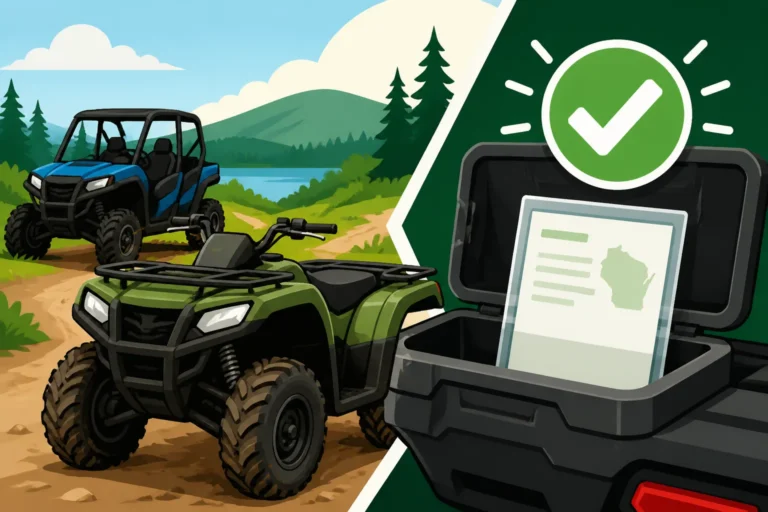
When a warden stops you on a Wisconsin trail or route, one of the first things they'll ask for, after your safety certificate if applicable, is your registration card. This physical card is your proof that your machine is legally registered with the state DNR. It's not enough to simply have current registration; you must be able to present the card upon request. Many riders, in their excitement, forget to carry this essential document, or they leave it at home thinking the stickers on the machine are enough.
The registration card contains vital information, including the machine's registration number, VIN, and the expiration date. It should always be carried with you on the machine, or at least with the operator. While some wardens might be understanding if you have current stickers but forgot the card and can verify it on their system, many will still issue a citation for failure to display proof of registration. It's a simple step to avoid a headache: put that registration card in a waterproof pouch and keep it in your machine's storage compartment, right next to your proof of insurance and a basic [What a Wisconsin ATV Bill of Sale Should Carry] if you just bought it.
Avoiding the Penalties: Getting Your ATV or UTV Registered
The good news is that avoiding penalties for an unregistered ATV or UTV in Wisconsin is entirely within your control. The process is straightforward, and the cost is minimal compared to the fines you could incur. Taking the time to register your machine correctly ensures peace of mind and allows you to fully enjoy Wisconsin's vast trail systems.
The Registration Process in Wisconsin
Getting your ATV or UTV registered in Wisconsin is a relatively simple process. You'll typically need to provide proof of ownership, such as a bill of sale, especially if it's a new machine or a [Buying a Used ATV in Wisconsin: The Paperwork] situation. The Wisconsin DNR manages all registrations. You can often register online through the DNR's Go Wild system, or you can visit an authorized registration agent, which are often sporting goods stores, bait shops, or even municipal offices located throughout the state, especially in popular riding areas.
When you register, you'll pay the applicable fee, and in return, you'll receive your registration card and decals. The decals, which show your registration number and expiration year, must be prominently displayed on your machine according to DNR guidelines, usually on the front and rear. It's worth understanding the difference between [Wisconsin's Public Use ATV Registration] and [Wisconsin's Private Use ATV Registration] to ensure you get the right one for your intended riding. LawDepot, for example, offers templates for bills of sale that can serve as excellent proof of ownership when you head to register your new machine.
| Registration Type | Primary Use Case | Valid For Public Trails/Routes? | Expiration | Key Benefit |
|---|---|---|---|---|
| Public Use | Recreational riding on public lands/trails | Yes | March 31st (Annually) | Legal access to vast public trail networks |
| Private Use | Riding exclusively on private property | No | Never expires (One-time) | No annual renewal for farm/private use |
Renewing Expired Registrations
Life happens, and sometimes registrations slip our minds. You get busy, the riding season seems far off, and suddenly, you realize your decals are expired. In Wisconsin, public use registrations expire annually on March 31st. If you've missed the deadline, don't fret too much, but don't delay either. The process for renewing an expired registration is generally the same as a new registration. You can renew online through the DNR's Go Wild system, or visit an authorized agent.
It's crucial to renew promptly, as operating a machine with an expired registration is just as much a violation as operating one that was never registered at all. The penalties are the same. Many riders make the mistake of thinking "it's just a few weeks expired, no big deal." Wardens, however, don't see it that way. Get those decals current, replace any that are peeling or faded, and always keep your registration card handy. It's a small investment in time and money that ensures you can ride legally and without the stress of potential fines or impoundment. Don't let your fun be cut short by an expired sticker; get your [Wisconsin DNR ATV Registration Explained] and keep it current.
Disclaimer
This article is for general informational purposes only and does not constitute professional advice. Laws, prices and regulations vary by location and change over time. Consult a qualified professional for guidance on your specific situation.