Looking Up a Wisconsin ATV Registration
There's nothing quite like the excitement of finding a new-to-you ATV or UTV, whether it's for hitting the scenic trails up north or tackling chores around your Wisconsin property. But that initial rush can quickly turn into a knot of anxiety when you realize you need to verify its history, confirm ownership, or simply check on your own machine's status. It can feel like you're trying to solve a mystery without all the clues. This guide is here to untangle that process, helping you understand how to legally and effectively look up a Wisconsin ATV or UTV registration, giving you peace of mind whether you're buying, selling, or just keeping your records straight.
Why You Might Need to Look Up a Wisconsin ATV Registration
The need to dig into an ATV's registration records can pop up for several reasons, each with its own set of concerns and frustrations. It’s rarely just for curiosity; usually, there's a genuine need to ensure everything is above board.
When Buying a Used Machine
Let's face it, buying a used ATV or UTV can feel a bit like a gamble. Unlike cars, Wisconsin doesn't title ATVs and UTVs, which means the registration card essentially serves as your primary proof of ownership. This absence of a traditional title system means that you, as the buyer, have to be extra vigilant. You want to ensure the person selling you the machine actually owns it, and that you're not inadvertently buying a stolen vehicle. That knot in your stomach when you're looking at a great deal? It often stems from this exact uncertainty.
Beyond avoiding stolen property, checking the registration allows you to confirm the machine's basic details. Does the VIN on the machine match the VIN on the registration card? Are the make, model, and year what the seller claims they are? These might seem like minor details, but discrepancies here could point to a number of issues, from an honest mistake to a more serious attempt at misrepresentation. You want to ensure that the machine you're about to spend your hard-earned money on is exactly what it appears to be.
Furthermore, a clear registration history makes the transfer process much smoother. If a seller can't produce a valid, current registration card, it throws a huge wrench in your plans to get the machine registered in your name. You might find yourself having to jump through extra hoops with the Wisconsin DNR, providing additional proof of ownership or even having to pay more fees to get the registration straightened out. This is a common frustration, especially when dealing with private sellers who might not have all their ducks in a row. For more on this, check out [Buying a Used ATV in Wisconsin: The Paperwork].
After a Sale, or to Verify Your Own Records
So, you've just bought a machine, and the seller assured you they'd send the transfer paperwork in, or maybe you've mailed it in yourself. But a few weeks go by, and you haven't heard anything. It's perfectly normal to wonder if the transfer went through successfully and if the Wisconsin Department of Natural Resources (DNR) records now reflect you as the new owner. You want that peace of mind knowing the machine is legally yours and the liability has officially shifted. This proactive check can save you a headache down the line, especially if any issues arise with the previous owner or the DNR.
Similarly, even if you’ve owned your ATV or UTV for years, you might need to look up your own registration. Perhaps you're approaching the March 31st renewal deadline and want to confirm your registration status. Or maybe you've misplaced your physical registration card and need to verify the details before ordering a duplicate or heading out on the trails. Keeping your own records straight, and confirming them against the DNR’s system, is just smart riding. Understanding [Wisconsin DNR ATV Registration Explained] can make this process clearer.
In Case of Theft or Recovery
The absolute worst-case scenario for any ATV or UTV owner is having their machine stolen. In such a distressing situation, accurate and accessible registration details become paramount. Law enforcement will need the VIN, make, model, and other identifying information to enter your machine into national databases and attempt to recover it. Having your registration number and details readily available can significantly expedite the reporting process and aid in the investigation.
Conversely, imagine law enforcement contacts you, believing they've recovered your stolen machine. You’ll need to verify that it is indeed yours. Providing your registration details will be crucial for them to cross-reference with the recovered vehicle's VIN and confirm ownership before releasing it back to you. In both scenarios, the ability to quickly and accurately access or verify registration information is not just helpful, it's essential.
The Challenges of Looking Up ATV Information in Wisconsin
While the need to look up ATV registration information is clear, the process isn't always as straightforward as checking a car's title history. Wisconsin's system has its own quirks that can add layers of complexity.
The Lack of a Title System
One of the biggest hurdles, and a source of confusion for many new ATV and UTV owners in Wisconsin, is the simple fact that these machines do not receive a traditional title like cars, trucks, or motorcycles. This means there's no central "title database" to search for past owners or lienholders. Instead, the Wisconsin DNR's registration record is the primary document linking an owner to a specific machine. For a deeper dive into this, you might find [Why Wisconsin Does Not Title ATVs] helpful.
This distinction is critical because it places a greater emphasis on the bill of sale and the registration card itself during a transaction. Without a title, verifying a machine's history becomes more about scrutinizing the current registration, the seller's documentation, and their willingness to provide information. It often means relying heavily on the seller's transparency and your own due diligence, which can feel daunting when you're dealing with a significant purchase.
Because there's no title, any issues regarding ownership or liens become more challenging to track down without direct access to the DNR's secure internal systems. This is why obtaining a detailed and accurate bill of sale, like one you might create using a platform like LawDepot, is absolutely essential. It helps establish a clear chain of ownership, especially since Wisconsin relies so heavily on that registration card as the core proof.
Privacy Concerns and Limited Public Access
Another significant challenge is privacy. While you might be able to search for a vehicle's history with just a VIN in other states or for titled vehicles, the Wisconsin DNR does not offer a public-facing lookup tool that allows just anyone to search for an ATV or UTV's registration information using only a VIN or registration number. This is a protective measure designed to safeguard the personal information of vehicle owners. You can't just plug in a VIN you saw on a machine parked somewhere and expect to get a full owner history.
This means that if you're looking at a used machine to buy, you can't independently verify all the seller's claims about the registration without their cooperation. They need to be willing to show you the physical registration card. The DNR won't, for instance, tell you if the machine is currently registered to the seller if you just call them with a VIN. They need a legitimate reason, usually tied to law enforcement, or you need to be the registered owner yourself.
So, while the lack of a title system makes the registration record incredibly important, the restricted public access to that record means you have to be strategic in how you gather information. It underscores the need for thorough communication and documentation during any private sale, and reinforces why [What a Wisconsin Warden Asks a Rider For] typically includes your physical registration card.
How to Legally and Effectively Look Up Wisconsin ATV Registration Information
Given the challenges, knowing the right avenues to access registration information is key. It's not about being a detective, but understanding the channels available for legitimate inquiries.
For Your Own Registered Machine
If you're the current registered owner of an ATV or UTV in Wisconsin, looking up your own registration information is the easiest and most direct path. The Wisconsin DNR provides several ways for you to access your records, ensuring you have the details you need for renewals, replacements, or simply to confirm your status. This is all part of managing your responsibility as an off-road enthusiast.
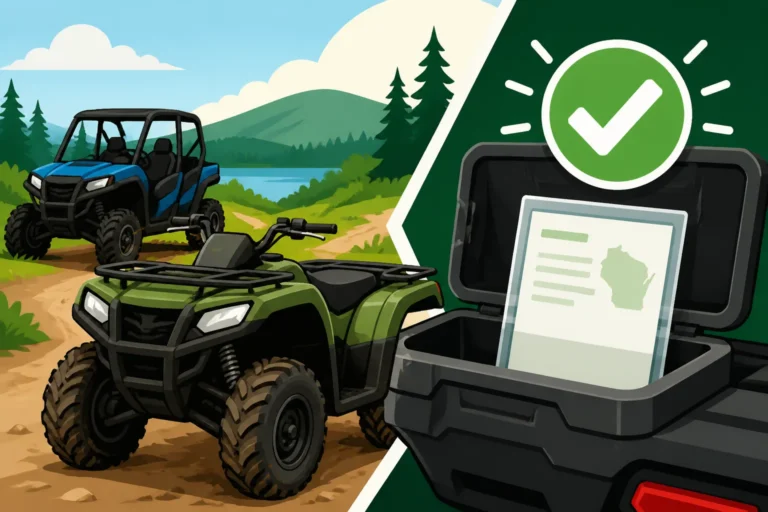
First and foremost, your physical registration card is your primary proof. Keep it in a safe, accessible place, perhaps even a laminated copy or a clear photo on your phone while riding (though the physical card is always best). This card contains your registration number, the machine's VIN, your name, address, and the expiration date. It's the simplest way to "look up" your own information. If you need a replacement, the DNR offers options to order new decals or cards. Learn more about the overall process with [Wisconsin DNR ATV Registration Explained].
Beyond the physical card, the Wisconsin DNR's Go Wild system is your best friend for digital access. If you've created an account, you can log in to view your current registration details, check expiration dates, and even initiate the renewal process online. This online portal provides a convenient way to manage all your DNR-related licenses and registrations from the comfort of your home. It's a fantastic tool for keeping track of your machines and ensuring everything is current, especially as the March 31st expiration date approaches for many registrations.
When Buying a Used ATV From a Private Seller
This is where things can get a bit trickier, as you won't have direct access to the DNR's system for someone else's machine. Your best bet here is to rely on the seller's cooperation and documentation. Insist on seeing the current, valid Wisconsin ATV/UTV registration card in person. This card should show the seller's name and address, the machine's VIN, and the current registration number. This is your first line of defense to ensure the seller is indeed the registered owner. You can cross-reference the VIN on the card with the actual VIN stamped on the machine itself. Any hesitation from the seller to provide this is a major red flag. For guidance on what a seller should provide, see [Handing Over the Registration Card at a Sale].
While you can't directly verify the DNR's records, you can ensure all the information you gather from the seller is accurately documented. A comprehensive bill of sale is critical. This document, which you can easily create using a template from a service like LawDepot, should explicitly list the machine's VIN, make, model, year, the purchase price, and the full names and addresses of both the buyer and the seller. It acts as your proof of transaction and establishes your claim of ownership for future registration. Don't underestimate its power, especially in a state without titles. For details on what to include, refer to [What a Wisconsin ATV Bill of Sale Should Carry].
What about checking for theft or liens? As a private citizen, you don't have direct access to law enforcement databases. However, some licensed ATV/UTV dealers or repair shops might be able to run a VIN check for theft records as part of their business operations. You could consider asking the seller if they'd be willing to take the machine to a trusted dealer to run such a check together, or if they'd be comfortable providing the VIN for you to ask a dealer. This requires a level of trust and cooperation, but it's a legitimate step to protect yourself from buying a problematic machine. Learning about [Running a Used Quad Past Theft Records] can further prepare you.
Through Law Enforcement or a Licensed Dealer
When direct access is limited, official channels become crucial, especially if you suspect foul play or need definitive verification beyond what a private seller can provide. Law enforcement agencies, such as your local sheriff's department or a Wisconsin DNR conservation warden, have access to secure databases that contain comprehensive registration and ownership information. If you have a legitimate reason to suspect a machine is stolen, or if you're involved in an accident, they can and will look up the registration details. They are the ultimate authority for verifying [Wisconsin Records and a Machine's Ownership History].
For instance, if you encounter a situation where a seller is unable to produce any registration documentation, and you have strong reasons to believe the machine might be stolen or have a murky past, reporting your concerns to law enforcement and providing them with the VIN is the most appropriate course of action. They can then use their access to determine the registered owner and any red flags associated with the machine. Remember, it's always better to be safe than sorry, especially when thousands of dollars are on the line.
Licensed Wisconsin ATV/UTV dealers also have more access than the average buyer. When you trade in a machine or buy one from them, they will run the VIN through their systems to check for theft, outstanding liens, or other issues. They have a vested interest in ensuring a clean transaction, and their professional tools allow them to delve deeper into a machine's history. If you're really concerned about a private sale, consider paying a trusted dealer for a pre-purchase inspection that might include a VIN check as part of their service. While not all dealers offer this as a standalone service for private sales, it's worth inquiring, as it's one of the few ways a private citizen can get a deeper look into the history.
Best Practices for Buyers and Sellers to Ensure a Smooth Process
Navigating ATV and UTV transactions in Wisconsin requires a bit more diligence than in states with traditional titles. Both buyers and sellers have roles to play in ensuring a smooth, legal, and frustration-free experience.
Buyers: Due Diligence Beyond Registration
As a buyer, your job doesn't end with just checking the registration card. True due diligence means a comprehensive approach. First, always physically inspect the machine. Match the VIN on the machine to the one on the registration card the seller presents. Look for signs of tampering on the VIN plate or sticker. Beyond that, scrutinize the overall condition. Are there signs of extensive damage, poorly done repairs, or components that look mismatched? These physical cues, combined with registration checks, tell a more complete story. You'll want to avoid [Buying a Machine With No Registration History] if at all possible.
Secondly, always insist on a comprehensive bill of sale. This isn't just a scribble on a napkin; it's a legally binding document. A good bill of sale, perhaps drafted using a reliable template from a service like LawDepot, should include the full names and addresses of both parties, the date of sale, a detailed description of the ATV or UTV (including make, model, year, color, and, most importantly, the VIN), the agreed-upon price, and a statement that the seller is the legal owner and the machine is free of liens. Both parties should sign and date it, and each should retain a copy. This document becomes your primary proof of ownership when it comes time to register the machine in your name.
Finally, verify the seller's identity. Ask for a driver's license or state ID and make sure the name on it matches the name on the registration card. Meeting in a public place for the transaction can also add a layer of safety and transparency. Don't be afraid to ask questions about the machine's history, how it was used, and why it's being sold. A trustworthy seller will be open and honest, providing all the information you need to feel confident in your purchase. Taking the time to do this upfront will save you potential headaches and costs down the road.
Sellers: Transparency and Documentation
As a seller, being transparent and well-prepared with your documentation isn't just good practice; it's the best way to attract serious buyers and ensure a smooth, quick sale. Having all your paperwork in order instills confidence in potential buyers and can often expedite the sale process. Buyers are far more likely to trust someone who has everything ready to go.
The most crucial document you need to have ready is the current, valid Wisconsin ATV/UTV registration card. This is what buyers will want to see immediately to confirm you are the registered owner and that the machine's details match. Be prepared to show it to potential buyers and even allow them to take a photo for their records (if they request and you're comfortable). Additionally, gather any other relevant documents, such as previous bills of sale if you have them, or maintenance records. These can add value and legitimacy to your offering.
Just as buyers need a bill of sale, sellers also benefit from a comprehensive, clear, and legally sound document. Using a resource like LawDepot to generate a professional bill of sale protects you, the seller, by clearly documenting the transaction and the machine's condition at the time of sale. This can help prevent disputes later on. Make sure it includes all the necessary details, as outlined above, and that both you and the buyer sign and date it. Always keep a copy of the signed bill of sale for your own records; it's your proof that ownership has been transferred and you are no longer responsible for the machine. This is particularly important for tasks like [Transferring a Wisconsin Registration Within Ten Days].
| Scenario | Accessible Information | Access Method |
|---|---|---|
| Current Registered Owner | Full registration details, VIN, expiration, address, status. | Physical registration card, Wisconsin DNR Go Wild account. |
| Private Buyer (Pre-Purchase) | VIN, make, model, seller's name/address (from card). | Seller provides physical registration card; cross-reference VIN on machine. Bill of sale. |
| Private Buyer (Theft/Lien Suspect) | Theft status, registered owner (if stolen), lien information. | Law enforcement (by reporting concern with VIN). Licensed dealer (may have internal access for VIN checks). |
| Law Enforcement/DNR Warden | Full registration history, owner details, theft status, lien info. | Secure government databases (for official purposes). |
Disclaimer
This article is for general informational purposes only and does not constitute professional advice. Laws, prices and regulations vary by location and change over time. Consult a qualified professional for guidance on your specific situation.