Elevation Change on a Trail Day Up North
A Northwoods ride can feel flat on the map and surprisingly tiring on the machine. Short climbs, rolling forest roads, sandy rises, and repeated descents all add up over a day, even when you are nowhere near mountain terrain. This guide explains how elevation change affects Wisconsin ATV and UTV rides, how to plan for it, and what to watch for on the trail.
What elevation change means on a Wisconsin trail
Total climbing matters more than the starting and ending height
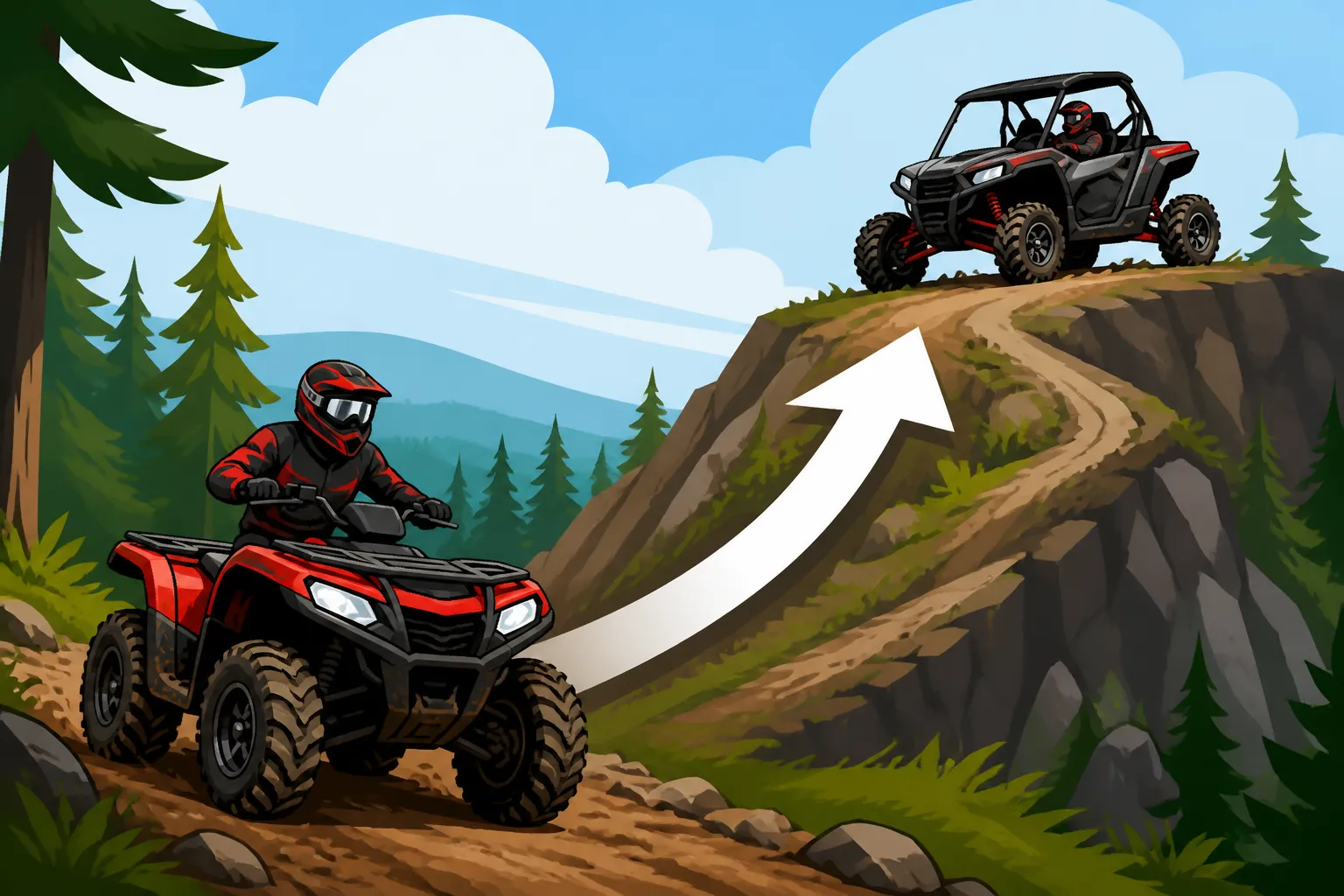
Elevation change is often described in two different ways. Net elevation change is the difference between where you start and where you finish. Elevation gain adds up the climbs along the route, including hills you descend and climb again.
That difference matters in practice. Imagine a loop that starts and ends at the same trailhead. Its net elevation change may be close to zero, but the route could still include a series of short climbs and descents. Those repeated efforts can make a ride feel more demanding than the endpoint heights suggest.
For Wisconsin riders, the ups and downs are generally rolling rather than mountainous, but a route’s surface and shape can make smaller hills feel significant. Soft sand, loose gravel, ruts, and wet ground may require more throttle and careful traction management on a climb. On the way down, the same route can call for slower speeds and deliberate braking.
Northwoods terrain varies from one riding area to another
“Up North” is not one uniform landscape. Some routes pass through relatively gentle forest terrain, while others wind over rolling ground or through sandy sections. Areas around Black River Falls are known for sandy riding conditions, where a short rise may be more demanding than its height alone suggests. In parts of northern Wisconsin, forest roads and trail systems also pass through rolling terrain where the repeated changes in grade affect pacing.
For a sense of how different a ride can feel, compare a long, gradual rise on a firm surface with a shorter climb through loose sand. The first may take longer but allow a steady pace. The second can demand more attention to traction, line choice, and throttle control. A route’s elevation profile is useful, but it does not tell you everything about the surface under your tires.
When comparing areas, use the elevation information alongside trail details and local guidance. Wisconsin Trail Difficulty Ratings can help frame what a route may ask of a rider, while Riding Black River Sand offers context for a surface that can make modest terrain feel more challenging.
How climbs and descents affect the ride
Uphill sections call for steady control and sensible spacing
On an uphill stretch, avoid rushing into the climb and then making abrupt throttle changes halfway up. A steady, controlled approach can help maintain traction and keep the machine predictable. If the ground is loose, scan ahead for a suitable line and avoid sudden steering inputs that could disturb your balance.
Spacing is especially important when a group reaches a hill. If the rider ahead stops or slows, following too closely can leave you with little room to react. Give each rider enough space to keep moving smoothly, and wait at a safe place if someone needs extra time. On a narrow trail, do not assume that a rider who has reached the top can see what is happening below.
For UTVs, passengers and cargo can affect how the machine responds on a grade. Keep loads secure and balanced, and follow the vehicle manufacturer’s operating guidance. ATV riders should also use a controlled body position appropriate to the machine and terrain, without making abrupt shifts that could affect stability. If a hill looks beyond your comfort or skill level, pause and choose a safe alternative rather than treating it as a challenge to conquer.
Descents can build speed before you notice
A downhill section can feel easy at first, then become harder to manage if speed increases on loose or uneven ground. Reduce speed before entering the descent, keep your attention on the route ahead, and leave room between machines. Avoid abrupt braking or sharp turns, particularly where sand, gravel, ruts, or wet leaves could reduce traction.
Use the machine’s braking and engine-control features as intended, and consult its owner’s manual for guidance on steep or uneven terrain. A passenger in a UTV should remain seated and secured as designed; riders should not lean or shift suddenly in an attempt to correct a moving machine. If the descent has poor visibility, treat the unseen section as a reason to slow down, not as an invitation to maintain the pace of the group.
Repeated downhill stretches can also tire riders through constant attention and hand or foot control. Plan short breaks before fatigue turns into sloppy decisions. It is easier to stop at a safe pull-off while everyone is comfortable than to push on until a rider is distracted, stiff, or impatient.
Planning a route around elevation and terrain
Read the map as a planning tool, not a promise
Before leaving the trailhead, look at the full route rather than only the distance. A route with frequent rolling terrain may take longer than a similar-length route across more even ground. Consider where you can pause, turn back, or shorten the ride if conditions or energy levels change.
A map or GPS app can help you understand the general shape of an area. For example, onX Offroad can be one part of your planning process when you want to review a route and its surrounding terrain. Treat elevation profiles as approximate planning information: tree cover, device settings, map data, and GPS reception can affect what you see, and a profile cannot tell you whether a hill is sandy, rutted, muddy, or recently changed.
Pair digital planning with local trail information and an offline backup. Reading a Wisconsin County Trail Map can help you make sense of the trail network, and Planning a Wisconsin Riding Trip is useful when you are working out a full day’s logistics. If you use onX Offroad, check that the relevant maps or route information are available to you before heading into an area where cell service may be limited.
| What to check | Why it matters on a ride with elevation change |
|---|---|
| Repeated climbs and descents | They can add effort even when the start and finish are at similar heights |
| Trail surface | Sand, loose gravel, ruts, and wet ground affect traction on both climbs and descents |
| Route options | A shorter alternative can help if the group is tiring or conditions worsen |
| Stops and turnaround points | Planned breaks reduce pressure to keep moving when riders need a pause |
| Trail status | Closures or changing conditions may affect which route is usable |
| Map access | Downloaded or offline information is helpful where phone coverage is unreliable |
Match the route to the least experienced rider
The most capable rider in a group should not set the day’s pace by default. Choose a route that fits the least experienced participant, the machines in the group, and the surface conditions you expect. A novice may manage rolling terrain comfortably at a measured pace but feel overwhelmed if the group strings out on a sandy climb or rushes downhill.
Discuss a few simple group expectations before starting: where to wait, how much space to leave, and what to do if someone wants to stop. Agree that a rider can call for a break without needing to justify it. This matters on a long day, when tiredness can make even familiar terrain feel more demanding.
Check trail status before you travel and again before riding if practical. Local closures, weather, and trail maintenance can affect your route choices. Checking Wisconsin Trail Status Before You Drive is a helpful planning step, while What to Carry on a Northwoods Ride can help you prepare for the possibility of a longer-than-expected trip. onX Offroad can supplement that preparation by helping you review route options, but it should not replace posted signs or local rules.
Riding comfortably through a full day
Pace the group before fatigue sets in
A route’s elevation change may be manageable in the morning and feel much harder later in the day. Riders often focus on mileage, then discover that the repeated climbs, noise, vibration, and concentration required on uneven terrain have worn them down. Build in breaks before the group is struggling, and allow time for slower travel through technical or unfamiliar sections.
At each stop, check in with the group rather than assuming everyone is fine because nobody has said otherwise. A rider who is tense or tired may need water, a snack, a few minutes to stretch, or a slower pace. If the group has mixed experience, keep the faster riders from disappearing around bends or over rises where they cannot see the rest of the party.
Leave room in the schedule for a conservative return. A ride that reaches its turnaround point with no time or energy to spare can become stressful if the trail is slower than expected. Having a shorter option or a clear decision point makes it easier to adapt without turning the ride into a race.
Prepare for changing trail conditions
Elevation does not change during the day, but the way a route rides can. Rain may soften a sandy stretch or make a descent slick. A dry trail can become dusty, reducing visibility between machines. Ruts and surface damage can also make a familiar grade feel different on a later visit.
Before a climb or descent, look for signs of changing conditions and adjust your speed accordingly. Do not assume that because one rider made a section smoothly, it will be equally easy for every machine or rider. Keep a safe gap so dust and sudden stops do not catch the group by surprise, and respect trail markers, closures, and posted restrictions.
When you plan around elevation, think beyond the line on the map. The useful questions are whether the route suits your group, what the surface is like, how you will manage repeated grades, and where you can pause or turn around. A measured pace and a flexible plan make a rolling Wisconsin trail day more comfortable for everyone.
Disclaimer
This article is for general informational purposes only and does not constitute professional advice. Laws, prices and regulations vary by location and change over time. Consult a qualified professional for guidance on your specific situation.