What Wisconsin Charges an Out-of-State Rider
An out-of-state plate does not automatically give you access to Wisconsin ATV and UTV trails, and arriving at a trailhead without the right pass can derail a trip before it starts. This guide explains the main charge visitors should expect, when a pass applies, what it does not cover, and how to prepare for riding in Wisconsin.
The main charge for an out-of-state rider
For a machine registered outside Wisconsin, the central statewide trail-access charge is generally a Wisconsin nonresident ATV trail pass when you ride on public ATV or UTV trails where a pass is required. Your home-state registration remains important, but it is not the same as a Wisconsin trail pass. The pass is an access requirement, not a replacement for your registration, safety obligations, or local route rules.
That distinction can feel fussy when you already paid to register the machine at home. Think of it as two separate questions: is the machine legally registered, and does the place you want to ride require a Wisconsin pass? Answering both before you load the trailer is much easier than sorting it out at a trail entrance.
What you are paying for
The pass is tied to riding on covered public trails, rather than to crossing the Wisconsin state line with an ATV or UTV. You are not generally charged a Wisconsin trail-pass fee just for bringing a machine into the state or parking it at a cabin. The fee becomes relevant when you operate it in a place where Wisconsin requires a pass.
The precise fee and the available pass options are set by the state and can change. Before buying, check the Wisconsin DNR’s current fee schedule and confirm whether the option you choose covers the dates and type of riding planned. Do not rely on a price quoted in an old forum post or on a listing from a previous season.
This is why visitors searching Wisconsin’s Non-Resident Trail Pass should look beyond the dollar amount. They need to know which machine the pass applies to, whether it is valid for their trip dates, how it must be displayed, and whether their planned riding area is a trail, a route, or another kind of public land.
What may add to your trip budget
The pass is only one line in a Northwoods riding budget. You may also need to account for fuel, lodging, meals, a trailer or rental, and any local requirements that apply to your route. A group staying near Eagle River, for example, may have a different mix of costs from a rider towing to Black River Falls for a day trip.
There can also be expenses related to getting the machine ready: a registration renewal at home, replacement decals, safety gear, or repairs before a long weekend. Those costs are not Wisconsin nonresident trail-pass charges, but they can matter just as much when you are trying to decide whether a quick trip is practical.
A useful way to budget is to separate statewide access costs from trip costs and machine costs. That prevents the pass fee from being mistaken for an all-in riding permit. It also makes it easier to compare a one-day visit with a longer stay, especially if your group is bringing several machines.
| Cost or requirement | What it generally relates to | What to check before riding |
|---|---|---|
| Wisconsin nonresident trail pass | Access to covered public ATV or UTV trails | Current fee, validity dates, machine coverage, display rules |
| Home-state registration | Legal registration of the machine | Registration validity and proof to carry |
| Local route rules | Riding on a town or county road route | Whether the road is open and what local rules apply |
| Safety certification | Certain riders’ legal training requirement | Rider’s age, birthdate, and accepted certificate |
| Trip expenses | Fuel, lodging, food, transport, repairs | Your route, group size, and trip length |
What the pass does not buy
A trail pass is not permission to ride anywhere you see a two-track. It does not open a closed trail, allow riding on private land without permission, or override a county forest closure. If a trail is closed because of spring thaw or a maintenance issue, having a valid pass does not make it legal to ride there.
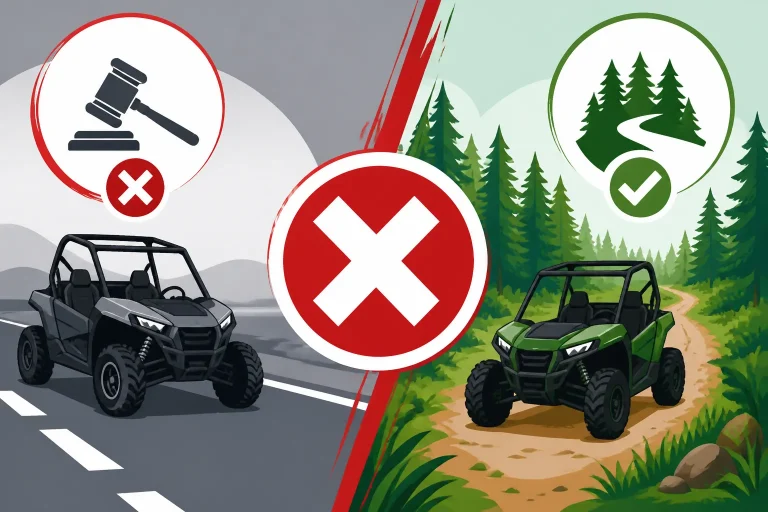
It also does not automatically authorize road riding. Wisconsin ATV and UTV routes are established under local rules, and a road that is open in one town may be closed in the next. The pass does not substitute for checking the route’s posted signs, operating hours, equipment rules, and any local insurance or license requirements.
The simplest way to think about the charge is this: the pass can satisfy a trail-access requirement, but it is not a universal riding permit. For a closer look at coverage, see [What Wisconsin’s $35 Non-Resident Trail Pass Covers] and Which Wisconsin Trails Require a Pass.
When an out-of-state machine needs a Wisconsin pass
Your home-state registration and Wisconsin trail access are related, but they are not interchangeable. A machine registered in Minnesota, Illinois, Michigan, Iowa, or another state may be properly registered where it is based and still need a Wisconsin nonresident pass for covered Wisconsin trails.
The important detail is where you plan to ride. Wisconsin has public trail systems, local road routes, county forest roads, private trails, and other areas with different rules. A weekend itinerary can include several of these in a single day, so check the status of each segment rather than assuming one rule covers everything.
Out-of-state registration is not automatic reciprocity
Visitors often assume that a registration sticker from home will be recognized as a complete substitute for Wisconsin’s trail-access requirements. That assumption can lead to an unpleasant surprise at a trailhead. Registration establishes that the machine is registered under its home jurisdiction; Wisconsin’s pass rules address access to covered trails.
Before leaving home, confirm that the machine’s registration is current and that you can show the documentation required for it. Then separately check the Wisconsin pass requirement for your destination. For a broader explanation of the distinction, read Passes for a Machine Registered Out of State.
There may be exceptions for particular machines, uses, or locations, so do not treat a general rule as a decision about every situation. If your machine is used for farm work, is part of a special event, or is being operated under an unusual arrangement, confirm the rule with the relevant agency or land manager before riding.
Trail riding versus road-route riding
A public trail and an ATV route on a road are not necessarily governed by the same access rule. Trails are designated off-road riding corridors. Routes are road segments opened to ATV or UTV use under local authority, and their rules can vary by town, county, and road.
For example, a trail ride near Rhinelander may connect to a local road route, but that does not mean every road between the trail and town is open. A road route may have posted hours, speed limits, equipment requirements, or restrictions that do not apply in the same way on the trail itself. Likewise, having a trail pass does not make an unmarked road legal to ride.
When your planned day includes a stop for fuel or lunch in a trail town, check the exact route connection and its signs. This is especially important around communities such as Eagle River, St. Germain, and Crivitz, where riders may use a mix of trail and route segments to reach services.
How different destinations can change the answer
A visitor riding in a county forest should check that county’s trail map and closures as well as statewide requirements. County forest systems can have seasonal closures, designated staging areas, and local restrictions. A pass does not guarantee that every forest road or recreational corridor is open to motorized riding.
If you are visiting the Chequamegon-Nicolet National Forest, a Wisconsin county trail system, or a route network around Vilas County, confirm the managing authority and the type of corridor. A trail may cross from one jurisdiction to another, and a route may be governed by the town rather than the county forest department.
A cabin location can also create confusion. Keeping the machine at a resort or private cabin does not itself trigger a trail pass, but riding from there onto a covered public trail may. If you are staying near a trailhead, ask the property manager which legal access points are nearby, then verify the answer against the current map and local notices.
How to buy and display the pass
Once you know your machine needs a pass, take care of the purchase before your first ride. Buying early gives you time to select the right product, enter the machine details correctly, and understand how the pass must be displayed. It also avoids the last-minute scramble of trying to find an agent after arriving in a small trail town.
The purchase channel and display procedure can be updated, so check the state’s current instructions rather than relying on what a friend did several seasons ago. Keep proof of purchase and the machine’s registration information together while traveling.
Choose the pass for the actual machine and trip
Start with the machine, not simply the number of people in your group. Pass requirements generally apply to the ATV or UTV being operated, so a group bringing multiple machines should verify coverage for each one. Do not assume a pass bought for one machine automatically covers another machine you borrow or bring as a backup.
Next, check the dates and type of pass available for your trip. A rider visiting for a few days may have a different option from someone returning to Wisconsin repeatedly through the season. The available products and fees should be confirmed directly through the Wisconsin DNR or an authorized sales agent.
Then compare the pass’s validity with your itinerary. If you arrive Friday evening and ride through the weekend, make sure the dates line up with the period you plan to operate. If the trip stretches into a new season or includes a later return, recheck whether the pass remains valid for that next ride.
Keep the purchase record with your machine papers
Keep your pass confirmation or receipt accessible, along with the machine’s home-state registration and any other required documents. That does not mean every document must be carried in the same pocket, but you should be able to retrieve the information without digging through a packed trailer or searching old messages in a weak-signal area.
A practical routine is to save the confirmation on your phone and keep a paper copy with your registration documents. If you travel with a group, make sure each driver knows which machine is covered and where the proof is stored. A clear system can prevent confusion when riders switch machines during the weekend.
If you are uncertain whether a pass purchase went through or whether a sticker was issued, resolve that before riding. Do not assume that a payment screen, a partially completed order, or an old decal proves current coverage. The state’s instructions explain what counts as valid proof and where to place the pass.
Display it as instructed
A pass may have specific placement and visibility requirements. Follow the instructions that come with it, including any rules about which surface to use and how to keep it readable. A pass tucked under a seat or kept in a glove compartment may not satisfy a display requirement if the rules call for it to be affixed to the machine.
Before the first ride, check that the pass is secure and visible. Mud, water, pressure washing, and repeated handling can damage stickers, so inspect it during a multi-day trip. If it peels or becomes unreadable, look up the official replacement process rather than improvising with a photocopy or an old decal.
The purchase and display details are easy to overlook because they feel administrative. But a pass is only useful if it is valid for the right machine and displayed as required. For the state’s purchase channels, see Buying a Wisconsin Trail Pass Online and Wisconsin Agents That Sell Trail Passes.
Registration, reciprocity, and common visitor situations
Out-of-state riders come to Wisconsin from many directions, and each home state has its own registration system. The general planning principle is the same: keep your home registration current, then check Wisconsin’s separate trail-pass and riding rules. Do not rely on a neighboring state’s sticker as proof that every Wisconsin requirement has been met.
This is particularly useful for groups where one person owns the machine and another is operating it. The machine’s documents, pass status, and the operator’s training requirements are separate questions. Sort them out before the owner hands over the keys.
Minnesota riders
Minnesota riders commonly travel east for Northwoods trails, including destinations near the St. Croix River, Hayward, and the northern counties. A Minnesota registration may establish the machine’s status at home, but visitors should still check whether the Wisconsin trail system they intend to ride requires a nonresident pass.
The route into Wisconsin matters too. A rider may tow the machine across the border, unload near a trailhead, and ride only in a designated system. Another may ride local routes between a lodging property and a restaurant. Those plans can involve different rules, so check the trail and route segments separately.
For the state-specific question, see Do Minnesota Riders Need a Wisconsin Pass?. Use it as a starting point, then confirm the current directions for your exact machine and destination.
Illinois, Michigan, and Iowa riders
Illinois visitors often plan trips to central or northern Wisconsin, while Michigan riders may cross near the Upper Peninsula and travel toward Forest, Marinette, or Vilas County. Iowa riders may arrive from the west for a long weekend. In each case, the short drive across the border does not erase Wisconsin’s access rules.
A machine’s home registration does not necessarily establish access to all public trail systems in Wisconsin. Check whether your planned destinations require a pass, and make sure the machine’s registration is valid for the entire trip. If your group is crossing between counties, check trail status and local rules at both ends.
For more targeted questions, consult Do Illinois Riders Need a Wisconsin Pass? and Michigan Riders Coming to Wisconsin Trails. Riders coming from Iowa can also review [Iowa Riders on Wisconsin Trails] before planning a route.
Rental, borrowed, and club machines
A rental machine can create an extra layer of uncertainty because the rental company may handle some documentation while leaving other responsibilities to the renter. Ask the provider which registration and pass requirements are already satisfied, what documents should remain with the machine, and whether the pass applies to the exact dates you booked.
Do not assume the rental agreement settles every local question. The operator may still need to follow safety, age, helmet, and route rules. If you intend to leave a trail system and ride on local roads, ask which route connections are legal and whether the rental machine is equipped for that use.
Borrowed machines deserve the same care. Ask the owner whether the machine is registered, whether the pass is valid for that machine, and whether you are allowed to operate it under the owner’s insurance or agreement. Wisconsin Pass Rules for a Rented Machine and Passes for a Borrowed Machine Up North are useful starting points for these situations.
Other requirements that can cost time or money
The trail pass is only one part of being ready to ride. Registration, safety requirements, insurance rules, and local ordinances can affect whether a ride is legal or practical. These requirements do not necessarily create another statewide trail-pass charge, but they can create extra costs or delay a trip if overlooked.
A rider who is organized about the paperwork before departure is less likely to be caught trying to interpret a sign at dusk or locate a document at a crowded staging area. Keep the machine’s paperwork and each rider’s requirements separate in your planning checklist.
Registration and proof for the machine
Carry the machine’s valid home-state registration and any proof required by that jurisdiction. If the registration card is stored in the towing vehicle, make sure the operator knows where it is and can access it when needed. A photo may help you remember the details, but it should not be assumed to replace whatever official proof the rules require.
If the machine was recently purchased, check that the registration transfer or temporary documentation is complete before traveling. A bill of sale alone may not answer every question about whether the machine is properly registered or whether it can be used on public trails. Resolve gaps with the home-state agency before the trip.
The Wisconsin pass and the home registration serve different purposes. Keep both records together, but do not confuse them. A valid pass does not cure an expired registration, and valid registration from another state does not automatically satisfy a Wisconsin pass requirement.
Safety certification and age rules
Some riders may need an ATV safety certificate based on age and applicable Wisconsin rules. Visitors should check whether their age, birthdate, and riding situation place them under a certification requirement, and whether their home-state certificate is accepted. Requirements can differ between ATV and UTV operators, so do not assume that one rider’s status answers the question for everyone in a family group.
This matters especially when children or teenagers are traveling with adults. A parent may be familiar with the rules at home but not know which Wisconsin requirements apply on public trails or routes. Confirm the rule before the trip and carry any certificate or proof that the rider is expected to have available.
An easy place to start is Wisconsin’s ATV Safety Certificate Requirement. Also review the relevant age-specific information if a young person will operate the machine. A safety certificate is not a substitute for supervision, appropriate equipment, or following the trail’s posted rules.
Insurance and local ordinances
Do not assume that your automobile policy covers an ATV or UTV simply because the machine is being towed behind a vehicle. Check the policy or contact the insurer about the machine, intended use, and any liability coverage. If you are renting or borrowing, clarify who is responsible for damage, injury, and proof of coverage.
Some local governments may impose requirements that differ from statewide trail rules, especially for road routes. These can include insurance, operating hours, equipment, or other conditions. A trail system’s entrance sign may not list every rule that applies after you turn onto a town road.
Before taking a route through a town, read the local ordinance or ask the local authority where to find it. A machine that is properly registered and has a valid trail pass can still be operated unlawfully if the route is closed or the rider misses a local requirement.
Planning a Wisconsin ride without last-minute surprises
A little research makes the fee question much simpler. Start with the destination, identify the public trail systems and road routes you plan to use, then match each segment with its managing authority and requirements. This prevents a common mistake: buying a pass and assuming it settles every access question for the whole trip.
Wisconsin’s riding geography can make that preparation especially worthwhile. Trail plans around Eagle River, Rhinelander, Hayward, Black River Falls, and Crivitz may involve different county systems, local routes, and seasonal conditions. A route that looks continuous on a general map may include a closed section or a road that is not open to ATVs.
Use a pre-trip checklist
A good checklist begins with the machine. Confirm its registration is current, the pass requirement is understood, and the pass is valid for the exact machine and dates. Check that required documents are packed and that the pass is displayed as instructed before the machine leaves the trailer.
Then check the riders. Confirm age and safety-certificate requirements, helmets and other equipment, and any insurance questions. If several people will take turns operating, do not assume that the requirements for the person who booked the trip automatically apply to every rider.
Finally, verify the places you will ride. Look up trail status, closures, staging areas, road connections, and local ordinances. For a checklist of pass and equipment basics, What Wisconsin Riders Need Before They Ride can help organize the final review.
Check trail status close to departure
Trail conditions can change with weather, maintenance, and seasonal closures. Spring thaw is a particularly important time to check before driving several hours to a trailhead. A route that was open on a previous visit may be closed to protect soft ground and prevent damage.
Use current notices from the county, forest, or agency that manages the specific system. A general map or a social-media post from another rider may not reflect a new closure. If you are planning to ride multiple counties, check each one rather than assuming the same opening status applies throughout the region.
This step also helps with trip logistics. If a trail system is closed, you may need to change where you unload, shorten the loop, or choose another destination. Checking Wisconsin Trail Status Before You Drive is a useful companion for planning around closures and conditions.
Make the rules part of the route plan
Do not plan only around mileage. Include fuel stops, food, staging locations, and legal route connections. If you hope to ride into a town for lunch, identify the road segment that connects the trail to the business and confirm that ATVs or UTVs are allowed there.
Give your group a quick rules briefing before starting. Point out who has the registration and pass information, where the map is saved, and what to do if the group becomes separated. For a long ride in a low-service area, download maps or carry a paper copy rather than depending entirely on a phone signal.
This is also a good moment to discuss courteous riding. Slow down near homes and farmyards, follow posted speed limits, and stay on the designated corridor. Visitors who respect local rules help protect the trail access that brings riders back to Wisconsin year after year.
Frequent questions from out-of-state riders
Most visitor questions come down to a few distinctions: whether a pass is required, whether it covers a road route, and whether a home-state registration is enough. The answers depend on where and how you ride, so treat these as planning principles rather than a replacement for checking the rules for a particular trail or local jurisdiction.
If your trip includes a rental, a young operator, a private property stop, or an unusual machine-registration arrangement, take the extra step of confirming the details before you unload. A few minutes of checking can prevent a much bigger interruption on the trail.
Do I need to buy a pass just to bring my machine into Wisconsin?
Generally, bringing or transporting a machine into Wisconsin is not the same as operating it on a public trail that requires a pass. The pass question is about where you ride, not simply whether the machine crosses the state border.
If you will ride only on private property, clarify the landowner’s permission and any applicable rules for that property. If your plan includes public trails, routes, or other public lands, check the requirements for each location. Do not assume that permission to unload at a cabin includes permission to ride onto a nearby trail.
When the destination is unclear, ask the land manager or local authority rather than guessing from a map. The words “trail,” “route,” and “road” can refer to different kinds of access, and each may have its own rules.
Does the pass let me ride on Wisconsin roads?
No. A trail pass should not be treated as a general road permit. Road riding depends on whether the road or route is legally open to ATVs or UTVs and whether the rider and machine meet the local and statewide requirements.
A town may open certain roads while another town does not. Even within a route network, there can be gaps, restrictions, or signs that limit access. Follow the posted signs and verify the local ordinance before riding on a road segment.
If your goal is to travel from a trail to a restaurant, gas station, or lodging property, map the route connection in advance. A short road segment can be the difference between a legal ride and an avoidable citation.
Does my home-state registration replace the Wisconsin pass?
Not automatically. The home-state registration and Wisconsin trail pass address different requirements. A machine can be registered at home and still need a Wisconsin pass for covered public trails.
The best approach is to check both documents separately. Confirm the registration is current under your home state’s rules, then check the Wisconsin requirements for your planned riding area. This is especially important for repeat visitors who may remember the process from an earlier trip but have not checked whether the rules or fee schedule have changed.
Can one pass cover more than one machine?
Do not assume it can. Verify the pass terms for the exact machine and purchase option. If your household or group is bringing multiple ATVs or UTVs, make a list of the machines and confirm the coverage for each one before buying.
This is also important when you borrow a friend’s machine or switch vehicles during a trip. The fact that one person in the group has purchased a pass does not necessarily mean every machine is covered. Keep each machine’s registration and pass information clearly matched.
What if the trail is closed after I have bought a pass?
A pass does not guarantee that a trail will remain open. Closures may happen for weather, maintenance, safety, or resource protection. If a trail is closed, do not ride around a barrier or use an unofficial path to get past it.
Check the relevant county or land manager’s notices and consider another open system. If the closure affects a large portion of the trip, contact the agency or pass seller about any applicable policy, but do not assume a refund or transfer is available. The access rules and purchase terms are separate questions.
A sensible way to answer “What will Wisconsin charge me?”
For an out-of-state rider, the key statewide access expense is usually the Wisconsin nonresident trail pass when riding covered public ATV or UTV trails. The exact fee and product options should be checked with the Wisconsin DNR before purchase. Your home-state registration does not automatically replace that pass, and the pass does not grant unrestricted access to roads, private land, or closed trails.
Plan around the route, not just the fee. Confirm the machine’s registration, identify every public trail and road segment, check local rules and seasonal status, and match the pass to the right machine and dates. Once those pieces are in place, you can head for the Northwoods—or whichever Wisconsin trail town is calling—without discovering the missing requirement at the staging area.
Disclaimer
This article is for general informational purposes only and does not constitute professional advice. Laws, prices and regulations vary by location and change over time. Consult a qualified professional for guidance on your specific situation.