Riding a Wisconsin Trail Through a Swamp
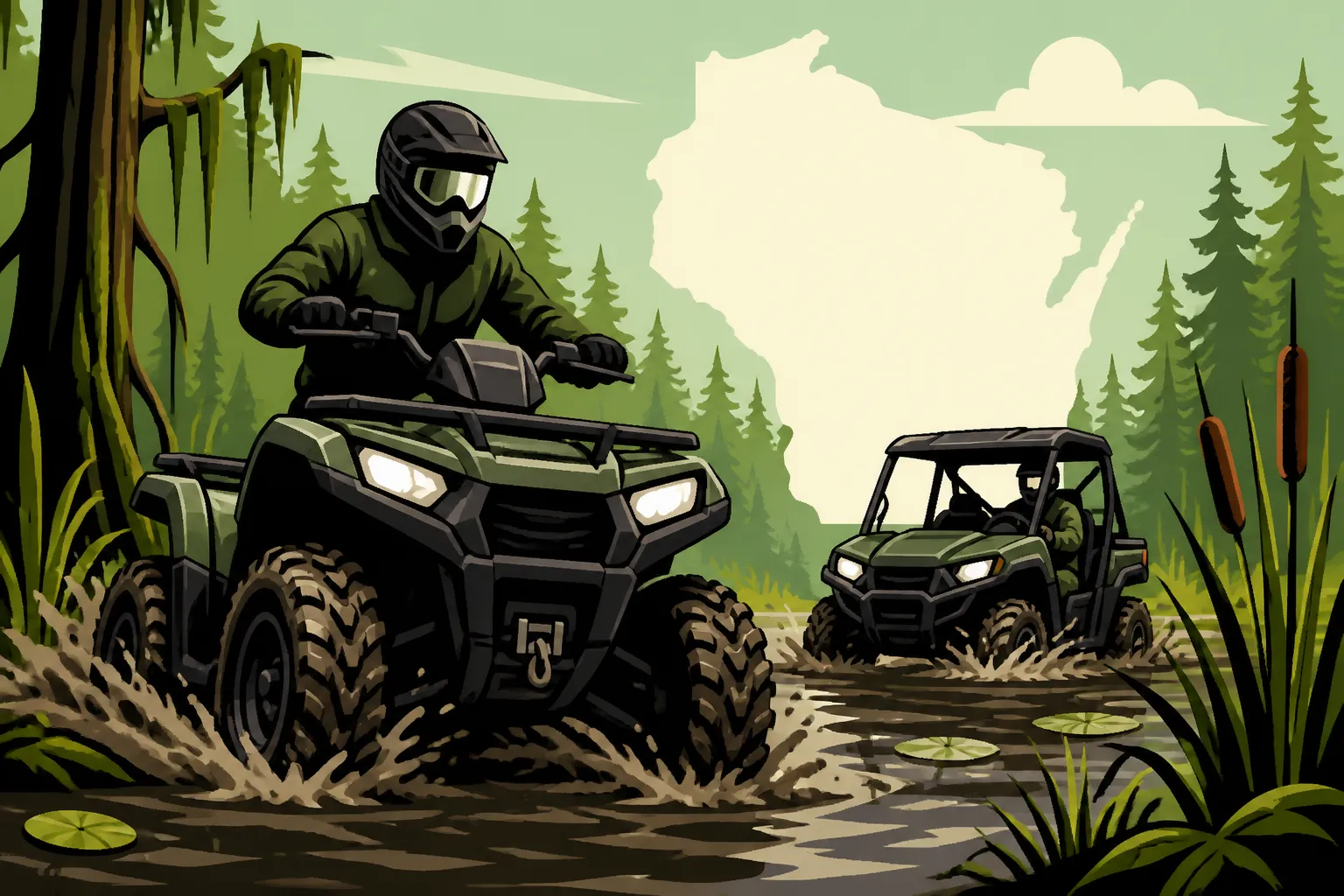
A swampy Wisconsin trail can look firm from the seat and still hide deep mud, soft shoulders, or water over the track. That uncertainty is part of the challenge, especially after rain or during spring thaw. This guide explains how to judge conditions, ride a wetland trail responsibly, prepare your ATV or UTV, and respond safely if the ground gives way.
Understand what makes a swamp trail different
Mud, standing water, and soft ground are not the same
A wet trail can include several kinds of terrain in a short distance. You may encounter shallow standing water over a firm base, deep mud that grabs tires, or saturated ground that looks dry beneath leaves and grass. In northern Wisconsin, a forest trail can also pass beside a wetland or cross a low area where water gathers after rain.
The biggest mistake is assuming that the surface tells the whole story. A puddle may conceal a rut, a rock, or a sudden drop. A patch of grass beside the trail may be much softer than the packed track. If you cannot tell where the trail goes or how deep the water is, do not charge into it to find out. Stop somewhere stable, look for visible trail markers, and assess whether there is a clear, permitted route through.
A swamp is also not an invitation to create a new route around a muddy section. Riding off the marked trail can damage sensitive ground, widen the trail, and put you into deeper or less predictable terrain. If a section appears impassable, turn around where it is safe and report the problem to the appropriate trail or county contact rather than cutting through vegetation.
Conditions can change quickly
A trail that was manageable earlier in the day may become difficult after a downpour. Water can collect in low spots, soften trail edges, and hide ruts that were easy to see when the ground was drier. Spring thaw is another important factor: the surface may look ready for riding while the soil underneath is still saturated and vulnerable to damage. Seasonal closures exist for a reason, and riding around a closure can harm the trail and create problems for everyone who uses it.
Before setting out, check for local updates and posted notices. The guide to Checking Wisconsin Trail Status Before You Drive can help you make that a routine part of trip planning. For spring rides, also review Wisconsin Trail Closures in April. Do not rely only on an old screenshot, a saved route, or a report from someone who rode the area days ago.
When planning a route through the Northwoods, conditions may differ between forest roads, marked ATV trails, and connecting routes. A digital map can help you understand where you are, but it is not a substitute for current closure information or signs on the ground. onX Offroad can be useful for reviewing your planned route and keeping track of your position; still, treat signs and official local updates as the authority for whether a trail is open.
Prepare before riding through a wet area
Check the route and make a realistic plan
Start by choosing a route suited to your machine, experience, and group. A short, marked trail loop is often a better choice than an ambitious route with unknown wet sections, particularly if you are riding alone or with a new operator. Look at the map before leaving, note possible turnarounds, and tell someone where you plan to ride and when you expect to return.
A map app can help you follow your route, but low areas and wetland edges are not always obvious from a screen. Use the app to stay oriented, not to justify a shortcut. If you use onX Offroad, download or save the information you expect to need before entering an area with weak cell service. Keep a paper map as a backup when you are heading into a remote forest. The article Carrying a Paper Map on a Northwoods Ride offers a useful reminder that a phone is only one part of a navigation plan.
| Before the ride | What to check | Why it matters |
|---|---|---|
| Trail status | Open or closed notices, seasonal restrictions, and local updates | Prevents riding into a closure or relying on outdated conditions |
| Route | Marked trail connections, turnarounds, and distance between stops | Helps keep the ride manageable if conditions worsen |
| Machine | Tires, brakes, throttle, lights, and recovery points | Reduces the chance of a preventable problem in a remote area |
| Group | Rider experience, passenger needs, and communication plan | Makes it easier to respond calmly if someone gets stuck |
| Supplies | Water, basic first aid, tools, and recovery gear | Helps the group handle delays without rushing or taking unsafe shortcuts |
Also consider how much daylight you have. Getting stuck in wet ground can turn a relaxed outing into a long recovery, and swampy trails are harder to read when light fades. If the route is unfamiliar, build in extra time instead of planning to reach the trailhead just before dark.
Check your machine and carry recovery basics
A wet ride puts extra demands on tires, brakes, and the drivetrain. Before leaving, look for obvious tire damage, confirm that the tires are properly inflated for the machine and conditions, and make sure the controls work smoothly. Secure loose cargo so it cannot shift if the machine hits a rut. If your ATV or UTV has a winch, check that it operates and that the cable or rope is in good condition.
Carry a small first-aid kit, drinking water, a charged phone, a basic tool kit, and a way to communicate if cell service drops out. Recovery gear should match your machine and the way you ride. A winch is not useful if you have no safe anchor point or do not know how to use it. A recovery strap should be designed for vehicle recovery, not improvised from a tie-down strap.
For more specific packing ideas, see What to Carry on a Northwoods Ride and Recovery Gear for Wisconsin Mud. If your group expects to travel through remote areas, discuss in advance who will operate the winch, where riders should stand, and how everyone will communicate during a recovery.
Ride through swampy sections without making the problem worse
Use a slow, steady approach
As you approach a wet section, reduce speed well before the edge. Look for the marked trail, existing tire tracks, and any signs that indicate a safe crossing or closure. Avoid stopping with your machine pointed downhill toward water or on a soft shoulder. If the trail is narrow, give the group space so the rider ahead has room to assess the terrain without pressure from someone close behind.
When the route is clearly open and the crossing is within your ability, maintain a controlled pace. Sudden throttle changes, sharp turns, and repeated attempts to accelerate can dig tires into soft ground. Keep your movements smooth and avoid riding close to the edge, where the ground may be less stable. On a UTV, make sure passengers are belted and seated properly before moving; on an ATV, carry only the passenger configuration the machine is designed for.
Do not follow another machine blindly. Its tires may have found a firm line that is not obvious from behind, or the ground may have changed after it passed. Wait until you can see the route and choose your own line within the marked trail. If water depth, current, or the condition of the bottom is unclear, do not enter. A few minutes spent turning around is better than discovering a hidden hole with your machine already in the water.
Stay on the marked trail and protect the wetland
Follow trail signs and markers even when the marked route is muddy or less convenient than a nearby patch of open ground. Wisconsin Trail Signs and Markers can help explain why those markers matter, especially where a trail passes through changing forest terrain. Do not ride around a puddle by widening the trail into the vegetation. That can damage plants, disturb wetland soil, and create a broader muddy area that becomes harder to maintain.
Keep a suitable distance between machines. If the rider ahead stops, you should have room to brake without crowding them or getting pulled onto a soft edge. A single-file line is often easier to manage on a narrow wet trail than several machines spreading out to find separate paths. Avoid spinning tires for fun or trying repeated high-speed passes through the same muddy spot.
Respect any barricades, closed gates, or temporary signs. A closure may be in place because of trail damage, unsafe conditions, maintenance work, or seasonal restrictions. A mapped route does not override a closure sign. If you find a blocked or badly damaged section, turn around safely and report it through the appropriate local channel. Do not move a barrier or assume that a passable-looking trail is open.
What to do if your ATV or UTV gets stuck
Pause and assess before attempting recovery
When a machine stops moving, take your foot off the throttle. Spinning the tires can bury the machine deeper, throw mud, and damage the trail. Check that the machine is stable, that no one is near moving parts, and that the area around it is safe to approach. If there is water nearby, keep riders away from slippery banks and avoid stepping into water when you cannot see the bottom.
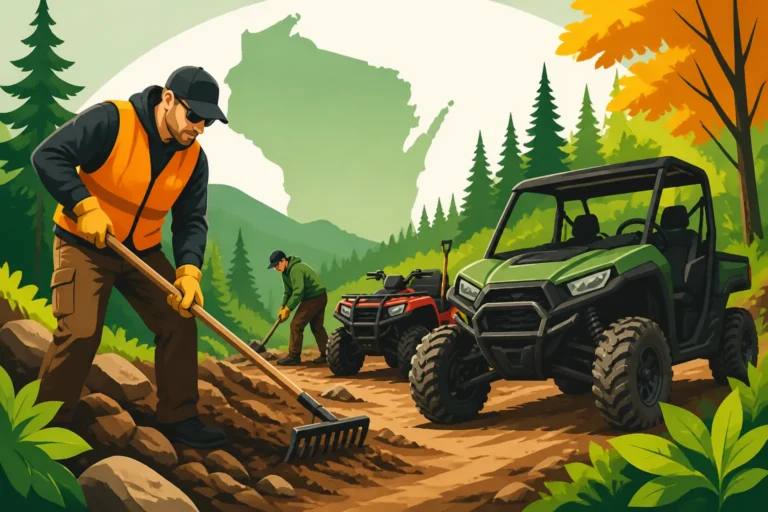
Work out what is holding the machine: a high-centered frame, a tire sunk in mud, a wheel caught in a rut, or an obstacle under the chassis. Remove loose cargo if it can be done safely, and use a shovel or recovery tool to clear mud from around the tires or underside. Keep the recovery plan simple. If the machine is unstable, the water is deep, or the recovery point is uncertain, stop and seek help rather than improvising.
Use only appropriate recovery points and equipment. Never attach a strap or winch line to a part that is not intended to take that force. Keep people out of the line of pull, and do not stand over a tensioned cable or strap. Follow the equipment instructions and keep bystanders well clear while the machine is moving. Winching Out of a Northwoods Bog covers the extra care needed for this kind of recovery.
Know when to turn back or call for help
If your first careful attempt does not work, pause instead of adding speed. A machine that is buried to the frame, leaning sharply, or sitting in water may require more than a basic pull. Another vehicle is not automatically a safe anchor, and a second machine can become stuck too. A poor recovery attempt can injure riders or damage both machines.
Do not leave a stuck machine unattended without considering the people, weather, daylight, and distance to help. Keep the group together, conserve phone battery, and share your location if you can. If a rider is injured, a machine is at risk of entering deeper water, or the group cannot recover safely, contact emergency services or local assistance as appropriate. Avoid walking through unfamiliar wetland terrain in search of a shortcut back to the trailhead.
After a recovery, check the machine before riding again. Look for loose cargo, mud obstructing controls, visible damage, or a change in how the steering and brakes feel. If anything seems wrong, do not continue simply because the group is eager to get moving. Choose the safest route back, and report trail damage or a hazardous obstruction so other riders are not surprised by it.
A swamp crossing should never become a contest. Stay on marked routes, check conditions before you go, and be willing to turn around when the trail exceeds your group’s ability or the ground is uncertain. That approach protects your machine and helps keep Wisconsin’s wetland trails usable for the next ride.
Disclaimer
This article is for general informational purposes only and does not constitute professional advice. Laws, prices and regulations vary by location and change over time. Consult a qualified professional for guidance on your specific situation.