Busy Wisconsin Trails on a Holiday Weekend
A holiday weekend can turn a quiet Wisconsin trailhead into a line of trucks, trailers, and riders waiting to unload. Crowds also mean slower travel, busy fuel stops, and more chances to get separated from your group. This guide explains how to choose a route, plan around bottlenecks, and ride considerately when Wisconsin trails are at their busiest.
Why Wisconsin ATV Trails Get Busy on Holiday Weekends
Memorial Day, the Fourth of July, and Labor Day draw riders who want to make the most of a long weekend. Popular destinations such as Eagle River, St. Germain, Minocqua, and the trails around Black River Falls can attract visitors from across Wisconsin and neighboring states. A well-known trail network may be busy even when the weather is less than perfect, especially if riders have limited vacation days and have already booked a cabin or campsite.
Crowds do not just mean more machines on the trail. They can also mean less room at staging areas, longer waits at popular fuel stops, and slower progress where trails narrow or meet roads. If your group expects to cover a full day’s distance at its usual pace, a crowded weekend can make that plan feel rushed.
Where congestion tends to form
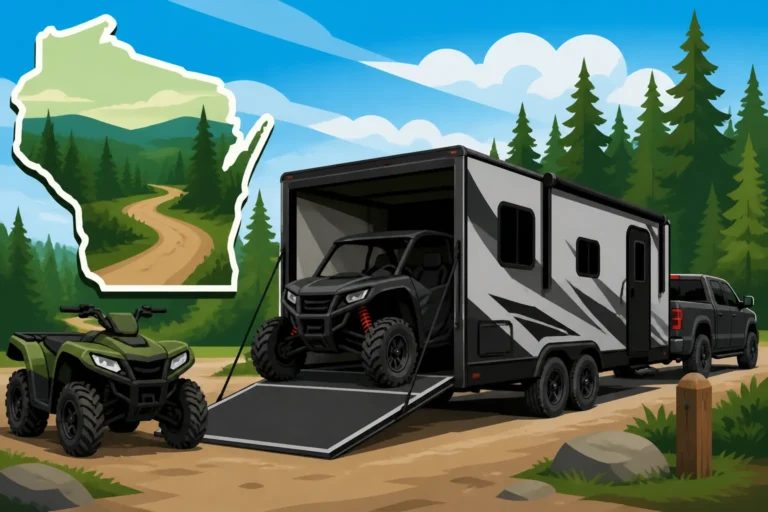
Trailheads and parking areas are often the first pinch points. A late arrival can leave you searching for a space to unload, or force you to stage farther from your intended route. Before leaving home, look into the trailhead’s access and parking setup, and have a second staging option in mind. A little research can prevent the unpleasant surprise of arriving with a trailer and nowhere obvious to put it.
On the trail, bottlenecks tend to develop at narrow sections, bridges, intersections, road crossings, and places where several routes converge. A stopped machine, a group checking a map, or a rider waiting for someone to catch up can slow everyone behind them. Give other riders room, keep moving when it is safe to do so, and pull well off the traveled way when your group needs to regroup.
Towns can be busy too. In Northwoods communities that welcome ATV and UTV traffic, riders may be sharing open routes with local vehicles, delivery trucks, pedestrians, and other visitors. A marked trail and a town road route are not automatically the same thing. Check local access rules before planning a ride into town, and review What a Wisconsin ATV Route Actually Is and Municipal Ordinances Wisconsin Riders Must Read before assuming a route is open.
How crowds change your ride plan
Expect a slower pace than you would on a quiet weekday. A route that looks straightforward on a map can take longer when you encounter groups, stop for safe crossings, or wait for a clear space to pass. Build in extra time rather than trying to recover lost minutes by riding faster.
Crowds also make communication more important. At intersections, agree on where the group will stop and wait. If a rider gets delayed, the group should have a simple plan for who stays with them and where everyone will reconnect. A prearranged meeting spot is much more useful than trying to describe a confusing junction over engine noise.
If your trip is centered on a particular county or forest, check its notices before setting out. Conditions and access can vary between trail systems, and local closure information matters more than an old social post or a map saved months ago. Checking Wisconsin Trail Status Before You Drive can help you make that final check before loading up.
Choosing a Trail and Time That Suit Your Group
A holiday weekend does not have to mean abandoning a favorite destination. It does mean choosing your route with your group’s experience, machine size, and appetite for crowds in mind. A beginner riding with children may have a very different idea of a pleasant day than a confident group hoping to cover a long loop.
A practical plan balances the ride you want with the conditions you are likely to encounter. If your priority is time on the machine, consider starting early, choosing a less central trailhead, or shortening the loop. If your priority is a relaxed outing, a scenic, familiar route may be more enjoyable than trying to reach a famous destination during the busiest part of the day.
Match the route to your riders and machines
Before committing to a route, make sure the trail system suits every machine in your group. Width restrictions, surface conditions, and local rules can affect whether a full-size UTV or a narrower machine can use a particular trail. Do not rely on a vague recollection that “we rode there before”; trail access can differ from one section or connecting route to another.
Think about the least experienced rider, not only the most confident one. A crowded trail can add pressure at turns, crossings, and places where riders need to stop. Choose a route that gives the group room to ride at a comfortable pace and has reasonable places to regroup. For ideas on picking a suitable outing, see Wisconsin Trails Suited to Beginners and Family-Friendly Wisconsin ATV Trails.
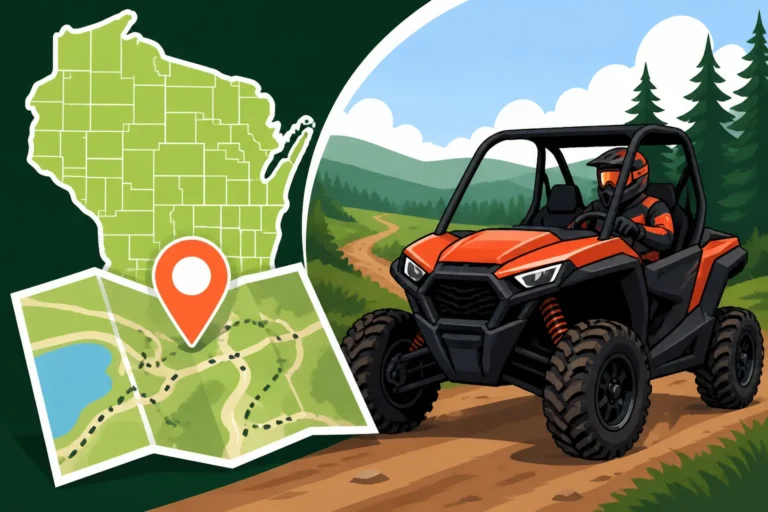
Maps are useful, but they should support—not replace—current local information. A digital mapping tool such as onX Offroad can help you review a planned route and understand where it connects to other trails or roads. Download or prepare the information you need before heading into areas with unreliable cell service. Keep a backup plan as well, such as a paper map or a saved route description.
Adjust your timing and distance
Arriving early can make parking and unloading easier, but the best departure time depends on the place, the day, and the local trail schedule. Check trail notices and parking guidance rather than assuming that early access is always permitted. If you cannot start early, consider riding a shorter loop and leaving more time for stops.
Plan your turnaround point before the group is tired or behind schedule. A shorter route can be a smart choice when the trail is crowded, the weather changes, or a machine needs attention. It is better to finish comfortably than to push the group to complete a distance that no longer makes sense.
You can also build flexibility into the destination. If the primary trailhead is full, know where you can legally and safely stage instead. Do not park in a way that blocks access, drives, or emergency routes, and do not assume that an empty-looking lot is available for public use. Wisconsin Trailhead Parking and Staging offers useful planning context, while Finding a Wisconsin County Trail Map can help you prepare a route with local trail information in mind.
| Planning choice | When it helps | What to check |
|---|---|---|
| Start earlier | You want more time before midday congestion | Trail access hours, parking availability, and local notices |
| Choose a shorter loop | Your group includes new riders or children | Route suitability, machine restrictions, and safe regrouping spots |
| Use a less central staging area | The main trailhead is known to draw crowds | Legal parking, access connections, and current trail status |
| Keep a backup route | Weather, closures, or traffic disrupt the original plan | Whether the alternate route is open and suitable for your machines |
| Ride on a quieter day | Your plans are flexible and you prefer less traffic | Seasonal closures and local trail conditions |
Riding Safely and Considerately in Heavy Traffic
Busy trails call for patience and predictable riding. Sudden stops, hurried passes, and following too closely can turn a routine outing into a stressful one. Leave enough space to react, especially when visibility is limited by dust, trees, bends, or a group ahead.
Be courteous without putting yourself or your passengers at risk. Let faster riders pass only where there is enough room and visibility, and do not squeeze past another machine on a narrow trail. If your group needs to stop, move completely out of the traveled path when it is safe. A pause in a blind corner or at the base of a hill can create a hazard for riders who cannot see you in time.
Make regrouping easy
Before the ride, decide how the group will handle separation. Pick a few clear meeting points, such as a major junction or a known trailhead, and agree that riders will stop there rather than continuing in different directions. Make sure everyone understands what to do if someone misses a turn or needs to stop.
Keep the group together at decision points. The lead rider can stop somewhere visible after a junction, while the last rider confirms that everyone made the turn. Avoid leaving a less experienced rider to interpret confusing intersections alone. If you use onX Offroad or another navigation app, have more than one person understand the route rather than relying on a single phone.
A plan should also account for limited reception. Cell service can be inconsistent in parts of the Northwoods, so do not assume a call or message will get through. Tell someone who is not riding where you plan to go and when you expect to return. For additional preparation ideas, see Cell Dead Zones in Northern Wisconsin and Carrying a Paper Map on a Northwoods Ride.
Share the trail and town routes responsibly
A crowded weekend makes respectful riding especially important near homes, businesses, and community roads. Slow down where people, pets, farm activity, or parked vehicles may be close to the route. Avoid unnecessary noise and keep group behavior calm when stopping in a town. The community’s willingness to support riding access can depend on visitors treating residents and other road users with care.
Do not treat every road that looks like a convenient connection as an authorized ATV route. Follow posted signs and confirm the local ordinance or route information. Town access can differ from one municipality to another, even in neighboring communities. If your ride includes a stop in a trail town, confirm the legal route and parking arrangements before setting out.
When trails are crowded, the most considerate choice may be to wait rather than force a pass, take turns at a narrow section, or change plans if the route is becoming unsafe. A good ride is not measured only by distance. Leaving space for other users and avoiding damage helps keep trails enjoyable for everyone. Group Etiquette Through a Northwoods Town and Single File on a Wisconsin Route cover practical ways to keep a group organized.
Preparing for the Day Before You Leave Home
Holiday-weekend riding goes more smoothly when basic decisions are made before the trailer is loaded. A small amount of preparation can save time at a busy staging area and help your group respond calmly if the plan changes.
Check the trail system’s current notices, access rules, and any local requirements that apply to your machines. Confirm that everyone has the documents, permits, and equipment needed for the ride. Requirements can depend on where you ride and the machine you use, so verify the details for your specific destination rather than relying on what applied on a previous trip.
Pack for delays and changing conditions
Bring enough water, food, and basic first-aid supplies for a longer day than expected. Crowded fuel stops, slow sections, or an unplanned repair can stretch a ride. Carry tools and recovery equipment appropriate to your machine and route, and make sure someone in the group knows how to use them.
Weather can change, and a crowded trail may make it harder to find a quiet place to adjust gear or take a break. Dress for the conditions and carry an extra layer if temperatures may shift. A charged phone is useful, but it should not be the only way your group navigates or communicates.
Before leaving, give your group a practical checklist:
- Confirm the trail system is open and check for local notices.
- Verify parking and staging options, including a backup location.
- Review route suitability for each rider and machine.
- Agree on regrouping points and what to do if someone gets separated.
- Carry water, basic supplies, appropriate tools, and a backup map.
- Tell someone your planned destination and expected return time.
Know when to change the plan
A full parking lot, a closure notice, poor visibility, or a machine problem can all be reasons to adjust your day. Do not let the effort of reaching a destination pressure you into riding somewhere unsuitable. If your intended route is crowded or inaccessible, switch to a prepared alternative or postpone the ride.
It helps to agree in advance that any rider can raise a safety concern without being teased or overruled. A child who feels overwhelmed, a new rider who is uncomfortable in a tight group, or an experienced rider who spots a hazard may be the first to recognize that the plan needs to change.
Using onX Offroad to review an alternate route before you depart can make that decision easier, but confirm access and current conditions locally. A map can show connections; it cannot guarantee that a trail is open, that parking is available, or that the route suits every machine in your group. A flexible plan, current local information, and a patient pace are what make a busy Wisconsin holiday ride manageable.
Disclaimer
This article is for general informational purposes only and does not constitute professional advice. Laws, prices and regulations vary by location and change over time. Consult a qualified professional for guidance on your specific situation.