Bear and Wolves on Northern Wisconsin Trails
A bear or wolf sighting can turn a relaxed ride on a northern Wisconsin trail into a tense moment, especially when the woods are quiet and cell service is weak. Most wildlife encounters are brief, but knowing how to respond—and how to prepare before you leave the trailhead—helps you protect yourself, your passengers, and the animals.
How to Prepare for Wildlife on Northern Wisconsin Trails
Know which animals you might encounter
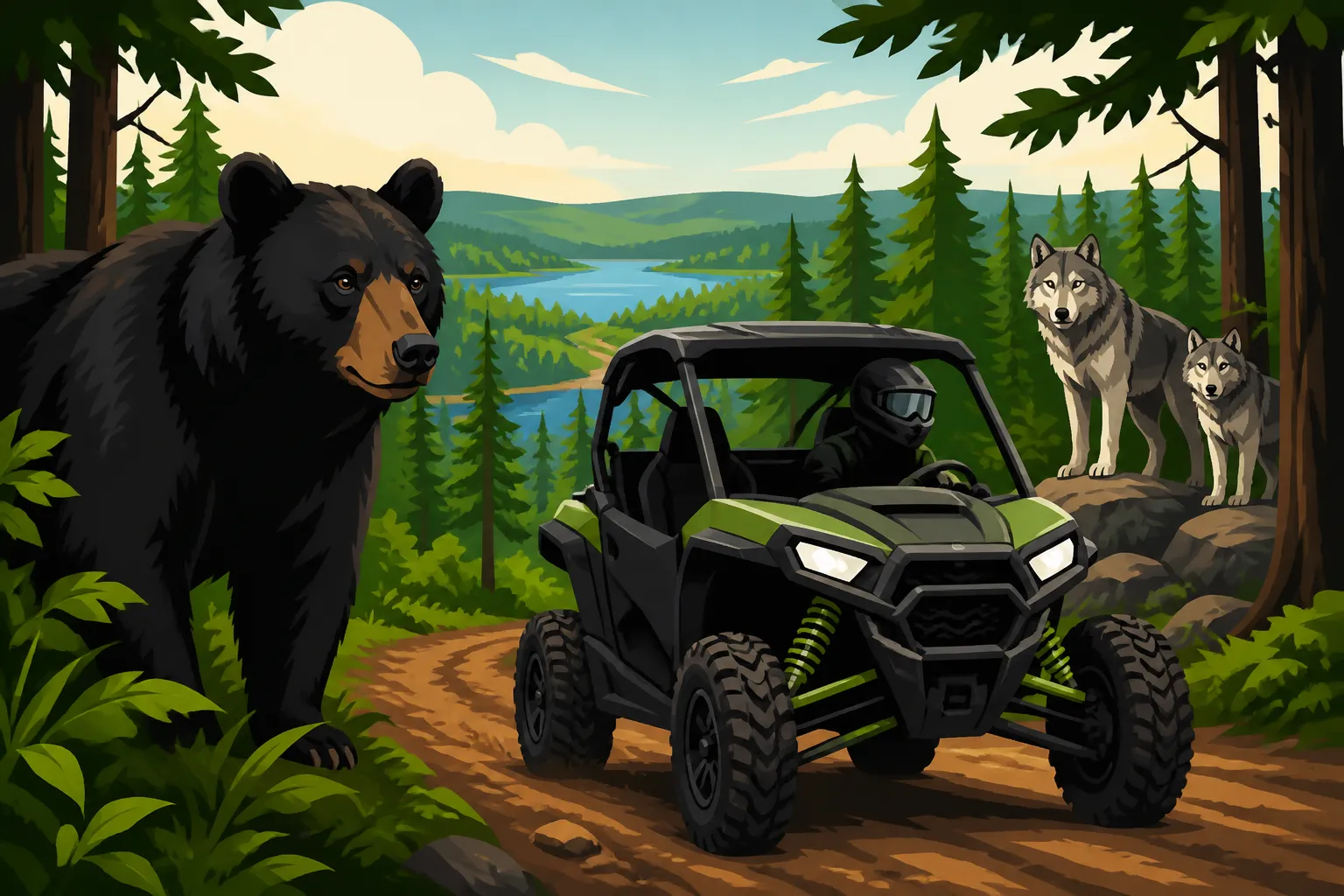
Black bears are found across much of northern Wisconsin, including forested areas around Vilas, Oneida, Forest, Florence, and Bayfield counties. A bear may cross a trail, forage near a road, or be active around campsites and other places where food is available. Seeing one does not necessarily mean it is approaching you; it may simply be moving through its habitat.
Wolves also live in parts of northern Wisconsin. They tend to avoid people, and a sighting from a distance is usually just that: an opportunity to let the animal move on. A wolf near a trail does not automatically mean a pack is nearby, and it is not a reason to chase after the animal for a closer look.
Other wildlife can catch riders off guard, too. Deer may dart across a trail, and smaller animals may appear suddenly in brush or around a bend. Slowing down in areas with limited visibility helps you react more safely. Wildlife on a Wisconsin County Trail offers more context on what riders may see in the woods.
Plan your route and communication before you ride
Look over your route before unloading at a trailhead. Know which roads, trail junctions, and towns you are aiming for, and agree on where your group will stop if it gets separated. A county map, paper backup, and a downloaded route can all help when trail signs are difficult to spot or you lose reception.
Apps such as onX Offroad can help you review routes and save map information for use where cellular coverage is limited. Set up your map before leaving service rather than expecting to load it in the middle of the forest. For more planning tips, see Reading a Wisconsin County Trail Map and Cell Dead Zones in Northern Wisconsin.
A phone is useful, but it should not be your only emergency plan on a remote ride. Tell someone where you are going and when you expect to return. If your route takes you far from reliable service, consider a satellite messenger and learn how to use it before you need it. Carrying a Satellite Messenger Up North explains why this can matter in a low-coverage area.
Make your group easier to manage in the woods
Ride with enough space between machines to stop safely, but close enough that the group can communicate at a trail junction. Agree on a simple signal for stopping, and have the lead rider check that everyone is still together after a turn or a wildlife sighting. A quiet rider who falls behind may be harder to locate than you expect.
If you are riding alone, choose a route that matches your experience and leave a clear plan with someone at home. A remote trail ride can become complicated quickly if a machine breaks down or a rider is injured. The advice in Riding Alone on a Wisconsin County Trail is worth considering even if you usually ride with others.
| Before leaving | Why it helps |
|---|---|
| Review the route and likely turnoffs | Reduces confusion if you need to change plans |
| Save maps for offline use | Helps when cellular service drops |
| Tell someone your route and return time | Gives another person a starting point if you are overdue |
| Carry water, basic first aid, and a charged phone | Helps with minor delays or injuries |
| Keep food sealed and secured | Avoids creating an easy wildlife food source |
| Agree on group signals and regroup points | Makes it easier to keep riders together |
What to Do If You See a Bear or Wolf
If you encounter a black bear
If you see a bear, stop at a safe distance and give it room to leave. Do not drive toward it, surround it with machines, or try to get closer for a photo. If the bear has not noticed you, calmly move away without blocking its path. If it has noticed you, speak in a steady voice so it can identify you as a person, and back away slowly while keeping an eye on its movements.
Do not run. Running can trigger a chase response, and it may also cause you to lose control of your machine or stumble on uneven ground. Avoid sudden movements and do not try to climb a tree. If the bear moves closer, keep your group together and continue to give it space. Bear spray may be useful if you carry it, but riders should know how to access and use their specific product before an encounter.
A bear that approaches a food source, appears injured, or behaves unusually deserves extra caution. Do not try to feed it or drive it away. Move to a safe location and report a concerning encounter to the appropriate local wildlife or law-enforcement authority. If a bear makes physical contact, fight back rather than playing dead; the safest response can depend on what the bear is doing, so avoiding close contact is the priority.
If you see a wolf
Give a wolf room to leave, just as you would with a bear. Do not approach, follow, or attempt to corner it. If the animal is watching you, stand tall, make yourself noticeable, speak firmly, and slowly back away. Keep your group together instead of scattering along the trail.
Never run from a wolf. If it continues to approach, make yourself look larger, raise your arms, and use a firm voice. If you have a jacket or other object you can safely hold up, it may help you appear larger. Do not leave food behind as a distraction or attempt to lure the animal away from the group.
Dogs can complicate wildlife encounters, particularly if they run ahead or chase an animal. Keep a dog under control and close to you, and do not let it pursue wildlife. If a wolf behaves unusually close to people or repeatedly approaches a riding area, leave and report the behavior rather than trying to investigate.
Keep the whole group calm and together
A sudden sighting can cause riders to react in different ways: one person may stop, another may turn around, and someone farther back may not know what happened. Before the ride, agree that the first rider who sees wildlife will signal a stop and that the group will regroup at a safe distance. This avoids a rush of machines toward the animal.
Passengers and young riders may feel frightened, even when the animal is moving away. Use a calm voice and give clear directions: stop, stay with the group, and follow the lead rider away from the area. Do not encourage anyone to honk, rev engines, or throw objects at an animal. The goal is to create distance without escalating the encounter.
If an animal crosses the trail ahead, wait for it to move away rather than trying to squeeze past. On a narrow route, the safest option may be to turn around when there is room and choose another trail. A ride can be rerouted; a close wildlife encounter is not worth forcing.
Reduce the Chances of a Problem Encounter
Keep food and trash secured
Food smells can attract wildlife to campsites, trailers, and places where riders stop for lunch. Keep snacks in sealed containers, pack out wrappers, and do not leave a cooler unattended beside a machine. At an overnight stop, follow the campground’s rules for storing food and disposing of garbage.
Avoid feeding wildlife, even if an animal appears calm or familiar with people. Feeding can teach animals to approach people and machines for food, which can put both wildlife and visitors at risk. A bear that finds food near a trailhead may return to that area, creating a problem for the next group of riders.
Make a quick cleanup check before leaving a rest stop. Look for food scraps, drink containers, and anything that could be mistaken for food. Good habits matter in popular riding areas around Eagle River, Rhinelander, and other Northwoods communities where people and wildlife share the landscape.
Ride attentively and respect trail conditions
Stay on authorized trails and obey closures. A marked route helps keep riders away from sensitive habitat and reduces the chance of disturbing wildlife unnecessarily. Check local trail information before traveling, since conditions and access can change. Checking Wisconsin Trail Status Before You Drive is a useful part of planning a ride.
Keep your speed low enough to stop when visibility is limited. Blind corners, dense brush, and trail sections near water or wetlands can make it harder to spot animals in time. Be especially cautious around dawn and dusk, when visibility is changing and wildlife may be moving.
Noise is not a dependable wildlife deterrent. Do not assume that engine sound will make every animal leave the area before you arrive. Instead, ride at a controlled pace, watch the trail edges, and leave room to brake. On a group ride, avoid bunching up so tightly that a sudden stop leads to a collision.
Pack for a delay, not just the planned ride
A wildlife sighting may mean waiting for an animal to move on or taking a longer route back. Carry drinking water, a basic first-aid kit, a charged phone, and enough clothing for changing weather. A small flashlight can be helpful if a delay pushes your return later than planned.
Bring the supplies you need to handle a minor machine issue without making a stressful situation worse. A basic tool kit, tire repair supplies, and recovery gear can help, but only carry equipment you know how to use. The checklist in What to Carry on a Northwoods Ride can help you think through the practical details.
If a machine breaks down in an area where wildlife is active, keep the group together and avoid spreading food or trash around the stop. Move to a safer place if you can do so without approaching an animal. Contact help using the communication method you planned for, and give clear information about your trail location or nearest junction.
Common Wildlife-Riding Mistakes to Avoid
Do not approach for a better look
A photo can feel like a harmless reason to get closer, but walking toward a bear or wolf reduces the space the animal has to leave. Use a camera only from a safe distance, and do not block the trail or the animal’s route. If you cannot get a photo without moving closer, let the moment pass.
Do not chase wildlife alongside your machine. A moving ATV or UTV can frighten an animal, push it toward other people, or lead riders into unfamiliar terrain. Stay on the trail and let the animal choose its path away from you.
Do not assume a group is automatically safe
Several riders may feel less vulnerable, but a group that surrounds an animal or behaves unpredictably can make a situation worse. Keep everyone together and create distance in the same direction. If the group is large, make sure riders at the back know where the lead rider is going.
Similarly, do not assume that a familiar trail is free of wildlife because you have ridden it many times. Animals move, food sources change, and a quiet stretch can become active without warning. Stay alert even on a route you know well.
Do not let a sighting turn into a trail-side crowd
If another group stops to watch an animal, do not add your machine to a cluster around it. Give the area room and move on when it is safe. If the animal seems trapped, injured, or dangerously close to people, report the situation rather than trying to manage it yourself.
A report is most useful when it includes a clear location, the type of animal, what it was doing, and whether anyone appears to be in danger. Avoid sharing a precise location publicly if doing so could draw more people toward the animal. Responsible reporting helps authorities decide whether follow-up is needed without turning a sighting into a spectacle.
Wildlife is part of riding in northern Wisconsin, but a bear or wolf sighting does not have to end the day badly. Give animals space, keep your group calm, secure food, and plan for limited service before you leave the trailhead. Those simple habits make it easier to enjoy the ride while respecting the woods you came to explore.
Disclaimer
This article is for general informational purposes only and does not constitute professional advice. Laws, prices and regulations vary by location and change over time. Consult a qualified professional for guidance on your specific situation.