Wildlife on a Wisconsin County Trail
A deer stepping onto a trail, a bear near a food-smelling campsite, or a turtle crossing a sandy track can turn an ordinary Wisconsin ride into a tense moment. The safest response is usually to slow down, give wildlife space, and avoid trying to move or approach an animal. This guide explains what to watch for, how to respond, and how to ride with less impact.
Wildlife You May Encounter on Wisconsin Trails
Deer, turkeys, and smaller animals
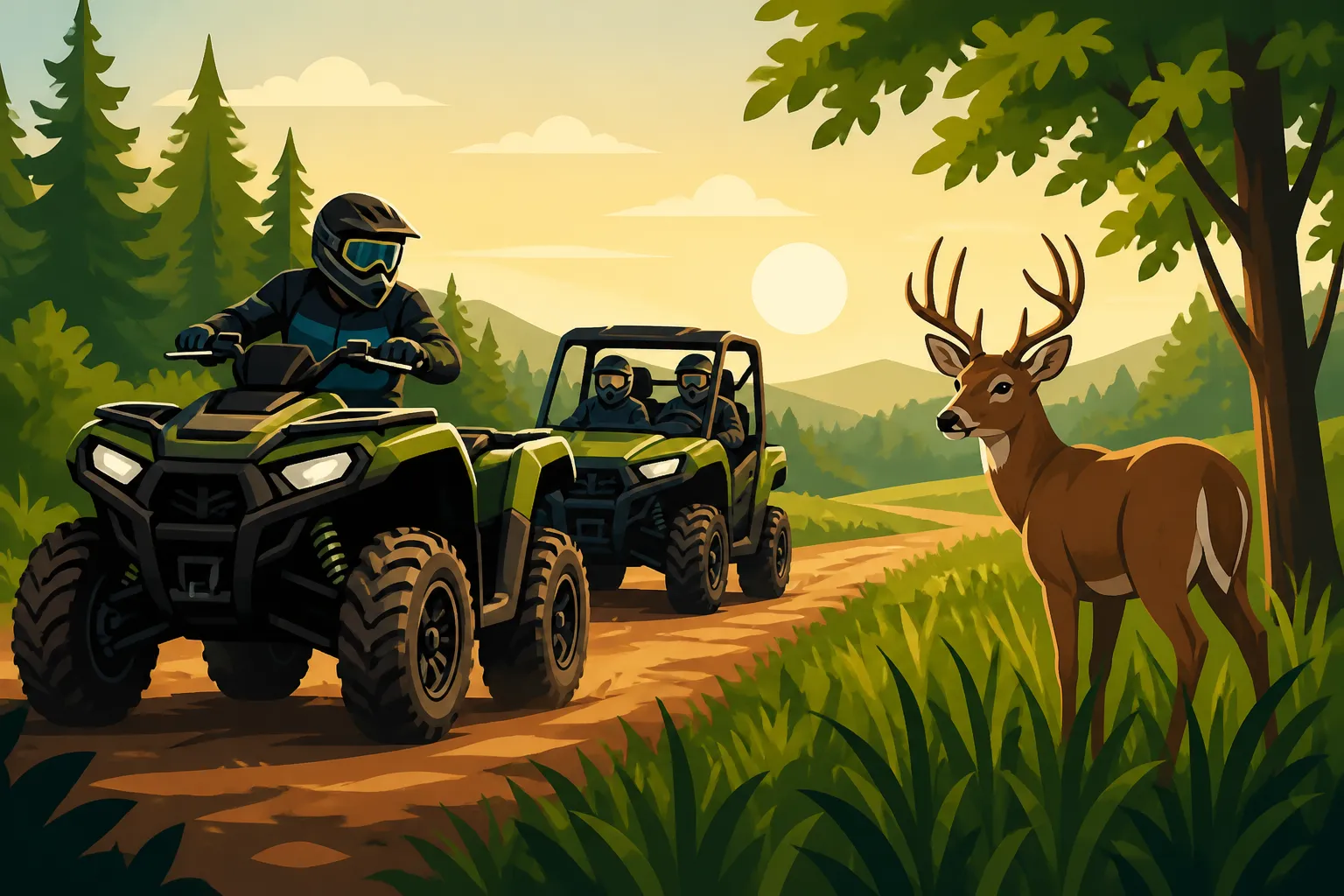
White-tailed deer are among the wildlife riders are most likely to see, especially near forest edges, fields, wetlands, and quiet stretches of trail. They can appear suddenly from brush or cross in a group, with younger animals sometimes following an adult. A deer that pauses beside the trail may still bolt across your path when your machine approaches, so don’t assume it has decided to stay put.
Wild turkeys, squirrels, rabbits, and other small animals may also dart across a trail. Their size and quick movements make them hard to spot in tall grass, leaf litter, or shaded areas. Keep a moderate speed where sightlines are short, and scan the trail edges instead of focusing only on the ground immediately ahead.
Not every animal needs an intervention. If a turtle, frog, or other small creature is crossing, slow down and give it room if you can do so safely. Don’t stop abruptly in a blind spot, walk into traffic, or reach toward an animal from a running machine. If a safe stop is possible, let the animal continue on its own.
Bears, wolves, and other large wildlife
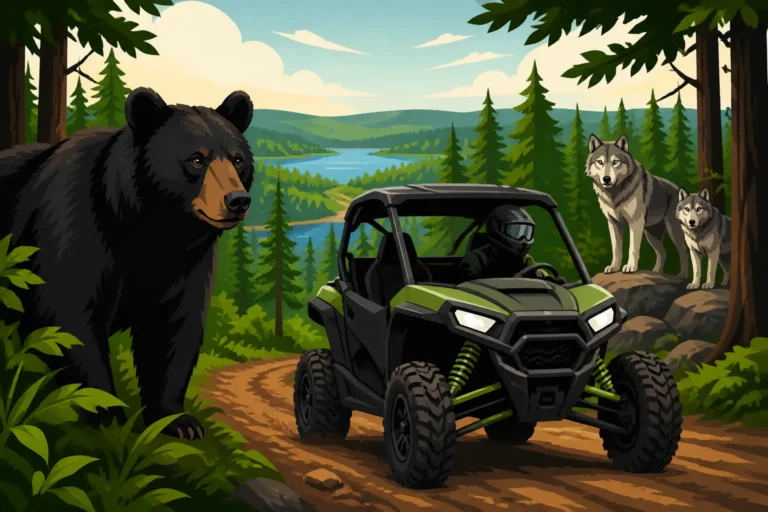
Black bears live in parts of Wisconsin, including forested areas of the Northwoods. A bear may be feeding, traveling through, or simply moving away from a disturbance. If you see one, don’t chase it for a closer look, try to surround it with a riding group, or block its route. Give it space and leave the area calmly if you can.
Wolves are present in some northern Wisconsin landscapes, but most riders are far more likely to notice tracks or hear a distant sound than to have a close encounter. If you do see a wolf or another large animal, don’t approach it or try to attract its attention. Keep children and pets close, avoid crowding the animal, and move away without sudden pursuit or attempts to follow it.
A group ride can make people feel safer, but several machines crowding an animal can make an encounter worse. Keep the group together at a safe distance, don’t rev engines to provoke a reaction, and don’t position machines to block the animal’s escape. For more detail on two of the larger species riders ask about, see Bear and Wolves on Northern Wisconsin Trails.
How to Respond When an Animal Is on the Trail
Slow down, create space, and avoid crowding
The first response is simple: ease off the throttle and look for a safe place to stop. Avoid hard braking if another rider is close behind. Give the animal time to move away, and leave enough space that it doesn’t feel trapped between your machine, the trail edge, or other riders.
If an animal stays near the trail, wait rather than creeping closer. A rider may be tempted to squeeze past a deer or bear to keep a trip on schedule, but an animal can react unpredictably when it feels pressured. Don’t honk, rev the engine, throw objects, or use a machine to herd it. If it doesn’t move, turn around when it’s safe and choose another route.
Tell the riders behind you what’s happening before the group closes in. A short, clear signal or verbal warning can prevent someone from rounding a bend at speed. On a busy trail, use a safe stopping area rather than gathering in the riding line. If visibility is poor, keep the group stopped where approaching riders can see you.
Know when to leave and when to report
If an animal appears injured, trapped, unusually aggressive, or unable to leave the trail, don’t try to handle it yourself. Keep a safe distance, note the location as accurately as you can, and contact the appropriate local or state wildlife authority when the situation warrants it. For an immediate danger to people, use emergency services.
A dead animal on a trail can also create a hazard, particularly around a blind curve or narrow crossing. Don’t attempt to drag a large animal with a machine or stand in a dangerous location to photograph it. If you can do so safely, record a nearby trail marker, intersection, or map location and report the obstruction to the responsible trail or land manager.
If you’re riding an unfamiliar county forest, check signs and maps before setting out. A trail marker, junction name, or nearby road can help you explain where you saw an animal or hazard. Wisconsin Trail Signs and Markers can help you get more comfortable reading trail signage, while Warden Patrols on Wisconsin Routes covers a related part of riding in areas where public enforcement may be present.
| Situation | Safer response | Avoid |
|---|---|---|
| Deer or turkey near the trail | Slow down, watch for others, and wait for a clear path | Accelerating toward it or assuming it will stay still |
| Bear or wolf nearby | Keep distance, stay calm, and leave the area without crowding it | Following, feeding, or surrounding the animal |
| Turtle or small animal crossing | Stop only if you can do so safely and let it cross | Reaching from a machine or stopping in a blind spot |
| Injured or trapped animal | Keep away, note the location, and report it to the appropriate authority | Trying to capture, treat, or move it |
| Animal carcass blocking a route | Avoid the hazard and report the location | Attempting to haul it away with an ATV or UTV |
Plan Your Ride With Wildlife in Mind
Adjust for visibility, weather, and trail conditions
Wildlife encounters are harder to manage when you’re riding too fast for the conditions. Slow down near bends, hill crests, tall vegetation, water crossings, and places where a trail passes between woods and open land. Dust, rain, fading light, and shadows can all make an animal harder to notice. Leave extra room behind the rider in front so you have time to react if they brake.
Conditions change throughout the year. In spring, animals may be active near nesting areas or wet ground; in fall, deer movement can increase in some places; and in winter, snow or ice can make stopping more difficult. These are broad seasonal considerations, not a reason to assume a particular trail will have wildlife activity. Check local notices and trail status before leaving home, especially after rain, thaw, or a closure. Checking Wisconsin Trail Status Before You Drive is a useful starting point.
A map can also help when a trail is unfamiliar and a group needs to backtrack or find another route. Some riders use onX Offroad to review routes and save useful location information before heading into areas where cell service may be unreliable. Don’t rely on a phone alone: keep a paper map or another backup, and make sure everyone knows the group’s plan.
Keep food, pets, and noise under control
Food and scented items can attract animals around a staging area, campsite, or trail stop. Keep snacks and garbage secured, don’t leave food out on a trailer or picnic table, and pack everything back out. Feeding wildlife can also teach animals to associate people with food, which can create problems for the animals and future visitors.
If a dog is part of your trip, check the rules for the trail and land you’re visiting before bringing it. Keep the dog controlled and close, and don’t let it chase or approach wildlife. A dog that runs toward a bear, deer, or other animal can put itself, the animal, and nearby riders at risk.
Noise is part of motorized riding, but unnecessary revving and repeated passes near wildlife add disturbance without helping anyone. Follow posted rules, stay on designated routes, and don’t leave the trail to get around an animal or reach a better viewing spot. If your group wants to observe wildlife, do it from a respectful distance without blocking the route. For practical preparation beyond wildlife awareness, see What to Carry on a Northwoods Ride and Riding a Wisconsin Trail After a Wet Week.
Build Wildlife Awareness Into Trail Etiquette
Ride at a pace that gives you time to react
A speed that feels comfortable on a familiar, open stretch may be too fast around a narrow corner or a section with thick brush. Keep your eyes moving between the trail ahead and its edges, and be especially cautious where vegetation limits your view. If you’re riding with children or less-experienced operators, explain that spotting wildlife is a reason to slow down—not a reason to rush closer.
Trail difficulty and machine capability don’t tell the whole story about how quickly a rider can stop or see around a bend. Surface conditions, passenger weight, tires, and visibility all matter. Review Wisconsin Trail Difficulty Ratings before choosing a route, and select one that gives the least experienced rider in your group room to make safe decisions.
On a group ride, ride single file where appropriate and maintain enough following distance to avoid a pileup if the lead rider stops. Agree on a signal for hazards before leaving the staging area. If one person spots wildlife, the rest of the group should reduce speed and avoid bunching up behind them.
Respect habitat and local access rules
Stay on marked routes, even when an animal appears to be just off the trail. Riding around a wet patch or detouring into the woods can disturb habitat, damage ground, or take you onto land where motorized access isn’t allowed. If a route is blocked or conditions make it unsafe, turn around or follow the posted detour rather than making a new one.
Wisconsin’s trails cross different kinds of land, and the rules can vary by location. A route through a county forest may have different closures or access instructions from a town road or another public riding area. Read signs at trailheads and intersections, check local guidance, and don’t assume that access shown on one map means every connecting path is open to motorized use.
Before a trip, onX Offroad or another mapping option can help you orient yourself, but use it alongside posted signs and land-manager information. Save a map area or note key junctions before you lose service, and share the plan with your group. For a broader look at route planning, Planning a Wisconsin Riding Trip offers helpful context. The best wildlife encounter is one where the animal can continue undisturbed and every rider gets home safely.
Disclaimer
This article is for general informational purposes only and does not constitute professional advice. Laws, prices and regulations vary by location and change over time. Consult a qualified professional for guidance on your specific situation.