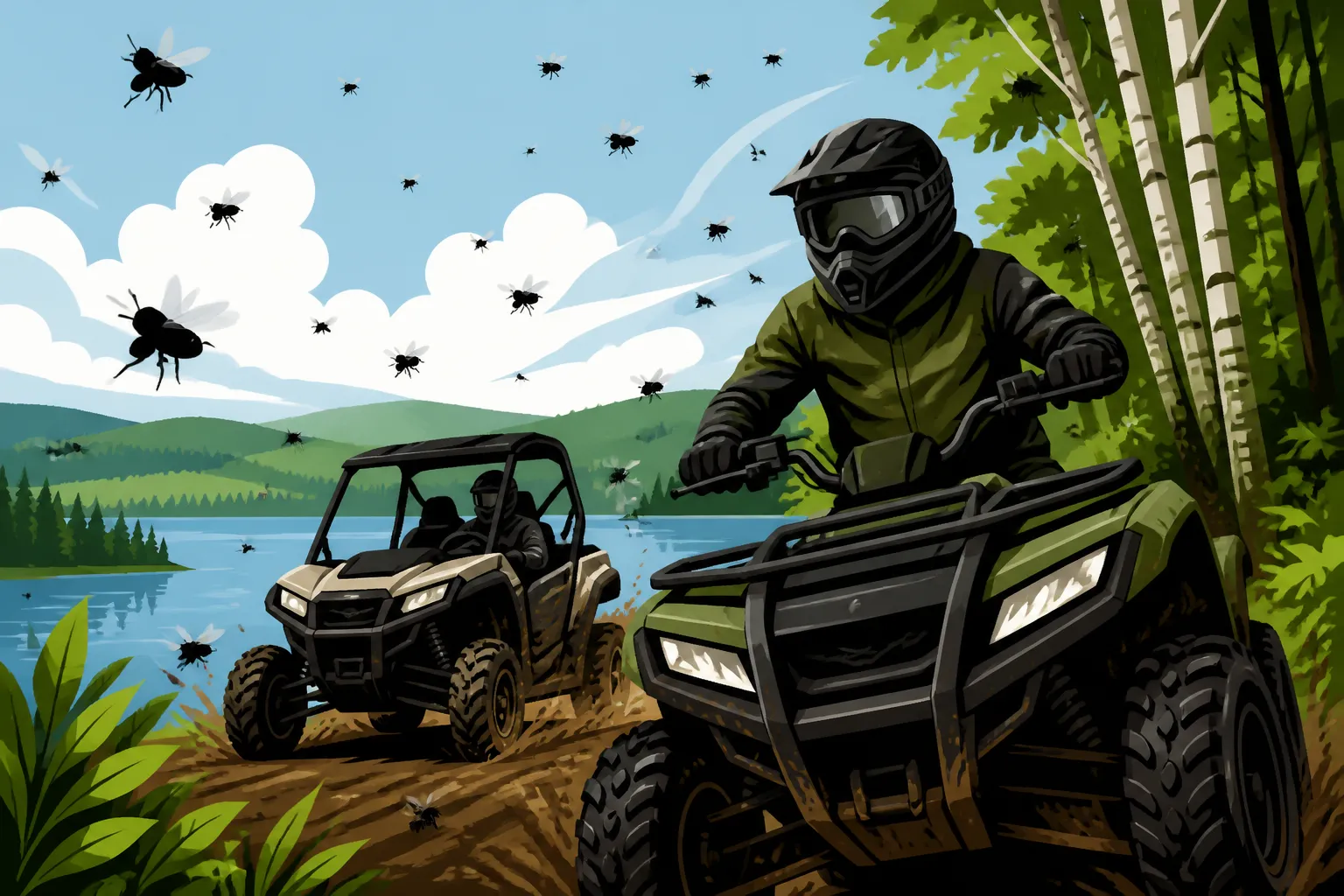
Black Flies on a June Ride Up North
A June ATV ride through northern Wisconsin can turn uncomfortable fast when black flies find the gap between your helmet and collar or swarm around your eyes at a trail stop. The best defense is a combination of protective clothing, carefully applied repellent, smart ride timing, and a plan for breaks so you can manage the bugs without compromising safety.
Why black flies can make a June ride difficult
Where and when you may encounter them
Black flies are small, biting insects that are often active in late spring and early summer. In northern Wisconsin, June riding can put you in the middle of their season, though conditions vary from one day and trail area to another. Warm, humid weather and nearby moving water can contribute to uncomfortable insect activity. A route that passes a creek or wooded lowland may feel very different from an open, breezy stretch.
Unlike mosquitoes, black flies do not simply hover around you after you stop. They can bite exposed skin, and they may work their way under a collar, around a cuff, or through an opening in riding gear. Their small size makes them easy to overlook until you feel a bite or notice them collecting around your face. A helmet and goggles help, but uncovered areas such as your neck, wrists, and the skin around your eyes can still be vulnerable.
It is hard to predict the bug situation from a calendar alone. A cool, breezy day may feel manageable, while a warm, still afternoon can be miserable. Check local conditions before leaving, and be ready to adjust your plans rather than assuming that every trail will feel the same. When you’re mapping a day in the Northwoods, [Planning a Wisconsin Riding Trip] can help you think through route length, breaks, and logistics beyond the trail itself.
How bites affect a day on the trail
A black fly bite can be more than a brief annoyance. Bites may become itchy, swollen, or tender, and repeatedly scratching them can irritate the skin further. The discomfort may not peak the instant you are bitten, either, so a rider can finish a loop feeling fine and then become increasingly itchy later.
For a group, the problem often shows up during transitions. One person is checking a map, another is tightening a strap, and someone else is trying to take off a glove to use a phone. Those few minutes with exposed skin can invite bites. A rider who is distracted by insects may also be less attentive to footing, traffic, or the machine while stopping and starting.
Try not to brush insects away while moving or reach for a spray bottle on the machine. Pull over in a safe, permitted place, shut down as appropriate, and deal with clothing or repellent only when you can focus on the task. If a rider experiences severe swelling, trouble breathing, dizziness, or another serious reaction after a bite, seek urgent medical care.
How to protect yourself without compromising riding safety
Choose clothing that blocks access to skin
The most dependable first layer of defense is clothing that covers exposed skin without making it difficult to operate your machine. Wear long sleeves, long pants, socks, and gloves. A snug collar and cuffs can reduce the gaps insects use to reach your skin. Lightweight, breathable fabric is often more comfortable than heavy layers during a warm ride, but it should still offer enough coverage to stay in place as you move.
A head net can help during stops or in particularly buggy conditions, especially when worn over a suitable hat or helmet setup. Check that it does not interfere with your helmet fit, goggles, peripheral vision, or ability to communicate. Do not use a loose net or fabric that could catch on controls, straps, branches, or other equipment. Your view and hearing need to remain clear enough for safe riding.
Light-colored clothing can make insects easier to spot and may be more comfortable in sunlight, but it is not a substitute for coverage. Before leaving, check the practical details: Are your sleeves still covering your wrists when your arms reach the handlebars? Do your pants overlap your boots when you sit and stand? Can you put your goggles on without leaving a wide gap around your face? A few adjustments in the driveway are easier than trying to fix a poor fit beside the trail.
For a broader packing checklist, see [What to Carry on a Northwoods Ride]. Add extra gloves or a clean neck covering if you expect to stop often, and keep spare layers in a sealed bag so they remain dry and usable.
Apply repellent carefully and follow its label
Repellent can help, but it is not a reason to leave skin uncovered or to apply a product casually around your face. Choose a product labeled for the insects and use you have in mind, then follow its directions for where and how to apply it. Pay attention to age restrictions, reapplication guidance, and precautions for use around eyes, mouth, and broken or irritated skin.
Apply repellent before you put on gloves, and wash your hands before touching food, a drink opening, or sensitive equipment surfaces. Avoid spraying near your eyes, helmet vents, goggles, or other gear where residue could affect visibility or comfort. For the face, follow the product label’s instructions; do not spray directly onto your face unless the label specifically directs that use. A careful application to your hands followed by gentle application to appropriate areas may be safer for some products, but the label is the authority.
If you use clothing treated with an insect repellent or insecticide, follow the specific product directions and do not assume that every treatment belongs on skin. Keep products secured so they cannot leak onto food, upholstery, or machine controls. When traveling with children, use only products suitable for their age and supervise application.
Repellent may wear off, especially after sweating, rain, or repeated contact with clothing. That does not mean you should reapply more often than directed. Instead, use clothing and timing as additional layers of protection. The same routine helps with other insects encountered during a Wisconsin ride; [Ticks and Bug Season on Wisconsin Trails] is useful for planning protection beyond black flies.
| Trail situation | Practical response | Safety reminder |
|---|---|---|
| Bugs are noticeable before departure | Add coverage, secure cuffs, and apply repellent according to its label | Do not let a head net or loose fabric obstruct vision |
| Insects gather during a stop | Move to a safe, permitted stopping area and make clothing adjustments there | Avoid handling sprays or gear while riding |
| The group is getting bitten repeatedly | Shorten the loop, change the route, or return to the staging area | Agree on the change before anyone becomes distracted |
| Repellent has worn off | Reapply only as directed and reinforce protection with clothing | Keep spray away from eyes, goggles, and controls |
| A rider has a severe reaction | Stop and seek urgent medical assistance | Do not continue riding while someone is seriously unwell |
Plan the ride around weather, route, and breaks
Use conditions to guide your timing
There is no guaranteed “bug-free” hour for a June ride. Black fly activity can change with temperature, wind, moisture, and local surroundings. Rather than relying on a rule of thumb, look at the day’s forecast and pay attention to what you encounter at the staging area. If the air is still and insects are already persistent before the group sets out, expect stops to be less comfortable.
A breeze can make a stop more pleasant, but do not choose an exposed or unsafe location just to get away from bugs. Use designated staging areas and legal stopping places. If your group is planning a long outing, agree in advance that anyone can call for a break or an early return. That keeps the decision from becoming a debate while one person is uncomfortable and everyone else is waiting.
Consider planning a shorter first loop. You can assess the conditions, check that everyone’s protective gear is working, and decide whether a longer route makes sense. This is especially useful for a family outing or a ride with someone unfamiliar with the local trail network. If the insects are tolerable, continue. If not, you have avoided committing the whole group to a long day in miserable conditions.
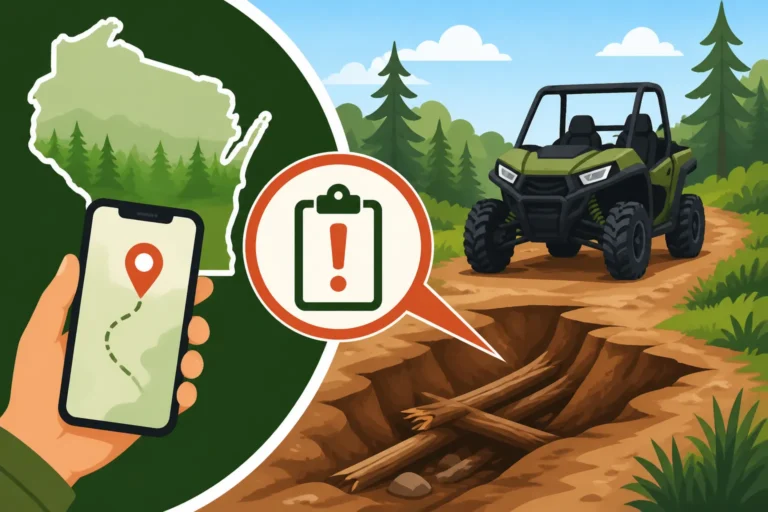
Before traveling, use current local information to confirm that the trails you intend to ride are open. Trail conditions and closures can change for reasons unrelated to insects, including weather and seasonal restrictions. [Checking Wisconsin Trail Status Before You Drive] is a useful starting point for making that check. If you use onX Offroad to review a route, treat it as one planning tool and confirm access and conditions through the relevant local trail or land manager information as well.
Make stops easier with a little preparation
A stop can become the most irritating part of the ride if everyone is standing still with bare skin exposed. Before pulling over, know who is carrying the map, who has the first-aid supplies, and where repellent is stored. Keep small items in a consistent, easy-to-reach place, but do not leave a loose bottle or pouch where it could fall into the trail or interfere with the machine.
At a stop, put on a head net or adjust clothing before taking off other protective gear. If you need to check a route on your phone, do it from a safe position away from moving machines. Download or save important route information before you enter an area with unreliable service. onX Offroad can be useful for reviewing mapped routes and keeping your planned route organized, but do not rely on a phone as your only navigation option in a remote area. [Cell Service in the Wisconsin Northwoods] covers why it is wise to plan for dead zones.
Keep snacks and drinks protected from insects and dirt. Avoid leaving food containers open while the group is stopped, and wash or sanitize your hands before eating if you have applied repellent. If someone is already uncomfortable, prioritize a quick, organized stop over a lengthy discussion beside the machines.
A paper map or another backup navigation method can also keep a minor phone problem from turning into a stressful detour. onX Offroad may help you review the route before the ride, while a saved route or printed map gives you another way to stay oriented if a device loses power or signal.
What to do when the bugs are worse than expected
Adjust the plan before discomfort becomes a safety issue
If riders are swatting at their faces, repeatedly stopping to scratch, or having trouble concentrating, treat that as a reason to change the plan. Choose a shorter loop, return to the staging area, or wait for conditions to improve if that is practical. Continuing simply because the group already drove a long way to the trailhead is rarely worth a distracted ride or a miserable passenger.
Let the group know about changes clearly. Decide whether everyone will turn back together or whether there is a safe, agreed meeting point. Do not split up casually in unfamiliar woods because one rider wants to continue and another wants to leave. Before heading out, check that everyone understands the route and has a way to contact the group if separated.
Use a map to identify sensible turnarounds and avoid improvising on unfamiliar roads or trails. onX Offroad can help you keep a route plan visible, but always follow posted signs and local access rules. If your group is considering a different trail, confirm that it is open to your machine and appropriate for your experience. [Wisconsin Trail Difficulty Ratings] offers helpful context for matching a route to the riders and machines in your group.
Handle bites and prepare for the next ride
After the ride, wash bites gently with soap and water and try a cool compress to ease irritation. Avoid scratching as much as possible, since broken skin can become more irritated. If a bite becomes increasingly painful, looks infected, or causes symptoms that concern you, contact a healthcare professional. Seek emergency help for signs of a severe allergic reaction.
Check your clothing, helmet, and gear before storing them. Remove any insects, wash dirty layers as directed, and keep repellent separate from food and clean clothing. If the ride left you with bites around the collar or wrists, note where your setup failed. A different neck covering, a tighter cuff, or a better-fitting glove may make the next outing much more comfortable.
For the next June trip, use what you learned rather than relying on one fix. Maybe your group will leave earlier, take a shorter route, pack a head net, or build in fewer stops near wet, wooded areas. A route tool such as onX Offroad can help with planning, but good clothing, sensible decisions, and attention to trail access are what turn that plan into a safer day.
Disclaimer
This article is for general informational purposes only and does not constitute professional advice. Laws, prices and regulations vary by location and change over time. Consult a qualified professional for guidance on your specific situation.