Riding to a Wisconsin Deer Stand
Ah, deer season in Wisconsin! There’s nothing quite like the crisp autumn air, the vibrant colors, and the thrill of the hunt. For many of us, our trusty ATV or UTV isn't just a recreational toy; it's an essential tool for getting deep into the woods to that perfect deer stand, or for the monumental task of hauling out a harvested animal. But let's be honest, trying to figure out exactly where and how you can legally use your machine during hunting season can feel like navigating a dense thicket in the dark. This guide is here to untangle the rules, clarify the nuances, and help you ride safely and legally to your deer stand and back, ensuring a smooth and successful hunt.
The Foundations: Understanding ATV/UTV Access for Hunting
Before you even think about loading up your gear and heading out, it's crucial to understand the fundamental distinctions that govern ATV and UTV use in Wisconsin, especially when it comes to hunting. The biggest factor is whether you're on public land or private property, as the rules can change dramatically.
Public Versus Private Land: The Crucial Distinction
This is where many hunters get tripped up. The vast majority of rules and regulations you hear about ATVs and UTVs in Wisconsin pertain to public lands – state forests, county forests, national forests, and designated trail systems. On these lands, you are typically restricted to marked trails and routes only. You can't just blaze your own path through the woods, even if your deer stand is "just over there." The Department of Natural Resources (DNR) works hard to maintain these areas, and unauthorized off-trail riding can lead to significant resource damage, hefty fines, and the loss of riding privileges. Think of it this way: public land access is a privilege, not a right, and it comes with strict guidelines to protect the environment and ensure fair use for everyone.
Private land, on the other hand, operates under a different set of assumptions. If you own the land, or have explicit permission from the landowner, you generally have much more freedom to operate your machine. However, "more freedom" doesn't mean "no rules." Even on private property, you still need to adhere to certain state laws regarding machine registration, safety requirements, and environmental protection. For instance, creating massive, erosion-prone trails on your own land could still draw scrutiny, though usually not enforcement unless it impacts public resources. The key here is "permission." Always ensure you have clear, preferably written, permission from the landowner, especially if you're crossing someone else's property to get to your stand. This can save you a lot of headaches later, preventing issues related to [Wisconsin Trespass Law for Riders].
Understanding "Legal Access"
So, what exactly constitutes "legal access" to your deer stand? It's more than just being able to physically get there. On public lands, legal access means using established and officially designated ATV/UTV trails or routes. These are clearly marked and maintained by the DNR or local municipalities. You might be able to ride a designated trail that brings you close to your stand, then dismount and walk the rest of the way. What you generally cannot do is leave the designated trail to drive directly to your stand, even if it's only a short distance off the main path. The idea is to concentrate vehicle impact to specific corridors.
On private land, legal access means having the right to be on the land itself, and the right to operate your machine on it. This permission extends to driving across fields, through wooded areas, or on private logging roads. If you're relying on a shared access road or an easement, make sure your permission covers ATV/UTV use, not just foot traffic. Sometimes, a general "permission to hunt" doesn't automatically imply permission to drive an off-road vehicle across someone's sensitive wetlands or through a recently planted food plot. Always clarify these details upfront. For landowners, remember that your own land might still have specific requirements. For example, if your machine never leaves your property, you might wonder [Do You Need Registration on Your Own Wisconsin Land?].
Registration and Safety Requirements: Always in Effect
Regardless of whether you're on public or private land, certain basic requirements for your ATV or UTV remain constant. Your machine must be properly registered with the Wisconsin DNR. This includes displaying your decals correctly. Public use registration is usually required if you plan to access any public trails or routes. Even if you only ride on your own private land, a private use registration is still required by law, though it is usually a one-time fee and never expires. Failing to register can result in [Penalties for an Unregistered ATV in Wisconsin].
Beyond registration, safety regulations are paramount. This includes having proper working headlights and taillights, especially if you're heading out before dawn or coming back after dusk. For those born on or after January 1, 1988, a Wisconsin ATV safety certificate is mandatory to operate on public lands, and it's always a good idea for anyone, anywhere, to have the knowledge that comes with certification. This is a critical point that many hunters overlook in the rush of the season. You can find more details on [Wisconsin's ATV Safety Certificate Requirement]. Also, remember basic operational rules, like not operating under the influence, which applies to ATVs and UTVs just as much as cars.
Navigating Public Lands to Your Deer Stand
For many Wisconsin hunters, public lands are the primary access point for deer season. Understanding the specific regulations for these areas is absolutely critical to avoid citations and ensure responsible use.
Designated Trails and Routes: Your Main Pathways
When hunting on public lands like county forests or the Chequamegon-Nicolet National Forest, your ATV or UTV is restricted to designated, marked trails and routes. These are the arteries of the motorized trail system, and they are typically well-signed. Before heading out, it’s essential to consult up-to-date county or state forest maps that clearly show which trails are open to ATVs/UTVs. Don't assume that a logging road or fire lane is an open trail just because it looks well-used. Many such paths are specifically closed to public motorized vehicle traffic.
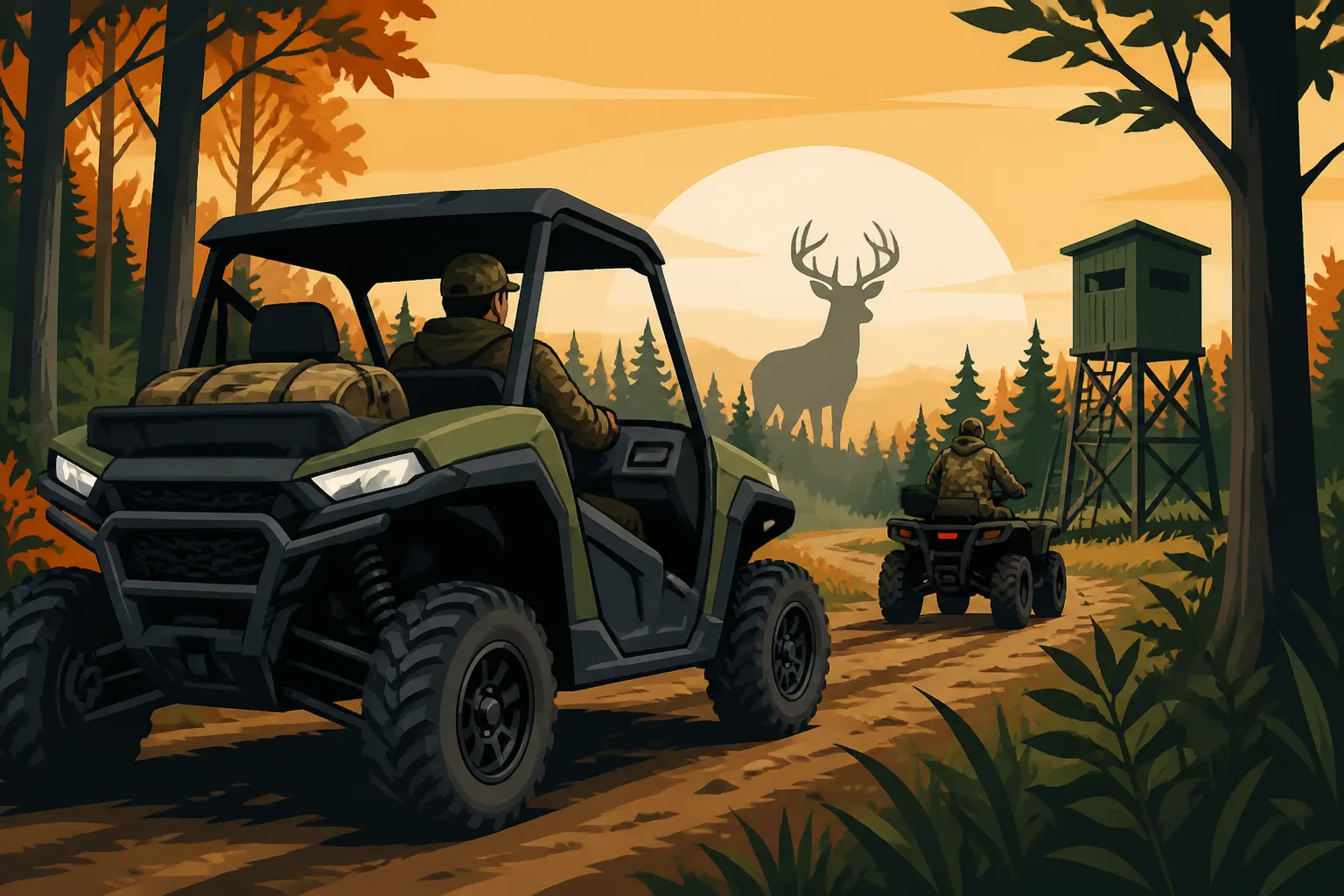
A common scenario might involve parking your truck and trailer at a designated [Wisconsin Trailhead Parking and Staging] area, then riding your machine a few miles down a marked trail that gets you within reasonable walking distance of your stand. From there, you park your ATV/UTV off the main trail in a way that doesn't impede other traffic, and proceed on foot. It’s a good practice to conceal your machine from plain sight if possible, to deter theft and minimize disturbance to other hunters. Remember, the goal is to use the machine to get to the vicinity of your stand, not necessarily to the stand itself. The rules are generally quite clear about staying on designated paths.
Off-Trail Restrictions: Why You Can't Just Drive Anywhere
This is perhaps the most critical rule on public land: off-trail riding to your deer stand is generally prohibited. The temptation might be strong, especially if your stand is "just a hundred yards" into the woods off a main trail. However, driving off a designated trail creates new, unauthorized paths, contributes to soil erosion, disturbs vegetation, and can disrupt wildlife. It also sets a precedent that can lead to wider ecological damage if many people do it. Wardens patrol these areas, and they are well-versed in identifying new tracks.
There are very few, if any, general exemptions for hunters to drive off-trail directly to a deer stand. Some exceptions might exist for retrieving a harvested animal, and even then, these are typically specific to certain zones, require prior permission, or are only for heavily disabled hunters. You cannot assume such an exemption exists. Always verify with the local DNR office or the specific land manager (e.g., county forest administrator) for the area you plan to hunt if you think you have a unique circumstance. Ignorance of the rules is not an excuse, and a citation for off-trail riding can be expensive, not to mention a blight on your hunting season.
DNR Regulations and Local Ordinances
It’s also crucial to remember that while the DNR sets statewide regulations, local municipalities and county forest systems can have additional ordinances or restrictions. For example, a particular county might have specific rules regarding ATV use during gun deer season that differ slightly from adjacent counties. Some towns might open up town roads as ATV routes, but those routes might have different hours of operation or special speed limits during hunting season.
Before you finalize your hunting plan, make sure to check the specific rules for the county or even township where you'll be hunting. This information is usually available on the county's website, or by calling their forestry or parks department. It's a small step that can save you a lot of grief. These varying regulations are part of what makes deciphering the rules so challenging, but taking the time to research them is part of being a responsible hunter and rider.
Using Your Machine on Private Property
Hunting on private land offers a different experience, often with greater flexibility for ATV/UTV use, but it’s still essential to follow a set of best practices and respect the property.
Owner Permission Is Key: And Specifics Matter
If you're hunting on land you don't own, the absolute first step is securing explicit permission from the landowner. This permission should not only cover hunting but also clarify your right to use an ATV or UTV on their property. Don't just assume. A verbal "yeah, go ahead and hunt" might not include tearing up their back forty with your side-by-side. Discuss where you can drive, what paths you should use, and any areas that are off-limits (e.g., wet areas, food plots, sensitive agricultural fields).
It’s often a good idea to get this permission in writing, especially if you have a complex arrangement or if the landowner is not always available. This written agreement could outline boundaries, permitted entry points, and specific rules for vehicle use. This not only protects you from potential [Wisconsin Trespass Law for Riders] issues but also provides peace of mind for the landowner. If you’re hunting on your own land, you have more leeway, but remember that state laws regarding registration and safe operation still apply. Just because it’s your land doesn’t mean you can operate an unregistered machine or drive recklessly.
Crossing Easements and Neighboring Lands
Sometimes, accessing your hunting parcel or deer stand requires crossing another person's property, even if you have permission to hunt on your primary land. This is where easements and good neighbor relations come into play. An easement might grant you access for certain purposes (e.g., foot traffic, farm equipment), but it may not explicitly permit ATV or UTV use. Always clarify this with the owner of the easement or the adjacent property.
Open communication is vital. Knock on your neighbor's door, explain your plans, and ask for specific permission to cross their land with your machine. Offering to help them with something in return or sharing some venison can go a long way in building goodwill. Remember, an ATV or UTV can be noisy and leave tracks, and some landowners might have strong feelings about their property being used by others, even with permission. Being respectful and transparent upfront can prevent future conflicts.
Considerations for Transporting Game
One of the biggest advantages of having an ATV or UTV during deer season is the ability to transport a harvested deer. Hauling a heavy deer out of the woods on your back is a monumental task, and a machine makes it much more manageable and less strenuous. However, there are ethical and practical considerations here. On public land, as mentioned, you generally cannot drive off-trail to retrieve a deer unless a very specific and rare exemption applies. This means dragging the deer to the nearest designated trail or route.
On private land, you have more flexibility to drive directly to your downed animal. When doing so, ensure you have the appropriate gear. A sturdy cargo rack, a small trailer, or even a heavy-duty sled can be incredibly helpful. Make sure the deer is securely fastened to prevent it from shifting or falling off, which could damage your machine or create a safety hazard. If you're using a side-by-side, many hunters invest in specialized racks or even install a small winch, perhaps from a brand like SuperATV, to help load heavier animals. Remember the importance of [Blaze Orange on a Wisconsin Fall Ride], especially when retrieving an animal; you might be moving in areas where other hunters are still active.
Building a "Deer Stand Road" on Your Own Land
On your own private property, you might be tempted to create a dedicated path or "deer stand road" to improve access. While you generally have the right to modify your own land, be mindful of environmental impacts. Avoid constructing roads through wetlands, steep slopes prone to erosion, or areas that could impact water quality in nearby streams or lakes. Building a proper, sustainable trail involves planning for drainage and minimizing disturbance.
For lighter use, simply clearing a path with a chainsaw might suffice, creating a "two-track" that minimally impacts the land. For more robust access, consider compacting the soil or adding gravel. Even on your own land, acting as a steward of the environment helps preserve habitat and ensures good hunting for years to come.
Gear and Good Practices for a Successful Hunt
Having the right gear and adopting good practices can make your ATV/UTV deer hunting experience safer, more efficient, and more enjoyable.
Blaze Orange and Visibility
Just as you wear blaze orange when hunting, your ATV or UTV may also need to be visible, especially if you’re using it during daylight hours of gun season. While there isn't a specific statewide mandate for blaze orange on your machine, it's an excellent safety practice. Consider attaching blaze orange flags or panels to your machine, especially if it's parked off a trail or in an area where other hunters might be. This ensures that your parked or moving machine is clearly identified as a vehicle, not game, reducing the risk of accidental encounters.
Visibility is also about your machine's lighting. Riding out to your stand before dawn or returning after dusk means you'll be operating in low light conditions. Ensure your headlights and taillights are fully functional and clean. It’s also wise to have reflective tape on your machine, particularly on the rear and sides, to enhance visibility from other angles. A high-quality light bar, perhaps an aftermarket option from SuperATV, can significantly improve your forward visibility on dark trails, though be mindful of blinding other riders or hunters.
Packing Out Game: Equipment and Securement
Successfully harvesting a deer is only half the battle; getting it out of the woods is often the harder part. Your ATV or UTV is your best friend here. Beyond just getting the machine to the deer, think about how you’ll actually load it. For larger bucks, a small winch on the front or rear of your machine can be invaluable for dragging the animal closer or even pulling it onto a cargo carrier or trailer. You can find robust winches that fit most machines.
When securing the deer, use heavy-duty ratchet straps or ropes to tie it down firmly. You don't want a 200-pound deer shifting unexpectedly on a bumpy trail. If using a small trailer, ensure the hitch is secure and the trailer is properly loaded to prevent swaying. For those long hauls, consider using a game cart to get the deer to your machine, especially if you're on public land and can't drive directly to the animal. It’s always good to have recovery gear on hand, as you never know when you might need to winch out your machine or a downed deer, especially if you get stuck in a muddy section after a fall rain. Knowing how to perform [Winching Out of a Northwoods Bog] can be a season saver.
Safety First: Lights, Limits, and Avoiding Incidents
Your safety and the safety of others are paramount. Always perform a quick check of your machine before heading out: tires, brakes, lights, fluid levels. Carry a basic toolkit, a first-aid kit, and communication devices (cell phone, satellite messenger if in remote areas) when venturing into the woods. Let someone know your route and expected return time.
Be mindful of your speed, especially on unfamiliar trails or in low light. The excitement of the hunt shouldn't override common sense. Remember that other hunters may be walking, so be attentive and yield the right of way. Obey all posted speed limits on trails and routes. If you're unsure about [What a Wisconsin Warden Asks a Rider For], it's usually your registration, safety certificate, and proof of identification. Keeping your [Keeping the Registration Card With the Machine] is a legal requirement.
Avoiding Disturbances and Respecting Others
Using an ATV or UTV for hunting can be noisy, and that noise can disturb other hunters or spook game. Try to plan your movements during times when animal activity is lower, like mid-day. If you're driving through an area where other hunters are present, slow down, be courteous, and keep your noise to a minimum. Ensure your machine's exhaust system is compliant with noise regulations; [Mufflers and Spark Arresters in Wisconsin] are not just for trail integrity but also for keeping peace in the woods.
Respecting posted property lines, even if you’re only on foot from your machine, is critical. Being a responsible hunter and rider means minimizing your impact on the environment and on the experience of others. By following these guidelines, you can ensure your ATV or UTV enhances your Wisconsin deer hunting experience rather than complicates it.
| Consideration | Public Land | Private Land |
|---|---|---|
| Access | Restricted to designated trails/routes only. | Generally free reign with landowner permission. |
| Off-Trail Driving | Almost always prohibited, except rare exemptions. | Allowed with landowner permission. |
| Registration | Public Use Registration (unless farm exemption). | Private Use Registration (or Public Use if on trails). |
| Safety Certificate | Mandatory for those born Jan 1, 1988, or after. | Recommended, but not always legally mandated. |
| Hauling Deer | Drag to nearest designated trail. | Drive directly to the downed animal. |
| Trail Creation | Strictly prohibited. | Allowed with environmental considerations. |
| Noise & Disturbances | Minimize impact on other users and wildlife. | Mindful of neighbors and wildlife. |
| Legal Documentation | Carry registration card, safety certificate. | Carry registration card, written permission. |
Disclaimer
This article is for general informational purposes only and does not constitute professional advice. Laws, prices and regulations vary by location and change over time. Consult a qualified professional for guidance on your specific situation.