Wisconsin ATV Rules During Gun Deer Season
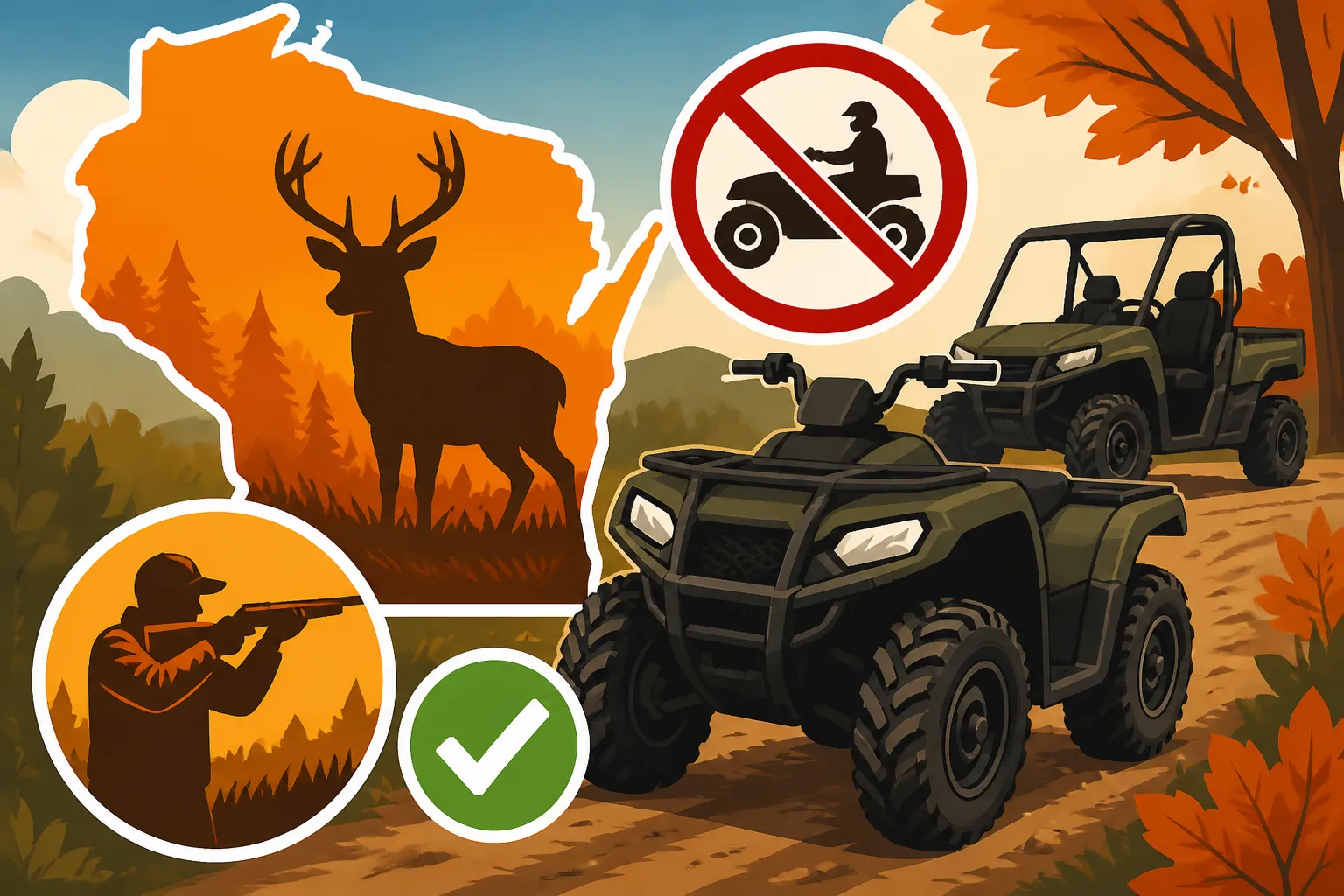
It's that time of year when the crisp air of a Wisconsin autumn gives way to the anticipation of gun deer season. For many of us who love both hunting and riding, the thought of combining these passions with an ATV or UTV is tempting. But before you load up your gear and head out, it's absolutely crucial to understand the specific rules that govern ATV and UTV use during this busy time. The lines can get blurry between what's allowed on private land versus public trails, and the consequences for getting it wrong can quickly turn a hunting trip into a frustrating and expensive ordeal. This guide will help clarify those often-confusing regulations so you can focus on the hunt safely and legally.
The Basics of ATV/UTV Use During Gun Deer Season in Wisconsin
The allure of using an ATV or UTV to access remote hunting spots or retrieve a trophy buck is undeniable. These machines are powerful tools that can save a lot of sweat and time. However, Wisconsin's Department of Natural Resources (DNR) has specific regulations in place, especially concerning firearms, that riders need to be intimately familiar with. These rules are designed not just for safety, but also to ensure fair chase and prevent unethical hunting practices. Ignoring them, even unintentionally, can lead to stiff penalties and put a real damper on your hunting experience.
Understanding the General Restrictions
One of the biggest sources of confusion for riders during deer season revolves around the general restrictions on carrying firearms on ATVs and UTVs. Many hunters assume that if they are going hunting, their firearm can simply ride with them. However, Wisconsin law makes a critical distinction between firearms that are "cased" and "uncased," and whether they are "loaded" or "unloaded." On public lands and designated trails, there's a strict prohibition against operating an ATV or UTV with an uncased firearm unless you are traveling directly to or from a shooting range or hunting ground with specific permits, and even then, the firearm must be unloaded.
This distinction is not arbitrary; it's a foundational safety measure. An uncased firearm, especially one that is loaded, poses a significant risk of accidental discharge, particularly when jostled on bumpy trails or during sudden stops. Beyond the immediate safety aspect for the rider and those around them, these regulations also help prevent "road hunting" or "shining," which are illegal and unethical hunting practices. The DNR aims to maintain a level playing field and ensure that hunting remains a respectful pursuit, and regulating vehicle use with firearms is a key part of that effort.
Private Land Versus Public Land: A Key Distinction
When it comes to ATV and UTV use during gun deer season, the ownership of the land you're on makes a world of difference. This is perhaps the most important distinction to grasp. Many of us own land or have permission to hunt on private property, and the rules often feel less restrictive there. However, it's never a free-for-all, and understanding the specific nuances is essential.
On private land, you generally have more leeway. If you're on your own property or have explicit permission from the landowner, you can typically transport an uncased, unloaded firearm on your ATV or UTV. The landowner's rules are paramount here, and they might have their own stipulations about machine use, especially during hunting season. However, the rule against loaded firearms in or on any motorized vehicle, including ATVs and UTVs, typically still applies on private land unless you have a specific exemption, such as a disabled hunting permit. This means that while your rifle might be uncased on your back rack, the magazine should be removed and the chamber empty. This protects against accidental discharge, which can happen just as easily on private land as public. Always consult the specific Wisconsin hunting regulations for the current year, as well as any local ordinances or conditions set by the private landowner.
For public lands – this includes state forests, county forests, and designated public ATV/UTV trails – the rules become significantly stricter. Here, you are generally required to transport firearms in a case, and they must always be unloaded. The intent is clear: to prevent accidental shootings, limit poaching opportunities, and reduce conflict between different user groups, such as hunters and other recreational riders or hikers. Public lands are shared resources, and the rules reflect the need to manage diverse activities safely. If you plan to ride public trails to access a hunting spot, make sure your machine is properly registered for public use, and that you have all the necessary decals and documentation, such as [Keeping the Registration Card With the Machine] with you. Remember, wardens frequently patrol these areas during hunting season and will not hesitate to issue citations for violations like [Penalties for an Unregistered ATV in Wisconsin] or improper firearm transport.
Specific Regulations for Carrying Firearms and Bows
Navigating the rules for carrying hunting implements on your ATV or UTV can feel like walking a tightrope. The language used in the regulations, like "cased" and "loaded," has very specific legal definitions that you need to understand to avoid accidentally breaking the law. It's not enough to simply think you're being safe; you must adhere to the letter of the law.
Uncased Firearms on Public ATV/UTV Trails
This is where many riders get into trouble. Wisconsin law generally prohibits operating an ATV or UTV on public trails or public lands with an uncased firearm. An uncased firearm is one that is not fully enclosed in a gun case. This means a soft case, a hard case, or even a scabbard that completely covers the firearm. A firearm merely lying on a seat or secured to a rack without being fully enclosed is considered uncased.
The rationale behind this rule is multi-faceted. First and foremost, it's about safety. Public trails can be unpredictable, with sudden bumps, turns, or other riders appearing unexpectedly. An uncased firearm is more susceptible to accidental discharge if it's dropped, jostled, or if a branch snags the trigger. Secondly, it's a measure to deter poaching and "road hunting." If firearms are required to be cased, it makes it more difficult for individuals to quickly dismount and shoot at game directly from or near the trail. Wardens are on the lookout for this during deer season, and if you're stopped and found with an uncased firearm on a public trail, you could face significant fines and penalties. When a warden asks [What a Wisconsin Warden Asks a Rider For], proper firearm storage is high on their list. Always ensure your firearm is securely contained in a case that fully encloses it before you even think about starting your engine on public land.
Transporting Bows and Crossbows
Bows and crossbows often fall under slightly different regulations than firearms, but the spirit of the law, focused on safety and ethical hunting, remains the same. Generally, you can transport an uncased bow or crossbow on an ATV or UTV in Wisconsin. However, just because it's allowed doesn't mean it's the safest or most responsible practice.
While there isn't the same "cased" requirement as with firearms, it is always recommended to transport bows and crossbows in a way that makes them inaccessible for immediate use and protects them from damage. For a crossbow, this typically means it should be uncocked and, if possible, in a soft or hard case. For a vertical bow, having it securely fastened to a rack, with the quiver removed or arrows securely contained, is a good practice. The goal is to prevent any accidental nocking of an arrow or discharge of a crossbow while the machine is in motion or being maneuvered. Some hunters choose to case their bows and crossbows simply for protection against the elements and trail debris, and many aftermarket accessories, including those from companies like SuperATV, offer specialized racks and cases designed to keep your archery equipment safe and secure during transport. While the legal requirements are less stringent than for firearms, exercising caution and common sense is always the best approach.
Loaded Firearms and Machines
This is one of the most critical rules to understand and one that applies almost universally across both public and private lands, with very limited exceptions. In Wisconsin, it is illegal to operate or be in possession of a loaded firearm in or on any motorized vehicle, which explicitly includes ATVs and UTVs. This means:
- For rifles and shotguns: The magazine must be removed or empty, and there should be no round in the chamber. If it's a tube-fed firearm, the tube must be empty.
- For handguns: While you may carry a loaded handgun on your person if you have a concealed carry permit (CCW), it cannot be stored loaded in the vehicle itself, such as in a glove compartment or under a seat. The moment the handgun leaves your person and is placed into the machine, it must be unloaded.
The purpose of this strict rule is purely safety. A loaded firearm in a moving vehicle presents an enormous risk. Bumps, sudden stops, or even just reaching for something can lead to an accidental discharge. The only general exceptions to this rule are for individuals with specific disability permits that allow them to carry a loaded firearm in a vehicle, or for law enforcement officers in the line of duty. These exemptions are rare and require specific documentation. For the vast majority of hunters, the rule is absolute: your firearm must be unloaded whenever it is in or on your ATV or UTV. This applies whether you're driving down a dirt road, cruising a trail, or even just parked with the engine running. Always ensure your firearm is completely unloaded before placing it on your machine, preventing any possible [Wisconsin Alcohol Limits for ATV Operators] issues.
Using Your ATV/UTV for Deer Recovery and Access
While the rules around carrying firearms can be stringent, ATVs and UTVs remain incredibly useful tools during deer season, particularly for accessing hunting grounds and, crucially, for retrieving harvested game. These machines can turn what would be an exhausting, multi-person drag into a much more manageable task. However, even in these scenarios, you must operate within established guidelines to avoid penalties and ensure responsible land use.
Retrieving Harvested Game
So, you've successfully harvested a deer – congratulations! Now comes the often-difficult task of getting it out of the woods. Can your ATV or UTV help? The answer is generally yes, but with important caveats depending on where you're hunting.
On private land, with the landowner's permission, you typically have the most flexibility. You can often use your machine to drive directly to your downed deer, load it, and transport it out. This is one of the major benefits of using an ATV or UTV for hunting. However, even on private land, common sense and responsible use dictate that you avoid unnecessary damage to the property, such as tearing up fields or creating deep ruts.
On public lands and designated ATV/UTV trails, the rules for game retrieval are more restrictive. You are generally permitted to use your ATV or UTV only on designated trails or routes to retrieve a deer. This means you cannot simply drive off-trail into the woods to reach your animal. If your deer falls a significant distance from an accessible trail, you will still need to manually drag it to the nearest designated path before loading it onto your machine. The key phrase here is "designated trail." These rules are in place to protect the fragile ecosystems of public lands, prevent soil erosion, and ensure that trails remain in good condition for all users. Failing to adhere to designated paths can lead to [Wisconsin Resource Damage Citations], which are costly and damaging to the environment.
Accessing Hunting Stands or Areas
Many hunters rely on ATVs and UTVs to reach their preferred hunting locations, especially those deep within large tracts of public or private land. This is generally permitted, provided you follow the same rules outlined for general use.
If you are using public lands, you must stick to designated ATV/UTV trails or routes to get to your hunting area. You cannot create new paths or drive off-trail, even if your stand is "just a little bit further" into the woods. Planning your access points and understanding the trail network is critical. Always consult current trail maps and ensure your chosen route is open and approved for ATV/UTV use. Some areas may have specific closures or restrictions during hunting season to minimize disturbance. [Riding to a Wisconsin Deer Stand] is a common practice, but it's vital to know your route and stay on marked paths.
On private land, you have more freedom to establish routes to your stands, but again, good stewardship is important. Consider the impact of repeated machine travel on the land, especially in wet conditions that can lead to ruts and erosion. Respect any rules set by the landowner, and always ensure your machine is properly registered for the type of use you intend, whether it's [Wisconsin's Public Use ATV Registration] or [Wisconsin's Private Use ATV Registration].
Special Permits and Exemptions
Wisconsin does offer some specific exemptions for hunters with disabilities, allowing them greater flexibility in using ATVs/UTVs and transporting firearms. These permits are typically issued by the DNR and require specific medical documentation. For example, a hunter with a qualified disability permit might be allowed to carry a loaded firearm in or on a vehicle, or to operate off-trail for game retrieval.
It is absolutely crucial to understand that these exemptions are not general. They apply only to the individual named on the permit and under the specific conditions outlined. If you do not possess such a permit, the standard rules apply to you without exception. Never assume an exemption, and always carry your permit documentation with you if you are operating under one. The DNR website and current hunting regulations pamphlet are the best sources for detailed information on these special permits and their requirements.
Common Misconceptions and Best Practices
Even with clear rules, misconceptions can persist, leading to unintentional violations. It's easy to get caught up in the excitement of deer season and overlook important details. Let's clear up some common misunderstandings and discuss best practices that will keep you safe and legal.
"Just Getting It Off My Land"
A common scenario that creates confusion is when hunters believe that because they are "just on their own land" or "just crossing a small piece of private land to get to public access," the rules for public land don't apply until they hit the official trail. This can be a dangerous assumption, especially regarding loaded firearms. While private land typically allows for uncased, unloaded firearms, the moment you transition to public land or even a public road route, the rules change instantly.
Even if you're only riding a short distance on a public shoulder or crossing a road, all applicable laws for public use, including the requirement for cased and unloaded firearms, come into effect. It's often safer to treat your machine as if you're always on public land when it comes to firearm transport during deer season, unless you are absolutely certain of the private land boundaries and regulations. The phrase "better safe than sorry" truly applies here. Remember that [Wisconsin Trespass Law for Riders] means you need to be acutely aware of property lines and where public access begins and ends.
Enhanced Visibility: Why It Matters
During gun deer season, hunter safety is paramount, and visibility plays a huge role. While hunters on foot are required to wear blaze orange or pink, this isn't just for them. If you're operating an ATV or UTV in hunting areas, especially during daylight hours of gun season, wearing blaze orange or pink is a critical best practice, even if not explicitly mandated for operators of motorized vehicles in all scenarios. Other hunters might not expect a machine to be in a particular area, or they might mistake movement for game.
Making your presence known and highly visible is a simple yet effective safety measure. Beyond personal clothing, consider accessories for your machine that boost visibility. Brightly colored machines, flags, and reflective tape can make a real difference, particularly at dawn, dusk, or in dense woods. A tall [Whip Flags on a Route Ride], especially in a vibrant color like blaze orange, can significantly increase your visibility to other hunters, especially when operating on trails or along route corridors where lines of sight might be limited. Companies like SuperATV offer a range of such visibility accessories that are easy to install and can provide peace of mind during hunting season.
Respecting Other Hunters and the Environment
Deer season brings a lot of people into Wisconsin's outdoors, and not everyone is using an ATV or UTV. Many hunters prefer to experience the woods on foot, in quiet solitude. The noise and presence of motorized vehicles can disturb game and disrupt the hunting experience for others.
As a responsible ATV/UTV operator, be mindful of the noise your machine generates. While Wisconsin has a [Aftermarket Exhaust and the Wisconsin Sound Limit] of 96 decibels for all ATVs, some aftermarket exhausts can exceed this, creating unnecessary disturbance. Operate at reduced speeds, especially when you know other hunters are nearby. Stick to designated trails and routes. Going off-trail not only risks environmental damage through erosion and habitat disruption, but it can also be seen as disrespectful to other users and landowners. Shared use of our public lands requires courtesy and adherence to regulations like those found in [Wisconsin Rules on Rail-Trails]. By being considerate, quiet, and adhering to all rules, you help ensure that hunting season remains enjoyable and safe for everyone.
| Category | Public Land/Trails (Gun Deer Season) | Private Land (Gun Deer Season) |
|---|---|---|
| Firearm Casing | Required: Must be fully enclosed in a case. | Recommended/Optional: Can be uncased if unloaded. |
| Firearm Loading | Required: Must be unloaded (no round in chamber, magazine removed/empty). | Required: Must be unloaded (no round in chamber, magazine removed/empty) unless specific disability permit. |
| Bow/Crossbow Casing | Not required, but recommended for protection/safety. | Not required, but recommended for protection/safety. |
| Game Retrieval | Only on designated ATV/UTV trails/routes. Off-trail retrieval is prohibited. | Generally permitted to drive directly to game with landowner's permission. |
| Access to Stands | Only on designated ATV/UTV trails/routes. | Generally permitted to drive to stands with landowner's permission. |
| Visibility | Blaze orange/pink highly recommended for rider and machine. | Blaze orange/pink highly recommended for rider. |
Disclaimer
This article is for general informational purposes only and does not constitute professional advice. Laws, prices and regulations vary by location and change over time. Consult a qualified professional for guidance on your specific situation.