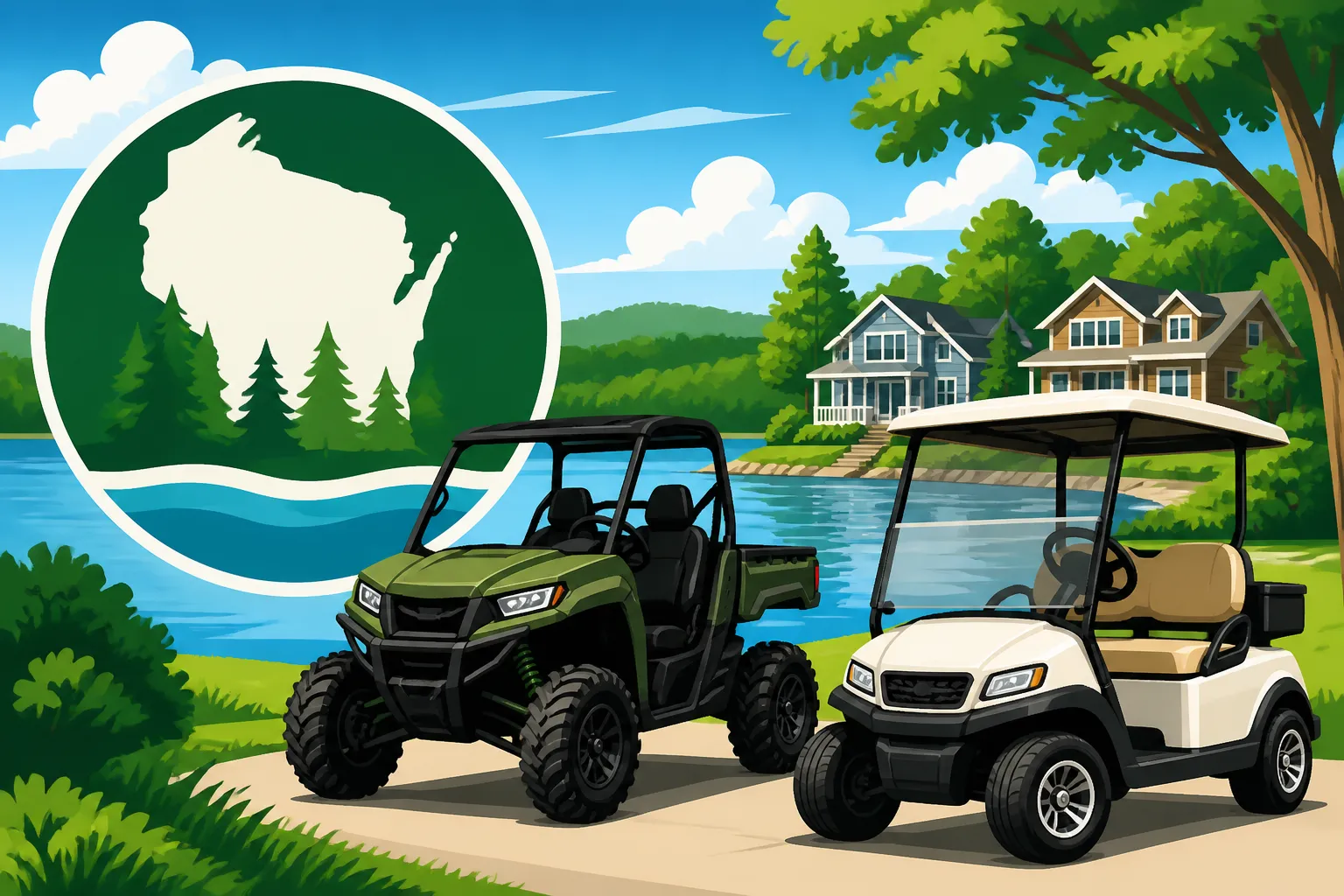
Golf Carts in a Wisconsin Lake Community
There's nothing quite like the charm of a Wisconsin lake community, especially when you're dreaming of those lazy summer days by the water. For many, that dream includes zipping around on a golf cart – heading to the public beach, a neighbor's cookout, or just down to the boat dock. It seems so convenient, so perfectly suited to the laid-back pace of lakeside living. But if you've tried it, or even just thought about it, you've likely bumped right into a wall of confusion and conflicting information. Is it legal? Is it just for the golf course? Why does your neighbor do it, but you've heard horror stories about tickets? This guide is here to untangle the complexities of golf carts, Wisconsin state law, and those often-mystifying local ordinances in your beloved lake community, helping you understand exactly what you can and can't do.
The Allure and Confusion of Golf Carts in Lake Communities
It’s easy to see why golf carts have become such a tempting option for getting around in Wisconsin’s lake communities. They embody a certain lifestyle, don't they? That sense of freedom, the open air, the ability to hop in and go for those quick, informal trips that define lakeside living. But this very allure often leads to a tangled web of misunderstandings when it comes to the law.
Why Golf Carts Are So Popular Near Wisconsin's Lakes
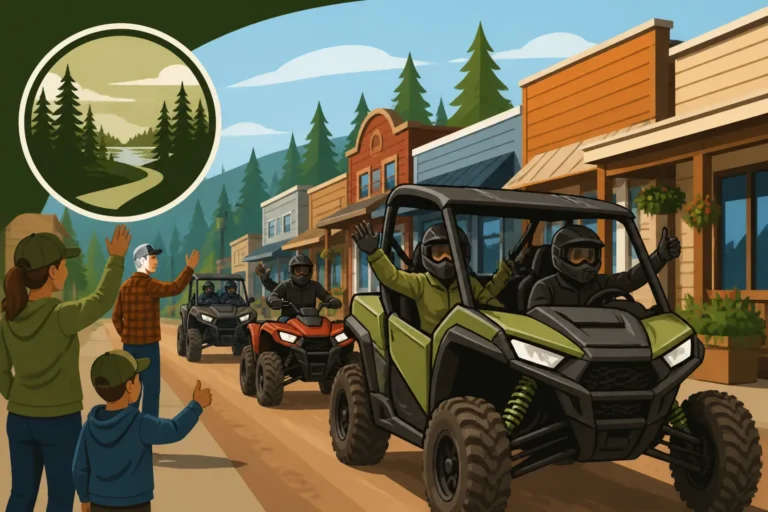
Picture this: You're at your cabin on Big Cedar Lake. Your grandkids are begging for ice cream from the general store just a mile down the road. Or maybe you just need to run a cooler over to your buddy's pier on Shawano Lake. Starting up the truck for such a short jaunt feels like overkill, and walking can be a bit far, especially when you're hauling stuff. This is where the golf cart seems like the perfect solution. They're quiet, easy to maneuver, and often seen as a more communal, less formal mode of transport. Plus, there's an undeniable cool factor to cruising slowly, waving at neighbors, and enjoying the breeze. For many, a golf cart simply enhances the whole lake experience, making those short, convenient trips a breeze and tying the community together.
The Immediate Legal Headaches Many Owners Face
However, that dream of effortless lakeside cruising often crashes into the harsh reality of Wisconsin's traffic laws. Many golf cart owners, or prospective owners, find themselves in a bind, hearing conflicting information from friends, neighbors, and even local authorities. One person swears their town allows them everywhere, while another got a hefty ticket for merely crossing a road. This "everyone else does it" mentality, while understandable in a close-knit community, can lead to serious legal trouble. The core of the problem lies in a fundamental misunderstanding of state law versus local control, and without clarity, you're left guessing, hoping you don't encounter the wrong warden on the wrong day.
Wisconsin State Law Versus Local Ordinances for Golf Carts
This is where the rubber meets the road, or more accurately, where the golf cart often doesn't meet the road according to state regulations. It's a common misconception that if a vehicle moves, it can automatically be driven on public roads, or that a golf cart is somehow in the same category as an ATV or UTV. Wisconsin law has very specific definitions and restrictions for golf carts, which are often at odds with how people wish to use them in their communities.
What Wisconsin State Law Says About Golf Carts on Roads
Under Wisconsin state statutes, golf carts are generally not considered street-legal vehicles. They are typically defined as machines designed and manufactured for operation on a golf course. This means they don't meet the rigorous safety and equipment standards required for vehicles operating on public roads, such as specific lighting, braking systems, speed capabilities, or turn signals. You can't just slap a "slow-moving vehicle" triangle on it and expect it to be legal on a county highway. There are very limited exceptions at the state level, such as crossing a highway at an intersection, or participating in special events permitted by the Department of Transportation, but these are exceptions, not the rule. The state views them primarily as off-road recreational devices, much like an unregistered dirt bike, for use on private land or specific courses.
How Towns and Villages Can Create Local Golf Cart Ordinances
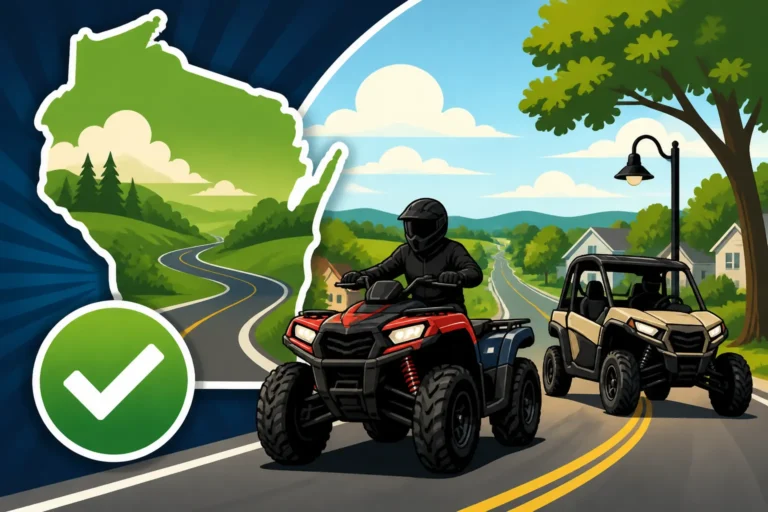
Here's where it gets interesting, and frankly, a bit confusing for residents. While the state generally prohibits golf carts on public roads, it does grant municipalities – like your local town or village – the power to pass their own ordinances allowing golf carts on certain roads within their jurisdiction. This local control is key. A town board, often responding to resident requests, can vote to open specific, usually low-speed roads to golf cart traffic. However, these ordinances almost always come with strict conditions. They might specify routes, hours of operation, require specific safety equipment (like headlights, taillights, brake lights, mirrors, or even turn signals), impose speed limits, demand proof of insurance, or even require a local permit or registration. It's not a free-for-all; it's a carefully regulated local privilege. Checking a resource like [Finding a Wisconsin Town's ATV Ordinance] can often point you in the right direction for local rules, even if they're about golf carts.
The Frustration of Varied Rules from Town to Town
This patchwork of local ordinances is precisely what causes so much frustration and confusion in Wisconsin's lake country. Imagine a large lake, like Lake Winnebago or Lac Courte Oreilles, whose shoreline might fall within several different towns or villages. One town might have a progressive ordinance allowing golf carts on almost all town roads, while the neighboring municipality, just a mile down the shore, might strictly prohibit them everywhere but the golf course itself. This means your golf cart could be perfectly legal on your street, but drive two blocks into the next jurisdiction, and you're suddenly breaking the law. It’s a challenge not just for residents, but also for visitors who might assume the rules are uniform across the region. This variance makes it absolutely critical to do your homework for your specific location.
Key Differences: Golf Carts, ATVs, and UTVs on Wisconsin Roads
Part of the confusion around golf carts often stems from their visual similarity to UTVs, or the general perception that "if it's off-road, it's all the same." However, Wisconsin law draws clear distinctions between golf carts, ATVs (All-Terrain Vehicles), and UTVs (Utility Terrain Vehicles) when it comes to road use. These classifications are critical because they dictate what is, and isn't, allowed.
Why a Golf Cart Isn't Automatically a UTV in Wisconsin
This is a really important distinction, and it trips a lot of people up. A golf cart, regardless of how many bells and whistles you add, is fundamentally designed and manufactured as a golf cart. It has specific characteristics: generally lower top speeds (usually capped at 15-25 mph), often lacks the robust suspension, frame, and safety features found in purpose-built UTVs. While you might see people modifying their golf carts with lift kits, bigger tires, and even some aftermarket lights, those modifications don't magically reclassify it as a UTV in the eyes of Wisconsin law. The original manufacturer's intent and design classification usually stick. So, even if you browse parts from companies like SuperATV to enhance your golf cart's appearance or utility, those accessories don't change its underlying legal definition or make it eligible for UTV regulations.
What Makes a UTV Road-Legal (When Allowed Locally)
UTVs, on the other hand, are designed as off-road utility or recreational vehicles. They're built with more powerful engines, heavier-duty frames, and typically include safety features like seatbelts and a Rollover Protective Structure (ROPS) from the factory. More importantly, Wisconsin state law specifically provides a framework for local municipalities to create ordinances allowing ATVs and UTVs on designated public roads and routes. This is a critical difference. When a UTV is legally operated on a designated road route in Wisconsin, it often needs to meet a specific list of equipment requirements: proper headlights, taillights, brake lights, a working horn, turn signals, mirrors, and sometimes a spark arrestor on the exhaust. These are often not factory standard on a golf cart. For more insight, you might want to read about [Riding an ATV on a Wisconsin Road Route] or delve into [Why UTVs Are Treated Differently on Routes]. These resources explain why a UTV, with its distinct design and regulatory pathway, is viewed differently than a golf cart when it comes to road access.
The Safety Equipment Gap
The most significant chasm between golf carts and ATVs/UTVs when it comes to road-worthiness lies in their inherent safety equipment. Most golf carts are designed for low-speed, contained environments like a golf course, or private grounds. They typically lack basic road safety features like seatbelts (though some newer ones might have them), robust roll cages, advanced braking systems suitable for sudden stops on paved roads, and comprehensive lighting for visibility in traffic. A UTV, conversely, is usually built with an integrated roll cage, proper seatbelts for all occupants, and more durable components designed to handle varied terrain and higher speeds. This substantial gap in fundamental safety features is a primary reason why golf carts are generally not deemed safe for public road use by state law, and why any local ordinance permitting them often mandates adding specific safety equipment.
Navigating Your Lake Community's Golf Cart Rules
So, you're in a Wisconsin lake community, and you're determined to figure out if you can legally use a golf cart. This isn't a situation where you can just follow the crowd. It requires a bit of detective work and a clear understanding of your local rules. Ignoring these steps could lead to fines, or worse, an accident that leaves you vulnerable.
How to Research Your Local Municipality's Stance
The absolute first step is to never, ever rely solely on what your neighbor or friend tells you. Rules change, and their property might be in a different jurisdiction, or they might simply be misinformed. Your go-to resource should always be the specific town or village clerk's office where your property is located. Visit their official website, look for their municipal code online, or simply call them directly. Ask for any ordinances related to "golf carts," "ATVs," or "UTVs" on public roads. Many clerks are used to these questions in lake communities and can provide you with a copy of the relevant ordinance. This is the only way to get accurate, up-to-date information specific to your area. It’s worth noting that checking resources like [Finding a Wisconsin Town's ATV Ordinance] can give you a template of what to look for, even if it's not specifically golf-cart focused.
Common Requirements If Golf Carts Are Permitted
If your local municipality does have an ordinance permitting golf carts on certain roads, be prepared for a list of requirements. These aren't suggestions; they are conditions for legal operation. You'll commonly find:
- Designated Roads: Golf carts are usually restricted to specific, lower-speed roads, often explicitly excluding state highways or county trunks.
- Time of Day: Many ordinances limit golf cart use to daylight hours only, or specific hours within the day.
- Operator Requirements: There might be age restrictions (e.g., 16 years old), or a requirement for the operator to hold a valid driver's license.
- Safety Equipment: This is a big one. Even if your golf cart didn't come with them, the ordinance might mandate proper headlights, taillights, brake lights, turn signals, a horn, a slow-moving vehicle sign, and sometimes mirrors. If you're looking to upgrade your cart to meet these requirements, companies like SuperATV offer a variety of aftermarket lighting, mirrors, and other accessories that could help you comply, but always confirm the exact specifications with your local clerk before purchasing.
- Insurance: Proof of liability insurance is frequently required, similar to how it might be required for a UTV on a road route.
- Local Permit/Registration: Your town or village might require you to obtain a local permit or sticker, often with a small fee, to demonstrate compliance with their ordinance.
The Consequences of Ignoring Local Rules
The temptation to just "go with the flow" and assume everyone else is legal can be strong in a close-knit lake community, but the consequences of operating an illegal golf cart can be significant. If you're caught operating a golf cart on public roads without complying with local ordinances (or in an area where it's simply prohibited by state law), you could face a citation and substantial fines. In some cases, your golf cart could even be impounded. Beyond the legal penalties, there's the much more serious risk of an accident. If you're involved in a collision while operating illegally, your insurance might not cover the damages or injuries, leaving you personally liable for potentially enormous costs. This isn't just about avoiding a ticket; it's about ensuring your safety and financial security, and upholding the responsible image of off-road enthusiasts in Wisconsin. If you're ever stopped, understanding [What a Wisconsin Warden Asks a Rider For] might be helpful, though golf carts fall under different rules than ATVs.
Disclaimer
This article is for general informational purposes only and does not constitute professional advice. Laws, prices and regulations vary by location and change over time. Consult a qualified professional for guidance on your specific situation.