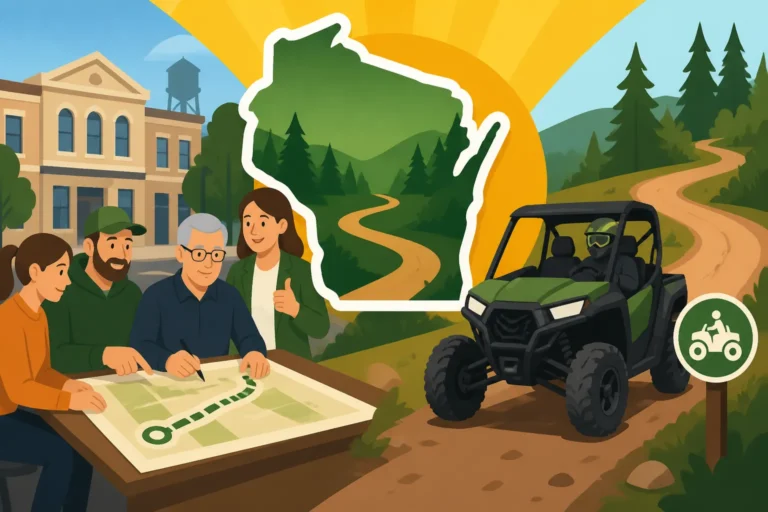
Belts and Nets in a Wisconsin Side-by-Side
Riding a side-by-side in Wisconsin offers an incredible way to explore the state's vast network of trails and routes, but it also comes with important responsibilities, especially when it comes to safety. Many new and even experienced riders often wonder about the specific requirements and best practices for seat belts and safety nets in their machines, particularly as they venture beyond private land. It's a common area of confusion, and frankly, a critical one for staying safe and compliant. This guide is here to cut through that confusion, offering a thorough look at why belts and nets are non-negotiable for your side-by-side adventures in Wisconsin, along with practical advice on their use and maintenance.
The Essential Role of Belts and Nets in Wisconsin Side-by-Sides
When you climb into your side-by-side, whether you're heading out for a casual cruise or gearing up for a more adventurous day, the first thing you should think about is safety. Belts and nets aren't just accessories; they are fundamental components designed to protect you and your passengers from the unpredictable nature of off-road riding, especially on Wisconsin's diverse terrains. Understanding their function isn't just about avoiding a ticket; it's about safeguarding lives.
Understanding Seat Belt Requirements for Side-by-Sides in Wisconsin
Wisconsin's approach to side-by-side safety, particularly concerning seat belts, is firmly rooted in preventing injuries from ejections and offering protection during rollovers or sudden stops. Unlike traditional ATVs, which are designed for a single operator and a more active riding style, UTVs (side-by-sides) are built more like compact vehicles, offering seating for multiple passengers within a protective cage. Because of this structural similarity to cars, the state often applies similar safety considerations to their operation on designated routes and trails as it does to other motor vehicles.
The general expectation, and often a mandatory rule, is that if your side-by-side came equipped with seat belts from the factory, they must be worn by all occupants whenever the machine is in operation on public trails or designated routes. This isn't just a recommendation from the manufacturer; it's typically a rule enforced by wardens and local law enforcement across the state. Imagine you're cruising down a scenic [Riding a Wisconsin Town Road] near a popular trail town, enjoying the fresh air and scenery, when suddenly you encounter an unexpected dip, a hidden root, or an animal darting across your path. Without a properly fastened seat belt, you could be violently thrown against the roll cage, suffering significant impact injuries, or even ejected from the vehicle entirely, turning what should have been a pleasant ride into a severe emergency.
It's also important to understand that there are different types of restraints. Most factory-equipped side-by-sides come with automotive-style three-point seat belts, which secure you across the lap and one shoulder. While these are perfectly adequate for many situations and meet the minimum requirements for general recreational riding, some riders choose to upgrade to four- or five-point harnesses. These multi-point harnesses offer enhanced security, distributing impact forces more widely across the body and significantly reducing movement within the cabin, which is particularly beneficial for more aggressive trail riding, sport events, or competitive scenarios. However, for casual route riding throughout Wisconsin, the factory belts are generally sufficient, provided they are in good condition and, critically, properly worn every single time the machine is in motion.
A common misconception among some riders is that if you're just putting around on private land, these rules don't apply. While enforcement might operate differently on private property compared to public trails, the fundamental physics of an accident remain brutally consistent. Even a low-speed tip-over, perhaps while turning too sharply on your own wooded property or navigating an uneven field, can result in serious injury if you're not securely belted in. The roll cage is there to protect the occupants, but it can only do its job if you remain safely contained within its confines.
The Function and Importance of Side-by-Side Nets
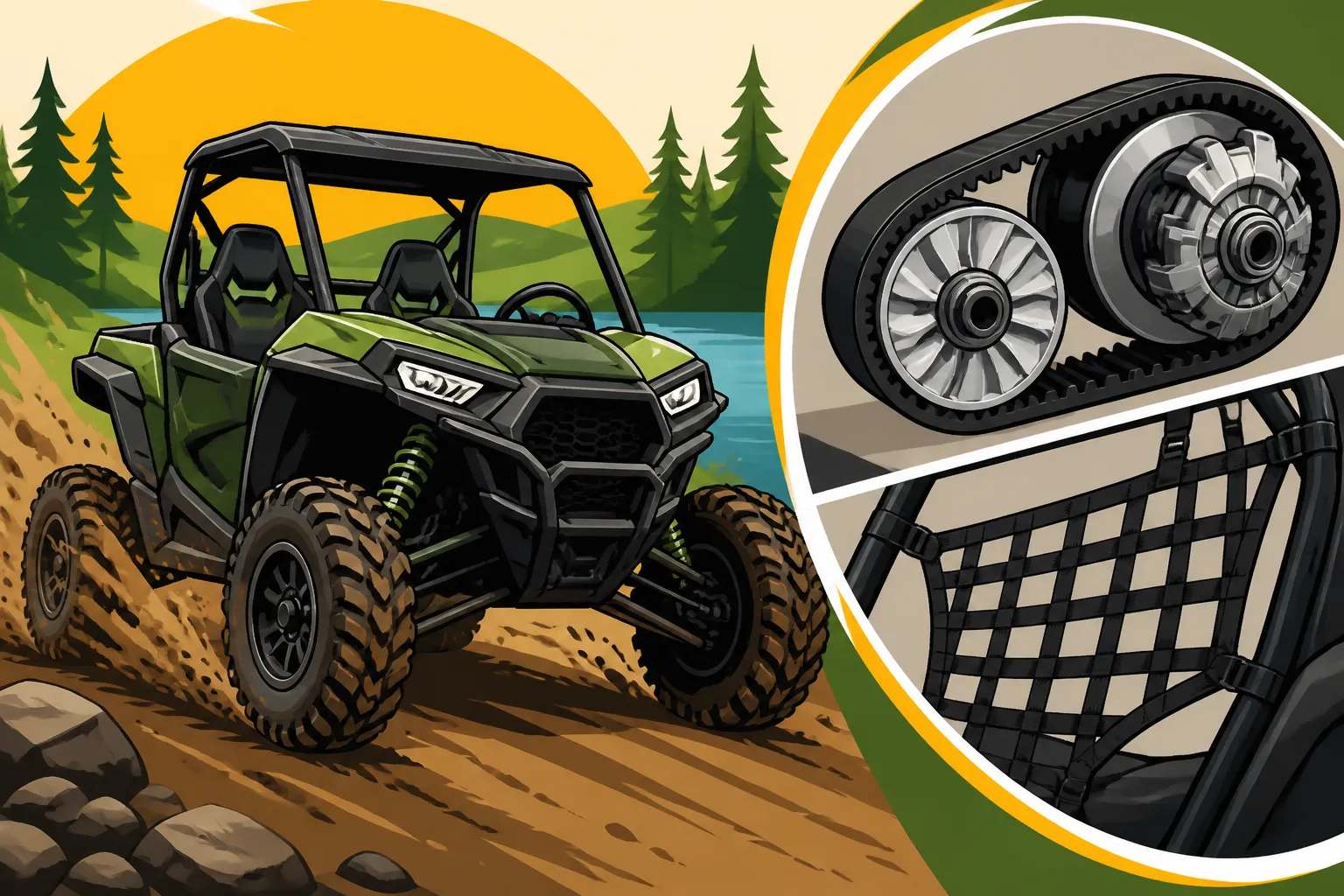
Beyond seat belts, many side-by-sides, particularly sportier models and those designed for more rugged use, come equipped with side nets or sturdy doors. These features serve a crucial, though sometimes underestimated, safety function: keeping limbs and bodies inside the vehicle's protective cage during a rollover, slide, or side impact. When a side-by-side rolls, the forces involved can try to pull occupants' arms or legs outside the protective structure. Picture this: you're navigating a tight, wooded section of trail, perhaps on one of the [Wisconsin Trails That Cross a County Line], and the machine suddenly tips or slides sideways into a tree or embankment. Without robust side nets or secure doors, an arm or leg could extend out and be crushed between the roll bar and the ground or the immovable obstacle.
While seat belts are primarily designed to keep your torso and body secured to the seat, nets or doors provide an essential secondary layer of containment. They are incredibly effective at preventing stray branches or other trail debris from whipping into the cab, keep small children's arms and hands safely inside, and often provide a subtle psychological barrier, reminding all occupants to keep their limbs contained. For many side-by-side manufacturers, these nets are not an afterthought but an integral part of the machine's overall safety design, especially in models that don't feature full, hard-sided doors. They offer a tangible piece of mind, particularly when traversing tight, wooded trails where potential hazards are always close at hand.
Some Wisconsin riders, especially those with older machines or who simply prefer a more open-air riding experience, might consider removing or modifying their factory nets. From a pure safety perspective, this is generally ill-advised. If your side-by-side was designed and came equipped with nets, they are there for a very specific, life-saving reason. If you must replace them, perhaps due to wear or a desire for different styling, it's paramount that any aftermarket replacement offers comparable or, ideally, superior protection. Many reputable aftermarket suppliers, including brands like SuperATV, offer a wide array of robust half-doors, full doors, or upgraded netting systems. These can not only significantly enhance occupant safety but often improve comfort, reduce trail spray, and even contribute to a more aggressive aesthetic for your machine. The key takeaway here is to always thoroughly consider the potential safety consequences before altering or removing any factory-installed safety equipment.
The debate over nets often boils down to a perceived inconvenience versus the undeniable reality of safety. While some argue that they might slightly impede a quick exit from the vehicle in a non-rollover situation or minimally reduce peripheral visibility, their primary and most critical purpose in a rollover or side-impact scenario is undeniable. In Wisconsin, where trails can be unpredictable, conditions can change rapidly, and terrain is incredibly varied, having these containment barriers can literally be the difference between a minor scare and a life-altering, debilitating injury. Think through the various real-world scenarios: traversing a steep, off-camber incline, encountering an unexpected deep rut on a challenging trail, or executing a sudden swerve to avoid a deer. In all these common situations, well-maintained and properly secured nets contribute significantly to the overall protection of every occupant in your side-by-side.
Navigating Wisconsin's Diverse Riding Environments with Proper Restraints
Wisconsin's natural beauty offers an unparalleled playground for side-by-side enthusiasts, from winding forest trails to designated road routes that connect small towns. However, this diverse environment also means varying conditions and, sometimes, varying interpretations of safety requirements. Understanding how belts and nets apply across these different riding environments is crucial for responsible and safe operation.
Belts and Nets on Designated ATV/UTV Routes and Trails
When you're out exploring Wisconsin's incredible network of [Where to Ride an ATV in Wisconsin], whether you're traversing the sprawling expanse of [Chequamegon-Nicolet National Forest Trails] or enjoying a local county forest system, the rules regarding the use of seat belts and nets are typically straightforward: use them. The state's Department of Natural Resources (DNR), alongside numerous local municipalities and county forest departments, invests considerable effort into ensuring these public routes and trails are as safe as possible for all users. Rider compliance with fundamental safety equipment, like seat belts and nets, forms a significant and expected part of that collective safety effort. It's not uncommon to pass a DNR warden or local sheriff's deputy on a popular route near a vibrant trail town like [Riding Into Eagle River], and you can be assured they are observing to ensure everyone is buckled up and operating safely.
It's also important to be aware that specific municipal ordinances can sometimes reinforce or even expand upon these statewide safety requirements. While Wisconsin's general ATV/UTV laws establish a baseline for safe operation, individual towns and counties retain the authority to add [Municipal Ordinances Wisconsin Riders Must Read] that further specify safety equipment or operational practices. This means that what might be considered acceptable on one county road route could potentially have slightly stricter interpretations or enforcement just across a county line or within a particular township. Therefore, it's always a wise practice to quickly check the local ordinances for any specific areas you plan to ride, although you should always operate under the assumption that factory-equipped seat belts are mandatory and nets are highly recommended (if not legally required by local rule) whenever you're operating on public routes and trails.
For side-by-side passengers, especially children, the paramount importance of these restraints simply cannot be overstated. Wisconsin has specific regulations regarding [Wisconsin Helmet Rules for Riders Under 18] and minimum age restrictions for operators, but regardless of a person's age, anyone occupying a designated seat in a UTV on public land is expected and required to be properly secured. A child who isn't wearing a seat belt can be easily jostled around inside the cab, potentially fall out of the vehicle, or sustain severe injuries in even a seemingly minor incident such as hitting an unexpected bump or swerving too quickly. Making absolutely certain that every passenger is properly belted in, and fully understands the protective purpose of the nets or doors, is a non-negotiable aspect of responsible and ethical riding.
While the consistency of enforcement can occasionally vary from one area to another, the inherent risks of not using proper restraints do not diminish. Relying on the risky gamble of "I probably won't get caught" is a dangerous strategy that puts your personal safety, and the safety of your passengers, at unnecessary risk. Furthermore, beyond the potential for hefty [Wisconsin Fines for Illegal Road Riding], an official accident report that highlights a lack of proper occupant restraint could have significant negative impacts on insurance claims or your liability in potential civil cases following an incident. So, before you even engage the transmission and put the machine in gear, cultivate this crucial habit: ensure all seat belt buckles are securely clicked and all safety nets or doors are properly fastened.
Adapting to Different Terrains and Riding Styles
Wisconsin's natural landscape offers an incredible variety of riding terrain, ranging from the soft, sandy trails found in the central part of the state to the rugged, rocky, and hilly paths characteristic of the northwoods. Each distinct type of terrain presents its own unique challenges that powerfully emphasize the ongoing need for proper restraints. On fast, open gravel routes, for instance, an unexpected washout, a sharp and abrupt turn, or even loose gravel can create significant G-forces that can easily pull an unbelted occupant from their seat. Conversely, slow, highly technical rock crawling or extreme terrain navigation, while seemingly less dynamic, still demands constant body adjustments and balance. Even in these low-speed scenarios, a sudden slip, a minor tip-over, or an unforeseen lurch can send an occupant flying if they are not properly and securely fastened within the machine.
Consider the vast differences in riding styles as well. A leisurely tour along a beautiful [Wisconsin Trails That Reach a Lake] might feel like a low-risk activity, but even at moderate speeds, a sudden collision with unexpected wildlife, an unseen obstacle obscured by tall grass, or a quick evasive maneuver can be incredibly jarring. For those who engage in more aggressive sport riding, where intentional jumps, significant bumps, and steep, challenging inclines are a regular part of the experience, enhanced multi-point harnesses might be considerably more preferable than standard factory belts. While factory belts are designed to meet minimum safety requirements, riders who frequently push their machines to the limits often seek the additional security and body containment provided by advanced harness systems, which help them stay firmly planted in their seats through every aggressive maneuver and impact.
The ever-changing weather patterns in Wisconsin also play a significant role in emphasizing the need for robust restraints. Wet, slick, or muddy trails after a spring rain can make the machine's handling less predictable, dramatically increasing the chance of an unexpected slide, loss of traction, or even a tip-over. Encountering significant [Mud on a Wisconsin Town Road in April] can transform a routine, gentle corner into a slippery, unpredictable challenge. In these more treacherous conditions, the extra security and stability provided by well-maintained belts and effective nets become even more critically important. Furthermore, remember that cold weather gear, such as bulky jackets or multiple layers, can sometimes interfere with achieving a proper, snug fit for your seat belt. Always take a moment to ensure that your heavy clothing doesn't create slack or prevent your belt from being securely tightened against your body.
Ultimately, adapting your restraint use to the prevailing conditions and your specific riding style is a matter of common sense and a steadfast commitment to prioritizing safety above all else. Whether you're carefully hauling essential gear for farm work across a field or exploring remote backcountry trails deep in the Northwoods, the fundamental principle remains constant: you must stay safely contained within the robust, protective structure of your side-by-side. The design engineers meticulously engineered and installed those critical safety features for a very specific and important reason, and ignoring them effectively negates a significant portion of the machine's inherent safety capabilities.
Beyond Basic Safety: Enhancements and Maintenance
While factory-installed belts and nets provide a solid foundation for safety, the world of side-by-side riding is dynamic, and so are the options for enhancing your machine's protective features. Moving beyond the basics often involves considering upgrades that offer superior protection or better suit specific riding styles, alongside diligent routine maintenance to ensure everything functions perfectly when you need it most.
Upgrading Your Side-by-Side's Safety Features
For many Wisconsin side-by-side owners, simply meeting basic safety standards isn't enough; they seek enhanced protection, improved comfort, or greater durability, especially as their riding skills evolve or they tackle more challenging terrain. This is where the aftermarket industry truly shines, offering a wealth of robust safety solutions. For instance, reputable brands like SuperATV offer a wide range of aftermarket doors, multi-point harnesses, and durable net systems specifically engineered to provide superior occupant containment and significantly better impact protection compared to some of the standard, entry-level factory components. These types of upgrades can be particularly invaluable for riders who frequently tackle highly challenging trails, often participate in competitive events, or simply desire the absolute highest level of safety for themselves and their passengers.
One of the most popular and impactful safety upgrades is replacing a standard three-point seat belt with a four- or five-point harness system. This choice is especially common for those riders seeking maximum security and body containment. These multi-point harnesses are designed to distribute crash forces much more evenly across the rider's entire upper body, shoulders, and hips, significantly reducing the dangerous phenomenon of "submarining" (sliding under the lap belt) or being violently jostled out of a safe riding position during sudden impacts or rollovers. While installation typically involves bolting to existing frame points or utilizing specific reinforcement plates, it is absolutely crucial to meticulously follow the manufacturer's installation instructions to ensure proper function and maximum effectiveness. Many riders who make this upgrade report an immediate and noticeable improvement in how secure and connected they feel to their machine, enhancing both safety and control.
Similarly, factory nets, particularly on older or more budget-focused models, might be constructed from lighter-duty materials that are more prone to stretching, tearing, or premature wear. Upgrading to heavier-duty, more robust nets or investing in full half-doors or even full hard doors can dramatically improve occupant containment. These enhanced doors and nets offer much better protection from flying trail debris, mud, and water, which is a common occurrence on Wisconsin's diverse trail systems. SuperATV, for example, is well-known for producing exceptionally durable doors and netting kits that are designed for a precise, custom fit on many popular side-by-side models. These upgrades don't just add a layer of safety; they can also provide a cleaner, more integrated aesthetic and often improve cabin ergonomics and weather protection. When you're considering a safety upgrade, carefully think about your typical riding environment, the aggressiveness of your riding style, and the precise level of protection you genuinely desire for all occupants.
Beyond direct restraint systems, other critical safety enhancements can contribute significantly to a safer riding experience. These might include adding thicker, energy-absorbing roll cage padding to prevent head or limb impacts against hard tubing, upgrading to wider-view mirrors for better situational awareness, or even installing a readily accessible, small fire extinguisher for emergencies. The overarching goal of these upgrades is always to proactively reduce risk as much as possible, effectively transforming your side-by-side into an even more secure and protective cocoon for you and your passengers. Investing in quality safety upgrades is not merely about spending money; it is a profound investment in your peace of mind and, most importantly, in the well-being and safety of everyone who shares your Wisconsin off-road adventures.
Routine Inspection and Care for Belts and Nets
Even the most advanced and robust safety equipment is ultimately only as effective as its condition allows. This is why regular, diligent inspection and proper care of your side-by-side's belts and nets are absolutely crucial for their long-term effectiveness and your continued safety. Before every single ride, particularly if you're planning to hit the challenging terrain of the [Wisconsin County Forest Trail Systems], make it an ingrained habit to perform a quick yet thorough visual check of all safety components. Scrutinize the seat belt webbing for any visible signs of fraying, cuts, tears, or excessive wear. Verify that the buckles latch securely with a reassuring click and release smoothly and easily when intended. A damaged or compromised belt simply cannot provide the necessary protection in the event of an accident or sudden impact.
Furthermore, pay extremely close attention to the anchor points where the belts attach to the side-by-side's frame. Are they perfectly secure? Is there any visible rust, corrosion, or damage to the mounting bolts or surrounding frame? Over time, constant vibrations, repeated stresses from riding, and continuous exposure to the elements—think about Wisconsin's dramatic seasonal weather changes, from humid summers to harsh, salty winters—can gradually loosen fasteners or accelerate corrosion. A loose or weakened anchor point will render even a pristine seat belt completely ineffective in a crash. Apply the same rigorous inspection to your safety nets: check for any tears, areas where the material has become noticeably stretched, or any faulty or weakened attachment points. If a net can easily pop open or if it has developed large, gaping holes, it fundamentally won't be able to do its critical job of occupant containment in an emergency.
Regular cleaning also plays an important role in the longevity and effectiveness of your safety equipment. Accumulated mud, fine dirt, and gritty dust can abrade webbing fibers, clog buckle mechanisms, and accelerate wear. Use a mild soap and plain water solution to gently clean belts and nets, and then allow them to air dry completely and thoroughly before storing your machine or embarking on your next ride. Crucially, avoid using any harsh chemical cleaners, solvents, or abrasive brushes, as these can severely weaken the synthetic fibers that give your belts and nets their strength and integrity. Properly maintained safety equipment not only lasts significantly longer but also performs reliably and as designed precisely when you need it most.
If, during your routine inspections, you discover any significant damage to your belts, harnesses, or nets—such as deep cuts, severe fraying, bent buckles, or compromised stitching—it is absolutely imperative that you replace them immediately without hesitation. Do not attempt to makeshift-repair frayed webbing, bent buckles, or torn netting, as such attempts will invariably compromise their structural integrity and their ability to function safely. This is unequivocally not an area where you should attempt to cut corners or delay replacement. Fortunately, many original equipment manufacturers (OEMs) and reputable aftermarket suppliers, including trusted names like SuperATV, offer easily accessible replacement parts, making it relatively straightforward to source and swap out damaged components. Your safety, and the irreplaceable safety of your passengers, depends entirely on paying attention to these small but incredibly critical details.
| Feature | Factory 3-Point Belt | Aftermarket 4/5-Point Harness | Side Nets (OEM) | Half/Full Doors (Aftermarket) |
|---|---|---|---|---|
| Primary Safety Role | Secures torso/lap, prevents ejection | Firmly plants rider, extreme ejection prevention | Keeps limbs inside during rollovers, deflects debris | Superior containment, weather protection, debris def. |
| Common Use Case | General recreational riding, public routes | Aggressive trail riding, sport, enhanced safety | All riding, basic limb containment | All riding, enhanced safety & comfort |
| Comfort Level | Good for casual rides, easy ingress/egress | More restrictive, secure fit, can be less convenient | Open feel, minimal comfort impact | Can offer better ergonomics, weather protection |
| Protection Level | Meets basic compliance, good general protection | Exceeds basic, superior impact/ejection protection | Good for minor incidents, basic limb safety | Excellent, robust containment & impact protection |
| Maintenance Need | Inspect webbing, buckles, anchor points | Inspect webbing, buckles, mounting hardware | Inspect for tears, attachment points | Inspect hinges, latches, frame damage |
| Upgrade Potential | Often upgraded to multi-point harnesses | N/A (already enhanced) | Often upgraded to full doors/stronger nets | N/A (already enhanced) |
Disclaimer
This article is for general informational purposes only and does not constitute professional advice. Laws, prices and regulations vary by location and change over time. Consult a qualified professional for guidance on your specific situation.