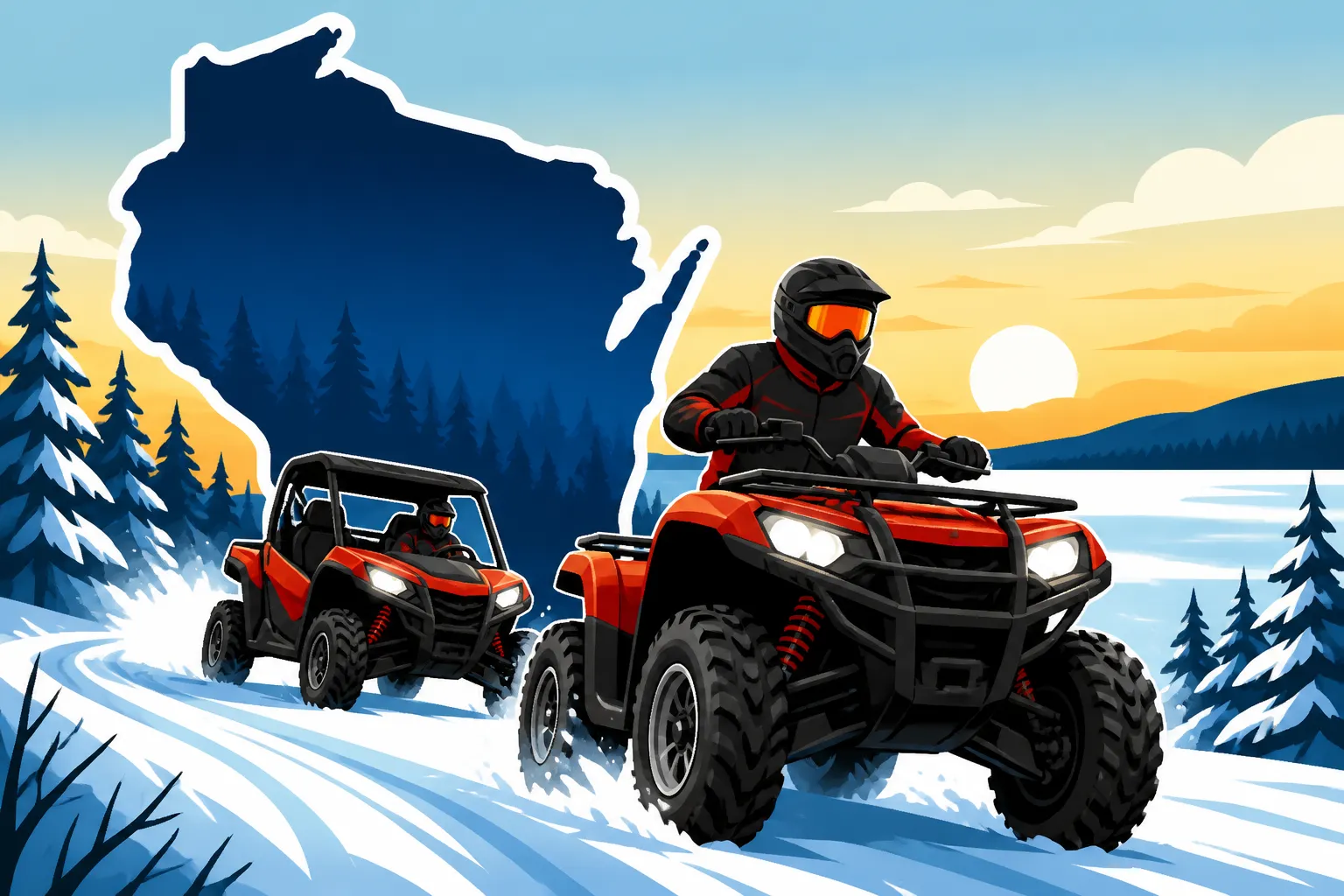
Winter Route Riding in Wisconsin
The crisp, clean air, the hushed beauty of snow-covered pines, and the exhilarating crunch of frozen earth under your tires – winter route riding in Wisconsin offers an unparalleled experience. However, tackling those open town and county roads when the temperatures drop and the snow flies brings a whole new set of challenges that can catch even seasoned riders off guard. This comprehensive guide is here to walk you through everything you need to know to safely and enjoyably navigate Wisconsin's ATV and UTV road routes during the winter months, from preparing your machine to understanding local regulations and staying warm.
The Unique Challenges of Winter Route Riding in Wisconsin
Riding ATVs and UTVs in Wisconsin during winter isn isn't just about bundling up; it's about acknowledging and preparing for a completely different environment. The landscape transforms, and so do the demands on your machine and your riding skills. It's a beautiful, serene experience, but it demands respect and preparation.
Adapting to Changing Surface Conditions
One of the biggest variables you'll encounter during winter route riding is the ever-changing surface beneath your tires. What might have been a smooth gravel road in summer can become a treacherous mix of ice, packed snow, or even slush in winter. This requires a constant state of vigilance and a willingness to adapt your riding style.
Imagine heading out on a clear winter morning, the sun glinting off the fresh powder, making the route look inviting. A few miles in, you might hit a shaded curve where the snow has melted and refrozen into a slick patch of black ice, completely invisible until you're right on top of it. Or perhaps a section of the route sees more traffic, compacting the snow into a hard, slippery surface that feels more like ice than snow. These conditions dramatically reduce traction, impacting your braking distance, steering control, and overall stability. You might find yourself needing to navigate deeper drifts in certain areas, particularly on less-traveled routes, while other sections are cleared down to the pavement. It’s a constant dance between anticipation and reaction, making smooth throttle control and gentle braking absolutely paramount. [Winter Route Riding in Wisconsin] is a totally different beast than summer riding.
Navigating Reduced Visibility and Shorter Days
Winter days in Wisconsin are notoriously short, and the sun often stays low in the sky, casting long shadows that can obscure hazards. Beyond the limited daylight, actual visibility can be significantly reduced by factors like falling snow, blowing snow, or even the glare reflecting off pristine white surfaces. This makes it harder to see upcoming turns, evaluate the condition of the route ahead, or spot other vehicles or wildlife.
Picture a late afternoon ride; the sun is already dipping below the horizon, and the light is fading fast. Snow from a passing vehicle or even just a gust of wind can create a temporary whiteout, blinding you for crucial seconds. Your headlights, even upgraded ones, might struggle to cut through heavy snowfall, creating a tunnel vision effect. It's not just about seeing; it's about being seen. The shorter days also mean colder temperatures, as the sun's warmth is fleeting. This combination of diminished visibility and plunging mercury underscores the need for excellent lighting on your machine, reflective gear, and a clear understanding of your route before you even set out. For more on this, check out [Lighting Rules for Wisconsin Night Riding].
Essential Gear and Machine Preparations for Cold Weather
Taking your ATV or UTV out in the depths of a Wisconsin winter requires more than just throwing on a heavy coat. Both you and your machine need specific preparations to ensure comfort, safety, and reliability in freezing temperatures and snowy conditions. Skipping these steps can lead to anything from a miserable ride to a dangerous breakdown far from warmth.
Outfitting Your Machine for Winter
Your ATV or UTV is a hardy beast, but winter riding pushes it to its limits. Think about what your machine needs to combat cold, snow, and ice. This isn't just about performance; it's about protecting your investment and ensuring it starts and runs reliably when you need it most.
First and foremost, consider your tires. While summer tires are fine for dry roads, they won't offer much grip on packed snow and ice. Aggressive mud tires can provide some traction, but many winter riders opt for dedicated winter-specific ATV/UTV tires, or even studded tires for maximum grip on icy surfaces. A good set of tires from a brand like SuperATV, designed for harsh conditions, can make a world of difference in control and safety. Next, think about a plow system. While not strictly for "riding," many winter riders use their machines for clearing driveways or trails, and having a reliable plow can be a game-changer. Beyond that, a robust winch is an absolute must-have. Even on cleared routes, you might find yourself stuck in a drift, or need to help a fellow rider. A strong battery is crucial; cold saps battery power, so ensure yours is in top condition or consider an upgraded cold-weather battery. For insights into costs, refer to [What a Plow Kit Costs to Fit] and [What a 6,000-Pound Winch Runs].
Beyond the basics, think comfort. Heated grips and a heated seat can drastically improve your riding experience, keeping your core and hands warm even on the coldest days. A full cab enclosure for UTVs offers unparalleled protection from wind, snow, and cold, transforming your open-air ride into a cozy cabin. For ATVs, handguards or wind deflectors are a simpler way to protect your hands from biting wind. Finally, ensure all your lights are in perfect working order and consider adding auxiliary LED light bars. Not only do they help you see, but they also make you much more visible to others, which is vital on dark winter routes.
Rider Gear for Staying Warm and Safe
You can have the most capable winterized machine, but if you're freezing, your focus will suffer, and your ride won't be enjoyable. Proper layering is key to staying warm in Wisconsin's often brutal winter temperatures, allowing you to regulate your body heat as conditions change or as you exert yourself.
Start with a moisture-wicking base layer against your skin. This pulls sweat away, keeping you dry and preventing the dangerous chill that comes from damp clothing. Next, add insulating mid-layers like fleece or down – multiple thin layers are often better than one thick one, as they trap more air and can be shed if you get too warm. Your outer layer should be waterproof and windproof, protecting you from snow, sleet, and the relentless winter wind. Look for gear specifically designed for snowmobiling or ice fishing, as these are built for similar demands. Don't forget extremities: warm, waterproof gloves or mittens are non-negotiable (many riders prefer mittens for warmth and switch to gloves for dexterity when needed). A warm helmet, often with a heated visor to prevent fogging, is crucial, along with a balaclava or neck gaiter to cover any exposed skin. Waterproof, insulated boots are equally important to keep your feet warm and dry.
Consider wearing bright, high-visibility colors or adding reflective tape to your gear. Even during the day, winter lighting can make it difficult for drivers of other vehicles to spot you, especially if you're sharing the route with cars or trucks. A small backpack with emergency supplies – extra layers, a headlamp, a fire starter, snacks, and water (in an insulated bottle to prevent freezing) – is also a smart addition for any winter adventure. Remember, even a short ride can turn into an extended stay if you have a breakdown or get disoriented.
Here's a quick comparison of essential winter gear:
| Category | Machine Preparation | Rider Preparation |
|---|---|---|
| Traction | Winter or studded tires, tire chains (optional) | Insulated, waterproof boots with good grip |
| Visibility | Auxiliary LED light bars, bright machine colors | Reflective outer layers, bright clothing, helmet with clear visor |
| Warmth | Heated grips/seat, cab enclosure (UTV), handguards (ATV) | Layered clothing (base, mid, outer), heated gloves/mittens, balaclava, warm helmet |
| Protection | Winch, plow system (optional), heavy-duty battery | Emergency kit, satellite messenger (for remote areas) |
| Maintenance | Antifreeze, block heater (optional), winter-grade fluids | Hand warmers, insulated water bottle, high-energy snacks |
Understanding Wisconsin's Winter Route Rules and Etiquette
Riding an ATV or UTV on a Wisconsin route in the winter isn't a free-for-all. It comes with its own set of rules, some specific to winter, and a healthy dose of common sense etiquette to ensure everyone's safety and preserve access for all. Ignoring these can lead to fines, loss of privileges, and resentment from other trail users and residents.
Specific Regulations for Winter ATV/UTV Use
Many Wisconsin towns and counties open their roads to ATVs and UTVs through local ordinances, creating a vast network of routes. While the general rules for [Wisconsin Road Rules Riders Get Wrong] apply year-round, winter can introduce specific nuances, especially regarding snow cover and frozen bodies of water. Always check local ordinances for the specific routes you plan to ride, as rules can vary from one municipality to the next.
For instance, some routes might be closed if there's too much snow, as they're not maintained for ATV/UTV use and could become impassable or damaged. Conversely, some routes might only open after a certain amount of snow has fallen, allowing for better riding conditions. A crucial point of regulation, particularly in the Northwoods, involves frozen lakes. While many people love to ride their machines out onto frozen lakes for ice fishing, it's vital to remember that these are often considered part of the public route network when certain conditions are met. However, the thickness of the ice is paramount, and it's your responsibility to ensure it's safe. State law provides guidelines for safe ice thickness, but local conditions can change rapidly. Always look for marked ice trails and follow local advice. Beyond that, remember that all machines on public routes must be properly registered for public use. [Wisconsin Public Use Registrations Expire March 31], so make sure your decals are current.
Regarding speeds, even if the posted limit for cars is 55 mph, you must always ride at a speed that is reasonable and prudent for the current winter conditions. Ice and snow drastically increase stopping distances and reduce maneuverability. A slow, controlled pace is always safer than trying to keep up with traffic on treacherous surfaces. Pay close attention to signage; some routes might have specific winter hours or restrictions on certain types of machines. [Wisconsin Rules for a Machine on Tracks] might also apply if you've converted your machine, so always verify local regulations.
Trail and Route Etiquette in Snowy Conditions
Good etiquette on winter routes is about respect – for the land, for other riders, and for the residents who live along these routes. Your actions directly impact how ATVs and UTVs are perceived and whether access to these routes remains open.
First, always stay on marked routes. Riding off-trail in winter can damage fragile vegetation hidden under the snow, or disturb wildlife. It also risks trespassing on private property, which can quickly lead to route closures if landowners complain. When encountering other vehicles, whether they're cars, snowmobiles (on shared corridors), or other ATVs, be courteous. Slow down, move to the right side of the route, and be prepared to yield. Splash guards can be a courtesy on UTVs to prevent slush and snow from being thrown onto other vehicles or pedestrians. Mud or slush flung onto passing vehicles or parked cars by wide tires can understandably irritate residents.
Noise is another big one. While the crisp air can muffle sound, it also carries far. Be mindful of your exhaust noise, especially when passing through residential areas or near cabins. A loud machine late at night or early in the morning can quickly turn a peaceful experience into a nuisance. Keep your speed down in these zones and avoid unnecessary revving. If you're riding in a group, ride single file on routes, never two or three abreast, which can be dangerous and monopolize the road. Also, remember that routes are often shared with snowmobiles in winter; respect their designated trails and corridors, and be aware of different rules and speeds that may apply. For more on group riding, see [Group Etiquette Through a Northwoods Town]. Leave no trace behind – pack out everything you pack in, including any trash. The beauty of a winter wonderland should remain unspoiled for everyone.
Planning Your Winter Route Riding Adventure
A successful winter route riding trip in Wisconsin isn't just about loading up the machine and hitting the road. It requires careful planning, from understanding current conditions to having a robust emergency strategy. The stakes are higher in winter, and being unprepared can turn an exhilarating outing into a genuinely dangerous situation.
Checking Conditions and Trail Status
Before you even hitch up the trailer, checking the latest conditions is paramount. Wisconsin's weather can be fickle, especially in winter, with temperatures, snowfall, and ice conditions changing rapidly. What was clear and rideable yesterday might be completely snowed in or dangerously icy today.
Start by checking the weather forecast for your specific riding area. Look for current temperatures, wind chill, expected snowfall, and any advisories for ice or blowing snow. Don't rely solely on a general regional forecast; pinpoint the exact county or town where you'll be riding. Next, and perhaps most importantly, check the specific route or trail status. Many counties and towns maintain websites or social media pages where they post updates on route closures, openings, and conditions. Local ATV clubs are also excellent resources for real-time information. A route that's open in one county might be closed just across the border, or a specific segment might be unmaintained. It's also wise to check local law enforcement websites or call non-emergency numbers for updates, especially if a recent storm has passed through. Remember, even if a route is "open," it doesn't mean it's been recently plowed or is free of ice. Assume challenging conditions and prepare accordingly. For general guidance, consider [Checking Wisconsin Trail Status Before You Drive].
A useful strategy is to call ahead to local businesses in your destination area – gas stations, restaurants, or lodging – as they often have the most up-to-date, real-world information on what the routes are actually like. They can tell you if a specific hill is icy, if a certain segment is drifted over, or if recent thawing has created slushy, dangerous conditions. This boots-on-the-ground intelligence is invaluable for making informed decisions and ensuring your ride is both safe and enjoyable.
Safety Considerations and Emergency Preparedness
In winter, even a minor mechanical issue or a wrong turn can escalate quickly into a serious emergency. The cold drains body heat rapidly, and remote locations mean help can be hours away. Thinking through potential problems and having solutions ready is a sign of a responsible winter rider.
Always ride with at least one other person if possible, or ensure someone knows your exact route and your expected return time. Carry a fully charged cell phone, but don't rely on it as your sole communication device, especially in the Northwoods where [Cell Dead Zones in Northern Wisconsin] are common. A satellite messenger or personal locator beacon (PLB) can be a literal lifesaver, allowing you to send an SOS even without cell service. Pack an extensive emergency kit: a first-aid kit, extra fuel (in an approved container), basic tools (wrench set, zip ties, duct tape), a small shovel, a tow strap, a fire starter, extra warm clothing layers, high-energy snacks, and water. A portable jump starter or jumper cables are also smart additions, as cold batteries are notorious for failing.
Be aware of the signs of hypothermia and frostbite, both in yourself and your riding companions. Shivering, confusion, and numbness are serious warning signs. If someone shows these symptoms, get them to warmth immediately. Plan your route carefully, ensuring you know where fuel stops and warm-up spots (like restaurants or shelters) are located. Don't push your limits, especially in unfamiliar territory or when daylight is fading. If conditions worsen, or you feel fatigued, it's always better to cut the ride short and head back. For more on emergency gear, refer to [What to Carry on a Northwoods Ride].
Maximizing Your Enjoyment of Wisconsin's Winter Wonderland
Once you've tackled the preparations and understand the rules, it's time to truly embrace the unique beauty and thrill of winter route riding in Wisconsin. This season offers a completely different perspective on the landscape, with serene views and a sense of quiet adventure that summer simply can't match.
Discovering Scenic Winter Routes
Wisconsin is blessed with an extensive network of town and county roads that open up to ATV and UTV traffic, and many of these become incredibly scenic in winter. Imagine cruising down a quiet back road, flanked by towering pines heavy with snow, their branches sparkling in the sunlight. The rolling hills of central Wisconsin or the rugged terrain of the Northwoods take on a magical quality under a blanket of white.
Counties like Marinette, Oconto, Clark, and Jackson offer vast networks that often connect to state forest trails, providing diverse terrain from sandy paths to gravel roads winding through dense forests. Many of these routes weave through charming small towns, allowing you to stop for a hot coffee or a meal at a local eatery, adding a social element to your ride. Look for routes that pass by frozen lakes or rivers, offering breathtaking vistas that are unique to the winter season. The quiet stillness of a snow-covered landscape, punctuated only by the hum of your machine, can be incredibly therapeutic. While some routes might be plowed regularly, others are left to nature, offering a true backcountry feel. Just remember, "scenic" doesn't mean "easy," so always be prepared for changing conditions, even on familiar routes. Checking [Wisconsin County Forest Trail Systems] can give you an idea of areas that are likely to have interconnected road routes.
To find these gems, explore county tourism websites, consult local ATV club maps, or use GPS apps like onX Offroad. These resources often highlight particularly scenic loops or routes that lead to points of interest. Sometimes the most beautiful routes are the ones you discover by simply taking a well-maintained town road that you might normally overlook in warmer months.
Post-Ride Care for Your Machine and Yourself
After a day of braving the cold and snow, both you and your machine will need some attention. Proper post-ride care is not just about comfort; it's about extending the life of your equipment and ensuring you're ready for your next adventure.
For your machine, the most immediate task is to clean off all the snow, ice, and especially salt and sand. The chemicals used on roads to melt ice can be highly corrosive to your machine's frame, suspension components, and electrical connections. A thorough rinse with cold water (hot water can melt snow into hard-to-reach places) will help remove these corrosive elements. Pay special attention to the underside, wheel wells, and any exposed metal. Once rinsed, allow the machine to dry thoroughly, or ideally, wipe down critical components. Consider applying a silicone spray or rust inhibitor to exposed metal parts to provide an extra layer of protection against the elements. Check your oil and other fluid levels, and inspect for any damage or loose components that might have occurred during the ride. For battery maintenance, especially after a cold ride, consider using a battery tender to keep it topped off and ready for the next start. This is especially important for [Winterizing a Machine in Wisconsin] if it's going into longer-term storage.
For yourself, the priority is to get warm and dry. Remove any damp layers of clothing immediately. A hot shower or bath will help raise your core temperature. Rehydrate with warm drinks like hot cocoa or tea, and refuel with a good meal. Take time to stretch and relax, especially if you've been riding for several hours. This prevents stiffness and helps your body recover from the exertion and cold. Review your gear, hanging anything damp to dry completely before storing it, and inspect your boots, gloves, and helmet for any wear or damage. This routine ensures that both you and your trusty ATV or UTV are ready to hit the winter routes again, refreshed and prepared for another incredible Wisconsin adventure.
Disclaimer
This article is for general informational purposes only and does not constitute professional advice. Laws, prices and regulations vary by location and change over time. Consult a qualified professional for guidance on your specific situation.