What a Wisconsin Warden Asks a Rider For
It's happened to almost every Wisconsin ATV or UTV rider: you're out enjoying a beautiful day on the trails, the engine purring, the sun on your face, when suddenly you see it—the unmistakable green truck or uniform of a Department of Natural Resources (DNR) warden. A knot tightens in your stomach. What are they going to ask for? What if you forgot something? This guide is here to unravel that anxiety, giving you a clear, comprehensive understanding of what a Wisconsin warden is empowered to ask a rider for, helping you ride with confidence and stay on the right side of the law.
The Essential Documents Every Wisconsin Rider Should Carry
When a Wisconsin DNR warden stops you on the trail or a designated route, their primary goal is to ensure public safety and compliance with state regulations. They're not out to ruin your day, but they are there to enforce the rules that keep everyone safe and preserve our natural resources. Knowing exactly what documents you need to present can make the interaction smooth and stress-free.
Proof of Registration and Decals
First and foremost, a warden will almost certainly ask for proof of your machine's registration. In Wisconsin, ATVs and UTVs are not titled in the same way cars are, so your registration card serves as a crucial piece of identification for your machine. Depending on how you use your vehicle, you'll have either a public or private use registration. If you're riding on public trails or designated routes, you absolutely need a current [Wisconsin's Public Use ATV Registration]. If your machine is strictly for use on your own private land and you're not out on public access areas, then a [Wisconsin's Private Use ATV Registration] might be sufficient, but you won't be on the public trail system to encounter a warden.
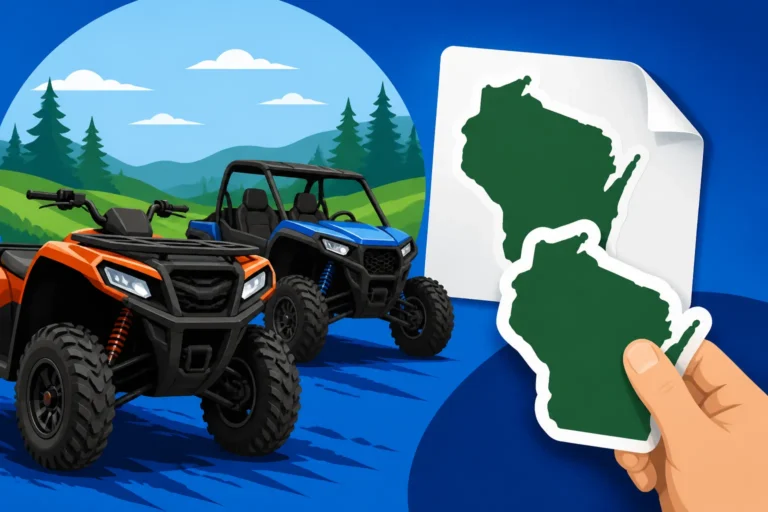
The registration card proves that your machine is legally allowed to operate. But it's not just the card; the physical decals are just as important. These bright, colorful stickers need to be prominently displayed on your machine in the designated areas. A warden will check to make sure they are current and correctly placed. We've all seen those faded, peeling stickers, but it's important to keep them in good shape. If they're expired, you could face [Penalties for an Unregistered ATV in Wisconsin]. If you've just recently purchased your machine, remember the clock starts ticking for [Transferring a Wisconsin Registration Within Ten Days] to get it into your name. If you've lost your decals or they've come off due to weather or wear, don't delay in [Replacing Lost Wisconsin Decals] to avoid any issues. The warden will be looking for proper [Sticker Placement on a Wisconsin Machine].
Your ATV Safety Certificate
Beyond your machine's registration, the warden will want to see proof that you, as the operator, are properly certified to ride. Wisconsin has specific requirements for ATV and UTV safety certification, primarily depending on your birthdate. If you were born on or after January 1, 1988, you are required to hold an ATV or UTV safety certificate to operate on public trails and areas. This isn't just a suggestion; it's a hard and fast rule designed to ensure riders have a basic understanding of safe operation and trail etiquette.
The certificate demonstrates that you've completed an approved safety course, which covers everything from basic handling and protective gear to environmental considerations and trail rules. This requirement also ties into [Wisconsin Age Rules for ATVs and UTVs], as there are different minimum ages for operating ATVs versus UTVs, and specific supervision requirements for younger riders. If you're visiting Wisconsin from another state, a warden may accept [Out-of-State Certificates Wisconsin Accepts], provided they meet Wisconsin's reciprocity standards. The key is to have the physical certificate or a verifiable digital copy with you. It's one of the [What Wisconsin Riders Need Before They Ride] essentials.
The Non-Resident Trail Pass (If Applicable)
For those of us who travel to Wisconsin to enjoy its incredible trail systems, there's another piece of paper you absolutely must have: the non-resident trail pass. If your ATV or UTV is registered in a state other than Wisconsin, you are required to purchase a [Wisconsin's Non-Resident Trail Pass] before hitting any public trails or routes. This pass is crucial for contributing to the maintenance and development of the trails you're enjoying.
A warden will typically ask to see this pass alongside your out-of-state registration. It's usually a sticker or decal that needs to be displayed prominently on your machine. The [Wisconsin Non-Resident Trail Pass Cost] helps fund the state's extensive trail network, ensuring that riders like you can continue to enjoy well-maintained and clearly marked routes. Be prepared to show where you've affixed your [Displaying a Wisconsin Trail Pass], as proper placement makes it easy for wardens to verify compliance without a lengthy stop.
Other Information a Warden Might Inquire About
While registration and safety certification are the primary documents a warden will check, their inquiries don't always stop there. They're also looking for overall compliance, safety, and to ensure the machine isn't stolen or involved in any other illegal activity. Being prepared for these additional questions will only help your case.
Proof of Ownership
Even though Wisconsin doesn't title ATVs and UTVs, a warden might still ask for some form of [Proof of Ownership Without a Title]. This is especially true if there's any suspicion regarding the machine's legitimacy, such as if it appears to be abandoned, reported stolen, or if the registration information doesn't quite match up. They might ask to see a bill of sale, especially if you've recently acquired the machine. A clear [What a Wisconsin ATV Bill of Sale Should Carry] is immensely helpful here, detailing the buyer, seller, machine VIN, and purchase date.
For those buying a used ATV in Wisconsin, understanding [Buying a Used ATV in Wisconsin: The Paperwork] is crucial. While a formal title won't change hands, a properly executed bill of sale from the seller is your best proof. You can find excellent templates for a bill of sale on sites like LawDepot, ensuring all the necessary legal information is included to protect both parties in a private sale. Having a copy of the previous owner's registration card with the bill of sale can also serve as strong proof.
Your Identity and Age
As with any law enforcement interaction, a warden has the right to ask for your identification to confirm who you are and to verify your age, particularly concerning safety certificate requirements and age restrictions for operating ATVs and UTVs. A valid driver's license or state ID card is usually sufficient. This is particularly important for younger riders. If you're between 12 and 15 years old, for example, [Wisconsin's Rule for Riders Aged 12 to 15] comes into play, which requires direct adult supervision and a safety certificate.
For any rider under 18, the warden will want to ensure they are riding legally and safely. If a minor is operating the machine, questions about who they are riding with and whether they have proper [Supervising a Wisconsin Youth Rider] will likely come up. Always be ready to present your ID, and if you're riding with minors, ensure they also have their safety certificates and are aware of the rules that apply to their age group.
Operational Standards: Helmets, Lights, and Exhaust
Warden inquiries often extend to the machine itself, ensuring it meets Wisconsin's operational and safety standards. This includes checking for proper safety gear, adequate lighting, and legal exhaust systems. For example, if you or a passenger are under 18, the warden will check for compliance with [Wisconsin Helmet Rules for Riders Under 18]. While adults 18 and over are not always required to wear helmets on public trails (unless riding on an approved road route), eye protection is always recommended and sometimes required, especially if your machine doesn't have a windshield.
The warden will also verify that your machine has appropriate [Lighting Rules for Wisconsin Night Riding], including working headlights and taillights, particularly if you're riding after dark or in low-light conditions. Another common check is for exhaust compliance. Wisconsin has a strict [The 96-Decibel Sound Test in Wisconsin] limit, which means excessively loud aftermarket exhausts are not permitted on public lands. Additionally, all machines must have a working [Mufflers and Spark Arresters in Wisconsin] to prevent wildfires. These checks are all part of maintaining a safe and enjoyable environment for all trail users and protecting the natural landscape.
Common Scenarios and How to Respond
Encountering a warden can happen in a few different ways, and understanding how to respond appropriately in each situation can make a big difference. Whether it's a routine stop or something more serious, a calm and cooperative attitude is always best.
Routine Checkpoints and Random Stops
The most common scenario is a routine checkpoint or a random stop on a trail or route. Wardens frequently set up these checkpoints in high-traffic areas or at trailheads to efficiently verify compliance from multiple riders. When you see a warden, whether at a checkpoint or waving you down, slow down immediately, pull over safely, and turn off your engine. Keep your hands visible and refrain from making any sudden movements. Think of it like being pulled over in your car.
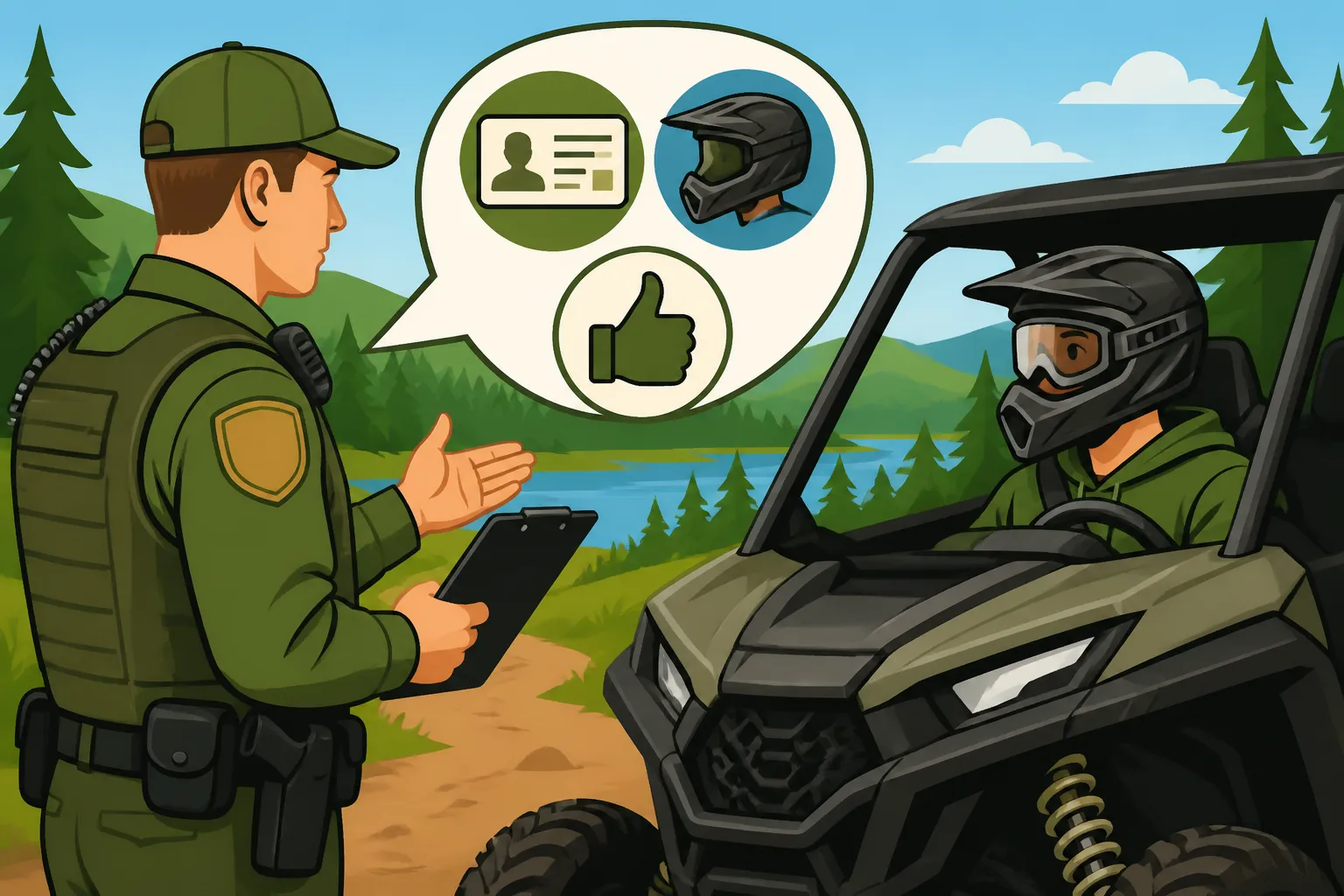
A warden’s presence is part of their broader mission of [Warden Enforcement on Wisconsin Routes] and trails. They're ensuring everyone's playing by the rules. They'll typically introduce themselves, explain why they've stopped you, and then begin asking for your documents: registration, safety certificate, and non-resident trail pass if applicable. Answer their questions clearly and truthfully. If you have any questions, ask them politely. This isn't the time for arguments or debates; cooperation is key to a swift and pleasant interaction.
Incident-Related Inquiries
Sometimes, a warden might stop you due to an observed violation, or as part of an investigation into an incident. This could range from witnessing what they perceive as [Wisconsin Penalties for Reckless Riding], to investigating a report of [Wisconsin Trespass Rules Along Routes], or even responding to an ATV crash. If you've been involved in a collision, understanding [Wisconsin ATV Crash Reporting] is vital, as there are specific steps you must take. In these more serious situations, the warden's questions will be more detailed and probing.
If you believe you are being unjustly accused, remain polite and cooperative, but understand that you have the right to decline to answer questions that could incriminate you beyond providing your basic identification. If you are issued a citation, accept it without arguing. You always have the right to contest it in court, which is the proper venue for such disagreements, not the side of a trail. For any subsequent legal processes, having clear records and possibly even legal forms from a resource like LawDepot could be helpful in organizing your information.
The Importance of Knowing Local Ordinances
It's easy to focus on state laws, but many towns and counties in Wisconsin have their own specific rules for ATV and UTV use, especially concerning designated road routes. A warden, or even local law enforcement, can enforce these [Municipal Ordinances Wisconsin Riders Must Read]. These local rules can vary wildly and might include specific [Municipal Hours of Operation for ATVs], speed limits, or even unique [Municipal Insurance Requirements in Wisconsin] beyond state minimums.
Before you plan a trip to a new area, it's always a good idea to do a little homework. Websites of local DNR offices, county sheriff departments, or town halls can often provide details. Sometimes, finding these ordinances requires a bit of digging, but resources like [Finding a Wisconsin Town's ATV Ordinance] can help point you in the right direction. Being caught unaware of a local rule is no excuse, and wardens will expect you to be informed. Ignorance of the law, whether state or local, generally won't save you from a citation.
Staying Prepared and Avoiding Issues
The best way to handle an encounter with a Wisconsin warden is to be fully prepared before you even leave your driveway. A little planning goes a long way in ensuring your ride is enjoyable and free of legal complications.
Pre-Ride Checklist
Developing a quick pre-ride checklist can save you a lot of headache. Before every ride, take a few minutes to confirm you have all the necessary documentation with you. This means checking that your ATV or UTV registration is current, you have your ATV/UTV safety certificate (if required), and if you're an out-of-state rider, that your non-resident trail pass is properly displayed.
Beyond paperwork, quickly check your machine's condition: ensure your lights are working, your exhaust isn't too loud, and your spark arrestor is in place. Knowing your intended route is also crucial. Reviewing a map or GPS tracks before you head out, as part of [Planning a Wisconsin Riding Trip], means you're less likely to accidentally wander onto closed trails or private land, which could lead to an unwanted interaction with a warden.
Digital Versus Physical Documentation
In today's digital age, many of us keep important documents on our phones. While a digital copy of your safety certificate or even a picture of your registration card might be accepted by a warden in a pinch, it's always safest to carry physical copies of all essential documents. Technology fails, batteries die, and cell service in the Northwoods can be notoriously spotty. Having the actual paper card in a waterproof pouch is the most reliable method.
Always make sure your registration card is kept safely with the machine, perhaps in a glove box or watertight compartment. [Keeping the Registration Card With the Machine] is not just convenient for you; it's what wardens expect. For your own peace of mind, you might consider scanning all your important documents—registration, safety certificate, bill of sale—and saving them securely in a cloud storage system or using a secure document service like LawDepot for backup. That way, if anything is lost, you have a digital copy ready to access.
Knowing Your Rights and Responsibilities
When interacting with a warden, it's important to remember that you have both rights and responsibilities. Your responsibility is to comply with the law, provide required identification and documents, and cooperate with reasonable requests. Your rights include being treated respectfully, asking questions for clarification, and remaining silent if you believe your answers could incriminate you, beyond providing required identifying information.
If you ever feel that a warden has acted improperly, or if you receive a citation you believe is unjust, handle the situation calmly on the scene. Make a mental note of the details, including the warden's name or badge number. Then, follow the proper channels to address your concerns, which might involve contacting the DNR regional office or seeking legal counsel. Attempting to argue or become confrontational on the trail is rarely productive and can escalate the situation unnecessarily.
Here's a quick reference table for what a Wisconsin Warden typically looks for:
| Item Requested | Purpose | Required For | Where to Keep It (Best Practice) |
|---|---|---|---|
| ATV/UTV Registration Card | Proves machine is legally registered for use. | All machines on public land/routes. | Waterproof pouch with machine, or on rider. |
| Current Registration Decals | Visual proof of active registration. | All machines on public land/routes. | Affixed to machine in visible, designated areas. |
| ATV/UTV Safety Certificate | Proves operator has completed required safety training. | Operators born on or after Jan 1, 1988 (all ages for UTVs). | Waterproof pouch on rider. |
| Non-Resident Trail Pass | Required for out-of-state registered machines on WI public trails. | Non-resident machines on WI public trails. | Affixed to machine, clearly visible. |
| Driver's License/State ID | Verifies identity and age. | All operators. | Wallet or waterproof pouch on rider. |
| Bill of Sale (or other ownership proof) | Verifies ownership, especially for recently purchased machines. | Sometimes requested if ownership is unclear. | Waterproof pouch, or secure digital copy. |
| Machine Operational Compliance | Ensures machine meets safety standards (lights, exhaust, spark arrester). | All machines on public land/routes. | Ensure machine is properly maintained. |
| Helmet (for specific riders/situations) | Ensures compliance with age-based helmet laws. | Riders/passengers under 18, and all riders on road routes. | Worn or carried with rider. |
Disclaimer
This article is for general informational purposes only and does not constitute professional advice. Laws, prices and regulations vary by location and change over time. Consult a qualified professional for guidance on your specific situation.