Insurance on a Machine You Borrowed
Picture this: You’ve just gotten the call from a buddy up north in Arbor Vitae or Eagle River. They’ve got an extra side-by-side, maybe a Polaris Ranger or a Can-Am Defender, and they're inviting you to join them for a weekend on the incredible trails around Vilas County. Sounds amazing, right? But as you load your gear into the truck, a little voice whispers: "What happens if something goes wrong on a machine that isn't yours?" This guide is all about navigating the tricky waters of insurance when you borrow an ATV or UTV in Wisconsin, so you can enjoy your ride with peace of mind, not lingering doubt.
The "What If" Scenario: Understanding Liability When Borrowing
It’s a natural assumption to think, "Oh, my buddy owns it, so their insurance covers everything." While that’s often the case, it’s not always as straightforward as we’d like to believe. When you take the keys to a borrowed off-road machine, you’re also taking on a certain level of responsibility.
Whose Insurance Responds First?
Generally speaking, when an ATV or UTV is involved in an incident, the owner's insurance policy is considered "primary." This means their policy is the first one that would be expected to respond to any claims for damage to the machine itself, or for injuries and property damage you might cause to others while operating it. Think of it like a safety net already cast over the machine. Most dedicated ATV/UTV insurance policies are structured to cover not just the owner, but also anyone operating the machine with the owner's express permission.
However, the depth and breadth of that safety net can vary wildly. Some owners might have comprehensive coverage, including collision, comprehensive, and robust liability limits. Others might carry only the bare minimum liability required, or perhaps no dedicated ATV insurance at all if they believe their homeowners policy covers it (a common misconception we'll dive into shortly). It’s absolutely critical to understand that if the owner's policy has low liability limits, and you cause a significant accident, those limits could be quickly exhausted, leaving a gap that someone else might have to fill.
Your Role as the Borrower
As the person behind the handlebars or steering wheel, you, the borrower, also carry a significant weight of potential liability. Even if the owner’s insurance is primary, if you were negligent in operating the machine and caused an accident, you could still be held personally responsible. Imagine you're riding too fast on a blind corner near a county forest trail system, you lose control, and you plow into a mailbox or, worse, another rider. Even if the owner's liability coverage pays out for the initial damages, if those damages exceed the policy limits, the injured party or property owner could come after you directly for the remaining costs.
Many people wonder if their own personal insurance policies, like their auto insurance or homeowners insurance, would kick in. This is where it gets particularly tricky, and often, disappointing. While your personal auto policy covers you in a car, it almost universally excludes off-road vehicles like ATVs and UTVs. Your homeowners policy, which might offer some liability coverage for incidents on your own property, almost always has an explicit exclusion for motorized vehicles used off your property. This means you could be left with no backup if the owner's coverage is insufficient or non-existent. It's a sobering thought, but one that demands attention before you hit the trail.
Types of Coverage That Might Apply
Understanding the different types of insurance coverage can help you ask the right questions and assess your risk when borrowing an ATV or UTV. It’s not just about if there's coverage, but what kind and how much.
The Owner's ATV/UTV Policy
If the owner of the machine has a dedicated ATV/UTV insurance policy, that's your first line of defense. These policies are specifically designed for the unique risks of off-road riding. They typically include several key components:
- Collision Coverage: This pays for damage to the borrowed machine itself if it collides with another vehicle, object, or overturns. If you ding up your friend's new side-by-side on a rocky section of the [Black River State Forest Trail System], this is the coverage that would help repair it, after the deductible is paid.
- Comprehensive Coverage: This protects the machine from non-collision incidents like theft, fire, vandalism, or damage from natural disasters (like a tree falling on it while parked). It’s invaluable, especially for more expensive machines. [What an Insurer Wants After a Wisconsin Theft] provides insight into handling claims.
- Liability Coverage: This is perhaps the most crucial for you as a borrower. It covers property damage and bodily injury you might accidentally cause to other people or their property while operating the ATV/UTV. For instance, if you accidentally run over a fence on private land or cause an injury to another rider on a busy trail near Hayward, this coverage would step in. The limits are incredibly important here; a basic policy might have limits that are easily surpassed by serious injuries or significant property damage.
It's vital to remember that the owner's policy is tailored to their needs, and those might not align with the potential risks you face as a borrower. Some owners might opt for minimal liability to save on premiums, especially if they primarily ride on their own land. This is why a frank discussion about the owner's policy details is so important.
Homeowners and Auto Policies: Gaps and Exclusions
This is where many people get caught off guard. There’s a widespread misunderstanding that a standard homeowners insurance policy will extend to cover ATVs or UTVs, especially if they're used recreationally. For the most part, this is simply not true. Most homeowners policies have very clear exclusions for motorized vehicles, particularly when they are operated off the insured property. While some might offer extremely limited liability coverage for a specific type of small, low-powered vehicle used only on your own land, it almost never applies to a borrowed ATV being ridden on Wisconsin trails or even a friend’s property up north. [Does a Homeowners Policy Cover a Wisconsin Quad?] goes into more detail on this.
Similarly, your personal auto insurance policy is designed for vehicles that operate on public roads, such as cars, trucks, and motorcycles. It does not extend to cover ATVs or UTVs, which are considered distinct types of recreational vehicles. You simply cannot rely on your auto insurance to protect you if you have an accident on a borrowed quad. This leaves a significant gap in coverage for borrowers if the owner’s dedicated ATV policy is insufficient or non-existent. In some cases, a personal umbrella policy might offer an additional layer of liability protection, but these policies typically kick in only after the primary underlying insurance (like the owner's ATV liability) has been exhausted. They aren't standalone policies for off-road vehicles.
Rental vs. Borrowed Machines
It's helpful to quickly differentiate between renting and borrowing, as the insurance implications are quite different. When you rent an ATV or UTV from a commercial outfitter, say in St. Germain or Minocqua, the rental agreement almost always includes or offers mandatory insurance options. These options are specifically designed to cover the rental period and often provide clear guidelines on collision damage waivers and liability coverage. You sign a contract acknowledging these terms.
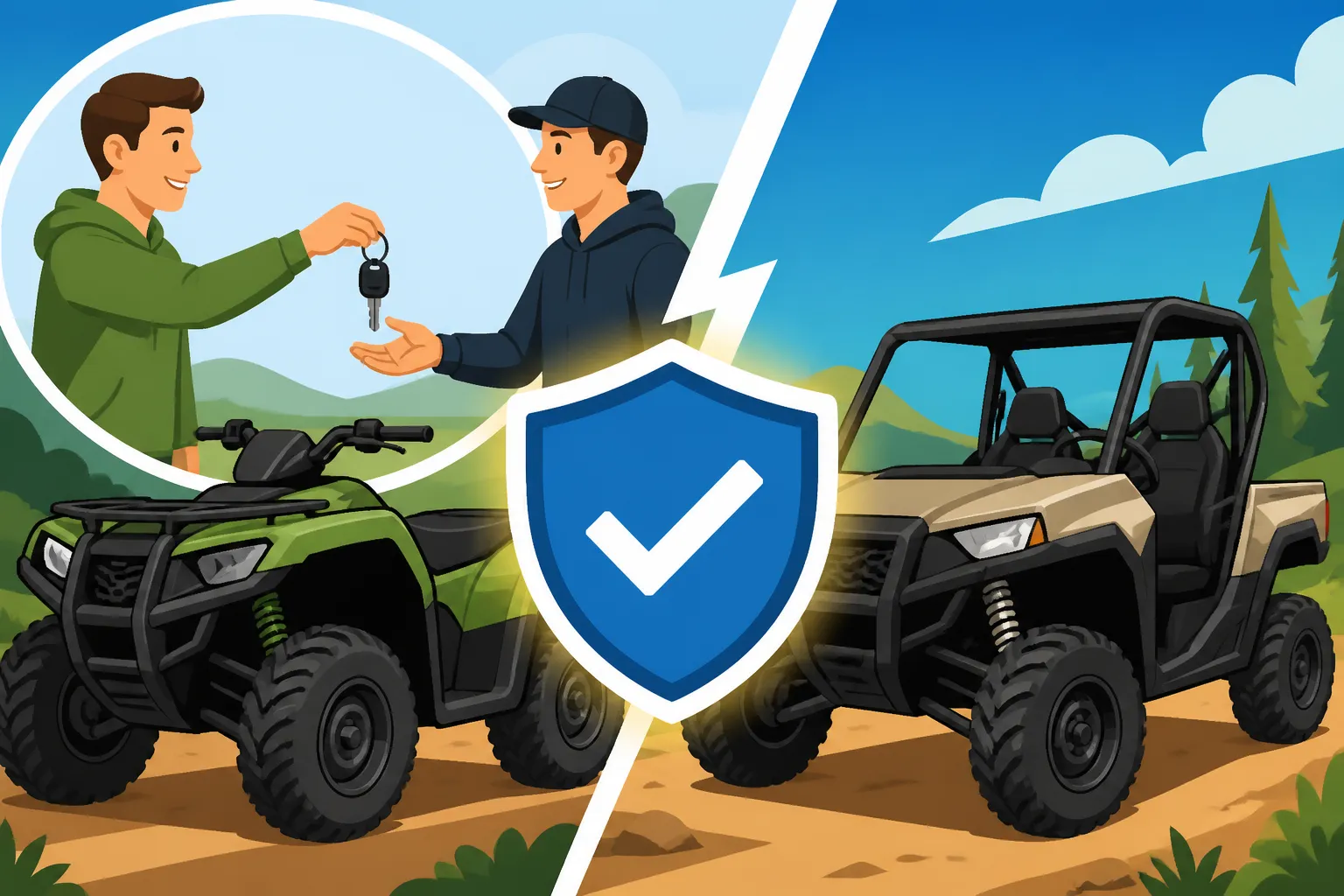
When you borrow a machine from a friend or family member, there's typically no formal contract. This informal arrangement, while convenient and friendly, is precisely why the insurance situation becomes murkier. There's no built-in, mandatory insurance option, and the discussion about what-ifs often feels awkward. This distinction underscores why taking proactive steps when borrowing is so crucial, as you won't have the clear protections that come with a rental agreement.
Protecting Yourself and the Owner When Borrowing
Borrowing an ATV or UTV doesn't have to be a gamble. With a few proactive steps and clear communication, you can greatly reduce the risk for both yourself and the generous owner.
The Importance of a Written Agreement
Even with the closest friends or family, a simple, written agreement can prevent misunderstandings and heartache down the road. It might feel a bit formal for a casual loan, but trust me, it’s far less awkward than sorting out who pays for a bent frame or a broken axle after an incident. This agreement doesn't need to be complex; it just needs to clarify a few key points.
A good agreement for borrowing an ATV or UTV should ideally address:
- Responsibility for Damage: Who is responsible for damage to the machine itself if it occurs while you're operating it? Will you pay the deductible, or the full repair cost if there's no insurance?
- Liability for Third-Party Damage/Injury: Acknowledgment of who is responsible if you cause harm to others or their property.
- Deductibles: Clearly state who will cover the deductible if a claim is filed against the owner's policy.
- Insurance Information: Include details about the owner's insurance policy, including the provider and policy number, so you know exactly what coverage is in place.
- Conditions of Use: Any specific rules for riding (e.g., no riding after dark, sticking to specific trails).
Resources like LawDepot can be incredibly helpful for drafting simple, customizable legal documents such as a loan agreement for personal property. Utilizing such a template can make the process easy and ensure all crucial points are covered without needing to start from scratch. This creates a transparent understanding, turning potential disputes into clear responsibilities.
Steps to Take Before You Ride
Before you even think about putting on your helmet and hitting the trails, a few essential conversations and checks are in order. These steps are your personal risk management strategy:
- Ask About the Owner's Insurance: This is the absolute first step. Don’t be shy! Ask your friend or family member directly about their ATV/UTV insurance policy. Specifically, inquire about the type of coverage they have (collision, comprehensive, liability) and, crucially, their liability limits. If they are hesitant or unsure, encourage them to look up their policy details. If they only carry minimum liability, you need to understand that your personal exposure could be much higher.
- Understand the Deductible: Every insurance policy comes with a deductible. This is the amount the owner must pay out of pocket before their insurance coverage kicks in. Discuss with the owner who would be responsible for paying this deductible if you cause damage to the machine or if a claim is filed. Getting this clear upfront avoids a very uncomfortable conversation later.
- Consider Your Own Exposure: Without a dedicated ATV policy of your own, and with your homeowners and auto policies likely offering no protection, you could be personally liable for significant costs if things go sideways. This is especially true if the owner’s policy is insufficient or if they have no coverage at all. It might be worth a call to your own insurance agent to see if any rider or umbrella policy you have might offer some contingent coverage, though this is rare for borrowed off-road vehicles.
- Confirm Registration and Trail Passes: While not directly insurance, an unregistered machine can lead to fines, and if the machine isn't legal, it could complicate any insurance claim. Always ensure the machine has current registration. Your friend will likely remind you about [Keeping the Registration Card With the Machine] and that you should [Do You Carry Papers on a Wisconsin Trail?] while out riding. A warden might stop you and [What a Wisconsin Warden Asks a Rider For] will include proof of registration and potentially a trail pass. Also, confirm if you need a [Wisconsin Non-Resident Trail Pass Cost] if you're from out of state.
- Inspect the Machine: Before you ride, do a quick visual inspection. Check the tires, brakes, lights, and general condition. If you notice pre-existing damage, point it out to the owner and perhaps even take a photo. This prevents disputes later about who caused what damage.
What If the Owner Has No Insurance?
This is a scenario that carries significant risk for you as the borrower. Many people, especially those who primarily use their ATV or UTV on their own private land, might not carry dedicated insurance, believing it's not necessary. While [Registering a Machine That Never Leaves Your Land] might not require public-use registration, it doesn't exempt them from potential liability if that machine somehow causes damage or injury, even on private property. If you borrow an uninsured machine and cause an accident, you are opening yourself up to substantial personal liability.
Without the owner's insurance as the primary responder, any damages or injuries you cause could fall directly on your shoulders. This means your personal assets – savings, future earnings, even your home – could be at risk if a lawsuit arises. Moreover, riding an unregistered ATV on public trails can lead to [Penalties for an Unregistered ATV in Wisconsin], which would be your responsibility, regardless of who owns the machine. This is a crucial conversation to have: if the owner confirms they have no insurance, you need to seriously weigh the personal financial risk before accepting the offer to ride. Sometimes, saying "no thanks" is the wisest choice. Even if it's a friend's machine, the legal and financial consequences can be severe.
What Happens After an Accident?
Even with the best precautions and intentions, accidents can happen. Knowing what steps to take immediately afterward can make a significant difference in how the situation is resolved and minimize further stress or liability.
Reporting the Incident
The immediate aftermath of an accident can be chaotic, but clearheaded action is crucial.
- Safety First: Ensure everyone involved is safe and tend to any injuries. Call for emergency services if needed.
- Notify the Owner Immediately: Your very first call, after ensuring safety, should be to the owner of the ATV/UTV. They need to be aware of what happened as soon as possible, as it's their machine and their insurance policy that will likely be involved.
- Contact Law Enforcement/Wardens (If Applicable): If the accident involved another party, significant property damage, or injuries, you should contact local law enforcement or a Wisconsin DNR warden. They will typically create an incident report, which can be invaluable for insurance claims. Remember [Wisconsin ATV Crash Reporting] rules. Even if it feels minor, an official record can protect you later.
- Gather Information: If other parties were involved, collect their names, contact information, and insurance details. Take photos of the accident scene, including damage to the machine, any other vehicles or property involved, and relevant surroundings (e.g., trail conditions, signage). Don't admit fault at the scene.
- Notify the Insurance Companies: The owner will typically file the initial claim with their ATV/UTV insurance provider. You might also need to notify your own insurance company (auto or homeowners) as a precautionary measure, even if you don't expect coverage, just to inform them of the incident.
The Claim Process and Deductibles
Once the incident is reported, the insurance claim process begins. The owner's insurance company will investigate the accident, review reports, and assess damages.
- Deductible: As discussed earlier, the owner's policy will have a deductible for collision or comprehensive claims. If the damage to the borrowed machine is covered, this amount will need to be paid before the insurance company covers the rest. This is where your pre-ride agreement with the owner becomes critical. Was it agreed that you, as the borrower, would cover the deductible if you caused the damage? Or did the owner agree to absorb that cost as part of lending the machine? Without a clear understanding, this can become a point of contention.
- Liability Claims: If you caused damage to another person's property or injuries to another individual, the owner's liability coverage would be triggered. The insurance company would handle negotiations and payouts up to the policy limits. However, if the damages exceed those limits, the remaining balance could be sought from you personally.
Potential for Legal Action
Unfortunately, if damages are severe, injuries are significant, or if there is no insurance coverage (or insufficient coverage), the situation can escalate to legal action.
- Against the Borrower: If you were deemed negligent in the accident, and insurance payouts don't cover all the costs, the injured party or property owner could sue you directly to recover their losses. This is why understanding your personal liability is so crucial.
- Against the Owner (and Borrower): In some cases, if the owner knowingly lent an unsafe machine, or if there's a question of "negligent entrustment," they could also face legal action, potentially alongside you. This dual liability highlights the importance of open communication and proper machine maintenance.
Navigating legal proceedings can be complex, costly, and emotionally draining. It reinforces the idea that an ounce of prevention (clear communication, a simple agreement, and understanding insurance) is worth a pound of cure.
Summary of Borrowed ATV/UTV Insurance Scenarios
Here's a quick look at how different scenarios might play out when you borrow a machine in Wisconsin:
| Scenario | Owner Has Dedicated ATV/UTV Insurance | Owner Has NO Dedicated ATV/UTV Insurance |
|---|---|---|
| Damage to Borrowed Machine (Collision) | Owner's Collision covers (after deductible) | Borrower (You) potentially liable for full repair costs |
| Damage to Borrowed Machine (Theft/Fire) | Owner's Comprehensive covers (after deductible) | Owner absorbs loss; Borrower has no direct role |
| Injury/Damage to Third Party | Owner's Liability covers (up to limits) | Borrower (You) personally liable for all costs |
| Your Homeowners/Auto Policy | Almost always no coverage for off-road use | Almost always no coverage for off-road use |
| Best Practice | Discuss deductible, agree on responsibilities | AVOID BORROWING or understand significant personal risk |
This article is for general informational purposes only and does not constitute professional advice. Laws, prices and regulations vary by location and change over time. Consult a qualified professional for guidance on your specific situation.