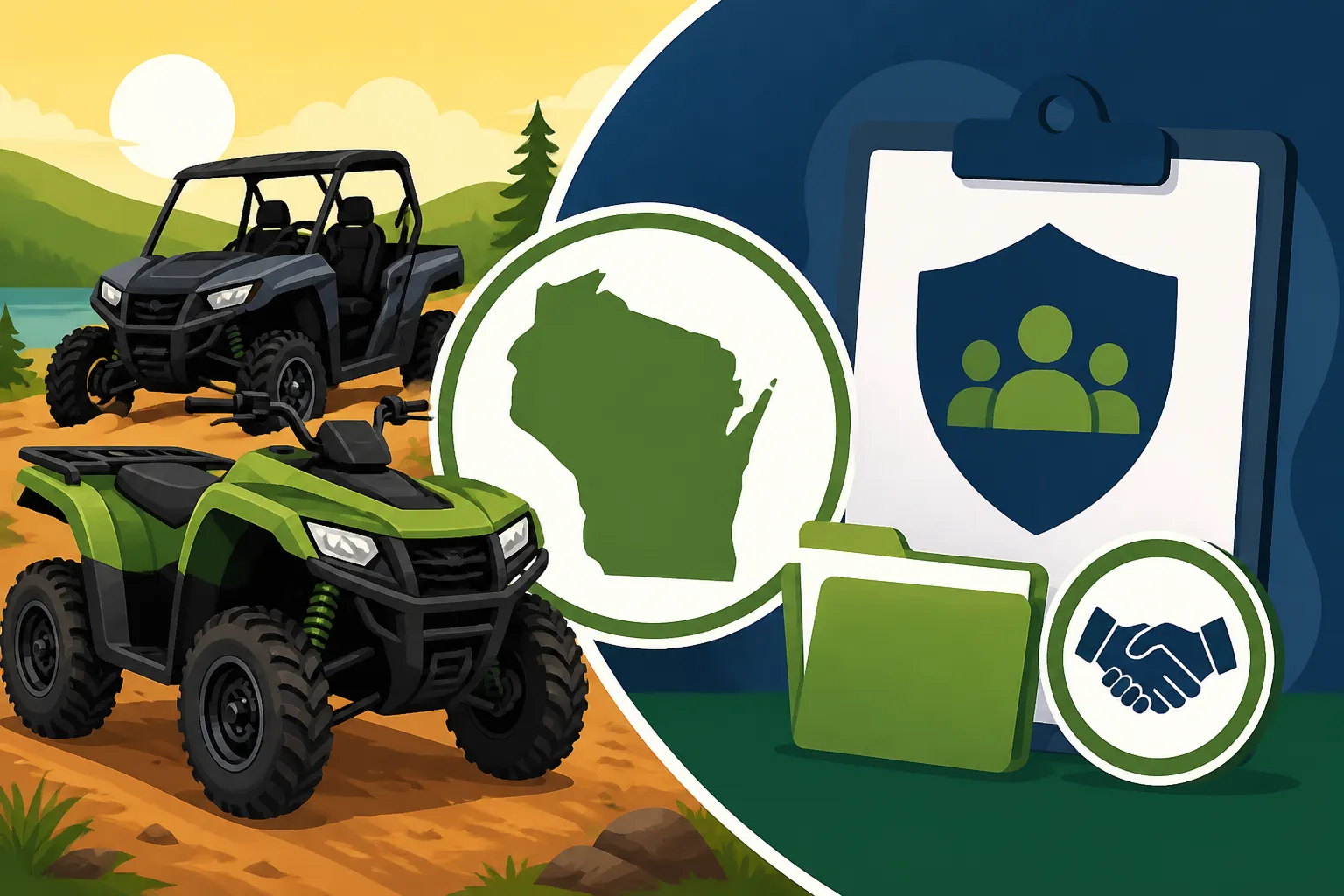
Registering an ATV Under a Wisconsin LLC
Navigating the world of ATV and UTV ownership in Wisconsin can sometimes feel like a maze, especially when you start thinking about more complex financial or legal strategies. Many of us are small business owners, farmers, or simply looking to protect our personal assets, and the question often arises: "Can I register my ATV under my Wisconsin LLC, and what exactly does that entail?" This guide is here to untangle that question, providing a clear roadmap for how to manage your ATV's registration when a business entity is involved.
Why Consider an LLC for Your Wisconsin ATV?
For many Wisconsin ATV and UTV owners, the idea of registering their machine under a Limited Liability Company (LLC) might seem like an extra step. However, there are some very compelling reasons why this strategy makes a lot of sense, particularly for those who use their machines for work, or who are simply prudent about personal asset protection. It's not just about paperwork; it's about peace of mind and smart planning.
Asset Protection and Liability Concerns
One of the biggest draws of forming an LLC is the protection it offers your personal assets. When you operate an ATV solely in your personal name, you are personally liable for any accidents or incidents that occur. Imagine a scenario where, despite your best efforts and safe riding practices, an unfortunate accident happens on the trail, involving another rider or even property damage. If you are sued, your personal assets – your home, your savings, your retirement – could be at risk.
An LLC creates a legal barrier between your personal finances and the assets and liabilities of the business. If the ATV is owned and registered by the LLC, then generally, any liability arising from its operation would fall to the LLC, protecting your personal wealth. This "corporate veil" is a crucial benefit, especially in a world where lawsuits can be a harsh reality. It's a layer of insulation that many responsible business owners seek to establish, even for what might seem like a recreational vehicle. This protection extends to situations where the ATV is being used for legitimate business purposes, but also offers a measure of security even if it's primarily for recreation, as long as proper formalities are observed.
Business Use and Tax Implications
Beyond personal asset protection, there's a strong case for an LLC when your ATV or UTV truly serves a business purpose. Think about Wisconsin farmers who use their side-by-sides to check fences, haul feed, or monitor crops across vast acreage. Consider a small guiding service that uses ATVs to transport clients to remote fishing spots, or a property management company that plows driveways and clears paths for clients in the snowy Wisconsin winters. In these scenarios, the ATV isn't just a toy; it's a vital piece of business equipment.
When an ATV is genuinely used for business operations and owned by an LLC, it opens the door to potential tax implications that can be beneficial. Business expenses, including the purchase, maintenance, fuel, and even insurance for the ATV, might be deductible against the business's income. This can lead to significant tax savings, which is always a welcome outcome for any entrepreneur. However, it's absolutely crucial to distinguish between legitimate business use and purely recreational use. The IRS has strict rules about what constitutes a business expense, and mixing personal and business use without clear lines can negate the benefits. Always consult with a qualified tax professional to understand the specific implications for your business and to ensure you are complying with all tax laws. They can help you structure your operations and record-keeping to maximize legitimate deductions while staying on the right side of the law.
Setting Up Your Wisconsin LLC (and How it Relates to Your ATV)
Before you can even think about registering your ATV under an LLC, you need to establish the LLC itself. This process involves a few key steps that lay the legal groundwork for your business, and ultimately, for your machine's ownership. It's not overly complicated, but it does require attention to detail to ensure everything is set up correctly in the Badger State.
The Steps to Form a Wisconsin LLC
Forming an LLC in Wisconsin typically begins with choosing a unique name for your business that complies with state regulations. You'll want to make sure the name isn't already in use by another entity. Once you have a name, the primary step is filing your "Articles of Organization" with the Wisconsin Department of Financial Institutions (DFI). This document officially creates your LLC. It's a relatively straightforward form, but it's important to complete it accurately.
Beyond filing the Articles, a critical, often overlooked, internal document is your LLC Operating Agreement. While Wisconsin law doesn't strictly require an operating agreement for single-member LLCs, it is highly recommended for all LLCs, regardless of the number of members. This agreement outlines the ownership structure, management responsibilities, how profits and losses are distributed, and what happens if a member leaves or the business is dissolved. It's essentially the rulebook for your LLC. Tools like LawDepot can be incredibly helpful for streamlining this process, offering user-friendly templates and guidance to draft your Articles of Organization and Operating Agreement correctly, ensuring you don't miss any vital details when setting up your business entity. Having these documents in order is fundamental to the legitimacy and proper functioning of your LLC.
Transferring ATV Ownership to the LLC
Once your Wisconsin LLC is officially formed and you have your operating agreement in place, the next step is to transfer ownership of your ATV from your personal name to the LLC. This might sound intimidating, but it's a procedural step that formally recognizes the LLC as the new legal owner of the machine. Even though Wisconsin does not issue titles for ATVs, which might make you think the transfer process is less formal, it's still crucial to document this change of ownership clearly and thoroughly.
The primary document for this transfer will be a Bill of Sale. You, as an individual, will "sell" the ATV to your LLC. The Bill of Sale should clearly state your name as the seller, the LLC's name as the buyer, the ATV's Vehicle Identification Number (VIN), make, model, and year, and the sale price (which can be $1 if it's an internal transfer, but it's important to document something). This document serves as proof that the LLC now owns the asset. While [What a Wisconsin ATV Bill of Sale Should Carry] details what goes into such a document, remember this one is an internal transfer. This formal transfer is essential for maintaining the separation between your personal assets and the LLC's assets, which is the cornerstone of the liability protection you're seeking.
Registering the ATV Under the LLC in Wisconsin
After your LLC is established and the ATV's ownership has been formally transferred to it, the final piece of the puzzle is to properly register the machine with the Wisconsin Department of Natural Resources (DNR) under the LLC's name. This process has some nuances, mainly due to Wisconsin's unique approach to ATV ownership documentation.
Wisconsin's Unique ATV Registration System
For those new to Wisconsin, or even long-time residents who haven't delved into the specifics, it's important to remember that Wisconsin operates a non-titling system for ATVs and UTVs. This means that unlike cars or even boats in some states, there's no official paper "title" issued by the state that proves ownership. Instead, the primary proof of ownership is often a combination of the bill of sale, a previous registration card, and the machine's VIN. As explained in [Why Wisconsin Does Not Title ATVs], this system places more emphasis on the registration process itself as the key identifier for who legally operates a machine.
Therefore, when you're registering an ATV under your LLC, the registration card itself becomes the crucial document. It will list your LLC as the registered owner, associating the machine directly with your business entity in the state's records. This is why accurately completing the registration application is paramount. Any discrepancies could lead to headaches down the line if there's ever a question about ownership or liability. The registration effectively serves as the official link between your LLC and the ATV in the eyes of the Wisconsin DNR and law enforcement.
The Registration Process for an LLC-Owned Machine
Registering an ATV under your LLC in Wisconsin follows a similar path to registering it personally, but with one critical difference: the registrant will be your LLC, not you as an individual. When you submit your application, whether online through the Wisconsin DNR GoWild system or in person at a registration agent, you will enter the LLC's full legal name as the owner. The LLC's address will be used, and if your LLC has an Employer Identification Number (EIN) – which it almost certainly will if it's operating as a business – that number will be used for identification purposes, rather than your personal Social Security Number.
You'll need to specify whether the machine will be registered for [Public Use Versus Private Use in Wisconsin]. If your LLC uses the ATV for any purpose on public trails, routes, or lands (e.g., for a guiding business, or just recreational use by LLC members), you'll need the public use registration, which usually expires on [Wisconsin Public Use Registrations Expire March 31] and needs annual renewal. If it's strictly for use on private land owned or leased by the LLC, a private use registration might suffice, but it’s critical to understand the limitations of each. The application will ask for the ATV's Vehicle Identification Number (VIN), make, model, and year. For a full breakdown of the general process, you can refer to [Registering an ATV in Wisconsin]. Ensuring that all information matches the LLC's official records is vital for a smooth process.
Ongoing Compliance and Documentation
Once your ATV is officially registered under your Wisconsin LLC, the work isn't entirely over. Ongoing compliance and meticulous documentation are crucial to maintain the legal integrity of your LLC and ensure you continue to reap the benefits of its structure. The registration card you receive is not just a piece of paper; it's the official record of your machine's legal status. It is absolutely essential that this registration card, or a legible copy, is carried with the ATV whenever it is being operated, particularly on public trails or routes. As detailed in [Keeping the Registration Card With the Machine], wardens or law enforcement may ask to see it, and not having it can lead to fines.
Beyond the registration card, it's important to keep all your LLC records up-to-date. This includes your operating agreement, any amendments, and financial records that clearly show the ATV as an LLC asset. If the LLC's address changes, or if there are any changes to the machine (like a different engine, though less common for ATVs), you need to update those records with the Wisconsin DNR promptly. This diligence ensures that the legal separation between you and your business remains robust, safeguarding the asset protection benefits you sought by forming the LLC in the first place. Consistency in all your documentation helps solidify the LLC's legitimacy. You can find more comprehensive information on the general DNR process in [Wisconsin DNR ATV Registration Explained].
Important Considerations and Potential Pitfalls
While registering your ATV under a Wisconsin LLC offers significant advantages, it's not a set-it-and-forget-it solution. There are critical considerations and potential pitfalls that every owner should be aware of to ensure the LLC provides the intended protection and benefits without creating unforeseen problems. It's about understanding the full scope of responsibility that comes with business ownership.
Insurance for an LLC-Owned ATV
This is a big one, and it's where many people can inadvertently trip up. If your ATV is owned by your LLC, your standard personal ATV insurance policy will almost certainly not cover it. Personal policies are designed for individuals and their recreational use, not for business assets or business-related activities. Relying on a personal policy for an LLC-owned machine could leave you completely uninsured in the event of an accident, negating all the liability protection your LLC was supposed to provide.
Instead, you will need to secure a commercial general liability policy or a specialized business vehicle insurance policy that specifically covers the ATV as an LLC asset. This type of insurance is designed to protect your business from claims of bodily injury or property damage that might occur during the operation of the ATV, whether it's for business use or even recreational use by an LLC member. The cost of [Wisconsin ATV Insurance Cost] can vary significantly between personal and commercial policies, so it's vital to shop around and ensure you have adequate coverage for the LLC's specific needs. Talk to an insurance agent who specializes in commercial policies to make sure your LLC and its assets are properly protected.
Piercing the Corporate Veil and Maintaining Formality
The "corporate veil" is the legal separation between an LLC and its owners, protecting personal assets from business liabilities. However, this veil isn't impenetrable. If you fail to treat your LLC as a separate legal entity, a court could decide to "pierce the corporate veil," holding you personally liable for the LLC's debts and obligations. This completely undermines the primary reason many people form an LLC.
To avoid this, it's crucial to maintain strict formality and separation. This means having separate bank accounts for the LLC, avoiding commingling personal and business funds, keeping detailed records of all LLC activities, and signing documents in the LLC's name (e.g., "John Smith, Member of [Your LLC Name], LLC"). Don't treat the LLC's assets (like the ATV) as your personal property. Documenting key decisions, even for a single-member LLC, is important. LawDepot can assist in creating templates for minutes or resolutions that help maintain these essential corporate formalities, ensuring that your LLC's legal standing is always robust and defensible. Consistency and diligence are your best defenses against piercing the corporate veil.
The Montana LLC Route and What Wisconsin Owners Risk
You might have heard whispers about using a "Montana LLC" to register vehicles, particularly high-value ones, to avoid sales tax or obtain certain benefits. While this strategy primarily applies to titled vehicles like luxury cars and RVs, it's sometimes mentioned in the context of other vehicles. However, for a non-titled machine like an ATV in Wisconsin, and especially for a Wisconsin resident, the Montana LLC route is far less relevant and carries significant risks.
Wisconsin is an origin-based sales tax state, meaning sales tax is typically paid where the transaction occurs, or where the vehicle is registered if it's brought into the state. Since Wisconsin doesn't title ATVs, the primary legal connection is the physical location and use of the machine, and the residency of its operator. Attempting to register a Wisconsin-used ATV under a Montana LLC while you are a Wisconsin resident and the machine primarily operates here could be seen as an attempt to evade Wisconsin sales tax or registration fees. This could lead to penalties, back taxes, and legal trouble, as thoroughly discussed in [The Montana LLC Route and What Wisconsin Owners Risk]. For a Wisconsin-based ATV and owner, forming a Wisconsin LLC is the straightforward, legally compliant, and far safer approach, aligning with state regulations and providing clear asset protection within the jurisdiction where your machine operates. The minimal, if any, perceived advantages of an out-of-state LLC for a Wisconsin ATV are heavily outweighed by the potential legal and financial headaches.
| Feature / Consideration | Personal ATV Ownership | Wisconsin LLC ATV Ownership |
|---|---|---|
| Primary Owner | Individual | The LLC (a legal entity) |
| Liability Exposure | Personal assets at risk | LLC assets at risk, personal assets generally protected |
| Insurance Needs | Personal ATV insurance | Commercial/Business ATV insurance required |
| Tax Implications | Limited deductions (recreational) | Potential business expense deductions (if business use) |
| Registration Name | Individual's name | LLC's legal name |
| Proof of Ownership | Bill of sale, personal registration | Bill of sale (to LLC), LLC registration |
| Complexity | Simpler to set up initially | Requires LLC formation and ongoing compliance |
| Business Use | Less suitable for formal business operations | Ideal for legitimate business use |
| Financial Separation | None | Distinct financial separation |
Disclaimer
This article is for general informational purposes only and does not constitute professional advice. Laws, prices and regulations vary by location and change over time. Consult a qualified professional for guidance on your specific situation.