Why Montana Plates Get Noticed in Wisconsin
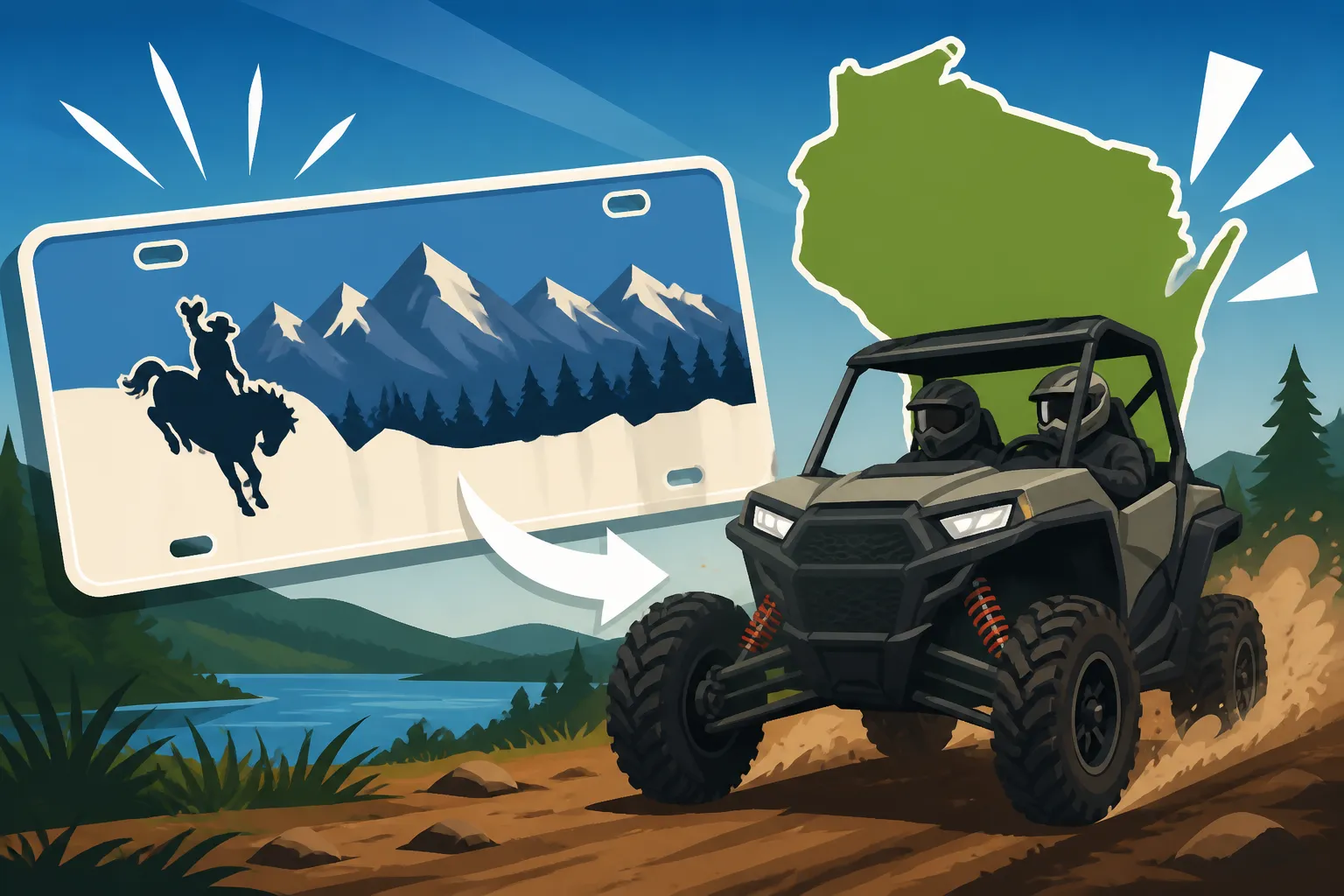
It’s a sight many of us have come across on the trails or even in a roadside parking lot: an ATV or, more commonly, a side-by-side with a distinctive yellow license plate from Montana. For Wisconsin riders, seeing these out-of-state tags on a machine clearly operating as if it belongs here can spark curiosity, confusion, and sometimes, a little suspicion. This guide is here to unravel the mystery behind those Montana plates, explain why they’re often noticed, and explore the legal intricacies and considerable risks involved for Wisconsin residents who might be tempted by such a setup.
The Lure of Montana LLCs for Wisconsin Riders
Let's be real, buying an ATV or a UTV, especially a top-of-the-line side-by-side, is a significant investment. We work hard for our money, and when there's talk of ways to save a few thousand dollars on a purchase, it's natural to at least listen. That's precisely why the "Montana LLC" strategy has gained traction among some off-road enthusiasts in states like Wisconsin.
What's the "Montana LLC" All About?
At its core, the Montana LLC (Limited Liability Company) strategy revolves around the fact that Montana is one of the few states that doesn't impose a statewide sales tax. This tax-friendly environment, combined with relatively straightforward LLC formation laws, makes it an attractive jurisdiction for purchasing high-value assets, from luxury cars and RVs to, yes, ATVs and UTVs. The idea is that a Wisconsin resident forms an LLC in Montana, and that Montana LLC then purchases and registers the machine. Because the LLC is a Montana entity, the argument goes, the purchase isn't subject to Wisconsin's sales tax, which can be a substantial chunk of change on a $20,000, $30,000, or even $40,000 UTV. The machine then carries Montana registration and license plates.
It sounds clever, right? You get your dream machine, legally owned by a Montana company you control, and you save thousands on sales tax. Plus, Montana plates are recognized nationwide, so theoretically, you can ride anywhere. It’s a loophole that appears to offer a significant financial advantage, particularly for those looking at the higher end of the off-road market where sales tax alone could fund a good portion of your riding gear or even a smaller secondary machine.
Why It Seems Attractive to Wisconsin Owners
Beyond the sales tax savings, there are other perceived benefits that draw Wisconsin owners to the Montana LLC route. For one, Montana’s registration fees can sometimes be lower than Wisconsin's, especially for certain types of vehicles. While this isn't usually the primary driver, every little bit helps. Another point of attraction, particularly for UTVs, is the perception of easier road legality. Some owners believe that having a Montana plate makes it simpler to operate their side-by-side on certain road routes or across public roadways, even if local Wisconsin ordinances might otherwise restrict it. The idea is that an out-of-state plate might fly under the radar or be assumed to have different operating privileges.
The convenience factor also plays a role. Setting up an LLC and handling the registration can often be done remotely, with various services simplifying the process for you. You sign a few documents, pay the fees, and soon enough, you have a Montana-registered machine. For someone who doesn’t want to deal with the intricacies of [Wisconsin Sales Tax on an ATV Purchase] or [County Sales Tax on a Wisconsin Machine], and is looking for a seemingly streamlined way to get their machine ready for the trails, this can look like an appealing option. Using a service that provides pre-made legal documents, like those available through LawDepot, might even make the initial setup seem deceptively simple, giving a false sense of security about its legality.
The Reality Check: Wisconsin's View on Out-of-State Registration
While the Montana LLC strategy might seem like a financial shortcut, Wisconsin's Department of Revenue (DOR) and Department of Natural Resources (DNR) have a very different perspective on how these machines should be handled, especially when they are owned and primarily operated by a Wisconsin resident within the state. The core issue boils down to residency, situs (where the vehicle is primarily kept and used), and the obligation to pay state taxes and adhere to local registration laws.
Residency Rules and Sales Tax Obligations
Wisconsin law is pretty clear: if you are a Wisconsin resident and your ATV or UTV is "situs" in Wisconsin—meaning it's primarily garaged, stored, and operated here—then it's generally subject to Wisconsin sales tax. Simply forming an LLC in Montana doesn't automatically change the residency of the actual owner or the physical location of the vehicle. The DOR looks at where the machine is actually used, not just where it's registered on paper. If your machine lives in your garage in Green Bay, rides the trails in Marinette County, and gets fueled up at a gas station in Eagle River, it's pretty clearly a Wisconsin machine in the eyes of the state.
The state views this as an attempt to evade sales and use tax. If you buy a machine out-of-state, whether in Montana or Illinois, and bring it into Wisconsin for use, you are generally required to pay Wisconsin's use tax, which is equivalent to the sales tax you would have paid if you bought it here. This applies even if you've already paid sales tax in another state, though Wisconsin often offers a credit for tax paid to another state if certain conditions are met. However, since Montana has no sales tax, there's no credit to claim, leaving the full Wisconsin use tax obligation on the table. This is a crucial detail many overlook, assuming the Montana registration magically makes them exempt.
The Risk of Unregistered or Improperly Registered Machines
Operating a machine that is technically "unregistered" in Wisconsin because it hasn't paid its sales tax or met other state requirements carries significant risks. [Penalties for an Unregistered ATV in Wisconsin] can be steep, ranging from fines to even the potential confiscation of your machine. Wisconsin wardens are highly attuned to these situations, especially given the rising popularity of UTVs and the increasing awareness of the Montana LLC workaround.
Here's how it often plays out: a warden stops a rider on a Wisconsin trail or road route, notices the Montana plate, and then begins to ask questions. If it becomes clear that the operator is a Wisconsin resident, the machine is primarily kept in Wisconsin, and there's no legitimate non-resident use case, then trouble brews. The DNR has the authority to investigate further, and it can involve coordination with the Department of Revenue. The consequence isn't just a simple ticket; it can lead to back payment of sales tax, plus substantial penalties and interest, which can quickly erase any perceived savings from the initial avoidance. In some cases, the penalties can be more than the original sales tax amount you were trying to avoid. It's a game of risk that rarely pays off in the long run.
When a Montana Plate Might Be Legit (and When It's Not)
It’s important to distinguish between legitimate out-of-state registrations and those intended to bypass Wisconsin law. Not every machine with a Montana plate on Wisconsin trails is breaking the rules. However, understanding the context is key to avoiding legal trouble.
Genuine Non-Resident Use Cases
There are, of course, perfectly legitimate reasons for an ATV or UTV with Montana plates to be operating in Wisconsin. Imagine a family from Billings, Montana, who loves to vacation in the Northwoods. They own a cabin near Eagle River, or maybe they just visit for a couple of weeks each year, bringing their side-by-side with them. Their machine is genuinely registered and primarily housed in Montana, and they’re simply visiting Wisconsin to enjoy our fantastic trail systems. In this scenario, their Montana registration is perfectly valid for their temporary use here.
Wisconsin law generally allows non-residents to operate their properly registered machines from their home state for recreational purposes. This is why you'll see plates from Minnesota, Michigan, Iowa, and other states on our trails all the time. The critical factor is that the machine is truly owned by a non-resident and is not primarily "situs" in Wisconsin. The intention and primary residence of the owner, along with the location where the machine is stored and used most of the year, are what matters. For these genuine visitors, [Wisconsin Registration for an Out-of-State Machine] is generally not required, provided they meet certain criteria like proper registration in their home state and often a Wisconsin trail pass.
The Legal Headaches and Practical Problems
For Wisconsin residents attempting to use the Montana LLC loophole, the legal headaches can be numerous and extend beyond just sales tax. For instance, what about insurance? Many insurance companies might be hesitant to fully cover a machine registered to a Montana LLC but primarily garaged and operated by a Wisconsin resident in Wisconsin. If there’s an accident, an insurer might deny a claim if they discover the true nature of the ownership and situs, leaving you on the hook for damages or medical bills. You might think you're covered, but the fine print can be a real killer when you’ve bent the rules.
Then there's the issue of [Proof of Ownership Without a Title]. Wisconsin is one of the states that does not title ATVs or UTVs; registration serves as proof of ownership. However, if your machine is registered to a Montana LLC, and you, as a Wisconsin resident, are considered the de facto owner for tax purposes, you might find yourself in a bind trying to prove clear ownership in Wisconsin if disputes arise or if you need to sell the machine. Selling a machine with a Montana registration to a Wisconsin buyer can create immediate sales tax obligations for that buyer, potentially complicating or devaluing your sale. It’s an administrative tangle you might not foresee until you’re deep in it. Imagine trying to explain to a potential buyer why your UTV, clearly used in Wisconsin, has Montana plates and no Wisconsin tax paid on it—they’d likely walk away. A clear [What a Wisconsin ATV Bill of Sale Should Carry], perhaps crafted with the help of a reputable document service like LawDepot, is important for any sale, but especially when dealing with such an unconventional registration.
What Wisconsin Law Enforcement Looks For
Wisconsin law enforcement, particularly DNR wardens, are well-versed in the tactics used to skirt state laws. They are trained to identify anomalies and investigate situations that look suspicious. When they see a Montana-plated ATV or UTV, it’s not automatically a red flag, but it is something that might prompt a closer look.
Here are some common indicators that might raise a warden's eyebrow:
- Wisconsin Resident Driver's License: If you're pulled over and present a Wisconsin driver's license while operating a Montana-plated machine, it immediately suggests that the machine might be primarily "situs" in Wisconsin. A warden's first question will often be about your address.
- Local Staging Areas: A Montana plate on a machine that's consistently seen at local trailheads, events, or even parked in front of a Wisconsin residence with other Wisconsin-registered vehicles, without any apparent signs of being a visiting machine, will draw attention.
- Lack of Travel Documentation: If questioned, a legitimate visitor from Montana would likely have a reasonable explanation for their travel, perhaps receipts from local businesses, or proof of a temporary stay. A Wisconsin resident attempting to pass off a Montana LLC machine as a "visitor's" machine might struggle to provide such evidence.
- Duration of Stay: If the same Montana-plated machine is observed in Wisconsin over extended periods, perhaps month after month, year after year, it clearly indicates it’s not a temporary visitor.
- Paperwork Discrepancies: Wardens are experienced in reviewing registration documents. They can quickly spot inconsistencies or evasive answers. [What a Wisconsin Warden Asks a Rider For] includes valid registration and identification. If the story doesn't add up, it can trigger a deeper investigation.
Essentially, law enforcement looks for the obvious signs that a machine registered in Montana is being used by a Wisconsin resident as their primary vehicle, thereby evading Wisconsin's tax and registration requirements. This is where [The Montana LLC Route and What Wisconsin Owners Risk] becomes a very real concern.
The Better, Legal Path for Wisconsin ATV/UTV Ownership
Instead of navigating the murky waters of out-of-state LLCs and potential legal repercussions, embracing the straightforward and legal path to ATV/UTV ownership in Wisconsin offers peace of mind and avoids costly penalties. It’s really not that complicated once you understand the steps.
Registering Your ATV/UTV in Wisconsin
Wisconsin has a well-established system for registering ATVs and UTVs, designed to fund our fantastic trail systems and ensure accountability. You have two main options:
- [Wisconsin's Public Use ATV Registration]: This is what most recreational riders need. It allows you to operate your machine on public trails, frozen waterways, and designated road routes across the state. This registration typically expires annually on March 31st, requiring renewal. The fees collected from these registrations go directly back into maintaining and expanding Wisconsin's extensive ATV/UTV trail network, benefiting all riders.
- [Wisconsin's Private Use ATV Registration]: If your machine never leaves private property and you never intend to ride it on public trails, road routes, or frozen waterways, then a private use registration might be sufficient. This registration does not expire, but it severely limits where you can legally operate your machine. For the vast majority of enthusiasts, public use registration is the way to go, offering the freedom to explore all that Wisconsin has to offer.
The process for [Wisconsin DNR ATV Registration Explained] is relatively simple. You can register online through the DNR website or visit one of the many authorized registration agents throughout the state. You’ll need proof of ownership (like a bill of sale), your identification, and the necessary fees. It’s a small investment that grants you legal access to thousands of miles of trails.
Paying Your Fair Share of Sales Tax
When you purchase an ATV or UTV in Wisconsin, whether new from a dealer or used from a private party, you are generally obligated to pay Wisconsin state sales tax. Currently, this is 5% of the purchase price.
- Dealer Purchases: If you buy from a licensed Wisconsin dealer, they will collect the sales tax from you at the time of purchase and remit it to the state. This makes the process seamless, and you walk out with a legally compliant machine. They'll often handle the initial registration paperwork for you too.
- Private Party Sales: This is where some people get tripped up. When you buy a used machine from a private seller, you, the buyer, are responsible for paying the sales tax directly to the Wisconsin Department of Revenue. This is usually done when you register the machine with the DNR. They will ask for proof of purchase, like a bill of sale, to calculate the tax due. Make sure your [What a Wisconsin ATV Bill of Sale Should Carry] includes the purchase price so this can be accurately calculated.
It's not just state sales tax either. Some counties in Wisconsin also impose a local [County Sales Tax on a Wisconsin Machine], usually 0.5%, which is added on top of the state sales tax. So, your total sales tax might be 5.5% depending on where you bought the machine or where it’s primarily garaged. Attempting to avoid this tax, even if it feels like a large sum, can lead to much bigger financial headaches down the road when penalties and interest are applied.
Protecting Yourself: Insurance and Proper Documentation
Beyond registration and sales tax, ensuring you have proper insurance and documentation is crucial for safe and legal ATV/UTV ownership in Wisconsin. While Wisconsin doesn't mandate insurance for all ATV/UTV use, it's highly recommended and can be required by some municipal ordinances if you ride on town roads or specific routes. [Insuring an ATV in Wisconsin] protects you financially in case of an accident, theft, or damage to your machine. Many homeowners' policies offer limited coverage, but a dedicated off-road vehicle policy provides much more comprehensive protection.
Since Wisconsin doesn't title ATVs, your registration card and bill of sale are your primary [Proof of Ownership Without a Title]. Always keep these documents readily accessible, preferably not on the machine itself (in case of theft), but in your riding pack or wallet. If you are ever stopped by a warden, they will likely ask for these documents. A well-prepared bill of sale, possibly created using a customizable template from LawDepot to ensure all necessary details are included, can be invaluable for establishing proper ownership and purchase details.
Here's a quick comparison of the two approaches:
| Feature | Montana LLC Strategy (for WI Residents) | Wisconsin Compliant Ownership |
|---|---|---|
| Sales Tax | Apparent initial savings, but high risk of back taxes + penalties. | Paid at purchase or registration, legally compliant. |
| Registration Fees | Potentially lower, but subject to legal scrutiny. | Transparent fees, directly supports WI trails. |
| Legitimacy | High risk of being deemed tax evasion or improper registration. | Fully recognized by WI DNR and law enforcement. |
| Insurance | Potential coverage issues, claims could be denied. | Clear coverage with dedicated ATV/UTV policies. |
| Proof of Ownership | Complex due to out-of-state LLC, potential for disputes. | WI registration card & bill of sale are clear proof. |
| Legal Risks | Fines, back taxes, interest, penalties, potential confiscation. | Minimal, as long as laws are followed. |
| Peace of Mind | High anxiety, constant worry about being caught. | Low anxiety, knowing you're fully compliant. |
| Trail Support | Does not contribute to WI trail funding. | Directly supports WI trail maintenance and development. |
As you can see, the perceived short-term gain of a Montana LLC strategy for Wisconsin residents is heavily outweighed by the significant legal, financial, and practical risks. Choosing the legal path not only keeps you out of trouble but also ensures you're contributing to the fantastic riding opportunities we all enjoy in Wisconsin.
Disclaimer
This article is for general informational purposes only and does not constitute professional advice. Laws, prices and regulations vary by location and change over time. Consult a qualified professional for guidance on your specific situation.