Parting Out a Quad That Will Not Start
There are few things more frustrating for an ATV or UTV owner than a machine that just won't start, or worse, one that's been diagnosed with an issue so severe it makes your wallet cringe just thinking about the repair bill. This guide is here to walk you through the often difficult but sometimes necessary decision of parting out your beloved quad, ensuring you understand the paperwork, the process, and how to get the most value from what's left.
When "Parting Out" Becomes the Only Option
It’s a tough pill to swallow when your quad, once a trusty companion on Wisconsin trails or a workhorse around the property, becomes nothing more than a stubborn metal lump. You've tried everything: new spark plugs, fresh fuel, checking connections, maybe even a basic carburetor clean or injector check. But sometimes, the problem is deeper, costlier, and ultimately, insurmountable for the machine's current value.
The Pain of a Non-Starter
That moment when you turn the key or pull the cord, and all you get is silence, a click, or a sad, struggling cough, can be gut-wrenching. You immediately start doing the mental math. A new engine? A complete transmission overhaul? Major electrical issues that no one seems to be able to trace? For many Wisconsin riders, especially those with older machines, the repair estimate can quickly climb past what the ATV or UTV is actually worth on the used market. Maybe the frame is bent beyond repair, or a critical component is simply obsolete and impossible to find new. This isn't just about money; it's about time, effort, and the emotional toll of seeing a machine you've invested in just sitting there, defeated. You might consult with a few mechanics, get a second opinion, or even spend hours poring over online forums, only to realize that the economic reality points to a different path.
Sometimes, it’s not just a single catastrophic failure. It could be a cascade of smaller, nagging issues that collectively make the machine unreliable and dangerous. The brakes are spongy, the suspension is shot, the plastics are cracked, and now, to top it all off, it won't fire up. At some point, you have to ask yourself if sinking more money into a machine that’s constantly failing is a wise financial decision, especially when that money could be saved toward a newer, more reliable ride. This is the moment when the thought of "parting out" begins to feel less like defeat and more like a strategic retreat.
Deciding to Deconstruct
Once you've exhausted repair options or simply determined they're not economically feasible, the choice often comes down to two main avenues: selling the machine as a "mechanic's special" or "for parts," or meticulously dismantling it yourself and selling individual components. Selling it whole, even if it's not running, has the appeal of being quick and relatively easy. You put a price on it, someone hauls it away, and you're done. However, you'll likely get a significantly lower return, as the buyer is taking on all the labor and risk of assessing and selling individual parts. They'll factor in their own time and profit margin, meaning your cut will be much smaller.
Parting out your quad, on the other hand, is a commitment. It requires time, tools, and a fair bit of patience. You'll be draining fluids, carefully disassembling components, documenting each piece, and then individually marketing and shipping them. But the potential financial upside can be substantial. Often, the sum of the parts is worth significantly more than the whole non-running machine. For example, a working engine might fetch a few hundred dollars, a good set of tires and wheels another hundred or two, plastics a hundred, and so on. These individual sales can quickly add up to a much greater total than what a single "for parts" sale would bring. The decision often hinges on how much time and effort you're willing to invest versus how quickly you want to move on.
| Aspect | Parting Out (Selling Components) | Selling Whole (As-Is) |
|---|---|---|
| Financial Return | Potentially much higher total revenue. | Significantly lower total revenue. |
| Effort Required | High (disassembly, cleaning, listing, shipping individual parts). | Low (one listing, one transaction, one pickup). |
| Time Investment | Long (can take weeks or months to sell all valuable parts). | Short (can be sold in a matter of days or weeks). |
| Buyer Pool | Wider (people needing specific repairs, rebuilders). | Smaller (mechanics, dedicated flippers, salvage yards). |
| Paperwork | Proof of ownership for the whole machine, simple bills of sale for parts. | Proof of ownership for the whole machine, single bill of sale. |
| Space Required | Can be significant during disassembly and storage of parts. | Minimal, machine is removed quickly. |
Ultimately, if you have the space, the tools, and the patience, deconstructing your quad can turn what feels like a total loss into a series of smaller, profitable transactions.
Your ATV's Paperwork: The First Step in Parting Out
Before you even think about grabbing a wrench, you need to square away the paperwork. Even if you're only selling individual components, demonstrating clear ownership of the original machine is critical. This protects you from any future claims of stolen parts and gives buyers confidence.
Proving Ownership When There's No Title
This is where Wisconsin's specific rules for ATVs and UTVs come into play. Many states title these machines just like cars, but Wisconsin is different. [Why Wisconsin Does Not Title ATVs] is a common question, and the simple answer is, they just don't. This can be confusing, especially if you're used to traditional vehicle sales. So, if there's no title, what do you use to prove ownership of the entire machine before you start selling its pieces?
The primary document for proving ownership in Wisconsin is the registration card issued by the Wisconsin Department of Natural Resources (DNR). This card lists your name as the registered owner and the machine's Vehicle Identification Number (VIN). Even if the registration has expired or is for private use, this card is your strongest piece of evidence. If you've never registered the machine, or if you bought it used and never transferred the registration, you'll need a bill of sale from the previous owner. This document, ideally detailing the VIN, sale price, and signatures of both parties, directly links you to the machine. In the case of a brand-new machine, your Manufacturer's Statement of Origin (MSO) or Certificate of Origin is the initial proof of ownership before it's ever registered. It's crucial to have at least one of these documents in hand, securely stored, even if the machine is a basket case in your garage. This paper trail ensures that every part you sell legitimately belongs to you. Losing this documentation can make selling even parts a headache, as potential buyers might become wary, and it could complicate matters if any questions about the machine's origin arise down the road. For more details on what counts, check out [Proof of Ownership Without a Title].
Handling an Active Registration
What if your non-starting quad still has an active, valid registration with the Wisconsin DNR? Does it need to be canceled before you start taking it apart? The short answer is, not necessarily, especially if you're simply dismantling it for parts. Unlike selling a running machine where the registration would ideally be transferred within ten days to the new owner, or a refund might be sought for the remaining registration period, when you're parting it out, the machine ceases to exist as a whole, registered unit.
However, it's wise to keep the registration card with your records until all valuable parts are sold and the frame is properly disposed of. This document will continue to serve as your primary proof of ownership for the original machine. If you decide to sell the stripped frame later, having that original registration will still be key. You won't be eligible for [Registration Refunds After a Sale] since the machine isn't being sold as a complete, functioning unit that someone else will register. The main thing is to ensure that if, by some chance, the VIN plate remains on the frame and it somehow ends up being rebuilt, there's a clear record that you, as the last registered owner, intentionally disassembled it. This prevents any confusion or potential misuse of the VIN in the future.
Deconstructing Your Quad: A Step-by-Step Approach
Now that your paperwork is in order, it's time to roll up your sleeves and get to work. This isn't just about unscrewing bolts; it's a methodical process that maximizes safety, efficiency, and ultimately, your return on investment.
Safety First: Preparing for Disassembly
Before you pick up a single tool, prioritize safety. This might seem obvious, but it's easy to get complacent when working on something familiar. Always wear appropriate personal protective equipment, which should include safety glasses to protect against flying debris or splashing fluids, sturdy gloves to prevent cuts and scrapes, and closed-toe shoes. Make sure your work area is well-lit and organized, free from tripping hazards, and on a stable, level surface. Working on concrete is ideal, and having a drip pan or old cardboard underneath is a must to catch any spills.
First order of business: disconnect the battery. This prevents accidental electrical shorts or the machine trying to start unexpectedly. Next, methodically drain all fluids. This includes engine oil, transmission fluid, coolant, and gasoline from the fuel tank and carburetor (if applicable). Store these fluids in clearly labeled, sealed containers for proper disposal. Never pour them down a drain or onto the ground. Gasoline vapors are highly flammable, so ensure good ventilation and no open flames or sparks nearby. Supporting the quad securely on jack stands or a sturdy lift is crucial, as you'll be removing heavy components, and an unstable machine could easily tip over and cause serious injury. Thinking ahead about how you’ll lift and support parts of the frame as it gets lighter can save you a lot of grief.
Identifying Valuable Parts
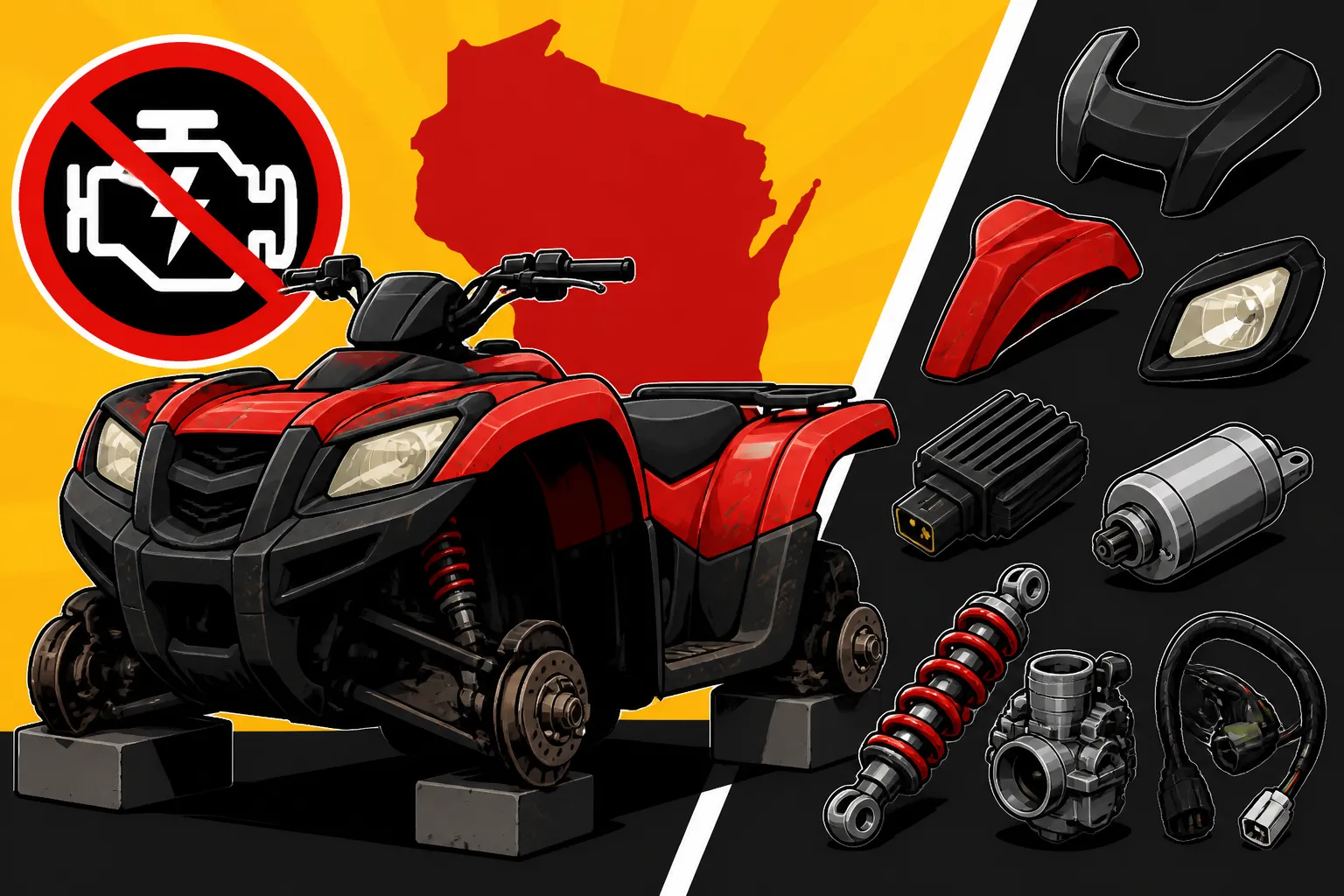
Once the machine is safe to work on, the real treasure hunt begins. Not every bolt and washer is worth selling, but many components hold significant value for other riders looking for replacement parts. Start with the most obvious and often most expensive items:
- Engine and Transmission Components: Even if the whole engine is seized, individual parts like the starter, carburetor (if it's not the problem), fuel pump, stator, CDI box, or even valve covers might be perfectly good. If the engine does turn over but just won't fire, it's possible internal components are fine, making it a good candidate for a rebuild or for individual parts. The transmission, if separate, also contains valuable gears, shafts, and cases.
- Suspension: Shocks, A-arms, swingarms, and tie rods are frequently damaged or worn on used machines. Good condition suspension components are always in demand.
- Wheels and Tires: Even if the tires are worn, the rims might be in excellent shape. New tires and wheels are expensive, so a good used set can fetch a decent price.
- Plastics/Bodywork: Fenders, shrouds, and hoods that are intact and not severely cracked or faded are highly sought after.
- Electronics: Headlights, taillights, wiring harnesses, ignition coils, and gauge clusters often fail or get damaged.
- Brakes: Calipers, master cylinders, brake lines, and discs are all consumable parts that frequently need replacing.
- Exhaust: A good condition header pipe or muffler, especially if it's an aftermarket performance part, can be sold for a good price.
- Other Components: Handlebars, steering stems, seats, fuel tanks, radiators, and even drive shafts can all hold value.
As you disassemble, take note of the condition of each part. Is it rusty? Bent? Cracked? Functioning properly? This will help you determine its market value. Researching prices for similar used parts on eBay, Facebook Marketplace, or dedicated ATV forums will give you a good idea of what people are willing to pay. For example, a complete, running rear differential assembly might be worth more than individual gears. Knowing [Buying a Used Machine in Wisconsin] can give you an insight into what potential buyers of your parts are looking for in terms of quality and pricing for replacement components.
Documentation and Labeling
This step is arguably as important as the disassembly itself. As you remove parts, document everything. Take photos from multiple angles before and after removal, especially of how components connect. This serves several purposes: it helps you remember how things go together (just in case you ever want to rebuild a similar machine), it provides visual proof of the part's condition before sale, and it offers great content for your sales listings.
As you remove fasteners, group them with the corresponding parts and label everything clearly. Ziploc bags, masking tape, and a permanent marker will be your best friends. Label bags with the part name and where it came from (e.g., "Front left A-arm bolts," "Carburetor jets"). This keeps your workspace organized and ensures that when you sell a part, you can include all necessary hardware. Creating a simple spreadsheet or a written inventory list will help you keep track of what you've removed, its condition, and its potential selling price. This inventory is a fantastic tool for managing your sales and understanding your progress. Thinking about [Wisconsin Records and a Machine's Ownership History] for the whole machine, this detailed inventory helps you create a record for the parts.
Selling the Parts: Getting Your Investment Back
Once you have a pile of well-documented, clean parts, it's time to turn them into cash. This is where your marketing and selling skills come into play.
Online Marketplaces and Local Forums
The internet is your best friend when it comes to selling ATV and UTV parts. You have a huge audience of potential buyers, from individuals needing a specific replacement to small repair shops looking for affordable components.
- Facebook Marketplace: This is often the easiest and quickest way to sell locally or even regionally. Snap some good photos, write a clear description, set a price, and be prepared for messages. Many local ATV groups on Facebook also allow sales posts, targeting a more specific audience.
- eBay: For smaller, easily shippable parts, eBay gives you access to a national and even international market. Be prepared to accurately calculate shipping costs and pack items securely. Using eBay's "sold listings" feature is an excellent way to gauge what parts are actually selling for.
- Dedicated ATV/UTV Forums: Many brand-specific or general ATV forums have "For Sale" sections. These buyers are often enthusiasts who know exactly what they're looking for and appreciate detailed descriptions.
- Local Classifieds/Craigslist: These platforms can still work, especially for larger items that are difficult to ship, like frames or complete engines.
No matter where you list, good quality photos are paramount. Take clear, well-lit pictures from multiple angles, highlighting both the good and any imperfections. Be honest in your descriptions. List the machine's year, make, and model it came from, the part number if available, and any known issues. Transparency builds trust and reduces returns.
Pricing Your Parts Realistically
This is a delicate balance. You want to get fair value for your efforts, but you also want to move the parts. Overpricing will lead to your parts sitting around for months, while underpricing means you're leaving money on the table.
Start with your research. As mentioned, eBay's "sold listings" is a fantastic tool for seeing what actual buyers have paid for similar parts. Check ATV parts websites for new component prices to get a baseline; your used part should be a fraction of that, unless it's a rare or discontinued item. Factors to consider when pricing:
- Condition: A pristine, barely used part will fetch more than one with cosmetic flaws or significant wear.
- Rarity: Is it a common part or something hard to find? Rare parts from older machines can sometimes command surprising prices.
- Demand: Some parts, like engines, transmissions, or complete wheel sets, are always in higher demand than, say, a plastic battery cover.
- Seasonality: Certain parts might sell better at different times of the year (e.g., plow mounts in the fall).
Be realistic and open to negotiation, especially if you have a lot of parts to move. Sometimes, selling a bundle of related parts (e.g., an entire brake system) for a slightly reduced combined price is better than trying to sell each piece individually.
The Bill of Sale for Parts
While you're not selling a whole, registered vehicle, it's still good practice to provide a simple bill of sale for any significant parts you sell, especially for higher-value items like engines, frames, or large assemblies. This protects both you and the buyer. It simply states what was sold, the price, the date, and ideally includes a description of the part (e.g., "Used Engine Assembly, Serial #XXXXX, from a 2010 Polaris RZR 800") and the original VIN of the donor machine if it's relevant to the part.
A basic handwritten bill of sale is often sufficient for individual parts. However, if you prefer something more formal, online services like LawDepot offer templates for various legal documents, including bills of sale. These can be customized to specifically list the part and its details, providing a professional touch and added peace of mind for both parties. Using a service like LawDepot ensures that your private sale agreement is clear and legally sound, even for parts. This protects you in case of any disputes over the condition of the part or its origin. Just as you'd use [Writing a Wisconsin Private Sale Agreement] for a whole machine, a simplified version is wise for valuable components. A clear paper trail for parts, linked back to your original ownership of the machine, prevents misunderstandings down the line.
What to Do with the Frame and Remaining Scrap
After you've stripped all the valuable, sellable parts from your quad, you'll be left with a bare frame and a pile of odds and ends that aren't worth the effort to sell individually. This final step is crucial for both legal compliance and environmental responsibility.
The Legalities of a Stripped Frame
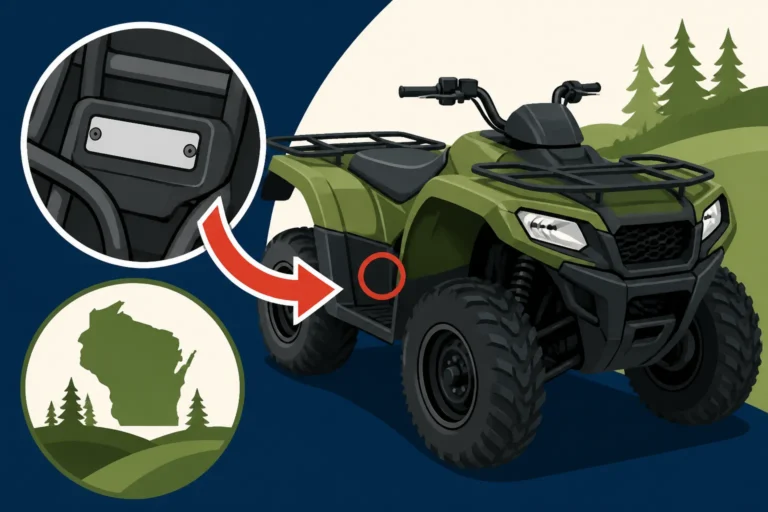
The frame of your ATV or UTV, even when completely bare, still carries its Vehicle Identification Number (VIN). This VIN is essentially the machine's identity, and mishandling it can lead to problems. In Wisconsin, while ATVs aren't titled, the VIN is still linked to the registration record. If you plan to sell the stripped frame, you absolutely must provide the buyer with proof of ownership, typically your original DNR registration card or a bill of sale from when you acquired the complete machine. This ensures that the frame, and its VIN, can be legitimately traced. Without proper documentation, a buyer of a stripped frame could face significant hurdles if they ever tried to rebuild or register a machine using that frame.
Furthermore, you need to be cautious about the VIN plate itself. If you're scrapping the frame, ensure that the VIN plate isn't easily removable or reusable in a fraudulent way. Some scrap yards might require you to destroy or remove the VIN plate before they accept the frame, precisely to prevent it from being used to "re-VIN" a stolen machine. If you're simply discarding the frame, you could be held liable if it's found to have been used improperly later. The best practice is to always confirm with your local authorities or scrap yard about their specific requirements for handling VIN-carrying frames from non-titled vehicles. This is a crucial step to avoid the [Penalties for an Unregistered ATV in Wisconsin] being applied to a frame that you no longer intend to be part of a complete machine.
Recycling and Disposal
Once you've stripped everything of value, you'll be left with the frame and a collection of non-sellable metal, rubber, and plastic pieces. Proper disposal is key.
- Scrap Metal Yards: The frame and any other metal components can typically be taken to a local scrap metal recycling facility. They will weigh the metal and pay you a small amount for it, effectively covering your gas money for the trip. Before you go, it's a good idea to call ahead and confirm their acceptance policy for vehicle frames, especially concerning the VIN. As mentioned earlier, some might require you to remove or deface the VIN plate.
- Fluid Disposal: Remember those fluids you drained earlier? Engine oil, coolant, and gasoline cannot be simply thrown in the trash or poured out. Most auto parts stores or municipal recycling centers have collection points for used motor oil and other automotive fluids. Gas stations often accept used oil as well. Check with your local waste management services for specific instructions on how to dispose of gasoline and coolant, as rules can vary by community.
- Tires: Worn-out tires are often accepted at recycling centers or tire shops for a small fee. They can't just go into regular landfill due to their composition.
- Plastics and Other Waste: Non-recyclable plastic bodywork, worn-out rubber hoses, and other miscellaneous trash can go into your regular waste collection, but try to separate any recyclable plastics if possible.
The goal is to responsibly dispose of all remaining materials, ensuring they don't harm the environment and that the machine's identity (the VIN) is handled with care. This final act of due diligence completes the parting-out process and gives you full closure on your non-starting quad. For information on the larger process of getting rid of a machine that's completely beyond hope, you might find [Scrapping a Machine Past Saving] helpful.
Disclaimer
This article is for general informational purposes only and does not constitute professional advice. Laws, prices and regulations vary by location and change over time. Consult a qualified professional for guidance on your specific situation.