Reading a Registration Number
Let's be honest, staring at that string of letters and numbers on your ATV or UTV registration card or decal can feel a bit like looking at hieroglyphics. You know it's important, you know it identifies your machine, but what exactly does it mean? Many riders in Wisconsin feel a twinge of anxiety, especially when a warden asks for papers or when they're trying to make sense of a used machine's history. This guide is here to unravel the mystery, showing you how to read and understand your Wisconsin ATV or UTV registration number, so you can ride with confidence and handle any paperwork with ease.
Decoding the Wisconsin ATV/UTV Registration Format
When you register an all-terrain vehicle (ATV) or utility terrain vehicle (UTV) in Wisconsin, the Department of Natural Resources (DNR) assigns it a unique identifier. This isn't just a random assortment of characters; it's a structured code designed to provide specific information at a glance. Understanding this format is key to not only identifying your machine but also ensuring all your paperwork is in order.
Understanding the Alpha-Numeric Sequence
The Wisconsin DNR uses a specific alpha-numeric sequence for ATV and UTV registrations, which helps differentiate machines and track their status within the state's system. Typically, you'll see a combination of letters followed by numbers. The most common format you'll encounter usually starts with one or two letters, indicating the type of machine or registration class, followed by a series of numbers that act as a unique serial within that class, and then often a final letter or two to denote the state (WI).
For example, a common format might look something like "ATV12345WI" or "UTV67890WI". The "ATV" or "UTV" clearly designates the type of vehicle. The numbers "12345" or "67890" are the sequential identifier assigned by the DNR, making your particular machine distinct from all others of that type. Finally, "WI" confirms its registration in Wisconsin. While the exact prefix can vary slightly depending on the age of the registration or any special classifications, the core structure remains consistent. This system allows law enforcement and DNR officials to quickly identify a machine and access its registration records in the state database. It’s also crucial for you, the owner, to be able to accurately state or write down this number whenever you're dealing with anything from insurance to a private sale.
Why the DNR Uses This System
You might wonder why the state doesn't just use your vehicle's Vehicle Identification Number (VIN) as its primary registration identifier. The truth is, the DNR's alpha-numeric system serves a distinct and vital purpose for tracking the registration status rather than the specific manufacturing details of the machine itself. While the VIN is a global standard for identifying a unique vehicle across its lifetime, the registration number is a state-specific identifier for its active permission to operate on public lands or routes.
This system allows the DNR to quickly categorize and manage the vast number of ATVs and UTVs operating across Wisconsin. For instance, it helps them differentiate between [Wisconsin's Public Use ATV Registration] and [Wisconsin's Private Use ATV Registration], each having different rules and expiry dates. The registration number is essentially a pointer to a specific record in the state's database that contains all the relevant details about your machine's registered status, the owner's information, and when it expires. This makes enforcement easier and ensures that all machines using public resources are properly accounted for, helping to fund trail maintenance and safety initiatives through registration fees. It's a robust system that ensures accountability and helps keep our trails open and well-maintained.
Where to Find Your Registration Number (and What to Do if it's Missing)
Knowing what the numbers mean is one thing, but actually finding them when you need them can be another. Whether you’re preparing for a ride, selling your machine, or just trying to get your records straight, you'll typically find your registration number in a couple of key places.
The Physical Registration Card
The most official and complete place to find your ATV or UTV registration number is on the physical registration card issued by the Wisconsin DNR. This card is a small, usually paper or plasticized document that you receive after successfully registering your machine. It’s absolutely essential for any rider to have this card. The registration number will be prominently displayed on it, often alongside your name, address, the machine's VIN, make, model, and the expiration date of your registration.
This card is your legal proof that the machine is registered. It's incredibly important to [Keeping the Registration Card With the Machine] whenever you're riding, especially on public trails or routes. Think of it like your driver's license for your ATV or UTV. If you're stopped by a warden, this is the document they'll ask for to verify your registration status. Losing this card can be a headache, but thankfully, there are processes in place to get a replacement, which often involves contacting the DNR or visiting a registration agent.
The Decals on Your Machine
In addition to the physical card, your registration number is also displayed on the decals that you are required to affix to your ATV or UTV. These decals, typically provided by the DNR, feature a larger, more visible version of your registration number. They usually also include the expiration date, making it easy for wardens or other riders to see at a glance if your machine is current.
The DNR has specific guidelines for [Sticker Placement on a Wisconsin Machine]. Generally, they need to be clearly visible on the front or rear of the machine, or on both sides, depending on the type of machine and its design. The purpose of these decals is to provide a quick, visible confirmation of registration without needing to stop every rider. Over time, these decals can fade, peel, or even get damaged during a spirited ride or a tough Wisconsin winter. If your decals become illegible or fall off, it’s crucial to order [Replacing Lost Wisconsin Decals] promptly. Riding without valid, clearly displayed decals can lead to fines, even if your registration is otherwise current. Ensuring your decals are intact and properly placed is a simple but vital part of being a responsible rider.
Looking Up a Registration When You Don't Have the Info
We've all been there: you've bought a used machine, or maybe you've simply misplaced your registration card and the decals are long gone or unreadable. How do you find that crucial registration number then? The good news is, the Wisconsin DNR has systems in place to help. Often, if you have the machine's VIN, you can use that to [Looking Up a Wisconsin ATV Registration] through the DNR's online services or by contacting them directly. The VIN is a unique 17-character identifier stamped on the frame of your machine, usually near the steering column, front left wheel well, or under the seat.
When buying a used machine, it's particularly important to verify the registration information. You don't want to get stuck with a machine that has a complicated ownership history or outstanding issues. While the seller should provide you with their current registration card, sometimes life happens, and they might have lost it. This is where a service like LawDepot could be useful if you're drafting a bill of sale and want to ensure all available identifying information, including the VIN, is clearly documented. Always verify the VIN on the machine matches any paperwork you receive, and don't hesitate to use the DNR's lookup tools. Knowing the registration status before you finalize a purchase can save you a lot of grief down the trail.
Common Questions and Misconceptions About Registration Numbers
Despite their apparent simplicity, registration numbers often lead to confusion, especially when compared to other identification methods like the VIN. Clearing up these common misconceptions can help you better understand your responsibilities as a Wisconsin ATV/UTV owner.
Registration Number vs. VIN
This is probably the most frequent point of confusion for new and even some experienced riders. While both the registration number and the VIN (Vehicle Identification Number) serve to identify your machine, they do so in fundamentally different ways. The VIN is like your machine's fingerprint—a unique, global identifier assigned by the manufacturer that stays with the machine for its entire life, regardless of who owns it or where it's registered. It tells a detailed story about the machine, including its manufacturer, model year, and specific features. You'll find the VIN stamped directly onto the frame of your ATV or UTV.
The registration number, on the other hand, is a state-specific administrative tag. It's unique within the Wisconsin DNR's system and is linked to the active registration period for a specific owner. If you sell your machine, the new owner will get a new registration number, even though the VIN remains the same. Think of the VIN as the machine's permanent legal name, and the registration number as its current "driver's license" number in Wisconsin. The VIN is crucial for proving [Proof of Ownership Without a Title] since Wisconsin does not title ATVs and UTVs. While LawDepot can assist with drafting important legal documents like a bill of sale, ensuring the VIN is correctly recorded is paramount, as it’s the ultimate identifier of the physical machine itself.
What the Registration Number Doesn't Tell You
It’s important to understand the limits of what a registration number can tell you. While it confirms that a machine is currently registered in Wisconsin and points to a record in the DNR's database, it doesn't offer a comprehensive historical view of the vehicle. For instance, the registration number itself will not directly reveal past owners, accident history, or if there are any [Liens on a Wisconsin ATV Record]. These deeper details are typically tied more closely to the VIN and any existing bills of sale or financial records.
If you're buying a used machine, relying solely on the registration number to gauge its history isn't enough. You'll want to thoroughly inspect the machine, verify the VIN, and try to get as much information as possible about its past. While the DNR's system tracks current ownership and registration status, it doesn't provide a public, comprehensive [Wisconsin Records and a Machine's Ownership History] in the way a titled vehicle might through a DMV report. For any deeper dives, you'd typically need the VIN and might need to contact previous owners or financial institutions directly.
Here's a quick comparison of what each identifier generally conveys:
| Feature | Wisconsin Registration Number | Vehicle Identification Number (VIN) |
|---|---|---|
| Primary Purpose | Tracks current registration status & owner in WI | Unique permanent machine identifier |
| Issued By | Wisconsin DNR | Manufacturer |
| Changes with Ownership | Yes (New owner gets new reg) | No |
| Shows Manufacturer/Model | Indirectly (via record lookup) | Directly encoded |
| Indicates Expiration Date | Yes (on card/decal) | No |
| Reveals Lien Information | No | Potentially via VIN check in lien databases |
| Historical Ownership Data | No | Potentially via VIN check (e.g., in accident databases) |
| Physical Location | Decals on machine, reg card | Stamped on frame/chassis |
How This Number Relates to Transferring Ownership
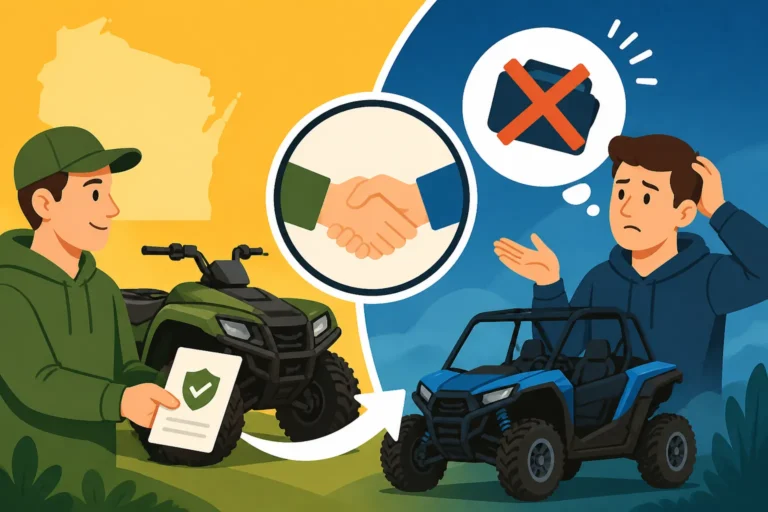
The registration number plays a critical role when it comes to transferring ownership of an ATV or UTV in Wisconsin, even though it's not a title state. When you sell your machine, your existing registration number essentially becomes void for that machine, as it's tied to your ownership period. The buyer will then need to apply for a new registration in their name, which will be assigned a new, unique registration number.
This is why it's so important for the seller to provide the buyer with the current [Handing Over the Registration Card at a Sale]. This card, even if the registration is expired, contains the VIN and other critical information that the buyer will need to register the machine in their own name. While Wisconsin does not have traditional titles for ATVs and UTVs, the old registration card serves as a crucial piece of the paper trail. The new owner generally has [Transferring a Wisconsin Registration Within Ten Days] of purchase, and having that old card makes the process much smoother. Many riders find that using a structured bill of sale, perhaps generated through a platform like LawDepot, helps ensure all necessary details like the VIN, the previous registration number, and sale terms are clearly recorded, protecting both buyer and seller in the transaction.
Disclaimer
This article is for general informational purposes only and does not constitute professional advice. Laws, prices and regulations vary by location and change over time. Consult a qualified professional for guidance on your specific situation.