The Montana LLC Route and What Wisconsin Owners Risk
Buying an ATV or UTV is a big deal, and let's be honest, the costs can add up fast. Between the machine itself, the gear, and of course, the ever-present sales tax and registration fees, it's easy to feel like you're constantly shelling out cash. This often leads folks to look for clever workarounds, and one that crops up a lot in conversations around the campfire or online forums is the idea of using a Montana LLC to "save" on these expenses. But before you dive headfirst into what seems like a simple solution, it's crucial to understand the very real risks and potential headaches you could be creating for yourself as a Wisconsin owner. This guide is here to lay out exactly what that Montana LLC route entails and, more importantly, the significant risks it carries for residents of the Badger State.
Understanding the Allure of the Montana LLC for ATV/UTV Owners
It's completely understandable why the Montana LLC strategy holds such a strong appeal. When you're dreaming of hitting the trails or using your side-by-side for work on your property, the last thing you want to think about are all the extra fees. The idea that there might be a legal loophole to bypass some of these costs can be incredibly tempting. For many, it seems like a smart financial move, especially when dealing with a high-value machine.
The Promise of Sales Tax Avoidance
The primary driver behind the Montana LLC trend is the state's lack of a sales tax. Imagine purchasing a brand new, top-of-the-line side-by-side that costs, say, $20,000. In Wisconsin, you're looking at a 5% state sales tax, which immediately adds $1,000 to your purchase price. Factor in any applicable county sales tax, and that number climbs even higher. When you consider that hefty chunk of change, the idea of avoiding it altogether by registering the machine in a state with no sales tax sounds like pure genius. People often hear about this strategy in the context of luxury cars or RVs, and it's not a huge leap for them to assume it applies equally well to their ATVs and UTVs. It feels like finding a secret cheat code in a game where everyone else is paying full price.
This promise of sales tax avoidance is a powerful draw, particularly for those who are making a significant investment in their machine. For many, it's not just about pinching pennies; it's about feeling like they're being financially savvy and not overpaying when a perceived alternative exists. The initial outlay for a new quad or side-by-side is already substantial, so any method that appears to reduce that upfront hit gets a lot of attention. The thought of keeping that 5% or more in their pocket is a strong motivator, often overshadowing the potential complications down the road.
Simplified Registration and Perceived Privacy
Beyond the sales tax savings, another attractive feature of the Montana LLC route is the perception of simplified registration and enhanced privacy. When you register a vehicle or ATV in Montana through an LLC, the machine is legally owned by the company, not by you personally. This can seem appealing if you prefer to keep your personal assets less visible or if you own multiple machines and want a streamlined way to manage them. The process for registering vehicles through an LLC in Montana is often portrayed as straightforward, handled mostly through mail or online services, which can be a welcome change from the bureaucratic hurdles some other states present.
The privacy aspect is particularly interesting for some. Instead of your personal name being tied to a specific VIN on a public record, it's the LLC's name. For individuals who value discretion or who might have reasons to separate personal and asset ownership, this can appear to be a valuable benefit. It's not uncommon for people to use LLCs for various business or investment purposes, so extending that to recreational vehicles might seem like a logical step. However, while the perception of privacy is there, the practical reality for a Wisconsin resident operating an LLC-owned machine can be far more complex and legally vulnerable than it first appears.
How the Montana LLC "Strategy" Works (and Where It Breaks Down)
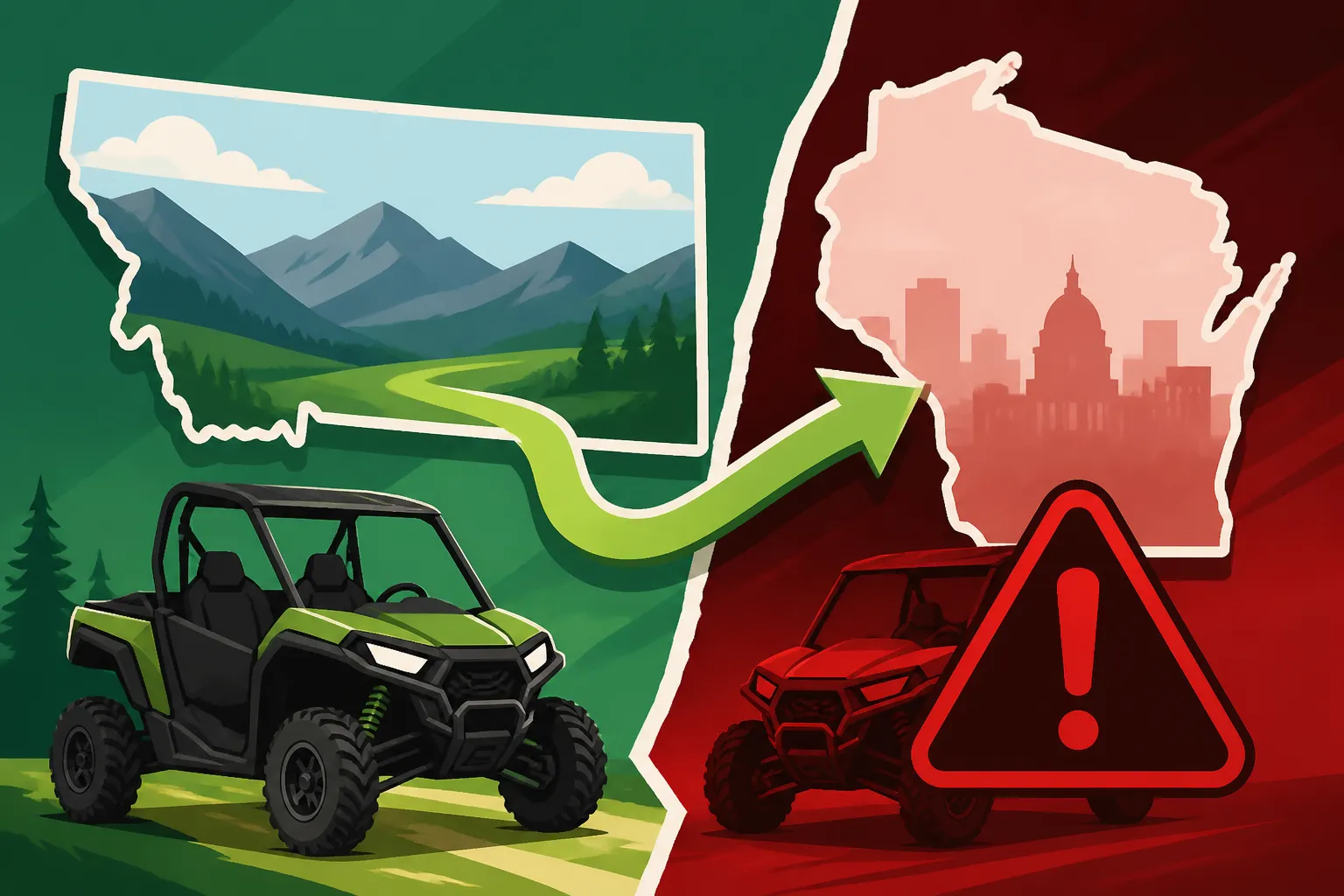
At its core, the Montana LLC strategy involves creating a legal entity in Montana that then purchases and registers your ATV or UTV. The idea is that since the LLC, not you, owns the machine, and the LLC is based in a state with no sales tax, you can avoid paying sales tax in your home state of Wisconsin. While the mechanical steps to set up an LLC and register a machine in Montana are indeed relatively straightforward, the strategy often falters when it collides with the residency and tax laws of the state where the machine is actually used and garaged.
Setting Up the LLC
The first step in this process is to establish a Limited Liability Company (LLC) in Montana. This typically involves filing articles of organization with the Montana Secretary of State. You don't need to be a Montana resident to form an LLC there, nor do you need a physical presence in the state yourself. Many people will use a registered agent service within Montana to handle their mail and legal notifications, effectively acting as the LLC's in-state presence. These services are widely available and can guide you through the initial paperwork.
Creating the LLC is fairly standard corporate procedure. You'll need to decide on a name for your LLC, appoint a registered agent, and draft an operating agreement, which outlines how the LLC will be managed. Services like LawDepot or other online legal document providers can help you generate the necessary forms and walk you through the process, often for a reasonable fee. Once the LLC is officially formed and you have an Employer Identification Number (EIN) from the IRS (even if you're the sole member), you've got your legal entity. This part of the process is genuinely simple and legally sound in its own right, as forming an LLC is a legitimate business practice. The challenge, however, begins when this legitimately formed entity is used in a way that attempts to circumvent the laws of another state.
Registering the ATV/UTV Under the LLC
Once your Montana LLC is established, the next step is for the LLC to purchase the ATV or UTV. The bill of sale, or any purchase agreement, would be in the name of your Montana LLC. After the purchase, the LLC would then register the machine with the Montana Motor Vehicle Division. Because Montana does not have a sales tax, no sales tax would be collected at the point of sale or during the registration process in Montana. This is where the perceived savings come into play, as the sales tax you would have paid in Wisconsin is seemingly bypassed.
Montana offers permanent registration for certain types of vehicles, including ATVs and UTVs, for a one-time fee, which adds to the appeal of this route. Once registered, the Montana DMV issues a registration card and decals to the LLC. The crucial detail here is that the machine is now legally owned by your Montana LLC, and it carries Montana registration. On paper, it looks perfectly legitimate. However, the legal legitimacy often hinges on where the machine is primarily garaged, operated, and stored. If that location is Wisconsin, the picture changes dramatically, leading to the legal and financial pitfalls that many unwary owners discover too late. It's a fundamental difference between where a legal entity is based and where a physical asset is used, and this distinction is where the strategy often breaks down under scrutiny.
The Tangible Risks for Wisconsin Residents
While the Montana LLC route might sound like a clever way to save a few bucks, for Wisconsin residents, it introduces a host of tangible and potentially expensive risks. Wisconsin has clear laws regarding sales tax and vehicle registration, and simply registering your machine in another state doesn't automatically exempt you from your obligations as a Wisconsin resident. The state is well aware of these types of tax avoidance schemes and has mechanisms in place to address them.
Wisconsin Sales Tax Enforcement
This is arguably the biggest risk. Wisconsin law is quite clear: if you are a resident of Wisconsin and you purchase a vehicle (which includes ATVs and UTVs) for use in Wisconsin, you are generally subject to [Wisconsin Sales Tax on an ATV Purchase]. Even if you buy the machine out of state and pay no sales tax there, Wisconsin imposes what's called a "use tax." This use tax is essentially the sales tax you would have paid if you had purchased the item in Wisconsin, and it applies when you bring goods purchased tax-free elsewhere into the state for your own use. The fact that an LLC owns the machine doesn't automatically shield a Wisconsin resident from this obligation if the machine is primarily used and stored within Wisconsin's borders.
The Department of Revenue in Wisconsin is not naive about these types of setups. They understand that a Montana LLC buying an ATV that is consistently parked in a Wisconsin garage and ridden on Wisconsin trails by a Wisconsin resident likely means that resident is attempting to avoid sales tax. They can and do pursue these cases. Simply having the paperwork from Montana doesn't negate your tax liability in your home state. [Proof of Sales Tax Wisconsin Requires] often needs to be shown during registration, and if you can't, or if you attempt to register it as an out-of-state machine that isn't truly an out-of-state machine, you're inviting trouble.
Penalties for Non-Compliance
If Wisconsin determines that you've improperly avoided paying sales tax, the penalties can be severe. It's not just about paying the original sales tax you tried to avoid; the state can also assess interest on the unpaid amount, as well as significant penalties. These penalties can sometimes exceed the amount of the original tax liability, quickly erasing any perceived "savings" and turning them into a substantial loss. Imagine owing the original $1,000 in sales tax, plus another $500 or more in interest and penalties. What started as a clever idea to save money quickly becomes a financial burden.
Beyond the tax penalties, there can be registration penalties too. If you're operating an ATV or UTV in Wisconsin that should be registered here but is only registered in Montana via an LLC, you could be subject to fines for operating an unregistered vehicle. [Penalties for an Unregistered ATV in Wisconsin] can be steep, and a warden or law enforcement officer won't care about your Montana LLC paperwork if the machine is clearly operating in violation of Wisconsin's registration laws. The financial hit can be substantial, not to mention the stress and time involved in dealing with state agencies and potentially legal counsel to resolve the situation.
Registration and Residency Issues
This is another critical area where the Montana LLC strategy often unravels. For a Wisconsin resident, a machine primarily kept and operated in Wisconsin generally needs to be registered with the Wisconsin DNR. The fact that a Montana LLC "owns" it doesn't change the physical location of the machine or the residency of its primary operator. Wisconsin has rules for [Wisconsin Registration for an Out-of-State Machine], but these typically apply to legitimate visitors or seasonal residents, not full-time Wisconsin residents attempting to bypass local requirements.
If you're riding your ATV on Wisconsin trails, county routes, or private property in Wisconsin, and you are a Wisconsin resident, local authorities expect that machine to carry valid Wisconsin registration and decals. A Montana registration, while valid in Montana, doesn't necessarily grant you carte blanche to operate freely in Wisconsin without meeting Wisconsin's residency-based registration requirements. Wardens and local law enforcement are trained to look for these discrepancies. They see plenty of Wisconsin residents out on the trails every weekend, and a Montana plate on a machine that clearly lives here raises a red flag immediately. You could face fines and be required to register the machine properly in Wisconsin anyway, effectively paying twice for registration and still incurring penalties.
Insurance, Financing, and Other Practical Headaches
The complexities of the Montana LLC strategy extend far beyond just sales tax and registration. There are practical headaches that can arise with insurance, financing, and even when you decide to sell your machine. These are often unforeseen consequences that can add stress, cost, and difficulty to what should be an enjoyable experience of ATV/UTV ownership.
Insuring an LLC-Owned Machine
Getting proper insurance for an ATV or UTV owned by a Montana LLC, but primarily garaged and operated by a Wisconsin resident in Wisconsin, can be surprisingly difficult and expensive. Most personal ATV insurance policies are designed for individuals owning machines. When an LLC is the registered owner, insurers often require a commercial policy, which typically carries higher premiums and different coverage terms. Many standard insurers might even outright refuse to cover an LLC-owned recreational vehicle if the primary operator is an individual resident of a different state.
You might find yourself needing to seek out specialized commercial insurance brokers, which adds another layer of complexity and cost. If you manage to get a personal policy, and your insurer discovers that the machine is actually owned by an LLC and garaged out of state, they could deny a claim in the event of an accident or theft. Imagine having a major incident on a Wisconsin trail, only to find out your insurance policy is invalid due to how the machine is structured. This risk alone is often enough to make people reconsider the LLC route. Properly [Insuring an ATV in Wisconsin] under your personal name provides peace of mind that is hard to put a price on.
Financing Complications
If you plan to finance your ATV or UTV purchase, using a Montana LLC can introduce significant complications. Most lenders for recreational vehicles offer personal loans, meaning the loan is in your individual name, and the machine serves as collateral. When the machine is legally owned by an LLC, the lender might not be able to secure their interest against the machine in the same way, or they might require the LLC itself to be the borrower.
Financing an LLC often requires a more extensive business loan application process, and if your LLC has no operational history or other assets, securing favorable terms can be challenging, if not impossible. Some lenders might refuse to finance a recreational vehicle under an LLC structure altogether, or they might require personal guarantees that essentially negate the liability protection an LLC typically offers. This means you could be stuck paying cash, or you might have to choose a different, less appealing financing option, again eroding any perceived savings from the tax avoidance scheme.
Resale Value and Transfer Difficulties
When the time comes to sell your ATV or UTV, an LLC-owned machine with out-of-state registration can present challenges. Potential buyers, especially those in Wisconsin, might be wary. They could question why a Wisconsin-used machine is registered through a Montana LLC, potentially fearing legal or tax entanglements themselves. This could make your machine harder to sell or force you to accept a lower price than you might otherwise get.
The transfer process itself might also be more complicated. You'd be selling the machine from your LLC, not from yourself personally. If you're selling to a Wisconsin buyer, they will then be responsible for paying [Wisconsin State Sales Tax on a Quad] and registering the machine in Wisconsin, even if you never paid tax on it. This discrepancy can raise questions during the sale. The buyer might insist on additional documentation or question the legitimacy of the transaction, which can delay or even scuttle a sale. Dealing with [Buying a Used ATV in Wisconsin: The Paperwork] is usually straightforward, but an LLC-owned, out-of-state registered machine can throw a wrench into that process.
The Legal Perspective and Real-World Consequences
From a legal standpoint, Wisconsin is not a state that tolerates tax avoidance lightly. The "Montana LLC" strategy, when used by a Wisconsin resident to evade sales tax and registration requirements for a machine primarily used in Wisconsin, is generally viewed as an illegal tax evasion scheme, not a clever loophole. The state revenue department and law enforcement agencies are increasingly aware of these tactics and have mechanisms to address them.
Wisconsin's Recourse Against Tax Avoidance
Wisconsin has a vested interest in collecting sales tax from its residents, as these funds contribute to state services and infrastructure. When residents attempt to sidestep these obligations, the state can and will take action. Wisconsin's Department of Revenue (DOR) has sophisticated methods for identifying potential tax evasion. This can include data sharing agreements with other states, scrutinizing vehicle registration databases, and even acting on tips from concerned citizens or other riders.
If the DOR determines that a Wisconsin resident has used a Montana LLC to avoid sales tax on an ATV or UTV that is predominantly used or stored in Wisconsin, they can issue a bill for the unpaid sales tax, along with significant interest and penalties. They can conduct audits and demand proof of legitimate out-of-state residency or genuine business operations for the LLC. Simply pointing to the Montana LLC documents isn't enough to satisfy Wisconsin's tax laws if the facts on the ground indicate a primary connection to Wisconsin. The state's power to assess these back taxes and penalties is a very real threat, often far outweighing any initial "savings."
The Cost-Benefit Analysis: Is It Worth It?
When you stack up the perceived benefits against the very real risks, the cost-benefit analysis of the Montana LLC route for a Wisconsin resident usually comes out heavily on the side of "not worth it." The initial savings on sales tax, which might seem substantial, can quickly be dwarfed by:
- Penalties and interest: For unpaid sales tax, sometimes accruing for years.
- Fines for improper registration: If caught operating an unregistered machine in Wisconsin.
- Increased insurance costs: Or even the risk of a denied claim.
- Legal fees: If you need to hire an attorney to dispute claims from the Wisconsin DOR or DNR.
- Difficulty financing: Leading to higher interest rates or requiring a cash purchase.
- Reduced resale value: And increased hassle when selling the machine.
- Stress and time: Dealing with state agencies, paperwork, and potential legal battles.
What starts as a few hundred or a couple of thousand dollars in "savings" can easily spiral into thousands more in penalties, fees, and legal expenses. Furthermore, the constant worry of being caught, getting pulled over by a warden, or having your insurance denied can take all the joy out of owning and riding your machine. The peace of mind that comes with knowing your machine is properly registered and taxed in your home state is invaluable.
Legitimate Ways to Save Money on Your ATV/UTV in Wisconsin
Instead of chasing risky workarounds that can lead to legal and financial headaches, there are plenty of legitimate, straightforward ways for Wisconsin residents to save money on their ATV or UTV. These methods won't put you at odds with state law and will provide genuine long-term value and peace of mind.
Understanding Wisconsin's Sales Tax Rules
The first step to smart, legal savings is simply understanding how sales tax works in Wisconsin. The [Wisconsin State Sales Tax on a Quad] is typically 5%, with additional county sales tax in many areas. While you can't avoid paying this if you're a Wisconsin resident using your machine here, you can ensure you're paying the correct amount and not overpaying for any reason.
For example, when buying from a dealer, ensure they accurately represent the tax. When buying a used machine from a private seller, you are still responsible for paying sales tax directly to the Wisconsin Department of Revenue, typically when you [Transferring a Wisconsin Registration Within Ten Days]. Knowing these rules prevents surprises and ensures you're budgeting correctly from the start. You can also get credit for tax paid to another state if you legitimately bought a machine and paid sales tax there before moving it to Wisconsin, avoiding double taxation.
Exploring Used Market Value and Smart Buying
One of the most effective ways to save significant money upfront is to consider buying a used ATV or UTV rather than a brand-new one. The used market in Wisconsin is robust, offering a wide range of machines at various price points. A well-maintained used machine can offer virtually the same enjoyment and utility as a new one, often for thousands of dollars less.
When looking at used machines, do your homework. Research common issues for specific models, check the machine thoroughly for wear and tear, and ask for maintenance records. A pre-purchase inspection by a reputable mechanic can be a small investment that saves you from major headaches down the line. Sites like LawDepot also offer templates for a private sale agreement, ensuring both buyer and seller are protected. Patience and thoroughness in the used market can lead to substantial savings, allowing you to get more machine for your money without any legal gray areas. For more tips, check out [Buying a Used ATV in Wisconsin: The Paperwork].
Responsible Ownership and Maintenance for Longevity
Beyond the initial purchase, consistent and responsible ownership practices are key to saving money over the long haul. A well-maintained ATV or UTV will last longer, perform better, and require fewer expensive repairs. Simple things like regular oil changes, checking fluid levels, maintaining tire pressure, and cleaning air filters can significantly extend the life of your machine.
Consider learning some basic maintenance tasks yourself. There are countless online resources, and your owner's manual is a treasure trove of information. Proactive maintenance is always cheaper than reactive repairs. Additionally, proper storage, especially during Wisconsin's harsh winters, can prevent damage and corrosion. Investing in a good cover and using fuel stabilizers can protect your machine when it's not in use. Over time, these habits will translate into real savings by delaying major component replacements and extending the overall lifespan of your investment. It’s all part of the [Yearly Cost of Owning an ATV in Wisconsin], and smart habits keep that cost down.
| Feature / Aspect | Montana LLC (for WI Resident) | Legitimate WI Ownership (Best Practice) |
|---|---|---|
| Sales Tax | Perceived Avoidance (High Risk) | Required (Transparent & Legal) |
| Registration | Montana (Invalid for WI Use) | Wisconsin DNR (Compliant & Accepted) |
| Insurance | Complex/Costly (Commercial Needed) | Standard Personal (Peace of Mind) |
| Financing | Difficult (Business Loan Needed) | Straightforward (Personal Loan) |
| Penalties/Fines | High Risk (Tax, Reg, Interest) | Low Risk (Unless Unregistered) |
| Resale | Potential Difficulty/Lower Value | Standard Market/Easier Transfer |
| Peace of Mind | Low (Constant Worry) | High (Full Compliance) |
| Overall Cost | Potentially Much Higher | Predictable & Lower Long-Term |
Disclaimer
This article is for general informational purposes only and does not constitute professional advice. Laws, prices and regulations vary by location and change over time. Consult a qualified professional for guidance on your specific situation.