Wisconsin’s 5 Percent State Sales Tax
Buying an ATV or UTV in Wisconsin is an exciting prospect, especially with all the incredible trails and open spaces our state offers. But let's be honest, the moment money changes hands, a tiny voice in the back of your head often pipes up: "What about sales tax?" It's a common frustration, the feeling that you're navigating a complex financial maze just to get your new machine out on the dirt. This guide is here to demystify Wisconsin's 5 percent state sales tax on ATVs and UTVs, making sure you understand your obligations whether you're buying from a dealer or a private party.
Navigating Wisconsin's State Sales Tax on ATVs and UTVs
When you're bringing a new-to-you off-road machine home in Wisconsin, one of the most consistent financial realities you'll face is the state's sales tax. It’s a pretty standard part of most large purchases, but it's often a source of confusion for ATV and UTV buyers, especially when comparing dealer sales to private transactions. Knowing the ins and outs from the start can save you a headache later on.
The Core 5% State Sales Tax Explained
Wisconsin imposes a 5 percent state sales tax on the retail sale of most tangible personal property, and that includes your shiny new or used ATV or UTV. This tax is a percentage of the purchase price of the machine, and it's something you, as the buyer, are generally responsible for paying. It's a pretty straightforward calculation once you know the exact selling price, but sometimes that "selling price" isn't as simple as it seems, especially with trade-ins or other considerations.
Think of it this way: if you purchase a machine for a certain amount, 5 cents of every dollar goes towards this state tax. This revenue plays a role in funding various state programs and services, so while it might feel like an extra cost, it's a routine part of transacting business here in Wisconsin. Understanding this fundamental percentage is your first step to budgeting accurately for your new ride.
Why This Tax Applies to Your Off-Road Machine
The rationale behind taxing ATVs and UTVs is consistent with how many other vehicles and durable goods are taxed. From the state's perspective, these are recreational vehicles, often substantial investments, and they fall under the general sales tax provisions. It’s not a special "off-road vehicle tax" but rather the application of general sales tax rules to a specific type of property.
For many riders, the focus is often on registration fees, trail passes, and insurance, but the sales tax is typically the largest single amount you'll pay at the point of sale. It's important to remember that this tax is separate from any registration fees or annual trail passes you might need. It's a one-time cost associated with the transaction of ownership, ensuring that the state receives its due when goods are sold within its borders, regardless of whether the machine is destined for the trails of Bayfield County or just your local farm fields.
Differentiating Dealer Sales from Private Transactions
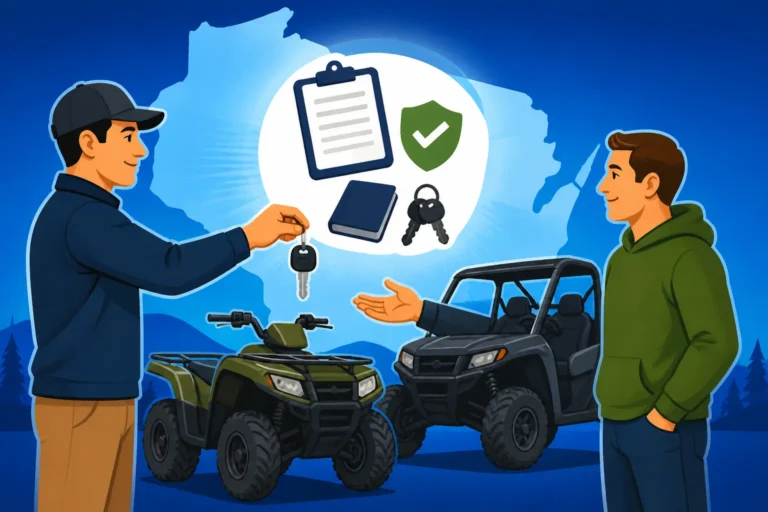
The biggest distinction when it comes to sales tax often lies in who you're buying from: a licensed dealer or a private individual. This difference dictates who collects the tax and how it gets reported to the state. When you purchase from a dealer, they are generally required to collect the 5 percent state sales tax (and any applicable county sales tax) at the time of sale. They handle the remittance of these funds to the Wisconsin Department of Revenue, simplifying the process for you. It's usually factored right into the total amount you pay at closing.
However, when you buy from a private seller, the responsibility shifts. The private seller typically won't collect sales tax from you. Instead, you, as the buyer, are responsible for remitting the sales tax directly to the state when you go to register the machine. This is a crucial point many first-time private buyers miss, leading to unexpected costs at the registration counter. [Sales Tax on a Private Quad Sale in Wisconsin] can feel a bit more involved, but it's totally manageable once you know what's expected.
Calculating Your Sales Tax Liability in Wisconsin
Figuring out exactly how much sales tax you owe might seem daunting, but it’s actually a pretty straightforward calculation once you understand the components. It's not just about the sticker price; things like trade-ins and local taxes can influence the final figure, so it's worth getting a clear picture of all the factors involved.
What Constitutes the "Purchase Price" for Tax Purposes
For sales tax purposes in Wisconsin, the "purchase price" is generally the total amount of money or value of other considerations paid for the ATV or UTV. This includes the actual cash price, but also the fair market value of any property traded in, or any other forms of payment exchanged. It's not just the amount you finance or the cash you hand over; it's the full value of the transaction.
For example, if you buy a side-by-side for $12,000 cash, your sales tax would be 5% of $12,000. If you "bought" it for $12,000 but only paid $10,000 cash and traded in an old dirt bike valued at $2,000, the tax is still on the full $12,000 purchase price. Be mindful of this, especially in private sales where people might try to write a lower price on a bill of sale—this can lead to issues later. The state is interested in the true value of the machine being transferred.
Understanding Trade-In Credits and Reductions
One area that often reduces your taxable amount is a trade-in. If you trade in another ATV, UTV, or even a different type of vehicle to a dealer when purchasing your new machine, Wisconsin law generally allows you to reduce the taxable selling price by the value of your trade-in. This is a fantastic benefit for buyers upgrading their existing ride.
Let's say you're buying a new UTV for $15,000 and the dealer gives you $5,000 for your old ATV as a trade-in. Your sales tax would then be calculated on $10,000 ($15,000 – $5,000), rather than the full $15,000. This can result in significant savings. It's important to note that this trade-in credit typically applies only to transactions with licensed dealers; in a private party sale, where you're essentially conducting two separate transactions (selling your old machine, buying a new one), you usually can't apply a trade-in credit in the same way. Always confirm with your dealer how trade-ins are handled for sales tax calculation.
The Interplay of State and Local Sales Taxes
While the 5 percent state sales tax is universal across Wisconsin, it's not always the only sales tax you'll pay. Many counties in Wisconsin also levy a separate local sales tax, often 0.5 percent. This [County Sales Tax on a Wisconsin Machine] gets added on top of the state's 5 percent. So, in many areas, your total sales tax rate will actually be 5.5 percent.
For instance, if you buy that $12,000 side-by-side in a county with a 0.5 percent local sales tax, you'd pay $600 in state sales tax (5% of $12,000) plus $60 in county sales tax (0.5% of $12,000), for a total of $660. It's crucial to check the specific sales tax rate for the county where the transaction takes place, as not all counties have this additional tax. Dealers will automatically collect this if applicable, but if you're handling a private sale, you'll need to account for both when you remit payment to the state. This combined total is what's usually referred to when people talk about [Wisconsin State Sales Tax on a Quad].
The Paperwork Trail: Ensuring Proper Sales Tax Payment
Navigating the paperwork for sales tax payment can feel like a chore, but it's an essential step to ensure your ATV or UTV is legally registered and ready for the trails. The process looks a bit different depending on whether you're buying from a dealer or a private individual, so let's break down what you can expect.
What a Wisconsin Dealer Handles for You
When you buy an ATV or UTV from a licensed dealer in Wisconsin, they are generally your one-stop shop for sales tax. The dealer is responsible for collecting the 5 percent state sales tax (and any applicable county sales tax) directly from you at the time of purchase. This amount will be clearly itemized on your purchase agreement or bill of sale.
After the sale, the dealer takes care of remitting these tax funds to the Wisconsin Department of Revenue on your behalf. They also typically handle the initial registration paperwork with the Wisconsin DNR, ensuring that your proof of sales tax payment is submitted correctly. This makes the process incredibly convenient for the buyer, as you don't have to worry about separate payments or filings for the tax. You pay the dealer, and they handle the rest, streamlining your path to getting your new machine out on the trails.
Your Role in Reporting Sales Tax on a Private Sale
If you purchase an ATV or UTV from a private seller in Wisconsin, the responsibility for sales tax collection shifts entirely to you, the buyer. The private seller is not typically authorized or obligated to collect sales tax. Instead, you will pay the sales tax directly to the Wisconsin Department of Natural Resources (DNR) when you go to register the machine. This is a key difference from a dealer purchase and one that often catches private buyers off guard.
When you register your machine, you'll need to declare the purchase price. It’s vital to have a clear, written bill of sale for private transactions. This document should detail the machine, the seller and buyer information, the date of sale, and the agreed-upon purchase price. Services like LawDepot can provide templates for a comprehensive bill of sale, ensuring all necessary information is included. This protects both parties and provides the necessary documentation for the DNR. Don't be tempted to write a lower price than what you actually paid to save on tax; this can lead to penalties and legal issues if discovered. The DNR expects you to accurately report the true [What a Wisconsin ATV Bill of Sale Should Carry].
Proof of Sales Tax Wisconsin Requires for Registration
Whether you buy from a dealer or a private party, you'll need to provide [Proof of Sales Tax Wisconsin Requires] when you register your ATV or UTV with the Wisconsin DNR. This is how the state confirms that the sales tax has been accounted for.
If you bought from a dealer, your copy of the purchase agreement or bill of sale, clearly showing the sales tax collected by the dealer, will serve as your proof. The dealer usually submits the necessary forms directly to the DNR. If you purchased from a private seller, you'll need to complete a form provided by the DNR (often part of the registration application) where you declare the purchase price and calculate the 5 percent state sales tax (plus any applicable county sales tax). You'll then pay this amount directly to the DNR agent or through the online registration portal. Without this proof of payment or direct payment, the DNR will not complete your machine's registration, meaning you won't be able to get your decals and legally ride. This is why accurately reporting the price on your bill of sale, especially when dealing with private parties, is so critical.
Out-of-State Purchases: Bringing Your Machine to Wisconsin
The allure of a great deal on an ATV or UTV isn't always confined to Wisconsin's borders. Many riders find their perfect machine in a neighboring state like Minnesota, Illinois, or Michigan. While this can open up more options, it also adds a layer of complexity when it comes to sales tax and registration. The key is understanding how Wisconsin handles machines brought in from elsewhere to avoid unexpected costs or delays.
When You Buy an ATV or UTV Beyond Wisconsin's Borders
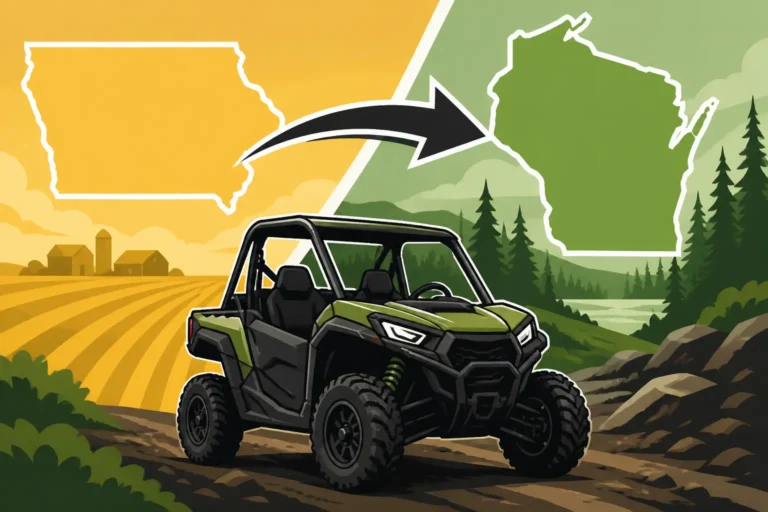
If you buy an ATV or UTV in another state and intend to bring it back to Wisconsin for use and registration, Wisconsin's "use tax" typically applies. The use tax is essentially the sales tax applied to items purchased outside the state but consumed or used within Wisconsin. The rate is the same as the Wisconsin sales tax: 5 percent state use tax, plus any applicable county use tax (usually 0.5 percent) for the county where you reside or where the machine will be primarily kept.
So, if you buy a quad in Iowa, for instance, you'll still be responsible for paying the Wisconsin sales/use tax when you register it here, even if you paid sales tax in Iowa. This is a common point of confusion. Wisconsin aims to ensure that revenue is collected on items used within its borders, regardless of where they were originally purchased. However, there are provisions to prevent you from being taxed twice, which brings us to the next crucial point. This is a critical step for [Wisconsin Registration for an Out-of-State Machine].
Claiming Credit for Tax Already Paid to Another State
Thankfully, Wisconsin law includes provisions to prevent double taxation on your out-of-state purchase. If you can prove that you paid sales tax on the ATV or UTV to another state at a rate equal to or greater than Wisconsin's combined state and local sales/use tax rate (which is often 5.5%), you generally won't owe additional use tax to Wisconsin. This is known as [Credit for Tax Paid to Another State].
For example, if you bought a machine in Minnesota and paid their sales tax (which might be higher than Wisconsin's), you would typically get a credit for that payment. You'd present proof of the sales tax paid in Minnesota to the Wisconsin DNR when you go to register. If the tax paid in the other state was less than Wisconsin's rate, you might still owe the difference. For instance, if you paid 4% sales tax in another state and Wisconsin's combined rate is 5.5%, you would owe the remaining 1.5% to Wisconsin. It's a fair system designed to ensure the state gets its due without penalizing buyers who've already contributed to another state's revenue.
Avoiding Double Taxation: The Key is Documentation
The absolute linchpin for avoiding double taxation on an out-of-state ATV or UTV purchase is meticulous documentation. You must have clear, verifiable proof of the sales tax you paid in the other state. This typically comes in the form of an itemized bill of sale or purchase agreement from the out-of-state dealer, explicitly showing the amount of sales tax collected.
Without this solid documentation, the Wisconsin DNR will generally assume no sales tax was paid to another state and will require you to pay the full Wisconsin use tax. This is where many buyers encounter frustrating delays and unexpected costs. Before you head to the DNR, ensure you have every piece of paper detailing the transaction, especially the sales tax line item. A simple receipt might not be enough; the DNR needs to see a clear breakdown. Taking the time to gather and organize these documents upfront will make your registration process much smoother and ensure you only pay what you legitimately owe.
Common Pitfalls and Special Considerations
The world of sales tax, even for something as fun as an ATV, isn't without its potential missteps. Knowing the common pitfalls can help you steer clear of trouble, and understanding special exemptions ensures you're not paying more than you have to. It's all about being informed and preparing correctly.
Avoiding Under-Reporting and Its Consequences
One of the most common and ill-advised attempts to reduce sales tax liability, especially in private sales, is to under-report the purchase price on the bill of sale. For example, if you buy a used ATV for $4,000 but write "Sold for $1,500" on the bill of sale to reduce the 5% tax. While this might seem like a clever shortcut at the time, it's a risky move with potentially serious consequences.
The Wisconsin DNR and Department of Revenue are aware of market values for ATVs and UTVs. If the reported purchase price appears unusually low for the type and condition of the machine, they can, and often do, question it. If they determine that you intentionally under-reported the price, you could be assessed not only the additional sales tax owed but also significant penalties and interest. Furthermore, issues with sales tax can directly impact your ability to properly register your machine, potentially leading to [Penalties for an Unregistered ATV in Wisconsin] if you ride before everything is sorted. It's simply not worth the risk. Always report the actual, agreed-upon purchase price.
Exemptions for Agricultural and Farm Use Machines
While sales tax generally applies to ATVs and UTVs, Wisconsin does offer some specific exemptions, particularly for machines used in farming. An ATV or UTV that is used exclusively in the business of farming may be exempt from Wisconsin sales and use tax. This means if you're a farmer and your side-by-side is solely used for things like checking fences, hauling feed, or moving equipment on your farm, you might not owe sales tax.
To claim this exemption, you'll usually need to provide specific documentation, such as a Wisconsin sales and use tax exemption certificate (Form S-211) or attest that the machine is for qualified farm use. It's not an automatic exemption, and the machine must truly be used exclusively for farm purposes. Using it for recreational rides on the weekend, even occasionally, typically disqualifies it from this exemption. If you believe your machine qualifies, it's always best to review the specific requirements with the Wisconsin Department of Revenue or a tax professional to ensure compliance. More details on this can be found in resources about [Wisconsin Exemptions for Farm Machines].
Gifting, Inheriting, or Other Non-Standard Transfers
Not every transfer of an ATV or UTV involves a "sale" in the traditional sense, and Wisconsin law accounts for these situations. If you receive an ATV or UTV as a bona fide gift (meaning no money or other consideration exchanged hands), you generally do not owe sales tax. The same often applies if you inherit a machine after the death of a family member.
However, even with gifts and inheritances, you'll still need to provide documentation to the DNR when you register the machine. For a gift, a notarized affidavit or a detailed gift letter from the giver stating "gift" and "no money exchanged" is usually required. For an inherited machine, estate paperwork, such as a death certificate and documentation showing transfer of ownership, will be necessary. It's important to remember that these are for true gifts or inheritances. If any money or other valuable property (even a handshake deal on something small) changes hands, it's generally considered a sale, and sales tax would apply. Understanding the process for [Inheriting an ATV in Wisconsin] can save you a lot of hassle during a difficult time.
| Transaction Type | Sales Tax Obligation (Buyer) | Who Collects/Remits Tax | Required Documentation |
|---|---|---|---|
| New from Dealer | 5% State + County (if applicable) | Dealer | Itemized Purchase Agreement |
| Used from Dealer | 5% State + County (if applicable) | Dealer | Itemized Purchase Agreement |
| Used from Private Party | 5% State + County (if applicable) | Buyer (to DNR) | Bill of Sale (LawDepot example) |
| Out-of-State Purchase | Wisconsin Use Tax (5% + County if applicable), less credit for tax paid elsewhere | Buyer (to DNR) | Out-of-State Bill of Sale (showing tax paid) |
| Bona Fide Gift | None | N/A | Notarized Gift Affidavit |
| Inherited Machine | None | N/A | Estate Paperwork, Death Certificate |
| Farm Exemption | None (if qualified) | N/A | Exemption Certificate (S-211) |
Disclaimer
This article is for general informational purposes only and does not constitute professional advice. Laws, prices and regulations vary by location and change over time. Consult a qualified professional for guidance on your specific situation.