Wisconsin Helmet Rules for a Passenger Under 18
A passenger under 18 cannot treat a Wisconsin ATV or UTV ride as a helmet-optional trip. The rule depends on the rider’s age and where the machine is being used, while the right helmet must fit and meet the required standard. Here’s how to handle the helmet rule, limited exceptions, and other passenger safety checks before you set out.
Wisconsin’s helmet rule for passengers under 18
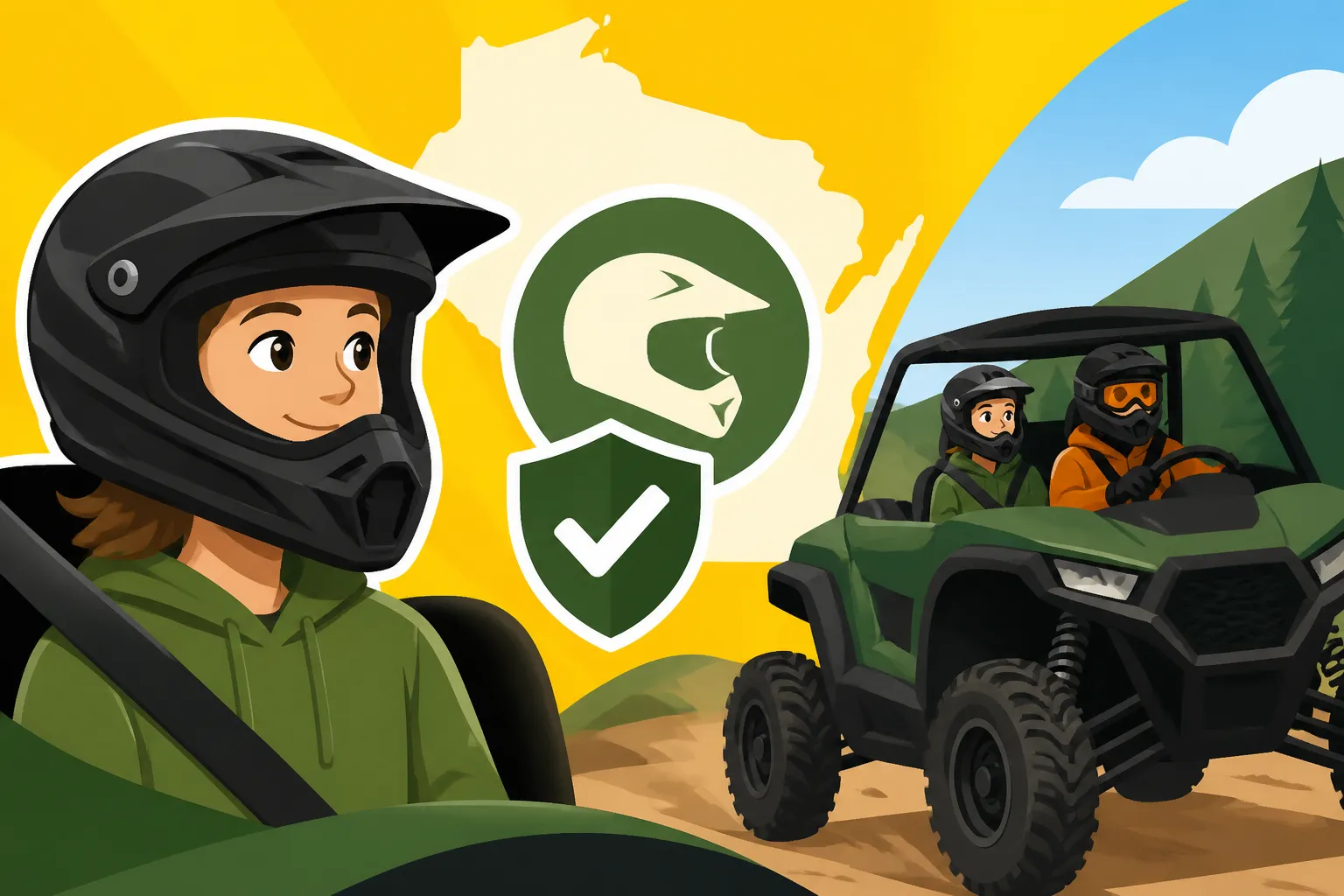
As a general rule, anyone under 18 riding as an ATV or UTV passenger in Wisconsin must wear protective headgear that meets the applicable safety standard. The helmet should be properly secured, not simply resting on the passenger’s head. Adults should check both the fit and the chin strap before the machine moves.
The rule matters whether the young person is riding on a trail, route, or other public riding area. It applies to passengers, not just the person driving. A passenger does not get an exemption because an adult is operating the machine, because the trip is short, or because the vehicle has a roof or windshield.
There is a limited exception for riding on land owned by the young person or an immediate family member. That is narrower than “private property.” Permission to ride on a friend’s land, a leased parcel, or land owned by someone outside the immediate family should not be treated as the same exception. When the property situation is unclear, follow the helmet rule and confirm the current details with the Wisconsin DNR before relying on an exemption.
| Situation | Practical approach |
|---|---|
| Passenger under 18 on a public ATV or UTV riding area | Wear a properly secured, compliant helmet |
| Passenger under 18 on land owned by the passenger or an immediate family member | A limited exception may apply; confirm the current rule and circumstances |
| Passenger under 18 on a friend’s or leased property | Do not assume the family-land exception applies; wear a helmet |
| Passenger age 18 or older | The under-18 rule no longer applies, but other rules and local requirements may still matter |
| UTV passenger wearing a seat belt | Wear the helmet too; a seat belt does not replace head protection |
A helmet rule is separate from rules about who may ride as a passenger. The machine must be designed to carry the passenger, and the passenger must use the seat and restraints provided for that position. A helmet does not make an unsafe passenger arrangement legal or safe. For the broader requirements, see Wisconsin Rules for a Child Passenger and Belts and nets in a Wisconsin Side-by-Side.
The rule also does not replace age-related operator restrictions or safety certification requirements. A child who is allowed to ride as a passenger is not automatically allowed to drive. For age and certification details, see Wisconsin Age Rules for ATVs and UTVs and Wisconsin ATV Safety Certificate Requirements.
Choosing and checking a helmet
The useful question is not simply whether a helmet is sold as an ATV helmet. It is whether the helmet meets the required protective standard, fits the passenger, and can be fastened securely. A casual bike helmet or a novelty helmet is not a substitute for compliant protective headgear.
When checking a helmet:
- Look for the appropriate compliance marking. Check the helmet itself for the applicable Department of Transportation marking and review the manufacturer’s information. A product description or a seller’s claim alone is not as reassuring as checking the helmet and its specifications.
- Make sure the fit is snug and stable. The helmet should sit level, cover the forehead, and resist shifting when gently moved. It should not pinch or create painful pressure points.
- Fasten the chin strap. A loose or unfastened helmet can come off during a sudden stop or impact. The strap should be secured as the manufacturer directs.
- Inspect its condition. Look for cracks, damaged straps, a compromised shell, or signs that the helmet has been in a significant impact. Follow the manufacturer’s instructions about inspection, service life, and replacement.
- Check the size as the child grows. A helmet that fit last season may now be loose or uncomfortable. A poor fit can make a passenger more likely to remove it during the ride.
If shopping online, including through Amazon, check the exact model and its safety information rather than relying only on a search result or product title. Make sure the delivered helmet has the appropriate marking, fits the passenger, and can be returned or exchanged if the fit is wrong. Avoid buying a helmet simply because it looks similar to a certified model.
A compliant helmet is only one part of a young passenger’s protective equipment. Eye protection may be needed to keep dust, insects, and debris out of the eyes, especially on open machines. Goggles that fit with the helmet are often more practical than glasses that shift in wind or rough terrain. Read [Eye Protection for a Wisconsin Passenger] for more on that separate issue.
The passenger should also be dressed for the conditions. Sturdy footwear, gloves, and clothing that cover exposed skin can reduce discomfort and help protect against brush, debris, and hot machine parts. Gear should fit securely; loose straps or dangling items can catch on controls or the vehicle.
ATV and UTV passenger checks beyond the helmet
ATVs and UTVs are not interchangeable when it comes to seating and restraints. An ATV passenger should ride only in a position the machine was designed and equipped to carry. A second person perched on a rack, fender, or cargo area is not a safe substitute for a passenger seat. If the ATV has no passenger seating, do not carry a passenger on it.
A UTV passenger should use the designated seat and the restraint system provided for that seating position. Keep the seat belt fastened as directed, and use any required side nets or doors. A roof, windshield, roll cage, or enclosed cab does not make it safe to ride unrestrained. Likewise, a belt does not replace a helmet when the passenger is under 18 and the helmet rule applies.
Before leaving, use a quick passenger check:
- Confirm the machine has an actual passenger seat and is rated for the number of people aboard.
- Make sure the young passenger can sit securely, reach the footrests where provided, and remain in the intended position.
- Put on and fasten the helmet before the machine starts moving.
- Fasten the seat belt or other restraint when the machine has one.
- Check that the passenger understands how to hold on and what to do if the machine stops or tips.
- Keep the passenger seated until the operator says it is safe to get off.
The operator’s driving choices matter just as much as the passenger’s equipment. Avoid sudden acceleration, sharp turns, and speeds that make it difficult for a young passenger to stay seated. Reduce speed on uneven ground and around corners, and stop if the passenger is frightened, uncomfortable, or struggling to hold position.
For a route ride, helmet requirements are only one part of the rules that may apply. Road routes can have additional requirements involving age, safety certification, equipment, and local ordinances. Check Wisconsin Helmet Requirements Under 18 for related rider requirements, and review Municipal Ordinances Wisconsin Riders Must Read before assuming one town’s rules apply everywhere.
Common mistakes and what to do before riding
A frequent mistake is treating a helmet as optional because the passenger is riding in a UTV rather than on an open ATV. The vehicle type does not make the general under-18 helmet rule disappear. If the passenger is under 18, plan on a helmet unless you have confirmed that a specific, limited exception applies.
Another mistake is assuming that landowner permission creates the family-land exception. Permission to ride is not necessarily the same as ownership by the rider or an immediate family member. If the ride is on borrowed, leased, or otherwise privately owned property, use a helmet rather than guessing about the exception.
Do not assume that a helmet meets the requirement because it is marketed for powersports, has a hard shell, or resembles a motorcycle helmet. Check its compliance information and condition. Do not force a child into an adult helmet that is too large; a loose helmet can shift or come off. If the fit is not right, find the correct size before riding.
Finally, do not let a helmet check distract from the passenger-seat check. A child wearing excellent protective gear is still at risk if seated on a machine not designed for a passenger, standing in a moving UTV, or riding without the available restraint. If the machine and the passenger do not fit each other safely, leave the passenger behind and choose another way to travel.
Before a Wisconsin ride, confirm the current state rule and any local requirements, especially if the trip involves private land, a roadway, or a route with special restrictions. Keep the decision simple: use a properly fitting, secured helmet for a passenger under 18 unless you have verified that the specific situation qualifies for an exception.
Disclaimer
This article is for general informational purposes only and does not constitute professional advice. Laws, prices and regulations vary by location and change over time. Consult a qualified professional for guidance on your specific situation.