Wisconsin Hands-On Safety Classes
Wisconsin hands-on ATV and UTV safety classes give riders a chance to practice controls and safe decisions with an instructor, not just study rules on a screen. The tricky part is knowing whether a class leads to an official safety certificate, what to bring, and whether you need an online component first. Here’s how to choose and prepare for training.
What to expect from a hands-on safety class
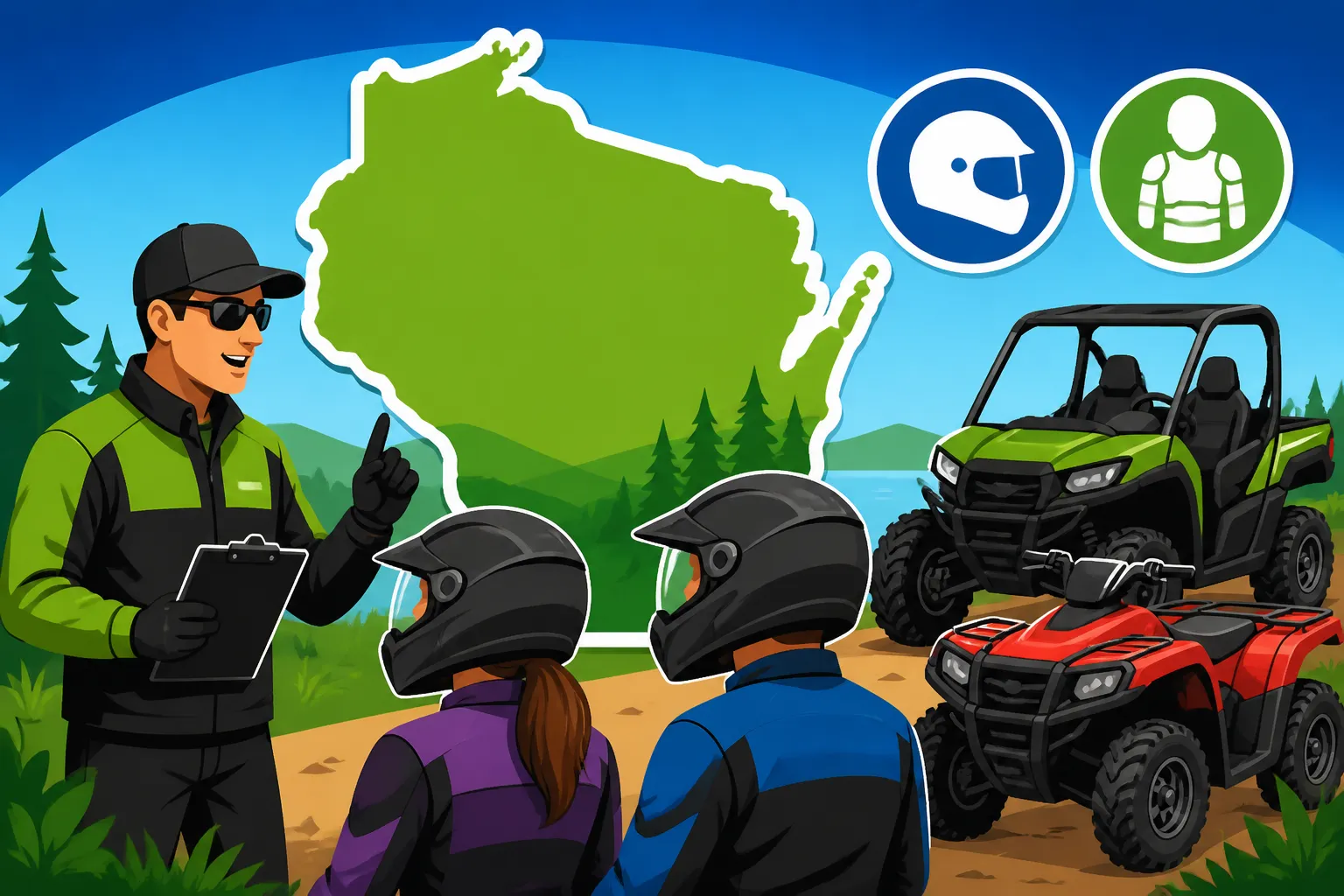
A hands-on class adds practical instruction to safety education. Depending on the course, students may review riding rules, inspect a machine, practice basic controls, and discuss how to respond to common trail situations. The exact format and amount of riding practice can vary by instructor and course.
Some offerings combine classroom or online study with an in-person skills session. Others may be in-person courses from start to finish. A session described as “hands-on” does not automatically mean that every student will ride an ATV or UTV; confirm what the schedule includes before enrolling.
Practice is about judgment as well as controls
A good class gives riders a chance to connect safety principles to real decisions. That may include checking the machine before riding, choosing a safe speed for conditions, keeping space between riders, and recognizing when a trail or route is unsuitable for a particular machine or skill level.
Students may also review topics such as helmets, passenger limits, visibility, and riding around other trail users. For a UTV, instruction can address seat belts and other occupant-protection equipment. What’s covered depends on the course, so ask the instructor whether the class is intended for ATV riders, UTV riders, or both.
Hands-on practice is particularly useful for beginners who have not yet developed consistent habits. A new rider can learn where key controls are, how to stop smoothly, and how to approach basic obstacles without treating public trails as a practice area. Parents can also use a class to understand what a young rider can safely manage and what supervision is appropriate.
A class is not a substitute for checking local riding rules. Wisconsin routes, trails, and private property can have different restrictions. Before taking a machine out, review Wisconsin ATV Safety Certificate Requirements and the rules for the place where you plan to ride.
It may not be a separate requirement
Wisconsin does not make a hands-on field session a universal requirement for every rider seeking safety certification. Course formats and available options can differ. Some students may complete an approved course online or in a classroom; others may choose in-person instruction that includes practical exercises.
That distinction matters: a recreational riding clinic, dealership demonstration, or informal lesson may be useful, but it should not be assumed to satisfy Wisconsin’s official safety education requirement. Before paying or attending, confirm that the course is an approved safety education option and ask how successful completion is recorded.
If you are comparing formats, Wisconsin Safety Courses Online and In Person explains the broader choices. For a hands-on class specifically, ask whether an online module or other work must be completed before the in-person date.
Who should take a class and what certification means
A hands-on class can benefit any new rider, but the state certification requirement depends on the rider and where the machine will be operated. Wisconsin’s age and certification rules are not identical for every ATV and UTV situation. Check the current requirements before registering, especially when a young person will be riding.
In general, Wisconsin requires safety education certification for certain younger and newer-generation riders using public riding areas. The rule is tied to a rider’s birth date and age, with separate considerations for ATV and UTV operation. The details are covered in The Wisconsin Rule for Riders Born On or After 1988 and Twelve for an ATV, Sixteen for a UTV. Confirm the current rule with the Wisconsin Department of Natural Resources before relying on a summary.
A certificate is evidence that the rider completed qualifying safety education. It is not a general license to operate any machine anywhere. Riders still need to follow local restrictions, age limits, equipment rules, and any requirements that apply to the trail or route. A safety certificate also does not replace a registration, trail pass, or other permit when one is required.
| Question | What to confirm |
|---|---|
| Does the rider need certification? | Check the rider’s age, birth date, machine type, and where it will be used. |
| Is this an approved course? | Verify that it is recognized for Wisconsin safety education, not only a recreational clinic. |
| Is the class for an ATV, UTV, or both? | Confirm the machine types covered and any age-related limits. |
| Is there an online prerequisite? | Ask whether coursework, a test, or another step must be completed before class day. |
| How is completion recorded? | Find out how the certificate or record is issued and how to access it later. |
Young riders and their families should check the rules before choosing a course, not assume that a class is open to every age. The class provider can explain its enrollment limits, while the state’s guidance determines whether the resulting credential meets Wisconsin requirements. See Wisconsin Rules for Riders Aged 12 to 15 for related age considerations.
A parent or guardian should also check whether the planned riding location has additional restrictions. A child who has completed safety education still needs to ride only where permitted and on a machine suitable for their size and ability. For public riding, course completion is one part of preparation, not permission to ignore supervision or equipment rules.
How to find and enroll in the right class
Start with Wisconsin DNR safety education information and look for currently available ATV or UTV courses. In-person dates may depend on instructor availability and location, so the nearest option may not be on the exact weekend you want. If the listing is unclear, contact the instructor before enrolling.
Use this process to avoid signing up for a class that does not match your needs:
- Check whether the rider needs a certificate. Review the current state requirements for the rider’s age, birth date, machine, and intended riding area.
- Search for an approved course. Use the state’s safety education information or contact a listed instructor. Ask directly whether successful completion satisfies Wisconsin’s certification requirement.
- Confirm the class format. Find out whether it is fully in person, a hybrid course, or a practical session attached to online study.
- Ask what the student will do. Confirm whether the class includes machine inspection, control practice, riding exercises, or classroom discussion. Do not assume that “hands-on” guarantees riding time.
- Check machine arrangements. Ask whether the student needs to bring a machine, whether one is supplied, and what machine types are accepted. If the rider is training on a UTV, confirm that the course includes UTV-specific content.
- Review age and supervision rules. Make sure the student is eligible for that class and learn whether a parent or guardian must attend or complete paperwork.
- Check the full cost and cancellation terms. Providers may handle registration costs, materials, and refunds differently. Confirm current details directly with the provider.
- Save proof of enrollment and completion. Follow the instructor’s directions for accessing the course record or certificate after passing.
If you already completed an online portion, bring any requested confirmation or completion information. If you have not, ask whether there is a deadline for finishing it before the in-person session. Arriving without a required prerequisite can mean missing the practical component or needing to reschedule.
Out-of-state riders should ask whether their existing credential is accepted in Wisconsin before enrolling in another course. Acceptance can depend on the certificate and the applicable rules. Out-of-State Certificates Wisconsin Accepts covers that question in more detail.
Questions to ask before you commit
A short call or email can settle the details that a course listing may leave out. Ask:
- Is this course approved for Wisconsin ATV or UTV safety certification?
- Does it cover ATVs, UTVs, or both?
- Is there an online portion, and must it be completed before the class?
- Will students operate a machine during the session?
- Must students provide their own machine or protective equipment?
- What should a student bring, and what happens if weather affects the class?
- How will successful completion be recorded?
The answers help distinguish formal safety education from a general introduction to riding. They also help you choose a class that suits the actual rider. A novice who needs control practice may benefit from an in-person session, while a rider seeking only to satisfy a certification requirement may find that another approved format is available.
Preparing for class and using what you learn
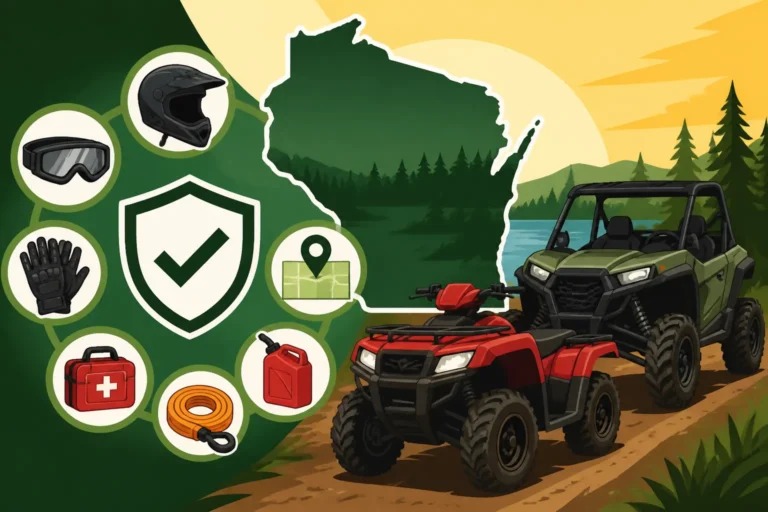
Follow the instructor’s equipment list rather than guessing. If the course includes outdoor practice, dress for the weather and for possible dirt, dust, or damp ground. Wear sturdy footwear and clothing that allows movement. If students are expected to bring a helmet or eye protection, confirm the required type in advance; equipment rules can vary by class and riding activity.
Do not bring a machine unless the provider has confirmed that it is required and suitable. If you do bring one, check the basic condition before class: controls should work properly, tires should be in usable condition, and there should be no obvious fluid leaks or loose parts. Tell the instructor about any mechanical issue rather than trying to work around it during an exercise.
For a young rider, make sure the machine fits the rider and that the adult attending understands the course expectations. A class can teach safer habits, but it cannot make an oversized or poorly maintained machine appropriate. Bring any forms or completion information requested by the provider, and arrive with enough time to check in and hear the safety briefing.
During instruction, ask questions when a control or rule is unclear. New riders often benefit from practicing simple actions deliberately: starting and stopping, turning at a controlled pace, looking ahead, and leaving room to react. The purpose is not to prove speed or skill. It is to build repeatable habits before riding in a place where other people, changing surfaces, and limited visibility add pressure.
After the course, keep access to the certificate or completion record and make sure the rider understands when it must be carried or presented. Does a Wisconsin Safety Certificate Expire? can help with questions about the certificate over time. If a certificate is lost or its details are wrong, use the state’s process for correcting or replacing the record rather than assuming a class receipt is equivalent.
Finally, match the next ride to the student’s actual skill level. Start with a suitable, permitted location and manageable conditions. Review the local route or trail rules, confirm that the machine is properly registered or permitted for that use, and check that required protective equipment is available. A class gives riders a stronger foundation; regular judgment and practice are what make that foundation useful.
Disclaimer
This article is for general informational purposes only and does not constitute professional advice. Laws, prices and regulations vary by location and change over time. Consult a qualified professional for guidance on your specific situation.