Wisconsin Trails Suited to Beginners
Choosing a first Wisconsin ATV or UTV trail can feel harder than it should: one route may be sandy and forgiving, while another nearby section has deep ruts, tight turns, or changing conditions. This guide explains what “beginner-friendly” really means, which areas are worth researching, and how to plan a first ride without mistaking an easy-looking map for an easy day.
What makes a Wisconsin trail beginner-friendly
Look beyond the trail name
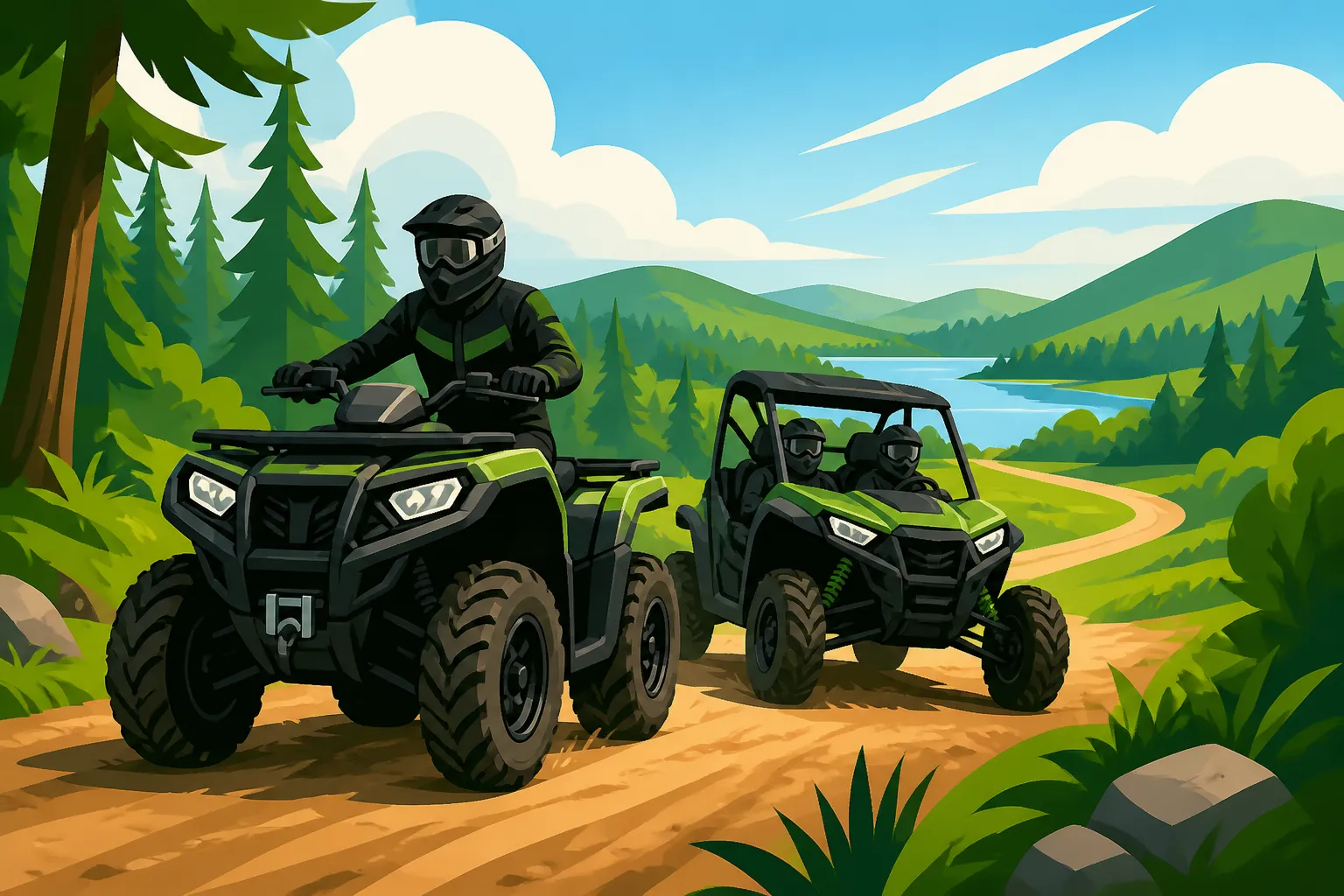
A beginner-friendly trail is not necessarily flat, smooth, or free of surprises. It is a route where a new rider can travel at a comfortable pace, see hazards with time to respond, and find places to pause without feeling pressured by difficult terrain or traffic.
In Wisconsin, trail surfaces can change within a single ride. A route may begin on packed dirt, run into loose sand, and later include rocks, roots, muddy stretches, or a narrow bridge. Rain, recent maintenance, seasonal closures, and the number of other riders can all affect how challenging the same trail feels. A route described casually as “easy” by one person may feel stressful to someone on a full-size UTV, a youth machine, or a quad with limited ground clearance.
Think about the rider and machine as well as the trail. A newer rider may feel more comfortable on a wide, visible trail with gradual turns than on a narrow route with blind corners. A longer-wheelbase side-by-side can be harder to maneuver in tight sections, while a small ATV may have less clearance for ruts or rocks. If you are riding as a group, the least experienced operator should help set the pace and route.
Before heading out, check any official difficulty descriptions, trail maps, and local rules. The guide to Wisconsin Trail Difficulty Ratings can help you understand the kinds of information to look for, but ratings do not replace your own judgment about conditions and experience.
Match the area to your first-ride goals
For a first outing, a short loop or an out-and-back route is often more manageable than a long point-to-point ride. You can see how the machine handles, take breaks, and turn back if conditions feel beyond your comfort level. A nearby staging area, clear trail signage, and a reasonable way to return to your vehicle can make a first trip less stressful.
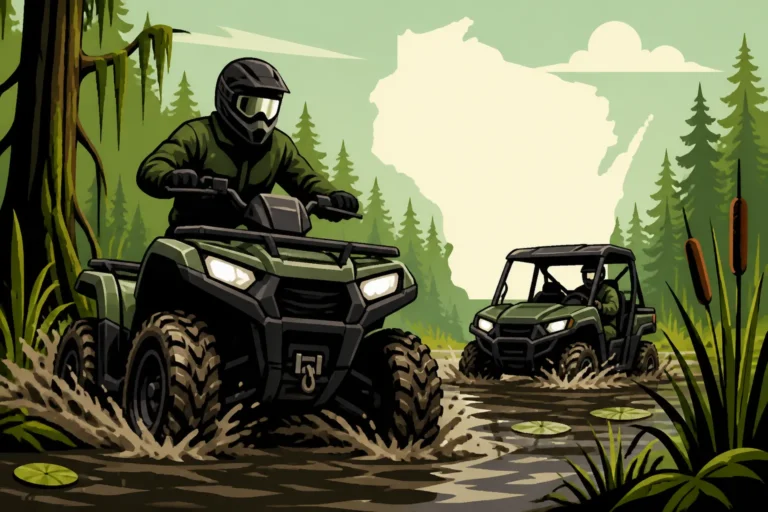
Some Wisconsin areas are known for particular surface characteristics, but that is not the same as a guarantee of easy riding. Black River State Forest, for example, is associated with sandy riding, while forest systems in northern Wisconsin can include a mix of surfaces and more remote stretches. Sand can be forgiving in some situations but tiring or unpredictable in others, especially when it is loose, rutted, or churned up by traffic. Rocky or root-filled sections demand different skills and may be uncomfortable for a new rider.
A useful first-trip question is not just “Is this area beginner-friendly?” Ask: “Which specific open route is suitable for my machine and experience today?” Use the area’s current map and local information to answer that. Black River State Forest ATV Riding and Wisconsin County Forest Trail Systems can help you explore different kinds of riding areas before narrowing down a route.
Compare areas carefully
Use the table as a starting point for research, not as a promise about any particular trail segment. Conditions and access can vary by route, season, and local management.
| Area or riding setting | What a beginner might appreciate | What to check before choosing it |
|---|---|---|
| Black River State Forest area | A recognizable riding destination with routes to explore and opportunities to plan a shorter outing | Surface conditions, open routes, current closures, machine-width rules, and how sandy sections may feel for your group |
| County forest trail systems | Routes managed within distinct local systems, often with maps and area-specific information | The county’s current map, difficulty notes, permitted vehicle types, and any seasonal restrictions |
| Routes near a Northwoods town | Potential access to services or a place to stop as part of a planned ride | Whether the route is actually open to ATVs or UTVs, local ordinances, signs, and road-crossing requirements |
| A short loop near a staging area | A simple way to test your comfort and machine handling without committing to a long ride | Parking, trail connections, current conditions, and whether the route returns conveniently to your starting point |
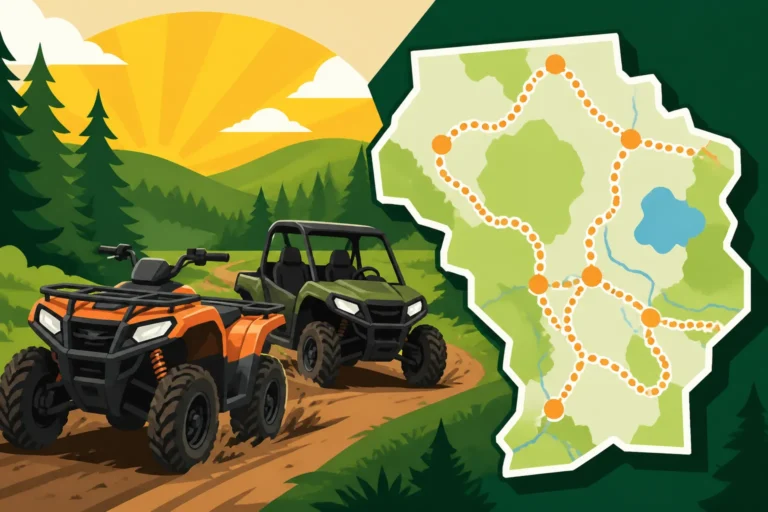
When comparing destinations, browse the map before you leave home. onX Offroad can be useful for viewing route layouts and getting a sense of distance, but treat an app as a planning aid rather than final authority. Confirm closures, access, and local restrictions through the land manager or county information for the specific area.
Wisconsin riding areas to research for a first trip
Start with a manageable section of a larger trail system
Large systems can offer flexibility: instead of committing to a full day’s ride, you can choose a shorter section and build confidence gradually. For a new rider, the best route may be a modest loop near a staging area rather than the most famous or longest route in the region.
Black River State Forest is one option to research, particularly if your group wants to experience sandy terrain. Do not assume every section will feel alike or that sand automatically means easy riding. Loose sand can make steering feel different, and ruts can form where many machines travel. If a group includes someone new to riding, choose a route that allows frequent stops and avoid pushing through a section simply because the rest of the group is comfortable.
County forest systems are another practical place to begin researching. They vary considerably, so one county’s trail network should not be treated as interchangeable with another’s. Check the county’s map, the trail descriptions, current openings, and the machine restrictions that apply. Finding a Wisconsin County Trail Map is a useful next step when you are comparing local options.
A map app such as onX Offroad may help you see how routes connect and estimate how ambitious a planned loop could be. Pair that view with official trail information; an app view alone may not tell you whether a segment is currently closed, has a temporary restriction, or is suitable for your vehicle.
Consider shorter rides near towns and staging areas
A trail near a town can be convenient, but proximity to a community does not mean every road or connecting route is open to off-highway vehicles. Wisconsin road routes depend on local decisions and signage. Confirm the route is legally open before riding it, and be ready to follow posted rules when crossing or using a road. The overview Riding an ATV on a Wisconsin Road Route explains why a mapped connection should never be assumed to be an open route.
For a first ride, staging logistics matter nearly as much as the trail itself. An accessible parking area, room to unload safely, and a clear way to locate the trail can take a lot of pressure off the day. If the parking area is crowded or confusing, a newcomer may already feel flustered before the ride starts. Check whether the trailhead has space for your truck and trailer, and avoid blocking other vehicles or access points.
It can also help to choose a destination where you have a simple backup plan. If the route is rougher than expected, you want to know where you can turn around or return to the staging area. Review your planned route with the group before unloading, and agree that anyone can call for a break or a change of plan. Wisconsin Trailhead Parking and Staging offers more planning considerations for getting started smoothly.
Verify the trail is open and appropriate that day
Trail access can change with weather and seasonal conditions. Spring thaw is a common reason to pay close attention to closures and surface conditions, and heavy rain can leave ruts, mud, or water crossings that were not part of the plan. A trail shown on a general map is not necessarily open on the day you arrive.
Check current trail status before driving to the area, then look again for signs and closure notices when you get there. Local maps and official notices are especially important when a system has multiple trail segments or different rules across nearby land. Checking Wisconsin Trail Status Before You Drive can help you build this check into your planning routine.
Do not rely on a previous visit or a friend’s old description as proof that a route is open now. A familiar trail can be affected by maintenance, weather, forestry work, or a temporary closure. If conditions look worse than expected, turn back or choose a more suitable section. Protecting the trail and avoiding a difficult recovery are better outcomes than completing a route at any cost.
Plan a first ride that builds confidence
Prepare the rider, machine, and route
Before the trip, agree on a realistic distance and pace. New riders often underestimate how much attention even a moderate route requires. A few hours of careful riding can be more tiring than expected, especially when the surface is unfamiliar, the weather is warm, or the group is stopping frequently to check directions.
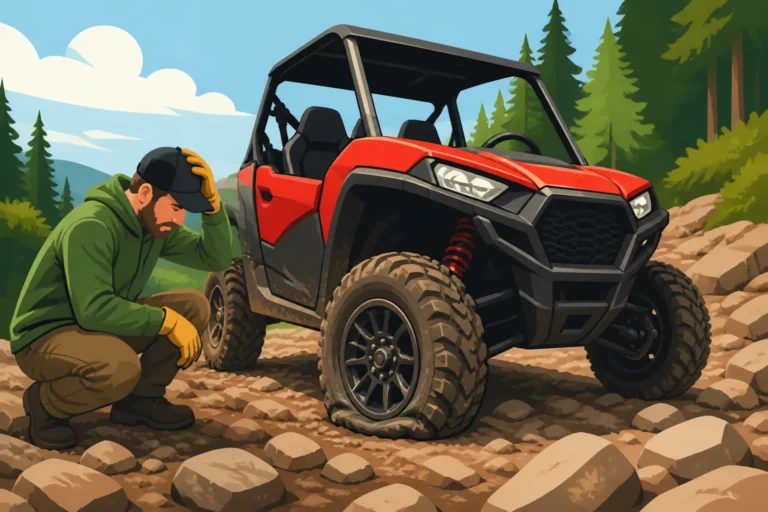
Check the machine before loading it. Make sure tires look ready for the terrain, brakes and lights work, and the vehicle is in sound operating condition. Bring required safety equipment and any items needed for your particular machine and outing. If you are traveling into a remote area, think about what you would do after a flat tire, a mechanical problem, or a change in weather. What to Carry on a Northwoods Ride can help you make a practical packing list.
Plan the route with a clear turnaround point. For example, a new rider might decide in advance to ride a short loop and return to the staging area before attempting a longer connection. That makes it easier to stop while everyone is still comfortable rather than waiting until fatigue sets in. Keep the first outing flexible: if the trail is busier, rougher, or wetter than expected, shorten the plan.
Use onX Offroad or another map tool to review the route, note intersections, and understand where you expect to turn. Save or carry the information in a way you can access if cell service is poor. Then compare what you see on the screen with official signs and current local information. A digital route can support good decisions, but it cannot make a closed or unsuitable segment safe to ride.
Ride at a pace that leaves room to react
A beginner does not need to keep up with the fastest rider in the group. Ride slowly enough to respond to loose surfaces, ruts, changing sightlines, and other trail users. Leave space between machines so the rider behind has time to react if the person in front slows down or stops. On blind corners, reduce speed and stay on the appropriate side of the trail.
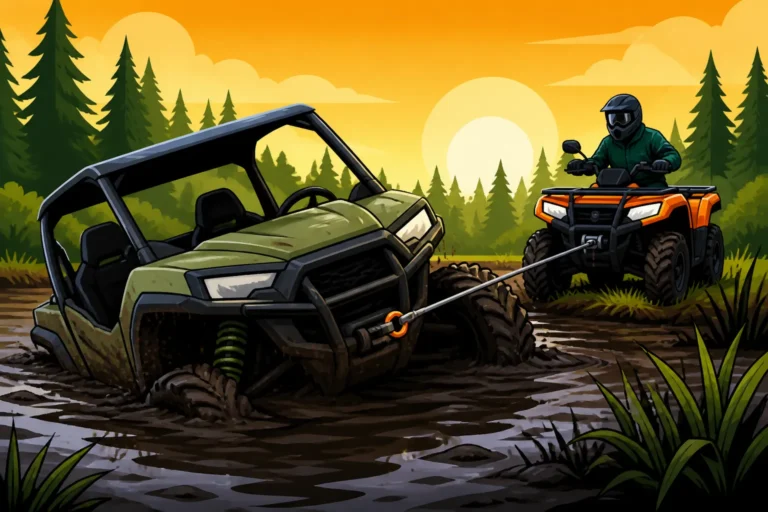
When you encounter an unfamiliar obstacle, stop somewhere safe and assess it rather than following another machine through automatically. Consider whether the route is within your skill level and whether your machine can clear it without damage. If you are unsure, turn around or choose another route. Feeling pressured to continue is a common way a pleasant ride turns into a stressful one.
Use breaks to check in with the group. Ask whether anyone is tired, uncomfortable, or having trouble controlling the machine. A new rider may not want to slow everyone down, so make it clear before the ride that stopping is expected and welcomed. Children and young riders may need more frequent breaks and closer supervision. Review Wisconsin’s ATV Safety Certificate Requirement and the applicable age and operating rules before bringing a young rider.
Make the outing enjoyable, not a test
It is tempting to judge a first ride by how many miles you cover. A better measure is whether everyone gets back safely, learns something about the machine, and feels comfortable enough to ride again. A short route with a relaxed pace is a successful first outing, even if you never reach the destination you originally had in mind.
If you are visiting from outside Wisconsin, check whether your machine needs a trail pass for the riding you plan to do. Registration and trail-pass rules are not the same question, and requirements can depend on the machine and the place you intend to ride. The guide to Wisconsin’s Non-Resident Trail Pass is relevant for visitors planning to use Wisconsin trails.
Keep your route choices conservative until you understand how the terrain affects your machine and riding style. After the trip, note which surfaces felt comfortable, where you had to slow down, and whether your route length was reasonable. That gives you a useful starting point for the next ride. If you used onX Offroad to plan, compare your planned route with what you actually rode, then verify any changes against local maps before repeating the trip.
A simple checklist for choosing a beginner route
Before setting out, confirm each of these details:
- The route is open. Check current notices and follow all posted signs.
- The vehicle is allowed. Confirm any width or vehicle-type restrictions for your ATV or UTV.
- The surface suits your group. Consider sand, rocks, ruts, mud, and the experience of the least confident rider.
- The route is manageable. Choose a short loop or a clear turnaround point rather than committing to a long ride.
- The starting point works. Confirm parking, unloading space, and how to reach the trail.
- The group knows the plan. Agree on pace, spacing, stops, and when to turn back.
- You have a backup. Carry navigation information and be prepared to change plans if weather or trail conditions shift.
A beginner-friendly Wisconsin ride is less about finding a universally easy trail and more about choosing the right open segment for your group, machine, and conditions that day. Start small, check local information, and give new riders room to learn at their own pace. That approach makes it easier to enjoy the ride and come back ready to explore more.
Disclaimer
This article is for general informational purposes only and does not constitute professional advice. Laws, prices and regulations vary by location and change over time. Consult a qualified professional for guidance on your specific situation.