First Aid Far From a County Trailhead
A crash miles from a Wisconsin county trailhead can turn a small injury into a serious problem when the group has poor cell service, no clear location, or an incomplete first-aid kit. This guide explains how to prepare, respond calmly, and get help on the trail, whether you’re riding near Eagle River, Black River Falls, or closer to home.
Prepare before riding beyond the trailhead
Build a kit for the people and conditions on your ride
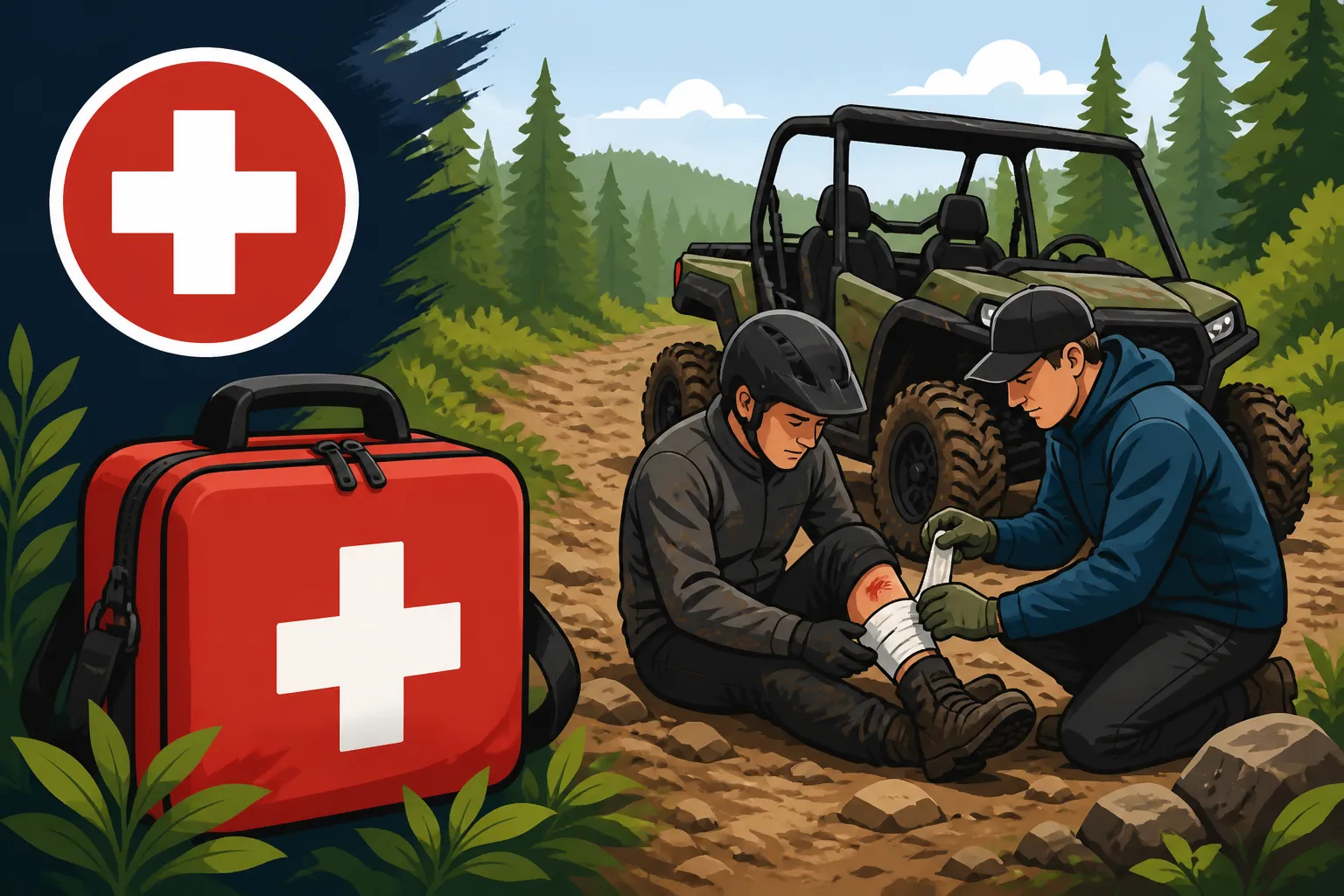
A first-aid kit for an ATV or UTV trip needs to be practical to carry and easy to reach. A bulky kit buried under recovery gear won’t help much when someone is bleeding beside the trail. Pack supplies in a waterproof bag or case, secure it so it won’t slide around, and tell every rider where it is.
Useful basics include disposable gloves, gauze pads, rolled gauze, adhesive bandages, medical tape, an elastic wrap, antiseptic wipes, tweezers, small scissors, and a CPR face shield. Add any personal medication a rider may need, such as prescribed emergency medication, and keep it in its original packaging when possible. A compact emergency blanket can help protect an injured or cold rider from wind and damp ground.
The right kit depends on the people and length of the trip. A short loop with experienced adults is different from a full-day ride with children, older relatives, or someone with a known medical condition. Check the kit before each outing: replace used supplies, inspect packaging, and remove anything damaged or expired. If you don’t know how to use a tool or dressing, learn before you rely on it.
Don’t let the kit create false confidence. First aid supplies support basic care while you arrange help; they don’t replace emergency responders or proper training. A first-aid or CPR course can make it easier to stay focused when a real person is hurt and everyone else is looking to you for direction.
Plan for location, communication, and weather
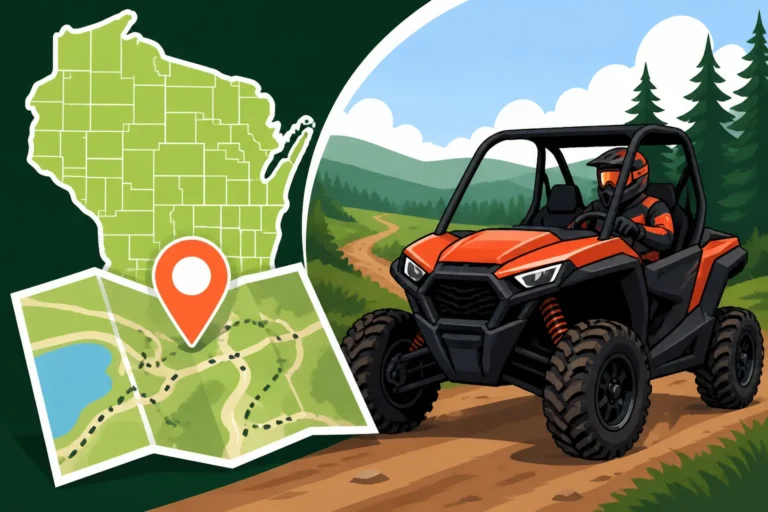
Before leaving the staging area, identify the trail system, likely route, and a backup plan if conditions change. Trail maps, junctions, road crossings, and recognizable landmarks can all help responders find you. Download maps for offline use before you lose service. Riders who use onX Offroad can prepare by checking the route and map access ahead of time, rather than assuming a phone will load everything once they’re deep in the woods.
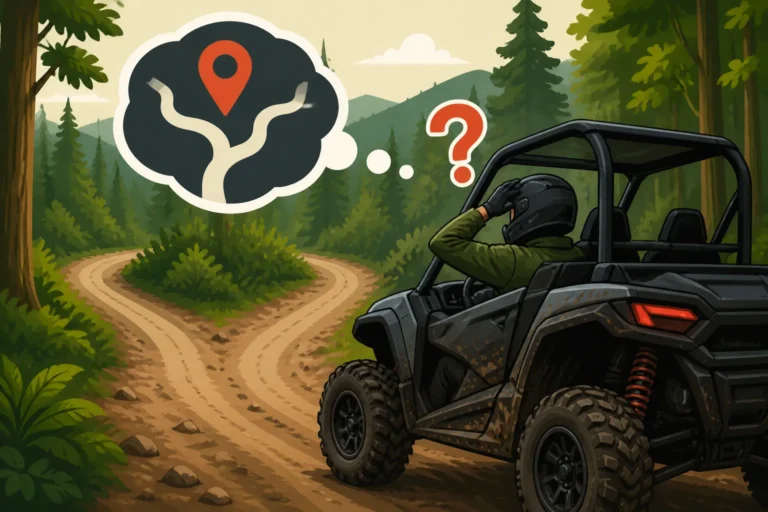
A map is useful only if someone can interpret it. Share the planned route and expected return time with a person who isn’t riding with you. Agree on what that person should do if the group doesn’t check in. On the ride, note major junctions and signs instead of assuming you’ll remember every turn later. If a crash happens, a clear location description may save precious time.
Cell coverage can be patchy in northern Wisconsin and in wooded or low-lying areas. Fully charge phones, consider carrying a power bank, and keep a phone protected from water and impact. If you ride in places with unreliable service, a satellite messenger or other emergency communication device may be worth considering. Learn how your device works before departure; an unfamiliar device is difficult to troubleshoot under stress.
Weather belongs in the plan, too. A warm afternoon can become cold and wet, and a rider who is injured or sitting still can lose heat quickly. Pack layers and rain protection, and know when the group should turn back. For additional preparation advice, see [What to Carry on a Northwoods Ride] and [Cell Dead Zones in Northern Wisconsin].
Respond calmly when someone is injured
Make the scene safe before treating the rider
When a rider goes down, pause before rushing in. Look for immediate hazards: moving machines, unstable terrain, traffic, fire, leaking fuel, or other riders approaching a blind corner. If it’s safe, shut off nearby machines and ask someone to warn approaching riders from a visible position. Don’t put yourself in danger trying to help.
Assign simple roles so the group doesn’t crowd the injured person. One rider can call for emergency help, another can guide responders from a nearby junction, and someone else can gather the first-aid kit. If you have a group, ask one person to keep other machines and bystanders clear. Clear roles reduce confusion and leave the person giving care with room to work.
Approach the injured rider calmly and explain what you’re doing. Ask what happened and where it hurts, but don’t assume that a rider who can speak is uninjured. Watch for changes in alertness, breathing, bleeding, pain, or ability to move. If the person seems confused, unusually drowsy, or increasingly unwell, treat the situation as urgent and seek emergency help.
A serious crash can involve injuries that aren’t obvious at first. Avoid moving someone with a possible head, neck, back, or serious limb injury unless they face an immediate danger where they are. Don’t remove a helmet just to make the rider more comfortable. If you need to provide care, follow dispatcher instructions and act within your training.
Call for help and give responders useful details
Call emergency services as soon as you identify a potentially serious injury. If you have poor reception, try moving only as far as necessary to reach service while making sure someone stays with the injured person. Don’t leave an injured rider alone if you can avoid it. If no one can get a call through, send a small pair of riders to a known point with service or to get help, while the rest remain with the person and follow the safest available plan.
When you reach a dispatcher, describe the injury and location in plain, concrete terms. Give the trail system or county forest name, the nearest trail number or junction sign, a road crossing, and any distinctive landmark. If you have GPS coordinates, read them slowly and confirm the format if asked. A map pin or a location from an app such as onX Offroad can help your group describe where it is, but tell dispatchers what the map shows rather than assuming they can access your screen or app.
Keep the phone available if the dispatcher needs to call back. Follow their instructions, and don’t hang up until they say to do so. If another rider is guiding responders, give that person a clear meeting point and make sure they can be seen safely. A reflective vest, bright clothing, or a flashlight can help at dusk, but the guide should stand well clear of moving traffic and machines.
For location planning before a ride, [Reading a Wisconsin County Trail Map] and [Checking Wisconsin Trail Status Before You Drive] can help you understand the system and avoid surprises. Knowing which trail you’re on is not just a navigation convenience; it can make an emergency call more effective.
Provide basic care while help is on the way
Control bleeding and protect the injured rider
For heavy bleeding, use gloves if available and apply firm, direct pressure with clean gauze or cloth. Keep pressure steady and add more material on top if blood comes through; lifting the first layer to check repeatedly can disrupt the clotting process. If bleeding is severe or does not respond to direct pressure, tell the dispatcher and follow their instructions. Use a tourniquet only if you have one and know how to use it, or if an emergency professional directs you.
For minor cuts, clean the wound with clean water when available, cover it with a dressing, and keep an eye on it. Don’t put dirt, trail debris, or unclean items into a wound. If something is embedded deeply, don’t pull it out; stabilize it as best you can and get medical help. When the injury is more than minor, don’t let the apparent size of a cut distract from the possibility of a larger injury from the crash.
Help the person stay as still and comfortable as the situation allows. Protect them from cold, wind, and wet ground with a jacket or emergency blanket, but avoid overheating them. Reassure them and keep checking whether they are alert and breathing normally. Don’t give food, drink, or medication unless a medical professional or dispatcher advises it, especially when a serious injury is possible.
If the rider is unconscious, having trouble breathing, or worsening, make that clear to the dispatcher immediately. If they stop breathing normally, follow the dispatcher’s CPR guidance and use an AED if one is available and you know how to operate it. Don’t delay calling for help while searching for supplies or trying to manage a serious emergency alone.
Recognize cold stress and other trail-side problems
Wisconsin weather can complicate an injury even when the original problem seems manageable. A rider who is wet, chilled, exhausted, or sitting still may become dangerously cold. Shivering, confusion, clumsiness, and unusual sleepiness are reasons to take the situation seriously and seek medical guidance. Move the person out of wind and rain if it’s safe, insulate them from the ground, and add dry layers or a blanket.
Heat and dehydration can also become problems on a long ride, especially when riders push through fatigue or fail to drink. Headache, weakness, nausea, dizziness, or confusion can be warning signs. Stop the ride, get the person to a safer, cooler place, and seek medical advice if symptoms are significant or worsening. Don’t encourage someone who is confused or severely ill to keep riding.
Ticks, scrapes, and minor sprains may not require emergency response, but they still deserve attention after the ride. Remove a tick with tweezers by grasping close to the skin and pulling steadily; avoid crushing it or covering it with substances. Clean the bite area and monitor it afterward. For a suspected sprain, rest and protect the injured area, and get medical care if pain is severe, the limb looks deformed, or the rider cannot use it normally.
A first-aid kit can help with these smaller problems, but it should not become a reason to delay professional assessment when symptoms are serious. If you’re unsure whether an injury needs urgent care, contact emergency services or a medical professional and describe what you see.
Get the group and machine out safely
Decide whether the ride should end
After an injury, the group may feel pressure to continue because the rider says they’re fine or because the vehicles are still working. Take a conservative approach. A rider with pain, dizziness, confusion, weakness, or limited movement should not be expected to operate a machine. A crash can also damage steering, brakes, tires, or lights even when the damage isn’t obvious at first.
If emergency responders are coming, keep the scene accessible and follow their directions. Don’t move machines in a way that blocks access or creates another hazard. If the incident is not an emergency but the rider cannot continue safely, arrange a suitable way to get them and the machine back. That may mean calling a friend, a towing service, or the trail system’s appropriate contact rather than trying to limp out on a damaged vehicle.
The person who is shaken may not be the best judge of whether they can ride. Ask another experienced adult to make the decision, and don’t let embarrassment or concern about slowing the group override safety. If anyone has had a head impact, feels confused, or develops worsening symptoms, seek medical assessment rather than assuming rest on the trail is enough.
Debrief and improve the next ride
Once the immediate situation is over, write down the trail location, approximate time, what happened, and what supplies were used. Replenish the kit and check whether the group had difficulty communicating or identifying the location. If nobody knew the junction name or map reference, make that a preparation task for the next outing.
Talk through the response without blame. Maybe the kit was difficult to reach, a phone battery was nearly dead, or the group had no plan for guiding responders. Those are practical problems that can be fixed. Update the route-sharing routine, review basic first aid, and make sure every rider knows how to stop, signal, and ask for help.
Preparation also means choosing a route that fits the group’s experience and equipment. Check trail conditions, closures, and access details before heading out, and carry a map even if you normally navigate by phone. For broader trip planning, [Planning a Wisconsin Riding Trip] and [First Aid Far From a County Trailhead] offer related preparation topics; for support on a remote ride, [Carrying a Satellite Messenger Up North] may also be useful.
Disclaimer
This article is for general informational purposes only and does not constitute professional advice. Laws, prices and regulations vary by location and change over time. Consult a qualified professional for guidance on your specific situation.