Little Rice Trail System in Oneida County
A ride on the Little Rice Trail System can be a great way to explore Oneida County, but planning matters: trail access, seasonal closures, road connections, and staging options can vary across the area. This guide explains how to prepare, read the local map, choose a suitable ride, and avoid the common mistake of assuming every nearby road or forest track is open to ATVs.
Getting to know the Little Rice Trail System
Where the trails fit into Oneida County
The Little Rice Trail System is one of the riding options in Oneida County, a popular Northwoods destination where trail corridors, county forest land, town roads, and local communities can connect parts of a day’s ride. It is useful to think of the system as a network to plan around, rather than as one uninterrupted loop with identical conditions from end to end.
That distinction matters when you are traveling with a group. One rider may picture a short afternoon outing, while another expects to cover a lot of ground and stop for lunch in town. Before you set off, identify the trail segments you actually want to ride, where you can legally enter them, and what route will bring you back to your vehicle or lodging.
Little Rice is also part of a wider regional riding picture. Riders looking to make a longer trip may compare it with other local systems, including the Enterprise Trail System Access area and routes closer to Rhinelander. A broader overview of Where to Ride Near Rhinelander can help you decide whether Little Rice should be your main destination or one stop in a multi-day itinerary.
What to expect from a Northwoods ride
A ride here is not only about the trail surface. Forest surroundings, changing weather, road crossings, and the distance between useful services can all shape the day. A dry, comfortable morning can turn into a dusty afternoon; after rain, low spots and soft sections may take longer to negotiate. Give your group enough time to ride at the pace of its least-experienced member.
Conditions can also change as the season progresses. Spring thaw is a particularly important time to check local notices and closures. Riding a trail that is temporarily closed can damage the surface and create problems for everyone who uses it later. Even when a route appeared open on a previous visit, do not assume that it remains open for your next trip.
Set expectations before you unload. If someone in your group wants a leisurely ride with plenty of stops, and someone else wants to cover as much ground as possible, agree on a plan that works for both. For local route links and riding options, Little Rice Connecting Road Routes may be useful to review alongside the main trail map.
Planning a route that suits your group
Start with a map, then confirm local access
Begin with an up-to-date county trail map and identify the trail segments, road connections, parking areas, and turnarounds you expect to use. A map helps you understand the overall layout, but it should not be treated as permission to ride every line it displays. Some lines may represent roads or other features with separate rules, and open status can change.
A useful first step is to read Reading a Wisconsin County Trail Map. Pay attention to the map legend and the difference between marked ATV trails, authorized road routes, forest roads, and private property. If a line is unclear, pause and confirm what it represents rather than deciding that a visible track must be open to motorized use.
Digital mapping can make it easier to follow your route, especially when you are unfamiliar with the area. Some riders use onX Offroad to review mapped routes and keep a sense of where they are, but it should be one planning tool, not a substitute for posted signs or official local information. Download or save what you need before leaving a reliable connection, and carry a backup plan in case your phone battery runs low.
Match the ride to time, ability, and machine
The best route is not necessarily the longest one. Consider how long your group wants to be out, how comfortable everyone is with uneven or wet terrain, and whether the machines are appropriate for the routes you plan to use. A beginner may enjoy a shorter out-and-back with a clear return point more than a complicated ride with several unfamiliar turns.
Be realistic about the whole day, not just the time spent moving. Loading and unloading, gear checks, breaks, trail intersections, and helping a rider who needs a moment all add up. If your group has children or first-time riders, leave extra room in the schedule. A relaxed ride with time to regroup is usually more enjoyable than racing to meet an overly ambitious plan.
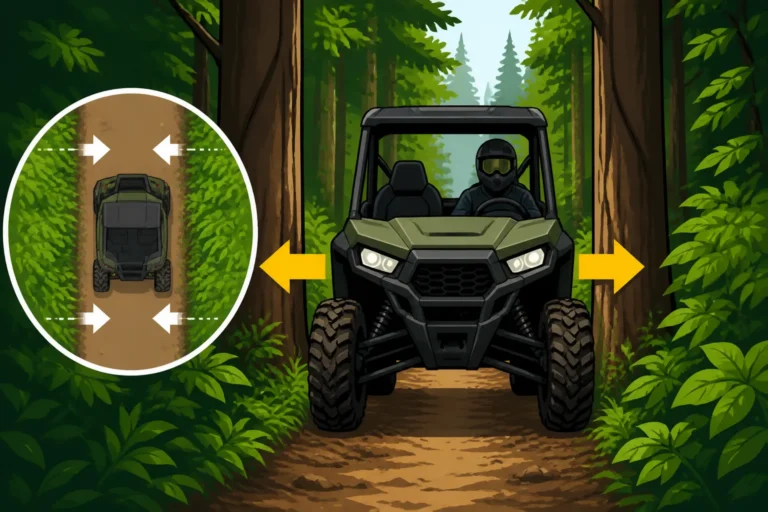
Machine dimensions matter, too. If you are bringing a wide side-by-side, check the trail information and local rules for any width restrictions before you leave home. The guide Wisconsin Trails Rated for Full-Size Rigs can help you think through that question statewide, but always confirm the rules for the particular route you intend to ride.
| Planning question | What to check | Why it matters |
|---|---|---|
| Is the route open? | Local trail status and posted notices | Seasonal closures can change access |
| Where can we start? | Staging and parking information | Not every road or trail entrance is a legal place to unload |
| How long should we ride? | Distance, group pace, breaks, and return route | Prevents a rushed trip or an unexpected late finish |
| Is the route right for our machines? | Width limits and local rules | Helps avoid arriving with a machine that cannot use the planned route |
| What is our backup plan? | Alternate route, turnaround point, and map | Useful when conditions or access differ from expectations |
Build in a simple return plan
Before you ride, agree on what happens if the group gets separated or someone needs to turn back. Pick a place to regroup at a major intersection, and make sure everyone knows the general direction back to the staging area. This is especially helpful when riders have different experience levels or when several machines are traveling together.
A small route plan can be as simple as noting your intended trail segment, your planned turnaround, and an alternate way back. Share it with someone who is not riding with you. If the route changes during the day, update the group so that everyone knows where you are heading.
Use onX Offroad or another mapping app to help orient yourself, but keep a map available offline and do not rely on cell service. Mobile coverage can be inconsistent in rural areas and forested stretches. For more preparation ideas, Cell Dead Zones in Northern Wisconsin covers why a ride plan should still work when a phone cannot load a map or place a call.
Checking trail status, rules, and connections
Confirm status before you drive
A trail map tells you where routes are, but it may not tell you whether a route is open today. Closures can be seasonal or related to conditions, maintenance, or local restrictions. Check current notices from the relevant county or local authority before loading the trailer, and look again for signs when you reach the area.
This is especially important during spring thaw and after heavy rain. A trail that looks passable to a large machine can still be vulnerable to rutting or surface damage. If a closure sign is posted, follow it even if the route appears dry or another rider tells you they went through recently. Respecting closures helps protect the trail and reduces the chance of a frustrating stop or citation.
Use Checking Wisconsin Trail Status Before You Drive as a planning reminder, then look for the local information that applies specifically to Little Rice. Online maps, visitor information, and onX Offroad may help you get oriented, but local signs and official closure notices take priority when they differ from a saved route.
Understand the difference between trails and roads
Not every road near a trail is automatically open to ATVs. Road access depends on the route, local authorization, and applicable signs or ordinances. A short road segment may be the connection that makes a ride possible, while another nearby road may be closed to ATV traffic.
Do not assume that a route is legal because you see tire tracks, a machine parked nearby, or a line on a general-purpose map. Check the local map legend and signage at intersections. If you are unsure whether a specific connection is permitted, choose a clearly marked route or confirm with the local authority before riding it.
For a broader look at the way town roads can fit into a ride, see Oneida County's 76 Miles of Town Roads. That topic can provide useful context, but it does not mean every town road is open to every rider. Read the signs and confirm the rules for the exact segment you plan to use.
Keep access and registration details in order
Before you ride, make sure the machine has the registration or trail pass required for your situation, and that required decals or proof are displayed as directed. Requirements can differ based on where a machine is registered and the kind of route being used. If you are visiting from another state, check the applicable Wisconsin requirements before the trip rather than sorting them out at the trailhead.
Keep any required documents accessible and follow rules for helmets, passengers, age, and equipment. These details can feel like a chore when all you want is to get moving, but they are easier to handle at home than after you have unloaded the machine. A quick pre-trip check also gives you time to fix a missing item without holding up the rest of the group.
Treat trail access as a shared responsibility. Stay on marked routes, avoid cutting corners at intersections, and do not ride across land simply because it appears unused. A respectful approach protects access for local riders and visitors alike.
Trailhead logistics and a comfortable day out
Choose staging and parking deliberately
Find out where staging is allowed before you arrive. A wide shoulder or convenient pull-off is not necessarily designated parking, and blocking a gate or access road can interfere with land managers, residents, or emergency vehicles. Look for an established staging area and check whether trailers can be left there for the length of your ride.
If you are towing a large trailer, think through turning room and unloading space before you commit to a location. A spot that works for a pickup may be awkward for a long trailer, especially if other riders are arriving at the same time. The guide Wisconsin Trailhead Parking and Staging offers a useful checklist for planning this part of the day.
Arriving with a simple setup routine can prevent a stressful start. Park so you can unload without blocking others, secure the tow vehicle and trailer, and keep loose gear from spreading across the parking area. When you return, take a quick look around for tools, straps, gloves, and trash before heading out.
Pack for changing conditions
Bring more than the bare minimum for the ride you hope to have. Water, snacks, weather-appropriate layers, basic first aid supplies, and a charged phone are sensible starting points. A small repair kit and tools suited to your machine can be valuable, particularly if your group plans to ride away from a busy staging area.
Dust and mud affect comfort as much as they affect the machine. Goggles or eye protection, gloves, and clothing that can handle trail grime make the ride more pleasant. If the forecast or conditions call for rain, pack a dry layer separately so that one wet stretch does not leave you cold for the rest of the day.
Do not forget fuel planning. Estimate your needs for the route, but allow for slow sections, detours, and the possibility that the group will ride longer than expected. Fuel Planning for a Wisconsin Trail Day is a useful companion topic if you are building a full-day itinerary or traveling with multiple machines.
Prepare for limited service and small problems
A remote-feeling ride can become stressful quickly when a machine has a mechanical issue and the group has no plan. Tell everyone where the basic tools are, who has the map, and what to do if a machine cannot continue. If a rider needs help, stop somewhere safe and keep the rest of the group together rather than scattering to look for assistance.
Phone coverage should be treated as a convenience, not a guarantee. Save maps for offline use, keep devices charged, and consider carrying a backup power source. Agree on a meeting point before the ride begins so that riders are not depending on a call or text to reconnect.
For longer outings, think through recovery and transport options in advance. A flat tire or stuck machine is easier to manage when someone has suitable gear and the group knows how to use it. Avoid attempting a risky recovery just to keep the schedule. If the situation is beyond the group’s ability, prioritize safety and seek appropriate help.
Making Little Rice part of a bigger Northwoods trip
Decide whether to ride one system or combine destinations
Little Rice may be the main event for a short visit, or one part of a wider trip around Oneida County. Combining destinations can add variety, but it also adds driving, unloading, and route-planning time. If you have only one day, choosing a single system and riding it at an easy pace may be more enjoyable than trying to fit in several areas.
If you are planning multiple days, look at how the systems relate to your lodging, fuel stops, and trailer parking. Do not assume that two nearby trail networks connect directly or that you can legally ride between them. Confirm the connection using local maps and route rules before treating separate destinations as one continuous ride.
The Little Rice Trail System Mileage page can help you explore the system’s scale, while Enterprise Trail System Access may be useful if you are comparing nearby options. Use those details as part of a practical itinerary, not as a promise that every segment will be open or suitable on the day you visit.
Choose lodging and meals with the ride in mind
A comfortable base can make a Northwoods riding trip much easier. When choosing lodging, consider trailer parking, a place to clean up, and how far you will need to drive to reach the trail access you plan to use. Ask questions before booking if you have a large trailer or several machines; parking arrangements that work for a car may not work for a riding group.
Food planning is another small detail that can make a long day feel much better. Carry enough snacks and water for the route, and identify possible meal stops without assuming that a trail itself leads directly to a business. If you want to ride into a community, confirm which routes and road segments allow that trip.
For an overnight stay close to riding, Camping Beside Wisconsin ATV Trails offers ideas for thinking through campsite access and trip logistics. Keep the same care around campground rules, noise, and machine use that you would bring to the trail. A considerate visitor helps maintain good relationships between riding areas and the communities around them.
Leave the area ready for the next visit
At the end of the ride, check your machines for mud, loose parts, and trail debris before loading. Secure ramps and straps carefully, and make sure no fuel containers or gear are left behind. A quick cleanup also makes it easier to spot damage that might otherwise go unnoticed until the next trip.
Follow local rules for washing or maintaining a machine; do not assume that a trailhead or campsite has a suitable wash area. Dispose of trash properly and leave parking areas as you found them. If you notice a damaged sign, blocked trail, or hazardous condition, report it through the appropriate local channel rather than trying to repair or bypass it yourself.
A good Little Rice outing is built on a few practical habits: plan a route that fits your group, confirm access and trail status, carry what you need, and respect the signs along the way. Those steps leave more room to enjoy the ride and make it easier to return with confidence.
Disclaimer
This article is for general informational purposes only and does not constitute professional advice. Laws, prices and regulations vary by location and change over time. Consult a qualified professional for guidance on your specific situation.