Municipal Ordinances Wisconsin Riders Must Read
Wisconsin's trails and road routes offer some of the most scenic riding in the Midwest, but if you've ever tried to plan a multi-county trip or even just explore a new town, you've likely hit a wall of confusion. The state sets the baseline, sure, but what really gets riders scratching their heads are the unique rules each city, town, or village can throw into the mix. This often creates a frustrating patchwork of regulations that can turn an exciting adventure into a legal minefield. This guide is here to untangle the complexities of municipal ordinances for ATV and UTV riders in Wisconsin, helping you navigate the local landscape with confidence and avoid unexpected fines.
The Patchwork Quilt of Wisconsin ATV/UTV Ordinances
Navigating the rules for ATVs and UTVs in Wisconsin can often feel like trying to piece together a quilt made by a dozen different designers, all with their own ideas about color and pattern. You might be cruising along, enjoying a beautiful day on a designated road route in one town, only to cross an invisible line into the next municipality and suddenly find yourself in violation of a completely different set of rules. It's a common frustration, and one that many riders, myself included, have experienced firsthand. This isn't just about understanding state law; it's about diving into the hyper-local nuances that can make or break a ride.
Why Local Rules Exist
The simple truth is that while the Wisconsin Department of Natural Resources (DNR) sets statewide regulations for ATV and UTV use, local governments—cities, towns, and villages—retain significant authority to add their own restrictions. They do this because each community has unique needs, concerns, and a specific character they wish to preserve. What works perfectly well for a remote, sparsely populated township might be entirely unsuitable for a bustling tourist town or a quiet residential village.
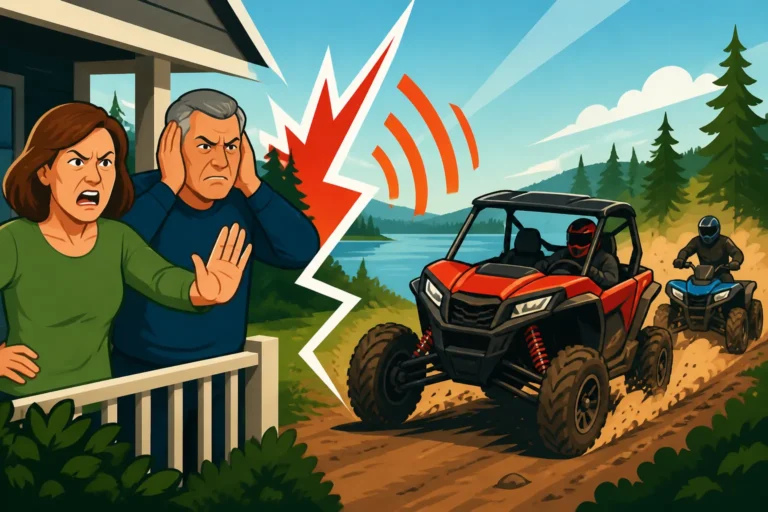
For instance, a small town heavily reliant on tourism might embrace ATV/UTV routes to bring visitors and their dollars to local businesses, while a more residential community might view the machines primarily as a source of noise and dust. These differing perspectives directly influence the ordinances they enact. Often, these local rules stem from valid concerns expressed by residents—think about the early morning rumbling of an exhaust near a neighborhood, or machines kicking up dust on a gravel road next to someone's home. Local officials have to balance the recreational desires of riders with the quality of life for their permanent residents, and that often means creating specific rules that address these local pain points. Safety is another huge factor; a town might restrict certain machines or speeds near schools, parks, or densely populated areas where children play.
Navigating the Information Maze
One of the biggest frustrations riders face isn't just that these local rules exist, but that they can be incredibly difficult to find and understand. There isn't a single, centralized database that compiles every city, town, and village ordinance related to ATVs and UTVs across Wisconsin. You might check the DNR website for trail and route maps, which are a fantastic resource for general access, but they often don't delve into the nitty-gritty of local curfews, specific equipment requirements, or localized speed limits that differ from the posted road speed.
Instead, you're often left to piece it together yourself. This can involve visiting individual county websites, then drilling down to specific town, village, or city websites. If you're lucky, they'll have their ordinances clearly posted and easily searchable. More often, you might find yourself sifting through meeting minutes, outdated PDFs, or generic legal code sections that aren't immediately clear to a layperson. I've spent hours trying to find a simple answer to a question like, "Can I ride my UTV on Main Street in this specific town after 9 PM?" only to come up empty-handed or with conflicting information. It’s an information maze, and it’s completely understandable why riders get frustrated trying to do the right thing.
The "Ignorance is No Excuse" Reality
Despite the challenges of finding accurate and up-to-date local information, the harsh reality for riders is that "ignorance of the law is no excuse." This means that even if you genuinely had no idea about a specific municipal ordinance, a conservation warden or local law enforcement officer can still issue you a citation. It’s a bitter pill to swallow when you've done your best to research, but it's the standard legal principle that applies to all traffic and recreational laws.
This principle makes it absolutely critical for riders to do their homework before heading out, especially when venturing into new territory. The fines for violating local ordinances can vary widely, from minor warnings to significant monetary penalties, and in some cases, even impact your riding privileges. For example, riding on a road not designated as an ATV/UTV route, or after a locally mandated curfew, could easily lead to a ticket. Wardens and local police are familiar with their jurisdiction's rules and are tasked with enforcing them to ensure public safety and respect for local residents. It’s a tough situation, but understanding this reality drives home the importance of thorough preparation before you hit the trails or routes. For more about what wardens might ask for, check out [What a Wisconsin Warden Asks a Rider For].
Common Restrictions You'll Encounter in Wisconsin Municipalities
Beyond the general state laws, many municipalities in Wisconsin implement their own specific restrictions on ATV and UTV use. These aren't always immediately obvious, and they can significantly impact your riding experience, turning a planned scenic cruise into a potential citation if you're not careful. It’s important to remember that these aren't arbitrary rules; they usually stem from local concerns about noise, safety, and community impact.
Hours of Operation and Curfews
One of the most common municipal ordinances you’ll encounter involves restrictions on the hours you can operate your ATV or UTV within town limits or on designated road routes. While you might be able to ride state trails from dawn until dusk, local ordinances can impose much stricter curfews, often for specific segments of the day or even for certain days of the week.
Towns implement these hours of operation primarily to mitigate noise complaints from residents. Imagine a quiet residential neighborhood where, after a peaceful evening, a group of riders rolls through at 11 PM or starts up their machines at 5 AM. These disturbances can quickly lead to strained relations between residents and the riding community. You might find ordinances that allow riding only between, say, 7 AM and 10 PM, or even shorter windows on Sundays. These rules can be particularly impactful if you're staying at a cabin or resort and planning early morning departures to hit the trails, or if you're enjoying a leisurely dinner in a trail town and hoping to ride back to your lodging after dark. Always check the specific ordinance for the town you're visiting to ensure your ride times align with their local rules.
Speed Limits and Posted Zones
While state law generally governs speed limits on public roads, municipalities often have the authority to impose lower speed limits specifically for ATVs and UTVs on their designated routes, or in certain zones. This is especially true in areas with heavy pedestrian traffic, near schools, parks, or through dense residential neighborhoods. You might be accustomed to riding at 25 or 35 mph on a county road, but a local ordinance could reduce that to 10 or 15 mph when you're within the village limits.
These localized speed limits are typically put in place to enhance safety for everyone sharing the road, including residents, pedestrians, and other vehicles. Local police departments are often the primary enforcers of these municipal speed limits, and they're well aware of the specific zones where reduced speeds are mandated. It’s not uncommon to see signs indicating these specific ATV/UTV speed limits, but they might not always be as prominent as you'd hope. Always keep an eye out for these specific postings, and remember that local enforcement can be quite diligent, particularly during busy riding seasons. Getting caught speeding in a restricted zone could lead to a fine, so pay close attention to any signage you see. For more general information about speeds, read [Speed Limits on a Wisconsin Route].
Equipment Requirements Beyond State Law
Another area where local ordinances can diverge from state law is in additional equipment requirements for ATVs and UTVs. While Wisconsin state law has baseline requirements for things like headlights, taillights, and spark arresters, a municipality might decide that certain areas or routes necessitate further safety measures. This is where researching local rules becomes truly essential, as you might need to equip your machine with something not required by the state.
For instance, some towns might mandate the use of a whip flag for increased visibility, especially if their routes cross busy roads or involve blind corners. Others might require turn signals on ATVs, even though state law doesn't universally require them for all ATV models. You might also find local rules requiring specific types of mirrors or even a horn, even if your machine's stock equipment doesn't include one. These added requirements are typically aimed at improving safety and making ATVs and UTVs more visible and predictable to other road users and pedestrians. Many riders turn to aftermarket suppliers like SuperATV for a wide range of accessories, including advanced lighting kits, mirrors, and signal systems, which can help ensure compliance with these varied local rules while also enhancing the overall safety of their ride. Neglecting these local equipment rules could lead to a roadside stop and a citation, even if your machine is perfectly legal under state statutes.
Insurance and Licensing: Local Add-Ons to State Requirements
While Wisconsin has statewide rules regarding ATV and UTV registration and rider education, local municipalities sometimes layer on additional requirements, particularly when it comes to insurance and operator licensing. This can be a real head-scratcher for riders who believe they've already met all necessary state mandates, only to find out a specific town has its own unique conditions for riding within its borders.
Municipal Insurance Requirements
You might be surprised to learn that some Wisconsin municipalities can, and do, impose their own insurance requirements for ATVs and UTVs operating on their designated road routes. This is separate from the general liability you might already carry on your machine or what's implied by a state trail pass. The state doesn't mandate liability insurance for all ATV/UTV operation, but a local government, concerned about potential accidents and liability on its public roads, may choose to do so.
These local insurance requirements are usually driven by a desire to protect the municipality and its residents in the event of an accident involving an ATV or UTV on their roads. They want to ensure that if property damage or injury occurs, there's an insurance policy in place to cover the costs. If a town has such an ordinance, you would be required to carry proof of insurance, just like you would for a car. This proof could be a physical insurance card or a digital copy on your phone. Failing to produce it to an officer if stopped could result in a citation. It's crucial to check the specific ordinances of any town you plan to ride through, especially if it's known for its extensive ATV/UTV route system. For more on this, see [Municipal Insurance Requirements in Wisconsin].
Driver's License Rules Some Towns Add
Wisconsin state law has clear guidelines for the age and certification required to operate an ATV or UTV. For example, riders born on or after January 1, 1988, generally need to complete an ATV safety course. However, some municipalities can, and occasionally do, add their own twists to these licensing requirements, particularly concerning who can operate a machine on their designated road routes.
While a 12-year-old with a safety certificate can generally operate an ATV on a public ATV trail in Wisconsin under direct adult supervision, a town might decide that on its road routes, only operators with a valid driver's license (for automobiles) are permitted, or they might impose a higher minimum age. This often stems from a local perception of increased risk when ATVs and UTVs share paved or gravel roads with cars, trucks, and bicycles. They want to ensure that anyone operating these machines on their roads has the experience and training that comes with a standard motor vehicle license. This can be particularly frustrating for younger riders or families planning trips, as it means a rider who is perfectly legal on a state trail might suddenly be prohibited from accessing local road routes. Always check specific town ordinances if you're riding with younger operators. For specific age and licensing details, you might also refer to [Driver's License Rules Some Wisconsin Towns Add] and [Wisconsin Rules for a Rider Turning 16].
Permitting and Local Fees
In addition to state registration fees and trail passes, some municipalities might levy their own local permits or fees for operating ATVs and UTVs within their jurisdiction. While not as widespread as other restrictions, it’s a possibility, particularly in areas that invest heavily in maintaining their local route systems or managing impacts from ridership.
These local fees could be for a specific "route pass" that only applies to that particular town's road network, or it could be a special permit required for participation in organized events like poker runs or club rides that traverse municipal property. The rationale behind these fees is often to cover administrative costs, contribute to local road maintenance, or offset the impact of increased traffic from recreational vehicles. It can be a nuisance to pay yet another fee on top of state requirements, but if a town has a robust and well-maintained route system, they might have legitimate reasons for implementing such charges. Always research these potential local fees when planning a trip to a new area, as they are another layer of cost and compliance that can catch you off guard.
Where You Can (and Can't) Ride: Route Specifics
One of the most critical aspects of understanding municipal ordinances in Wisconsin is knowing precisely where you are, and are not, permitted to ride your ATV or UTV. The lines between what's allowed and what's prohibited can feel blurry, especially when transitioning from state-managed trails to local road routes. This confusion is often at the heart of citations issued by local law enforcement or conservation wardens.
Understanding "Route" vs. "Trail"
It’s crucial to grasp the distinction between an "ATV/UTV trail" and an "ATV/UTV route" in Wisconsin, as this difference is fundamental to local ordinances. State-managed "trails" are typically off-road corridors, often through forests or along old rail beds, designed specifically for recreational riding. These are generally managed by the DNR or county forests. "Routes," on the other hand, are public roads (town, county, or sometimes even state highways in specific, limited circumstances) that a local municipality has designated and marked for ATV/UTV use.
The rules of the road apply much more strictly on routes. When you're on a route, you're sharing the pavement or gravel with cars, bicycles, and pedestrians, and municipalities often impose rules that reflect this shared environment. This distinction dictates everything from speed limits to equipment requirements and hours of operation. Mistaking a public road for a "trail" and operating your machine where it's not explicitly designated as a route is a common way to get into trouble. Always look for the official signage indicating that a road is an authorized ATV/UTV route. For a deeper dive, check out [What a Wisconsin ATV Route Actually Is].
Designated Road Routes and Their Limitations
When a town or county opens a road for ATV/UTV use, it becomes a "designated road route." However, these routes come with specific limitations that riders must understand. It's not a blanket permission to ride on all public roads within that municipality. Often, only certain roads, or specific segments of roads, are open, and they must be clearly marked with official ATV/UTV route signs.
These signs are your visual cue. If you don't see the signs, assume the road is not an ATV/UTV route. It’s easy to get carried away on a ride and inadvertently turn onto a non-designated road. This can happen particularly in areas where route systems connect, and it’s tempting to take a shortcut. Unfortunately, that shortcut could lead to a fine for illegal operation. Furthermore, even on designated routes, there might be specific rules about how you operate – for instance, whether you can ride the shoulder, where you can park, or restrictions on stopping at certain businesses. Many towns have developed extensive route networks to attract riders, such as the numerous [Wisconsin Towns With Miles of Open Roads] that openly welcome riders, but even within these rider-friendly communities, strict adherence to the marked routes and their rules is paramount. Always plan your ride using official maps and stick to the marked paths. [Riding an ATV on a Wisconsin Road Route] provides more details on this.
Off-Limit Areas and Trespassing
Beyond designated routes, local ordinances often explicitly prohibit ATV/UTV operation in specific areas within municipal limits. These off-limit zones are usually established to protect sensitive environments, ensure public safety, or preserve the quiet enjoyment of certain public spaces. Common examples include riding on sidewalks, through public parks (unless a specific trail is designated), on school grounds, or in private business parking lots without permission.
Riding in these prohibited areas can quickly lead to a trespass citation, whether it's on private land or publicly owned property not designated for ATV/UTV use. This is particularly relevant when you're looking for a place to park, or trying to access a business. It’s never acceptable to cut across private land or ride where signs clearly state "No ATVs" or "Private Property." The consequences of trespassing can range from a fine to having your machine towed, or even facing legal action from property owners. Always respect posted signs and assume that if an area isn't explicitly marked as a designated route or trail, it's off-limits. Being a responsible rider means respecting private property rights and understanding [Wisconsin Trespass Law for Riders].
Noise, Environmental Concerns, and Community Relations
Operating ATVs and UTVs in and around communities naturally brings up issues of noise and environmental impact. While most riders are conscientious, a few bad apples or a lack of awareness can quickly sour local sentiment towards the entire riding community. Municipal ordinances often reflect these concerns, aiming to strike a balance between allowing recreational riding and maintaining quality of life for residents.
Local Noise Ordinances and Decibel Limits
Wisconsin state law sets a maximum noise level of 96 decibels for ATVs and UTVs, measured at 20 inches from the exhaust outlet, with the engine at a specific RPM. This standard is designed to ensure machines aren't excessively loud. However, a local municipality has the authority to impose an even stricter noise ordinance within its jurisdiction. This means a machine that is perfectly legal under state noise standards might still be in violation of a local rule if it’s deemed too loud by a specific town.
These stricter local limits are almost always a direct response to noise complaints from residents. Early morning starts, late evening returns, or simply riding through a quiet residential area with an aftermarket exhaust can generate significant complaints. Even high-quality aftermarket exhaust systems, like those from SuperATV, which are designed to enhance performance and sound, might draw unwanted attention if a local ordinance has a lower decibel threshold. It's a tricky line to walk, and it highlights the need for riders to be extra mindful of their machine's sound, especially when riding through towns. Being considerate by reducing speed and revs when passing through residential zones can go a long way in preventing complaints and ensuring local routes remain open. For more on the state standard, refer to [The 96-Decibel Sound Test in Wisconsin].
Environmental Protection and Restricted Areas
Local governments are also deeply invested in protecting their natural resources, and this often translates into ordinances that restrict ATV/UTV use in environmentally sensitive areas. While state and federal laws protect large swaths of land, municipalities can add their own layers of protection for local wetlands, unique wildlife habitats, stream banks, or areas prone to erosion within their borders.
These restrictions are put in place to prevent habitat destruction, water pollution, and soil erosion that can result from off-trail riding or improper operation. You might find areas designated as "no motorized vehicles" or "stay on marked trail" to protect a specific sensitive ecosystem. Ignoring these rules not only risks environmental damage but also serious citations from local enforcement. The integrity of Wisconsin's beautiful landscapes depends on respectful riding practices, and local ordinances often reflect the community's commitment to preserving these areas for future generations. Responsible riders always stick to marked trails and routes, understanding that venturing off-path can have significant ecological consequences.
Fostering Positive Community Relations
Ultimately, the long-term success and expansion of ATV/UTV riding opportunities in Wisconsin's municipalities depend heavily on fostering positive relationships between riders and local communities. When riders are respectful and considerate, towns are more likely to maintain or even expand their route systems. Conversely, repeated issues with noise, dust, trespassing, or reckless riding can quickly lead to route closures and stricter ordinances.
As riders, we have a collective responsibility to be good ambassadors for our sport. This means riding slowly and quietly through residential areas, waving to residents, supporting local businesses (which many trail towns rely on), and leaving no trace behind. If you're using a part from a brand like SuperATV to upgrade your machine, consider whether that upgrade aligns with the community's desire for quieter operation, or if it might exacerbate noise issues. Every interaction, every passed house, and every stop at a local gas station or restaurant is an opportunity to reinforce a positive image of the riding community. By being mindful and respectful, we ensure that the welcome mat stays out for ATVs and UTVs in Wisconsin's towns for years to come.
How to Find and Interpret Local Ordinances
The biggest hurdle for riders wanting to comply with municipal ordinances is often simply finding them. There's no single magic website that lists every town's ATV/UTV rules. However, with a bit of persistence and knowing where to look, you can usually gather the information you need. The key is to be proactive and thorough, especially when venturing into unfamiliar areas.
Best Resources for Official Information
When you're trying to pin down the specific rules for a Wisconsin town, village, or city, you need to go directly to the source. The best official resources are typically:
- The Municipal Clerk's Office: This is often the gold standard. A quick phone call or email to the clerk's office for the specific town you plan to ride in can yield direct answers or point you to the exact ordinance. They are the keepers of the local laws and usually happy to help clarify.
- Official Municipal Websites: Many cities, towns, and villages in Wisconsin have their ordinances codified and published on their official websites. Look for sections like "Ordinances," "Code of Ordinances," or "Local Laws." You might need to use their internal search function with terms like "ATV," "UTV," "all-terrain vehicle," or "off-road."
- County Websites: Sometimes, county ordinances can supersede or complement town-level rules, or provide links to the various municipalities within their borders. This is a good starting point if you're exploring a whole county.
- Local Law Enforcement: Calling the non-emergency line of the local sheriff's department or police department can also provide valuable insights. Officers on patrol are directly responsible for enforcing these rules and can often clarify common restrictions.
- DNR Website (with caution): While the DNR website offers excellent state-level information and general trail maps, it typically does not delve into the nuances of specific municipal ordinances. Use it for overall state rules and trail status, but don't assume it lists every local curfew or equipment requirement.
Remember, if you find information online, try to verify the effective date to ensure you're reading the most current version. For practical steps on how to begin your search, refer to [Finding a Wisconsin Town's ATV Ordinance].
Reading and Understanding the Legal Jargon
Once you locate an ordinance, you might be faced with legal language that isn't always straightforward. Municipal codes are written by legal professionals, and they can sometimes be dense or use terms that aren't immediately clear to the average rider. Don't be intimidated; take your time to break it down.
- Look for Keywords: Scan the document for "ATV," "UTV," "all-terrain vehicle," "off-road vehicle," "route," "trail," "hours," "speed," "insurance," and "equipment." These terms will often lead you to the relevant sections.
- Understand Definitions: Ordinances often start with a "Definitions" section. Read this carefully! How a municipality defines an "ATV" or "UTV" might slightly differ from state definitions and can impact which rules apply to your specific machine.
- Cross-Reference: If an ordinance refers to a state statute, look up that statute as well. This helps you understand the full legal context.
- Identify Specific Streets/Areas: Pay close attention to any named roads, streets, or geographical areas mentioned. Does the ordinance apply to all roads, or only specifically designated ones? Are certain areas explicitly excluded (e.g., "no ATVs in village park")?
- Note Penalties: Ordinances will usually outline the penalties for violations. Knowing these can underscore the importance of compliance.
If, after careful reading, you're still unsure about a particular section, that's a perfect lead-in to the next step: asking for clarification from local authorities.
When in Doubt, Ask!
This is perhaps the most crucial piece of advice for navigating Wisconsin's municipal ATV/UTV ordinances: if you are ever in doubt, ask! It is far better to make a quick phone call or send an email beforehand than to risk a fine or confrontation on the trail. Local officials and law enforcement are there to serve the public, and that includes clarifying their local rules for recreational users.
- Contact the Municipal Clerk: As mentioned, they are often the best resource for detailed ordinance information.
- Call the Non-Emergency Line: Reach out to the local police department or sheriff's office. Explain where you plan to ride and what your question is. They can provide real-world enforcement context.
- Conservation Wardens: Wisconsin DNR wardens are often knowledgeable about local rules, especially in areas with popular trail systems.
- Get it in Writing (if possible for complex questions): For particularly complex or critical questions, if you can get an answer via email, that provides a record. This isn't always necessary for simple questions but can be helpful for unique situations.
Don't assume that because an ordinance is hard to find or interpret, you're exempt from it. Taking the initiative to ask shows respect for the community and its rules, and it empowers you to ride legally and confidently. It avoids the frustration of receiving a [Wisconsin ATV Ticket Amounts] for something you genuinely didn't know.
| Rule Category | Common Examples | Why It Exists | What to Look For in Ordinances |
|---|---|---|---|
| Hours of Operation | No riding before 7 AM or after 10 PM | Noise control, residential quiet hours | Specific time windows (e.g., "between sunrise and sunset"), exceptions for weekdays/weekends. |
| Speed Limits | 10-15 mph in residential zones, 25 mph on routes | Safety, dust control, community peace | Numeric speed limits, areas where they apply (e.g., "within village limits," "residential districts"). |
| Equipment | Turn signals required, whip flags, specific lighting | Enhanced visibility, shared road safety | Mention of specific items like "turn signals," "whip flags," "mirrors." |
| Insurance | Proof of liability insurance required for routes | Liability protection for accidents | Phrases like "proof of financial responsibility," "liability insurance required." |
| Operator Age/License | Driver's license required on road routes | Operator experience on shared roads | "Valid driver's license," "minimum age requirements for routes." |
| Designated Routes | Specific roads marked for ATV/UTV use only | Controlled access, safety, property protection | Lists of street names, maps, "designated roads only," "no off-road." |
| Noise Levels | Decibel limits lower than state standard | Reduce impact on residents | Specific decibel measurement (e.g., "90 dB," "excessive noise prohibited"). |
| Environmental | No riding in wetlands, sensitive areas | Habitat preservation, erosion control | "Prohibited areas," "wetlands protection," "stay on marked trail." |
| Permits/Fees | Local pass for route access, event permits | Route maintenance, administrative costs | "Local permit required," "route pass fee," "event application." |
Disclaimer
This article is for general informational purposes only and does not constitute professional advice. Laws, prices and regulations vary by location and change over time. Consult a qualified professional for guidance on your specific situation.