Moving to Wisconsin With an Out-of-State Quad
Moving your entire life to a new state is a whirlwind, and amidst all the boxes and change of address forms, figuring out what to do with your beloved ATV or UTV can feel like just another bureaucratic hurdle. It’s frustrating to think you’ve already handled all the necessary paperwork where you came from, only to realize Wisconsin has its own unique way of doing things. But don't you worry, because this guide is here to walk you through the specifics of registering your out-of-state quad in America's Dairyland, making sure you're ready to hit those incredible trails.
Understanding Wisconsin's Registration Philosophy
When you move to a new state, one of the first things you often encounter is how differently they handle vehicle ownership. For many of us, our cars, trucks, and even our powersports machines come with a title, that official piece of paper proving ownership. Wisconsin, however, does things a little differently, and it’s important to understand this distinction right from the start so you don’t hit any unexpected snags.
Why Wisconsin Is Different No Titles
Here's the big one, and it often catches new residents off guard: Wisconsin does not issue titles for ATVs or UTVs. I know, right? Coming from a state where that title is king, it can feel a bit unsettling. In Wisconsin, your proof of ownership largely hinges on your registration. This means that your registration card and decals aren't just for showing you're legal to ride; they're also a critical part of establishing who officially owns the machine. This reliance on registration means the process of transferring ownership, or in your case, bringing a machine in from out of state, focuses heavily on accurate and complete registration records. For a deeper dive into this, you might find our post on [Why Wisconsin Does Not Title ATVs] really helpful.
Public Use Versus Private Use Registration
Wisconsin distinguishes between two primary types of ATV and UTV registration, and knowing which one applies to you is crucial.
- Public Use Registration: This is what most riders will need. If you plan to ride your quad on any of Wisconsin’s incredible public trails, frozen lakes, or designated road routes—which, let's be honest, is probably why you brought it here—you'll need a public use registration. This type of registration allows you to enjoy the vast network of county and state trails Wisconsin is famous for. It's the standard for recreational riders.
- Private Use Registration: This is a much more limited registration, intended for machines that will only be used on private land, never venturing onto public trails or routes. For instance, if your machine is exclusively for farm work on your own property, or for riding around your cabin without ever hitting a public trail, private use might be an option. However, if there's even a slight chance you'll explore public lands, you absolutely need public use. The penalties for riding public trails with only a private use registration are real, and wardens are out there. Our guide on [Public Use Versus Private Use in Wisconsin] can give you more context if you're still weighing your options. For new residents, the safest bet, and usually the desired one, is public use registration.
The Step-by-Step Process for New Wisconsin Residents
Alright, let's get down to the nitty-gritty of actually getting your machine registered in Wisconsin. This isn't just about filling out a form; it's about making sure all your ducks are in a row, especially since you're coming from another state with different rules.
Gathering Your Out-of-State Paperwork
This is arguably the most critical step. Wisconsin needs to establish a clear chain of ownership and ensure that any sales tax obligations are met. When you come from a titled state, the lack of a Wisconsin title means they rely heavily on your previous state’s documentation.
- Your Previous State's Registration Card: This is your primary proof of current (or most recent) ownership. Wisconsin will want to see this to verify that the machine was legally registered to you in your former state. Don’t worry if it's expired by the time you move; the key is showing it was registered in your name.
- Bill of Sale or Proof of Purchase: This document is paramount. It should clearly show who you purchased the ATV or UTV from, the date of purchase, the purchase price, and the Vehicle Identification Number (VIN) of the machine. If you bought your quad from a private seller and didn’t get a formal bill of sale, now might be the time to formalize one. Sometimes, a simple handwritten note isn’t enough. Resources like LawDepot can provide templates for a clear, legally sound bill of sale, which can be invaluable in establishing your ownership and purchase details for Wisconsin. Even if you don't use it now, knowing about [What a Wisconsin ATV Bill of Sale Should Carry] is always good for future reference.
- Proof of Sales Tax Paid: If you paid sales tax on your ATV or UTV in your previous state, gather those receipts or any documentation that shows the amount paid. Wisconsin allows a credit for sales tax paid to another state, so having this proof is crucial to avoid paying sales tax again. We'll talk more about this in the next section, but the takeaway is to find that proof!
- Photo Identification: Just like any official transaction, you'll need a valid photo ID, such as your driver's license or state ID, when you apply for registration.
Make a checklist and gather everything before you even think about starting the application. It will save you immense frustration later.
The Application Itself
Once your paperwork is in order, you're ready to tackle the actual registration application. Wisconsin makes this fairly accessible, but understanding your options helps.
- Online Through the Wisconsin DNR: The most convenient way for many is to register directly through the Wisconsin Department of Natural Resources (DNR) website. This platform guides you through the process, allowing you to input your machine's information, ownership details, and pay any applicable fees. It's often the quickest way to get the ball rolling. You can find more details on [Registering Through the Wisconsin DNR Website].
- In Person at a Wisconsin DNR Service Center or Agent: If you prefer face-to-face assistance or have questions that feel too complex for an online form, you can visit a DNR service center. Additionally, Wisconsin has a network of authorized registration agents—often local businesses like sporting goods stores, bait shops, or even municipal clerks—who can process your registration. These agents are especially helpful if you’re new to the state and want some personalized guidance. Our article on [Wisconsin Registration Agents and Where They Are] lists where you might find one near you.
- What You'll Need to Provide:
- Your Personal Information: Name, address, contact details.
- Machine Details: Make, model, year, and crucially, the VIN. Double-check this number against your machine and all your documentation. A VIN discrepancy can cause serious delays.
- The Documents You Gathered: You'll submit (or show, if in person) the previous registration, bill of sale, and proof of sales tax.
Here's a quick reference table for the documents you should have ready:
| Document Type | Why It's Crucial for Wisconsin Registration | Notes for Out-of-State Machines |
|---|---|---|
| Previous State's Registration Card | Establishes prior legal ownership and registration in your name. | Even if expired, provides vital historical ownership data. |
| Bill of Sale / Proof of Purchase | Confirms the transfer of ownership and purchase price. | Should include VIN, date, buyer/seller names. A clear document (perhaps via LawDepot template) is always best. |
| Proof of Sales Tax Paid (from previous state) | Allows you to claim credit, potentially reducing Wisconsin sales tax. | Keep official receipts or previous state's registration if tax amount is shown. |
| Photo Identification (Driver's License/State ID) | For identity verification during the application process. | Ensure it matches the name on your ownership documents. |
| Machine VIN (Vehicle Identification Number) | The unique identifier for your ATV/UTV. | Verify it matches all paperwork and the physical machine before applying. |
Dealing with Sales Tax Even if You Paid Before
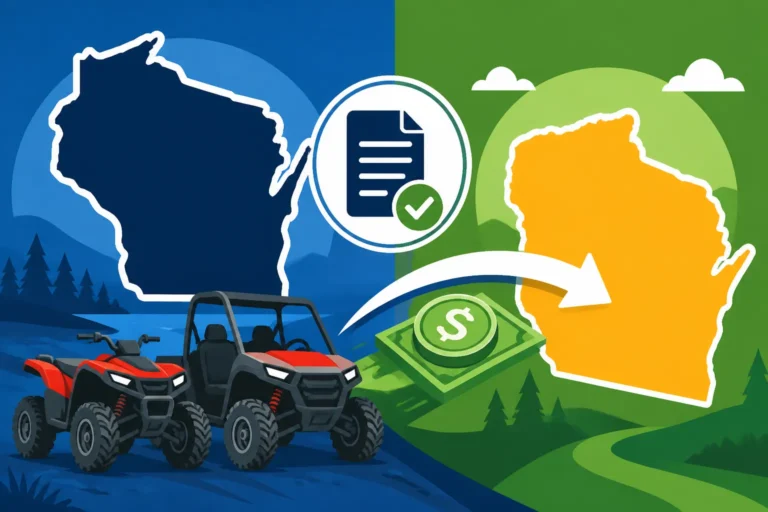
This is where many new residents experience a bit of a headache. Wisconsin has a 5% state sales tax on ATV and UTV purchases. If you bought your machine in another state and are now bringing it to Wisconsin, you're generally still liable for Wisconsin sales tax unless you meet certain conditions.
- Credit for Tax Paid to Another State: The good news is that Wisconsin typically offers a credit for sales tax you've already paid to another state. This means you won't usually have to pay tax twice on the same machine. However, you must provide clear, verifiable proof of that payment. This is why digging out those old sales receipts or the previous state's title/registration showing the sales tax paid is so important. Without it, Wisconsin might assume no tax was paid, and you'll be on the hook for the full 5%. Our post on [Credit for Tax Paid to Another State] goes into more detail on how this works.
- No Tax Paid (or Insufficient Tax): If you purchased your machine in a state with no sales tax, or a lower sales tax rate than Wisconsin's 5%, you will owe the difference or the full 5% when you register in Wisconsin. For example, if you paid 2% sales tax in your old state, you'd owe the remaining 3% to Wisconsin. This isn't Wisconsin trying to get extra money; it's simply harmonizing the sales tax across all machines used within its borders. You can learn more about this general obligation in [Wisconsin Sales Tax on an ATV Purchase]. Make sure you factor this potential cost into your moving budget.
Displaying Your New Wisconsin Registration
Once your application is approved and you've paid all the necessary fees and taxes, the Wisconsin DNR will send you your new registration card and decals. This is a moment of triumph! But the job isn't quite done yet. There are specific requirements for how you display your registration to ensure you're compliant with state law.
Sticker Placement and Legibility
The decals you receive are not just pretty stickers; they are your proof of registration.
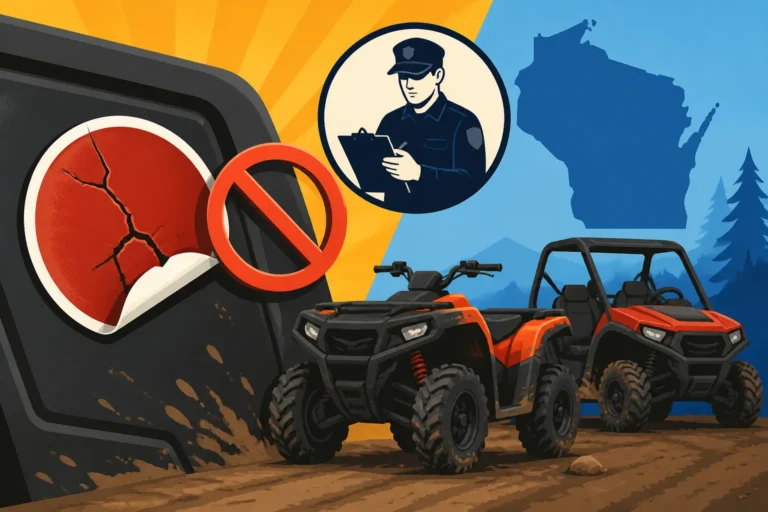
- Where to Put Them: Wisconsin law is pretty specific about decal placement. You’ll receive two decals, and they must be affixed to each side of your ATV or UTV, typically on the cowling, fenders, or side panels. The key is that they must be clearly visible and legible from a distance. Avoid placing them where they might be easily obscured by mud, equipment, or accessories.
- Tips for Application: Ensure the surface is clean and dry before applying. Cold weather can make the adhesive less effective, so if you're moving during a Wisconsin winter, try to apply them indoors where it's warm. Improperly applied or missing decals can lead to fines, so take your time and do it right. Check out [Sticker Placement on a Wisconsin Machine] for a visual idea.
Keeping Your Registration Card Handy
While the decals are for external display, your registration card is your internal proof.
- Always Carry It: Wisconsin law requires that you carry your current registration card with you whenever you operate your ATV or UTV. This means keeping it on the machine itself, or on your person, accessible to show to a warden if requested. Don't leave it in your truck or back at camp.
- Protect It: These cards can take a beating out on the trails. Consider laminating it or keeping it in a waterproof pouch to protect it from the elements. A faded or illegible card can cause delays if you're stopped. For more on this, our post [Keeping the Registration Card With the Machine] is a good read.
What Comes Next Safety and Trail Access
So, your out-of-state quad is officially a Wisconsin machine. Congratulations! Now that the bureaucratic stuff is handled, let’s talk about what you need to know to actually ride those Wisconsin trails safely and legally.
Wisconsin's ATV Safety Certificate Rule
Safety is paramount, and Wisconsin takes it seriously, especially for younger riders or those new to the sport.
- The January 1, 1988 Rule: Here's the general guideline: Anyone born on or after January 1, 1988, who operates an ATV or UTV on public trails or designated routes in Wisconsin, must possess a valid ATV or UTV safety certificate. This applies regardless of whether you're a resident or non-resident, though since you're now a resident, it's definitely something to consider.
- Getting Certified: You can take approved safety courses online or in person. These courses cover important topics like safe operating practices, state laws, and trail etiquette. Even if you were certified in your previous state, it's a good idea to check if Wisconsin accepts it, or just take the Wisconsin course to be fully compliant and up-to-date on local regulations. You can find all the details on [Wisconsin's ATV Safety Certificate Requirement].
What a Wisconsin Rider Needs Before They Ride
Now that your machine is officially registered in Wisconsin, you might be wondering about other fees or permits. This is a common point of confusion for new residents, especially concerning trail passes.
- No Non-Resident Trail Pass for Wisconsin-Registered Machines: Here's the good news and a common misconception cleared up: Once your ATV or UTV is properly registered in Wisconsin with public use registration, you do not need to purchase a separate "non-resident trail pass." The annual fee you pay for public use registration already contributes to the state's trail system. The non-resident trail pass is only for machines that are registered outside of Wisconsin but wish to ride its public trails. Since your machine is now a Badger State resident, you're good to go!
- Other Essentials: Beyond your registration card and decals, and your safety certificate (if required), always consider carrying basic safety gear, a map, water, and perhaps a small toolkit. The Northwoods trails are beautiful, but cell service can be spotty, and preparedness is key. For a comprehensive list, consult our guide on [What Wisconsin Riders Need Before They Ride].
Moving to a new state and getting your powersports machine set up can seem like a lot, but taking it step-by-step makes it manageable. Welcome to Wisconsin—now go enjoy those trails!
Disclaimer
This article is for general informational purposes only and does not constitute professional advice. Laws, prices and regulations vary by location and change over time. Consult a qualified professional for guidance on your specific situation.