Where the VIN Sits on a Utility Quad
Trying to find that elusive Vehicle Identification Number (VIN) on your utility quad can feel like a treasure hunt, especially when you're in a hurry to register it, sell it, or simply confirm its identity for maintenance. It's a common frustration for many Wisconsin ATV and UTV owners, leaving you scratching your head, crawling under the machine, and wondering why it's not stamped somewhere obvious. This comprehensive guide is here to end that headache, walking you through exactly where to look for the VIN on your utility quad, why it’s so important, and what to do if it seems to have vanished.
Why Finding Your VIN is So Important for Wisconsin Riders
Let's face it, nobody thinks about the VIN until they absolutely need it. But when that moment comes, whether you're standing at a DNR service center or shaking hands on a sale, knowing exactly where to find and verify that VIN can save you a world of trouble. For Wisconsin riders, this little string of numbers is the bedrock of ATV and UTV ownership.
Registration and Ownership Verification
In Wisconsin, registering your ATV or UTV is a fundamental requirement for legal riding on public trails and routes. Without a clear, readable VIN, you can hit a significant roadblock. The VIN is how the state identifies your specific machine, ties it to you as the owner, and keeps track of its registration status. Think of it as your quad’s social security number. If you're trying to get a new public or private use registration, or even just renew an existing one, the VIN is the first piece of information the Wisconsin DNR will ask for. This also becomes crucial if you ever need to prove ownership without a formal title, which Wisconsin does not issue for ATVs. [Proof of Ownership Without a Title] often relies heavily on a verifiable VIN matched to your purchase documentation.
Moreover, if your registration ever gets called into question, or if there's a discrepancy in state records, the VIN is the definitive identifier. It ensures that the machine you're riding is indeed the one registered in your name. For new residents, bringing an out-of-state machine into Wisconsin requires using that VIN to establish its identity with our DNR. This level of detail keeps everything above board and protects you from potential legal headaches down the road.
Buying and Selling Safely
The used ATV and UTV market in Wisconsin is bustling, but it also comes with its share of potential pitfalls. The VIN is your single most important tool for a secure transaction, whether you're the buyer or the seller. As a buyer, verifying the VIN is paramount to ensure the machine isn't stolen or doesn't have a murky history. You'll want to cross-reference it against any provided documentation and, ideally, run it through theft records. [Running a Used Quad Past Theft Records] is a step no buyer should ever skip.
For sellers, having a clear and accessible VIN is vital for completing the sale smoothly. When you're selling your machine, you'll need to accurately record that VIN on the bill of sale and, in Wisconsin, you're responsible for signing over the registration card to the new owner. If the VIN on the machine doesn't match the paperwork, it can throw the entire sale into doubt, potentially leading to a canceled deal or future legal challenges. Using a comprehensive bill of sale, perhaps generated through a reliable platform like LawDepot, can make this process much smoother, ensuring all critical details, including the VIN, are properly documented. A mismatch can even cause issues when the buyer attempts to complete the [Transferring a Wisconsin Registration Within Ten Days] process, leading to delays and frustration for everyone involved.
Understanding the Universal VIN Standard
While the precise location might vary, the structure of an ATV or UTV's VIN is remarkably consistent. This 17-character alphanumeric code isn't just a random assortment; it's a global standard designed to tell a unique story about your machine. Knowing how to read it can provide you with a wealth of information, even before you've owned the quad for years.
Decoding the VIN's Secrets
Every single character in a 17-digit VIN holds specific information. This universal standard was established to ensure transparency and traceability for every vehicle manufactured globally after 1981.
- Characters 1-3: World Manufacturer Identifier (WMI): This tells you who made the machine and where. For example, '1' or '4' might indicate the USA, 'J' for Japan, and the next two characters specify the manufacturer.
- Characters 4-9: Vehicle Descriptor Section (VDS): This section describes the general attributes of the vehicle. It covers things like the vehicle type (ATV, UTV), engine type, model, and often a check digit for verification. This is where you might find clues about the specific model, engine size, and even safety features, although the exact breakdown can vary by manufacturer.
- Character 10: Model Year: This is one of the most useful characters, especially when buying a used machine. It's a single letter or number that decodes to the model year of your quad. For instance, 'A' might be 2010, 'B' 2011, 'Y' 2000, and numbers like '1' for 2001. After 2009, they often cycled back to letters. Knowing [Which VIN Digit Gives the Model Year] is invaluable for dating your purchase.
- Character 11: Assembly Plant: This character indicates the specific factory where your machine was assembled.
- Characters 12-17: Vehicle Indicator Section (VIS) / Sequential Production Number: This is the unique serial number for your specific vehicle, making it distinct from every other machine that rolled off the assembly line. This section is often simply a sequential number, ensuring no two machines have the exact same VIN.
Understanding these sections means you can verify crucial details about a machine simply by looking at its VIN. If a seller tells you a quad is a 2015 model, but the 10th digit of the VIN decodes to a 2010, you know something isn't right.
Manufacturer Variations and Standards
While the 17-digit standard is universal, manufacturers do have some leeway in how they encode information within the VDS (characters 4-9) and, crucially, where they physically stamp the VIN on the machine. For instance, a Polaris utility quad might have its VIN in a slightly different spot than a Honda Rancher or a Can-Am Defender. The materials used, frame design, and even the model year can influence the exact placement.
Some manufacturers might opt for stamping the VIN in a more prominent location, like the front-right frame rail, while others might place it under a seat or near the engine mount. These subtle differences are why a general guide is helpful, but sometimes you might need to consult your owner's manual or even do a quick online search for your specific make and model. Even within the same brand, a sport quad might have a different VIN location compared to a utility quad, simply due to frame geometry and intended use. Knowing these variations helps manage expectations when you're on your hands and knees looking for that number.
Common Spots on a Utility Quad
Utility quads are built tough, designed to haul, tow, and tackle chores, often leading to frames that are robust and somewhat cluttered with components. This can make finding the VIN a bit of a scavenger hunt, but most manufacturers stick to a few tried-and-true locations. Get ready to do a bit of bending, kneeling, and shining a flashlight!
Main Frame Rails
This is by far the most common location for the VIN on a utility quad. The frame rails, usually made of sturdy steel, provide a durable surface for the stamped characters.
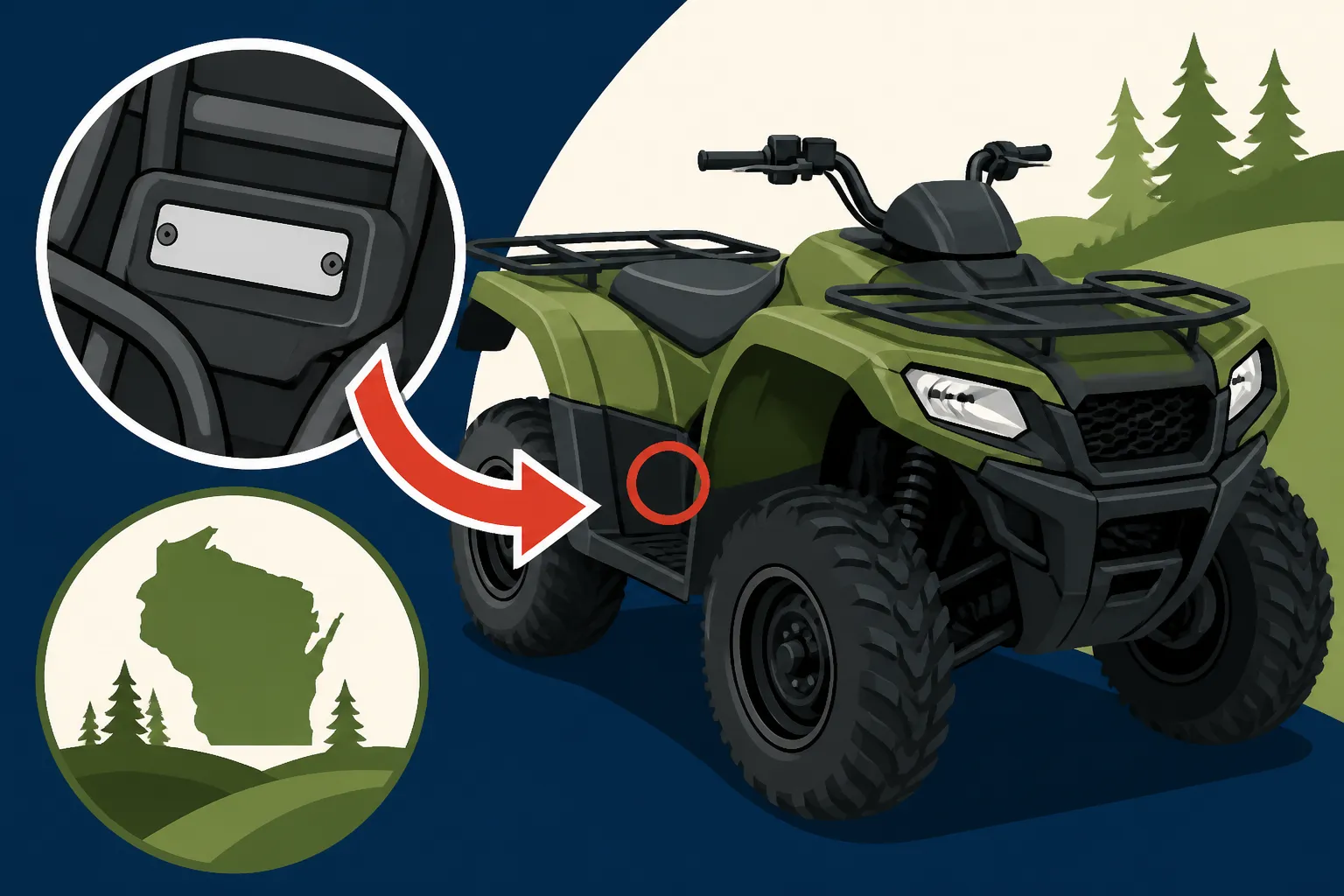
- Front-Right Main Frame Rail: Start by looking on the right-hand side of the machine (as if you're sitting on it). Follow the main frame rail from the front wheel well back towards the footwell area. Often, the VIN is stamped into the top or side of this main tubular or box-section frame member. It might be just behind the right front tire, or slightly further back towards the engine. This area is relatively exposed, making it easy to spot once you know where to look.
- Under the Seat/Rear Frame: Sometimes, particularly on older models or those with unique frame designs, the VIN can be found stamped on a crossmember or main frame rail located directly under the seat. You'll need to remove the seat to access this area, which might involve unlatching it or unbolting it depending on your specific model. This spot is often cleaner and better protected from trail grime, but requires a bit more effort to access.
- Near the Footpeg/Engine Area: On certain models, the VIN might be stamped on a frame component low down, often near the right-side footpeg or where the engine mounts to the frame. This area can get quite dirty and be obscured by engine components, so be prepared to clean it thoroughly. For many popular utility models like the Honda Foreman or the Polaris Ranger, this general area is a prime suspect.
Steering Stem and Head Tube
Another very common location, especially on machines with a more open front frame design, is around the steering mechanism.
- Steering Head Tube: This is the large tube at the very front of the frame where the steering shaft passes through. The VIN is frequently stamped on the front, side, or even the top of this tube, sometimes facing upwards. It’s often easily visible without much disassembly, sitting just below the handlebars. This is a good place to start your search, as it’s generally accessible and not usually hidden by plastics or other components.
- Under the Handlebars (Crossbar): Less common for the primary VIN, but some manufacturers might have a secondary identifier or stamping on a crossbar that supports the handlebars, especially on simpler, smaller machines. Always look for the full 17-digit VIN, as other numbers might just be part numbers.
Engine Block and Other Potential Areas
While the engine block might carry a serial number, it's rarely the primary VIN for the entire machine. However, it's worth a quick check if you're really struggling to locate the main frame stamp.
- Engine Block (Secondary Number): You might find a serial number stamped directly into the metal of the engine block, often on a flat surface near the crankcase or cylinder head. This is usually not the 17-digit VIN that registers the machine, but rather an engine-specific serial. In very rare cases, if the main frame VIN is obliterated, this might serve as a last resort for identification, but typically, the DNR will want the frame VIN.
- Frame Crossmembers or Brackets: Occasionally, manufacturers will stamp the VIN on a sturdy frame crossmember or a robust bracket that's welded to the main frame. This could be anywhere from under the front plastics to near the rear suspension mounts. It often requires more thorough inspection and possibly removing some plastic body panels to get a clear view. For instance, some Can-Am Outlander models might have it in a less obvious spot, so knowing [Where a Can-Am Outlander Carries Its VIN] for specific models can be a real time-saver. Don't be afraid to get a little dirty and explore these less visible spots.
Here's a quick reference table for common VIN locations on utility quads:
| General Location | Specific Area | Notes |
|---|---|---|
| Main Frame Rails | Front-right main frame rail | Most common. Often visible just behind the right front wheel or near the footwell. |
| Frame crossmember under the seat | Requires seat removal. Area is usually cleaner. | |
| Near right-side footpeg/engine mount | Can be obscured by dirt or engine components. | |
| Steering Assembly | Steering head tube | Front, side, or top of the tube where the steering shaft passes. Often easy to spot. |
| Handlebar crossbar | Less common for primary VIN; may be a secondary ID or part number. Verify 17 digits. | |
| Engine Block | Flat surface on engine block/crankcase | Typically an engine serial number, not the primary vehicle VIN. Use as a last resort for cross-reference. |
| Other Frame Components | Robust brackets, subframe sections | Less frequent, may require removal of plastic body panels. |
Tips for Locating a Stubborn VIN
Sometimes, finding the VIN isn't as simple as glancing at the obvious spots. Years of mud, grime, rust, or even aftermarket accessories can obscure this critical number. Don't give up! With a little patience and the right approach, you can usually uncover even the most stubborn VIN.
Cleaning and Lighting Techniques
The biggest enemies of a visible VIN are dirt and poor lighting. Utility quads are meant to get dirty, and that means the VIN area is often caked with mud, dust, and rust.
- Start with a good wash: Before you go spelunking, give your quad a thorough cleaning, especially in the areas where the VIN is commonly found. A pressure washer can help, but be careful not to blast directly at electrical components.
- Wire brush and degreaser: For stubborn grime or light surface rust, a wire brush can be your best friend. Gently scrub the suspected area to remove buildup. Follow up with a good degreaser to cut through any oily residue. Take your time and avoid being overly aggressive, as you don't want to damage the stamped numbers themselves.
- Powerful flashlight: Even in daylight, direct sunlight can create glare. A bright LED flashlight held at different angles can make the stamped numbers "pop" by casting subtle shadows. Try holding it almost parallel to the surface to highlight the depressions in the metal. Sometimes, the numbers are faint, and just the right angle of light is all you need.
- Mirror and Phone Camera: For really tight spots, a small inspection mirror can help you see around corners or into recesses. Alternatively, your smartphone camera, especially with its flash enabled, can often capture an image of the VIN in an awkward spot where your eyes can't quite get a clear view. Just make sure the photo is in focus!
Consulting Documentation and Previous Owners
If the physical hunt isn't yielding results, it's time to turn to the paper trail. Often, the VIN is recorded in multiple places, and these records can serve as a guide to its physical location or at least give you the number itself.
- Owner's Manual: This is your first and best resource. Most owner's manuals include diagrams or descriptions of where the VIN is located on that specific model. It’s designed to be the definitive guide for your machine, so make sure to check the index or table of contents for "VIN" or "serial number."
- Registration Cards and Bills of Sale: Any previous registration cards or bills of sale should have the VIN clearly listed. While this won't tell you where it is, it will give you the actual number, which is half the battle. This is especially helpful if you're trying to verify a damaged or illegible VIN against a known good one. If you're using a template from a service like LawDepot for your bill of sale, it will always include a prominent field for the VIN.
- Insurance Documents: Your insurance policy, especially the declarations page, will list the VIN of your insured machine. Again, this provides the number, which you can then use to try and match what you find on the quad.
- Previous Owner: If you bought the machine used, reach out to the previous owner if possible. They might know exactly where the VIN is located, having had to find it themselves for registration or other purposes. This can be a real shortcut to ending your search.
What to Do If Your VIN is Damaged or Missing
Discovering a damaged, illegible, or seemingly missing VIN can be a nightmare for any ATV or UTV owner in Wisconsin. It raises a red flag immediately and can complicate everything from registration to selling the machine. Don't panic, but be prepared for a process that might require official intervention.
Legal Ramifications and Solutions
A damaged or missing VIN isn't just an inconvenience; it can have significant legal consequences. The state relies on the VIN for identification and tracking, and any ambiguity can lead to questions about the machine's legitimacy.
- Registration Challenges: The most immediate problem you'll face is with registration. The Wisconsin DNR requires a verifiable VIN to issue or renew any ATV or UTV registration. If the VIN is unreadable, they may deny your registration, effectively making your machine illegal to ride on public lands. [Penalties for an Unregistered ATV in Wisconsin] can include hefty fines and even seizure of your machine. This could also complicate the [Buying a Machine With No Registration History] scenario, as verifying its origin becomes nearly impossible.
- Buying and Selling Issues: Trying to sell a machine with a compromised VIN is incredibly difficult, if not impossible. Buyers will, rightly, be suspicious of a machine without a clear identification number, fearing it could be stolen or have a salvage history. If you're buying, a missing VIN should be a non-starter unless you're willing to go through a complex legal process to establish ownership. Even if you have a bill of sale from a platform like LawDepot, if the VIN on the machine doesn't match, you're looking at a problem.
- Stolen Machine Concerns: Unfortunately, a damaged or altered VIN is a common tactic used by thieves to disguise stolen machines. If you suspect your VIN has been tampered with, or if it appears to be completely ground off, you must contact local law enforcement and the Wisconsin DNR immediately. Trying to circumvent this issue yourself could lead to legal trouble.
In situations where the VIN is genuinely damaged but not intentionally altered (e.g., from an accident or extreme rust), you may need to go through a VIN verification process with law enforcement or a certified VIN inspector. They will attempt to locate any hidden or secondary VINs, confirm the machine's identity through other records (like engine serials or frame stamps), and potentially issue a new VIN plate if permissible by state law. This is often a lengthy and detailed process.
Alternative Proof of Ownership
When the VIN itself is compromised, you'll need to rely on other forms of documentation to prove your legitimate ownership. The more evidence you can provide, the better your chances of resolving the issue.
- Bill of Sale: A robust, detailed bill of sale is crucial. It should clearly list the seller's information, the buyer's information, the date of sale, the purchase price, and any VIN or engine serial numbers that were legible at the time of purchase. A professionally drafted bill of sale, easily obtained from services like LawDepot, provides a strong legal document to support your claim of ownership. Even if the VIN on the machine is now unreadable, the bill of sale can verify what it was at the time of sale. [What a Wisconsin ATV Bill of Sale Should Carry] includes these vital details.
- Previous Registration Cards: If you have previous registration cards in your name or the name of a known prior owner, these can serve as powerful proof, especially if they list a VIN that matches your other documentation.
- Insurance Records: Your insurance policy documents will list the VIN for the machine you insured, tying the machine to your ownership.
- Purchase Receipts/Financing Documents: If you bought the machine new, your original purchase receipt, financing agreement, or manufacturer's statement of origin (MSO) will unequivocally list the VIN. For used machines, any records from a dealership or certified mechanic that include the VIN and your name can also help.
- Photos of the Machine: While not definitive on their own, dated photographs of your machine, especially if they show unique identifiers or modifications over time, can help corroborate your story, particularly if you have other documents.
It's a frustrating situation, but meticulously gathering all available documentation and working with the proper authorities is the only way to navigate a damaged or missing VIN on your utility quad in Wisconsin. Trying to ignore it will only lead to greater complications down the line.
Disclaimer
This article is for general informational purposes only and does not constitute professional advice. Laws, prices and regulations vary by location and change over time. Consult a qualified professional for guidance on your specific situation.